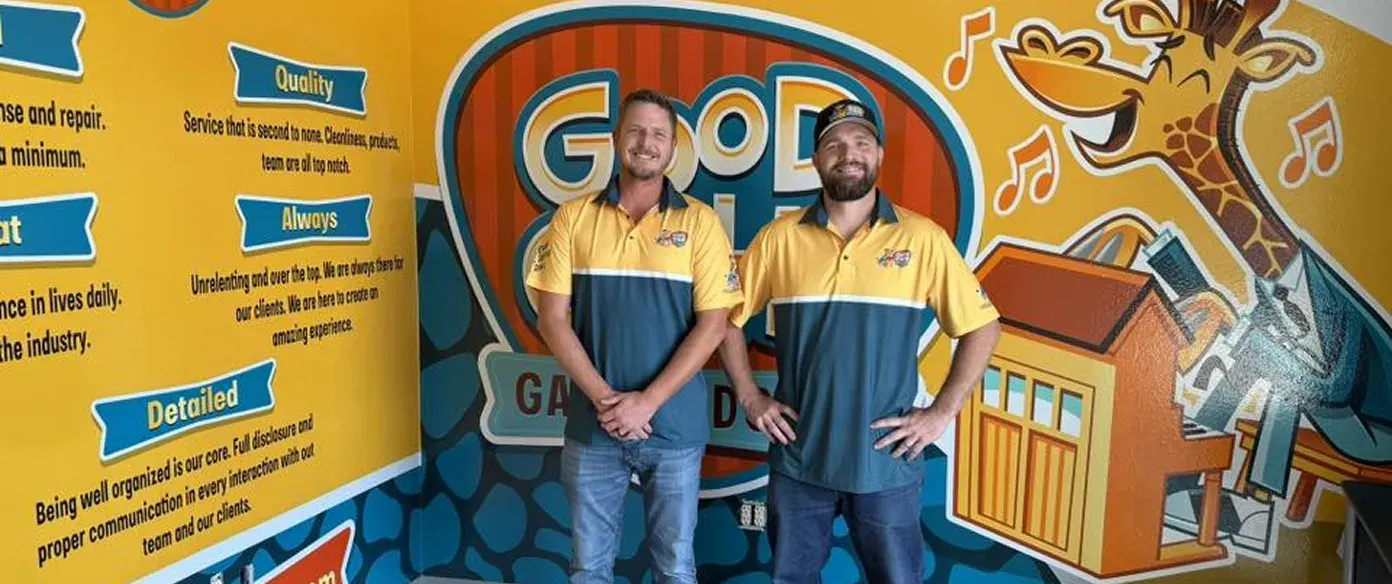

Garage Door Maintenance Stockton - Quiet & Smooth Operation
Experience seamless and quiet garage door operation with our Stockton maintenance services. Prevent breakdowns and ensure safety. Schedule now!
Is Your Garage Door Making Grinding Noises or Failing to Close Smoothly?
Ignoring the subtle squeaks, rattles, or hesitations of your garage door often leads to sudden, inconvenient breakdowns that trap your vehicle inside or lock you out of your home. If your door is vibrating excessively or making loud grinding sounds, contact us today or ask about our available financing options to restore your system.
Homeowners in Stockton often overlook the heavy lifting their garage door system performs daily until the mechanism fails completely. A standard door is the largest moving object in your home, and without regular attention, the tension springs, cables, and rollers wear down rapidly. Good Golly Garage Doors provides comprehensive preventive maintenance designed to catch small issues before they become expensive repairs.
• Eliminate disruptive noises and vibrations with precision lubrication and tightening.
• Prevent unexpected spring or cable failures that can cause property damage or injury.
• Extend the operational lifespan of your opener and door hardware significantly.
We are fully insured professionals committed to keeping your home safe and accessible year-round.
Comprehensive Preventive Maintenance and Safety Inspection
A preventive maintenance visit is far more than a visual check; it is a rigorous tune-up of the entire mechanical system. Over time, the vibration from opening and closing the door loosens hardware, while dust and debris from the Central Valley environment clog tracks and dry out essential lubricants. Our service focuses on returning the door to factory specifications to ensure smooth, quiet operation.
We perform a multi-point inspection and adjustment protocol that covers every moving part of the door. This service is designed for homeowners who want to avoid the high cost of spring replacements or motor burnouts. By resetting the balance and tension of the system, we reduce the strain on your automatic opener, which is often the first component to fail on a poorly maintained door.
Hardware Tightening and Alignment
The average garage door moves up and down over a thousand times a year. This constant movement causes nuts, bolts, and hinges to loosen. During a maintenance visit, technicians systematically tighten every piece of hardware holding the door together.
• Tightening of all track brackets and hinge fasteners to prevent the door from sagging or becoming misaligned.
• Adjustment of the door tracks to ensure there is proper spacing between the door and the frame, preventing friction and binding.
• Inspection of the bearing plates and torsion tube to ensure the door rotates freely without grinding.
Lubrication of Moving Parts
Proper lubrication is the difference between a silent door and one that wakes the neighbors. However, using the wrong lubricant, such as standard WD-40, can actually attract dirt and gum up the works. We use professional-grade lithium or silicone-based sprays specifically designed for garage door components.
• Application of high-viscosity lubricant to steel rollers and hinges to reduce metal-on-metal friction.
• Lubrication of the torsion springs to reduce the friction between coils as they wind and unwind, which is a common source of loud banging noises.
• Greasing of the opener rail or screw drive (depending on the model) to ensure the trolley moves seamlessly.
Cable and Spring Inspection
The springs and cables are the muscles of your garage door system, holding the immense weight of the panels. These components are under extreme tension and are the most dangerous parts of the door to neglect.
• Visual inspection of lift cables for fraying, kinks, or signs of unraveling which indicate imminent failure.
• Checking torsion or extension springs for rust, elongation, or gaps in the coils.
• Testing the spring tension to ensure the door is properly counterbalanced, meaning it can be lifted manually with minimal effort.
The Step-by-Step Maintenance Process
Understanding what happens during a professional service call helps you prepare and ensures you know exactly what is being done to your property. Our technicians follow a structured process to ensure no component is overlooked.
First, the technician performs a complete visual assessment of the door’s exterior and interior. This involves looking for cracks in the panels, weather stripping damage, or dents that might affect the door's balance. Identifying structural damage early is vital, as a compromised panel can cause the door to buckle under its own weight.
Next, the technician disconnects the electric opener to operate the door manually. This "balance test" is the most critical step. If the door plummets to the floor or shoots up uncontrollably when released, the springs are out of calibration. Operating an unbalanced door puts severe stress on the electric opener, leading to premature gear failure. The technician will adjust the spring tension to ensure the door hovers in place when halfway open.
Finally, we test the safety features. This includes the mechanical reverse test, where we place a block of wood under the door to ensure it reverses upon contact, and the photo-eye sensor test to guarantee the door stops if the beam is broken. These safety checks are non-negotiable and protect your family and pets from entrapment accidents.
Determining When to Maintain vs. Repair or Replace
Homeowners often struggle to decide if a tune-up is enough or if they need more extensive repairs. While preventive maintenance can resolve many operational quirks, there are distinct signs that a component has reached the end of its lifecycle and requires replacement rather than adjustment.
When Maintenance is Sufficient
If your door is generally functioning but has become louder recently, moves slower than usual, or seems to "stick" at certain points in the track, a maintenance tune-up is usually the correct solution. Routine maintenance is also appropriate if it has been more than 12 months since the last professional inspection, even if the door appears to be working fine.
• The door squeaks or squeals during operation.
• The chain or belt on the opener seems slightly loose or sags.
• The wall button or remote works intermittently due to sensor misalignment.
When Repair or Replacement is Required
Maintenance cannot fix broken metal or snapped cables. If a part has physically failed, it must be replaced. Furthermore, if your garage door system is over 15 to 20 years old and requires frequent adjustments to stay operational, it may be more cost-effective to replace the system than to continue paying for temporary fixes.
• Broken Springs: If a spring has a visible gap or the door refuses to open, the spring is broken. Maintenance cannot fix this; it requires an repair service.
• Frayed Cables: If a cable is hanging loose or looks like a frayed rope, do not attempt to operate the door. This requires part replacement.
• Rotted or Cracked Sections: If wooden panels are rotting or steel panels are cracked, structural replacement is necessary to maintain security and insulation.
Why Professional Maintenance Outperforms DIY Efforts
Many homeowners attempt to lubricate their garage doors themselves, but professional maintenance goes beyond a can of spray. The primary differentiator is safety and the ability to diagnose hidden issues. Garage door springs are under immense tension—enough to lift a 400-pound object. Adjusting these springs without the proper tools and training is incredibly dangerous and is a leading cause of DIY-related injuries in the home.
Professional technicians also spot "invisible" problems. A slight bend in a track or a microscopic crack in a hinge is easily missed by an untrained eye but can cause catastrophic failure weeks later. Our diagnostic tools and experience allow us to identify these weak points and address them proactively.
• Safety Assurance: We handle the high-tension components so you never have to put yourself at risk.
• Comprehensive Tooling: We carry specialized winding bars, tension gauges, and levelers that are not standard in a homeowner’s toolbox.
• Long-Term Savings: Catching a worn roller today costs a fraction of replacing a bent track and a derailed door tomorrow.
The Importance of Regular Opener Care
While the door itself gets the most attention, the automatic opener requires its own set of maintenance checks. The opener is the brain of the operation, and if it is struggling to lift a poorly balanced door, the internal gears will strip.
For chain-drive openers, which are common in many homes, the chain requires periodic tensioning. A loose chain can slap against the rail, causing noise and wear. Belt-drive openers need to be checked for signs of dry rot or cracking on the rubber belt. Our technicians also check the internal plastic gears inside the motor housing, applying fresh grease to prevent them from grinding down to dust.
We also inspect the logic board and wiring. Loose connections caused by vibration can lead to "phantom operation," where the door opens or closes on its own. Tightening these terminals ensures reliable response to your remote controls and keypad.
Secure Your Garage Door Investment
Your garage door is a critical entry point to your home, providing security for your family and protection for your vehicles. Neglecting its care leads to inevitable frustration, noise, and unexpected repair bills. By choosing a scheduled maintenance plan, you ensure that the system operates quietly and safely, regardless of the season.
Do not wait until your car is trapped inside the garage or the door refuses to close before seeking help. Proactive care is the only way to guarantee the longevity of your system.
Keep your home secure and your door running smoothly by scheduling your preventive maintenance service with us today.

Need Garage Door Help ASAP?
We answer the phone 24/7 for emergency spring, track, panel, and opener repairs, so you can reach a real person any time. Our technicians arrive in clearly marked service vehicles carrying common replacement parts, and most jobs can be completed the same day. If the door appears unstable or unsafe, keep people and pets clear and let our team handle the repair.