

A Comprehensive Guide to Insulated vs Non-Insulated Garage Door Differences
The insulated vs non-insulated garage door difference comes down to one thing: how well your garage door blocks heat, cold, and noise from moving through it.
Why the Insulated vs Non-Insulated Garage Door Difference Matters for Austin Homeowners
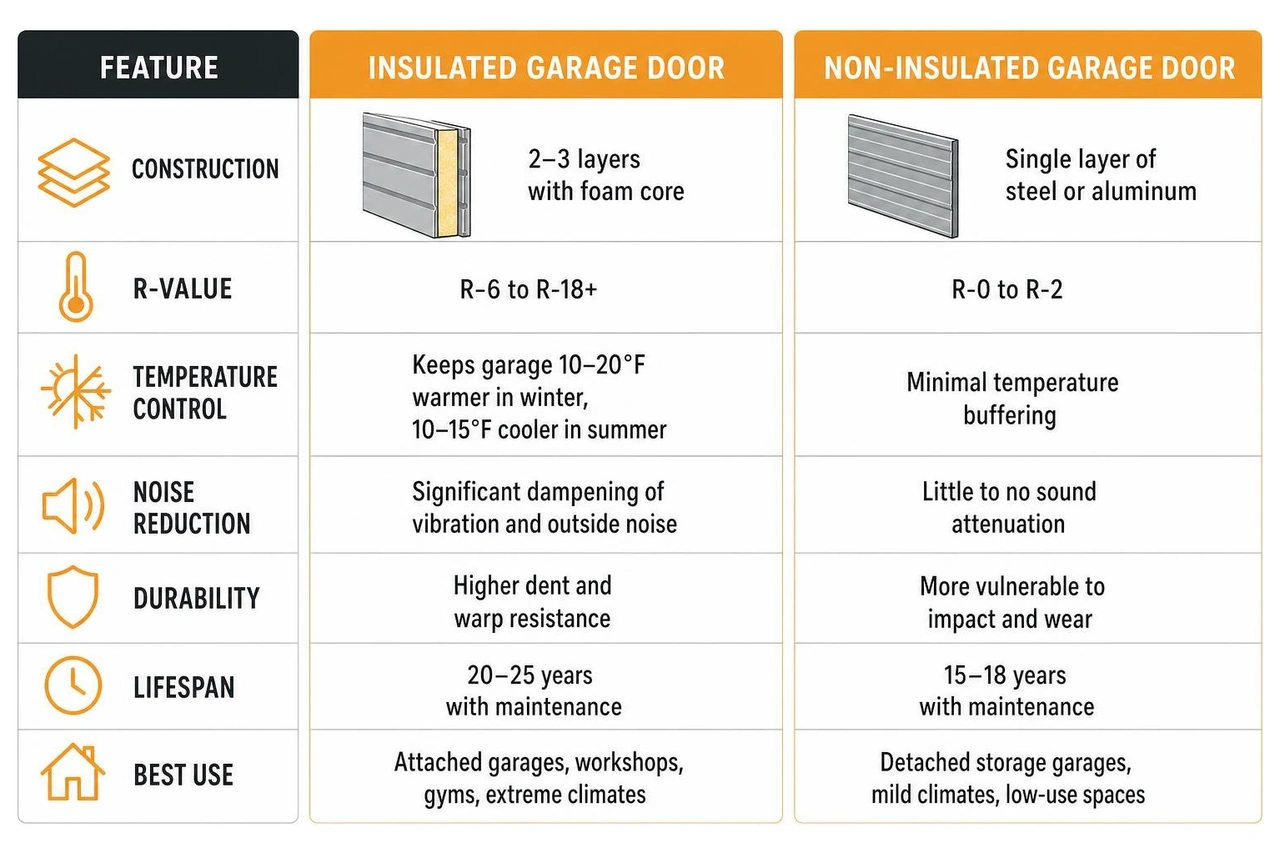
The insulated vs non-insulated garage door difference comes down to one thing: how well your garage door blocks heat, cold, and noise from moving through it. Here’s a quick breakdown before we dive deeper:
| Feature | Insulated Garage Door | Non-Insulated Garage Door |
|---|---|---|
| Construction | 2–3 layers with foam core | Single layer of steel or aluminum |
| R-Value | R-6 to R-18+ | R-0 to R-2 |
| Temperature Control | Keeps garage 10–20°F warmer in winter, 10–15°F cooler in summer | Minimal temperature buffering |
| Noise Reduction | Significant dampening of vibration and outside noise | Little to no sound attenuation |
| Durability | Higher dent and warp resistance | More vulnerable to impact and wear |
| Lifespan | 20–25 years with maintenance | 15–18 years with maintenance |
| Best For | Attached garages, workshops, gyms, extreme climates | Detached storage garages, mild climates, low-use spaces |
Here in Austin, stepping into your garage in July can feel like walking into a furnace. That intense Central Texas heat doesn’t just make your garage uncomfortable — it can radiate through an uninsulated garage door straight into your home, forcing your HVAC system to work overtime. Whether your garage is attached to your living space, used as a workshop, or simply where you park your truck, the type of door you choose has a real impact on your daily comfort and energy use. Understanding this difference is one of the most practical decisions you can make as a homeowner.
I’m Jason Henderson, founder and CEO of Good Golly Garage Doors, and through years of hands-on experience in the home service industry — including countless garage door installations across Austin and the surrounding communities — I’ve helped homeowners navigate the insulated vs non-insulated garage door difference to find the right fit for their home and climate. In the sections below, I’ll walk you through everything you need to make a confident, informed decision.
Must-know insulated vs non insulated garage door difference terms:
- best garage door materials compared for homeowners
- how to choose the right garage door for your home
Exploring the Insulated vs Non-Insulated Garage Door Difference
When you step back to evaluate your home’s exterior, a garage door represents up to 30% or more of your home’s front elevation. Beyond curb appeal, however, lies the mechanical and thermal core of how your door actually performs. The fundamental insulated vs non-insulated garage door difference starts inside the panel structure itself.
A standard non-insulated door is typically manufactured as a single sheet of steel or aluminum. While this thin barrier keeps out rain, leaves, and unwanted pests, it offers virtually no thermal resistance. Heat from the afternoon Texas sun hits the metal face and transfers straight through into your space.
By contrast, an insulated door uses multiple bonded layers, embedding a dense core of thermal insulation—such as polystyrene foam board or injected polyurethane—between structural panels. This core breaks the path of thermal conduction, creating a sturdy thermal barrier that keeps exterior extreme temperatures on the outside.
To understand why this is so critical for home efficiency, take a closer look at Why Your Garage Door Could Be Driving Up Your Energy Bill in Austin.
Single-Layer vs Multi-Layer Panel Construction
To choose the right option for your property, it helps to understand how garage door manufacturers build these panels. Doors generally fall into three distinct structural categories:
| Construction Style | Layer Breakdown | Relative Strength & Dent Resistance | Ideal Usage Scenario |
|---|---|---|---|
| Single-Layer (1-Layer) | Outer steel or aluminum skin only with open interior backing | Standard protection; susceptible to panel dings and impact dents | Detached garages, shed structures, mild climates |
| Double-Layer (2-Layer) | Steel outer skin backed by open polystyrene foam insulation board | Moderate structural strength and moderate noise dampening | Detached workshops or budget-conscious attached homes |
| Triple-Layer (3-Layer “Sandwich”) | Steel outer skin + continuous polyurethane or polystyrene core + heavy-duty inner steel backer | Maximum panel rigidity, high dent resistance, and superior acoustic barrier | Attached garages, air-conditioned workshops, home gyms |
Single-layer doors consist of a single steel sheet resting on the door’s structural frame. Looking at the back of a single-layer door from inside your garage, you will see raw stamped steel and exposed horizontal support struts.
Double-layer doors add a layer of rigid polystyrene insulation board to the interior side of that steel panel. This provides a basic thermal barrier, though the back of the insulation remains visible unless covered.
Triple-layer doors—often referred to as sandwich construction doors—enclose the foam core completely between two solid steel skins. The interior steel backer protects the insulation from damage, gives the inside of your garage a clean, finished appearance, and provides immense overall structural rigidity.
The Core Insulated vs Non-Insulated Garage Door Difference in Thermal Protection
The primary unit of measurement for thermal resistance in building products is R-value. In simple terms, the higher the R-value, the better the door restricts the rate of thermal transfer.
- Non-Insulated Doors: Typically carry an R-value ranging from R-0 to R-2. Uninsulated metal panels readily absorb external thermal energy and radiate it into your garage space.
- Insulated Doors: Range anywhere from R-6 to R-18+, depending on the insulation type and thickness.
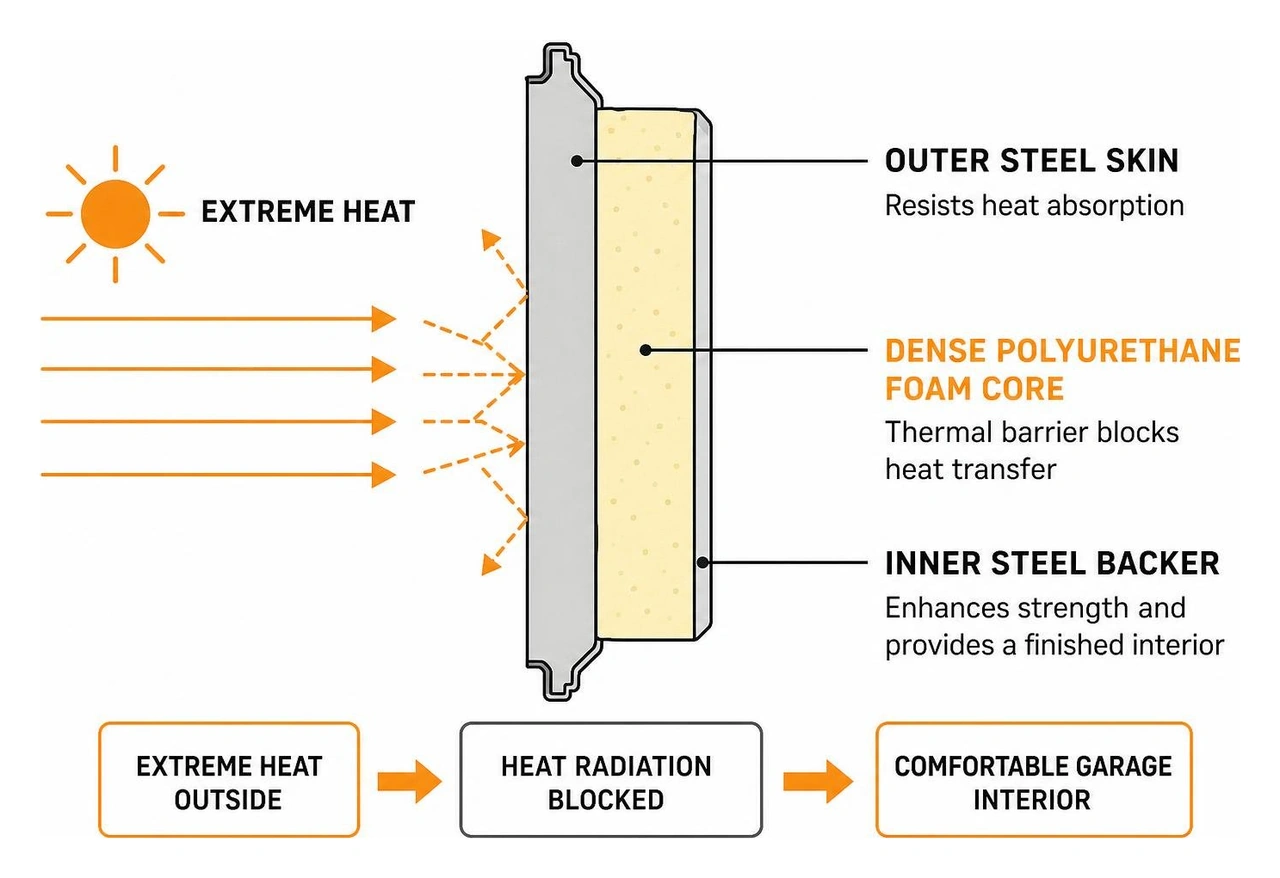
Without a thermal core, convective airflow and direct radiant heat warm up uninsulated steel panels until they act like a massive radiator inside your garage. When combined with quality perimeter weatherstripping, an insulated door creates a sealed envelope that slows ambient air changes significantly. For a detailed breakdown on measuring thermal ratings, review our complete Insulated Garage R-Value Guide.
Key Benefits of Insulated Garage Doors for Central Texas Homes
Living in communities like Round Rock, Pflugerville, Cedar Park, or Bee Cave means enduring long summer stretches where afternoon temperatures routinely pass 100°F. In Central Texas, an uninsulated garage can easily top 120°F inside. Installing an insulated door offers transformative advantages that extend far beyond simple vehicle shelter.
Temperature Regulation and Energy Efficiency
For attached homes, the garage shares one or two walls—and often a ceiling—with your home’s main living quarters. When heat builds up inside an uninsulated garage, it bleeds through those shared walls and electrical cutouts into adjoining kitchens, hallways, or upstairs bonus bedrooms.
By serving as a thermal buffer, an insulated garage door helps lower garage temperatures by 10°F to 15°F during scorching summer afternoons, and keeps the space 10°F to 20°F warmer during winter cold snaps. This bufferzone drastically reduces heat transfer into your home’s conditioned living space, relieving strain on your central HVAC unit and helping stabilize indoor cooling efficiency.
To learn more about keeping heat damage at bay, read How Summer Heat Affects Your Garage Door and How to Prevent the Damage as well as our Garage Door Energy Savings Guide 2026.
Structural Durability, Dent Resistance, and Noise Dampening
Beyond thermal regulation, multi-layer insulated garage doors deliver incredible mechanical benefits:
- Enhanced Panel Rigidity: Injected polyurethane foam expands and bonds tightly to both steel panels, forming a solid composite panel that resists warping, twisting, and flexing under high Central Texas wind loads.
- Superior Dent Resistance: Single-layer steel doors easily ding when struck by stray basketballs, lawnmowers, or trash cans. The solid foam core behind triple-layer steel absorbs impact energy, keeping panels pristine.
- Acoustic Sound Dampening: Insulated doors carry a higher Sound Transmission Class (STC) rating. The dense core deadens outdoor traffic noise, neighborhood sound, and lawn equipment. Additionally, because the panels are structurally solid, they do not rattle or echo along the horizontal track during opening and closing cycles.
- Extended Hardware Lifespan: Less operational vibration translates to lighter physical wear on track rollers, hinges, and opener drive systems over time.
Key performance advantages of insulated models include:
- Reduced thermal leakage into adjacent living spaces and bedrooms
- Greater resistance to hail, accidental impact, and vehicle dings
- Significantly quieter opening and closing cycles
- Protection for stored items like tools, automotive fluids, paint, and electronics
When a Non-Insulated Garage Door Is a Practical Choice
While insulated options offer comprehensive home benefits, an insulated door is not strictly mandatory for every residential application. In specific scenarios, choosing a non-insulated door is a practical, sensible, and budget-friendly decision.
Detached Garages and Storage Buildings
If your home features a freestanding garage, detached car shed, or backyard storage building in Georgetown, Leander, or Liberty Hill, the structural relationship to your living space changes:
- No Shared Living Envelope: Because a detached garage does not share walls or ceilings with your home, thermal transfer through the door panel has zero effect on your home’s indoor air conditioning or central heating usage.
- Unheated Storage Spaces: If you only use your detached garage to store lawn tools, seasonal gear, or park vehicles, maintaining precise indoor ambient temperatures is usually unnecessary.
- Ventilated Outbuildings: Many detached structures feature open roof rafters or uninsulated side walls. Installing an expensive high-R-value door on a structure with open framing provides little thermal return since heat simply moves through the uninsulated walls and roof.
Light Duty Applications and Hardware Impact
Non-insulated single-layer doors carry a distinct operational profile due to their light physical weight:
- Lighter Weight: Without dense foam cores or inner steel backing panels, single-layer doors weigh considerably less than multi-layer doors.
- Less Initial Spring Tension Required: Lighter door panels place lower static load on torsion or extension spring systems, allowing smooth manual operation if power outages occur during severe storms.
- Simpler Mechanical Demands: The reduced total weight reduces stress on standard light-duty openers, track hinges, and roller bearings during daily movement.
To evaluate various base materials for light-duty doors, check out our Steel vs Wood vs Aluminum Garage Door Comparison.
Choosing the Right Insulation Type and R-Value for Your Home
If you decide an insulated door is the best choice for your home, the next step is selecting the proper insulation material and thermal rating for your climate and usage goals. For additional recommendations, explore our Insulated vs Non-Insulated Garage Door Tips 2026.
Polystyrene vs Polyurethane Insulation
The garage door industry primarily utilizes two core insulation materials, each presenting distinct performance traits:
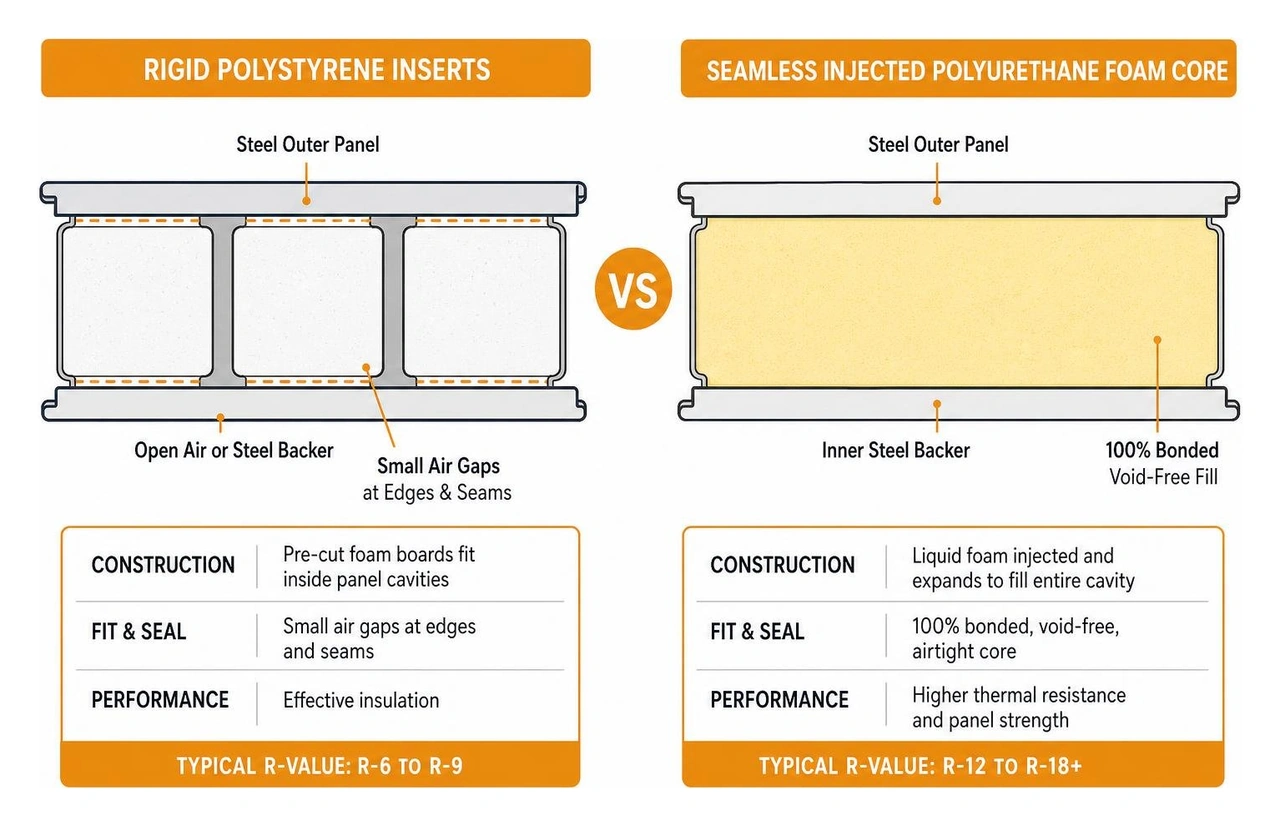
- Polystyrene Insulation: Manufactured as rigid foam sheets or boards cut to slide into the interior cavities of the door panels. While effective at dampening heat transfer, pre-cut board inserts leave minor air gaps along panel seams and struts. Polystyrene options usually range from R-6 to R-9.
- Polyurethane Insulation: Injected as a dense liquid foam between steel skins during manufacturing. As it cures, the polyurethane foam expands into every corner and micro-cavity, bonding directly to the inner metal walls. This dense, closed-cell foam creates an airtight structural core that yields high thermal resistance—ranging from R-12 to R-18+—while dramatically strengthening panel rigidity.
The Practical Insulated vs Non-Insulated Garage Door Difference for Attached Homes
For attached homes across Lakeway, West Lake, Spanish Oaks, and Pflugerville, garage spaces frequently serve as more than just vehicle parking. Homeowners regularly convert garages into home gyms, woodworking shops, crafting areas, or laundry spaces.
An insulated garage door turns a harsh, single-walled shed space into a comfortable, functional extension of your home. It buffers extreme pavement heat in summer and prevents freezing drafts from chilling your laundry area or gym equipment during winter months. To understand how extreme heat affects thermal buffers, explore Why Insulated Garage Doors Matter in Extreme Desert Heat.
Frequently Asked Questions about Garage Door Insulation
Here are clear, straightforward answers to the most common questions our team receives from Central Texas homeowners evaluating garage door insulation.
Is an Insulated Garage Door Worth It for an Attached Garage in Austin?
Yes, absolutely. For an attached garage in the Austin metro area, an insulated garage door is one of the most effective upgrades you can make to improve home comfort. Because Central Texas summers bring intense radiant heat, an uninsulated metal garage door heats up like an oven, raising temperatures in your garage and forcing thermal energy directly through shared walls into your home. An insulated door breaks that radiant path, lowers garage ambient temperatures during peak afternoon heat, suppresses exterior street noise, and protects cars, tools, and stored items from heat degradation.
Will an Insulated Garage Door Require a More Powerful Garage Door Opener?
Not necessarily, provided your garage door system is installed and balanced correctly. While an insulated triple-layer door is heavier than a single-layer non-insulated door, a garage door’s spring system—specifically calibrated torsion or extension springs—is designed to counterbalance the exact weight of the door.
When calibrated properly by a professional, a heavy triple-layer insulated door can be easily raised and lowered with one hand. As long as your torsion springs are correctly matched to the door’s total weight, a standard 1/2 HP or 3/4 HP garage door opener will operate the door smoothly without premature motor strain.
Can You Add Insulation to an Existing Non-Insulated Garage Door?
While aftermarket DIY insulation kit panels (such as roll-out radiant barriers or foam board kits) are available at home improvement stores, retrofitting an existing non-insulated door comes with major trade-offs:
- Spring Balance Risks: Adding 15 to 30 pounds of aftermarket insulation to a door calibrated for lightweight single-layer steel unbalances your spring system. Unbalanced springs cause doors to fall unexpectedly or put severe strain on automatic openers.
- Inferior Thermal Performance: DIY foam kits leave unsealed gaps along door hinges, seams, and stiles, providing significantly lower thermal protection (typically R-4 to R-8) compared to factory-injected polyurethane doors.
- Panel Sagging & Aesthetics: Adding weight to single-layer panels can cause light steel panels to bow or sag over time, potentially voiding manufacturer warranties.
For long-term reliability, thermal efficiency, and safety, replacing an uninsulated door with a factory-built multi-layer insulated door is always the recommended approach.
Conclusion
Understanding the insulated vs non-insulated garage door difference comes down to matching your choice with your home’s layout, climate demands, and everyday lifestyle needs. For detached storage structures where climate control is unnecessary, a single-layer non-insulated door remains a practical choice. However, for attached garages across Austin and nearby communities—where summer heat routinely beats down on uninsulated panels—upgrading to a quality multi-layer insulated door delivers unmatched comfort, whisper-quiet operation, panel durability, and long-term HVAC relief.
At Good Golly Garage Doors, we pride ourselves on providing friendly, honest, and reliable garage door solutions rooted in true Central Texas values. Whether you live in Austin, Bee Cave, Cedar Park, Georgetown, Lakeway, Leander, Liberty Hill, Pflugerville, Round Rock, Spanish Oaks, or West Lake, our expert team is ready to help you select and install the ideal door for your property.
Ready to transform your home’s comfort and efficiency? Schedule Garage Door Installation in Austin, TX with Good Golly Garage Doors today!

Need Garage Door Help ASAP?
We answer the phone 24/7 for emergency spring, track, panel, and opener repairs, so you can reach a real person any time. Our technicians arrive in clearly marked service vehicles carrying common replacement parts, and most jobs can be completed the same day. If the door appears unstable or unsafe, keep people and pets clear and let our team handle the repair.