
How Summer Heat Accelerates Wear on Garage Door Parts
Discover how summer heat accelerates wear on garage door parts in Las Vegas. Prevent failures with expert tips!
Why Is Summer Heat In Las Vegas Quietly Destroying Your Garage Door?
How Summer Heat Accelerates Wear On Garage Door Parts is something most Las Vegas homeowners do not think about until something breaks — usually on the hottest day of the year, with a car trapped inside. Here is the short answer:
Summer heat damages garage door parts by:
- Weakening springs — Steel tensile strength drops 6–10% when garage temperatures reach 130–150°F, causing faster metal fatigue and micro-fractures
- Expanding metal tracks and hinges — Thermal expansion shifts precise tolerances, increasing friction and causing misalignment
- Breaking down lubricants — High heat thins or evaporates standard lubricants, leaving moving parts grinding metal-on-metal
- Overheating opener motors — Poor ventilation and increased summer usage push motors and circuit boards past their safe operating limits
- Drying out weather seals — UV rays and heat make rubber and vinyl seals brittle, cracking and shrinking until gaps form
- Accelerating spring failure cycles — Standard 10,000-cycle springs that last 7–10 years in moderate climates can fail in as few as 5 years in Las Vegas desert conditions
In an uninsulated Las Vegas garage, interior temperatures routinely hit 130–140°F during summer afternoons — and can climb even higher behind a dark-colored door. That kind of sustained heat does not just wear your garage door system down gradually. It compresses years of mechanical stress into a single season, turning a minor issue into a full system failure without much warning.
Most homeowners notice something is off only after the damage is already done: a door that groans on a Tuesday, then refuses to open on a Thursday during a 115°F heatwave.
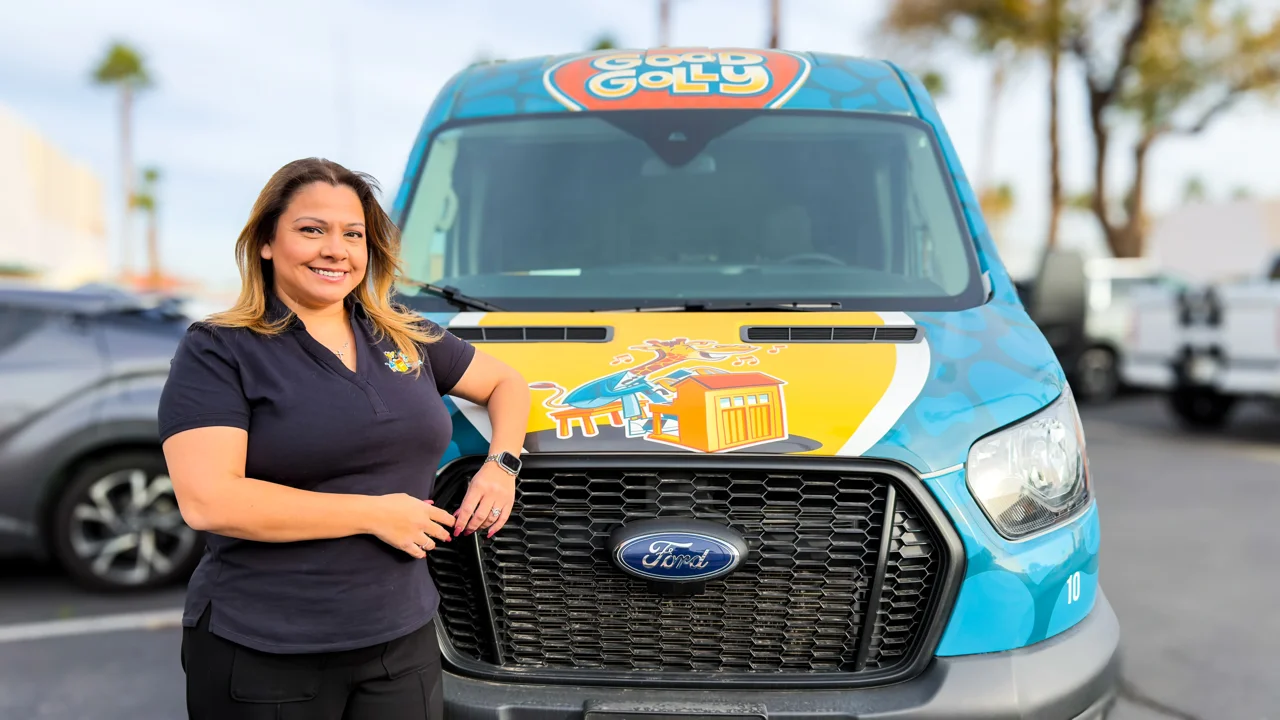
At Good Golly Garage Doors, our experienced, family-owned team has seen How Summer Heat Accelerates Wear On Garage Door Parts in ways that catch homeowners completely off guard — especially on systems that seemed perfectly fine just weeks before peak summer hits. Across Las Vegas, our local technicians help homeowners stay ahead of heat-related breakdowns with dependable service, quick response times, and workmanship built for desert conditions.

The Physics of Metal Fatigue in the Las Vegas Desert
Las Vegas heat is hard on everything parked in a garage, including the garage itself. Springs, hinges, tracks, and fasteners all expand when temperatures rise and contract again as things cool off overnight. That daily cycle may sound small, but it adds up.
Garage door springs are typically made from high-carbon steel wire. They are designed to store and release a huge amount of energy every time the door opens and closes. In moderate climates, a standard 10,000-cycle spring may last 7 to 10 years. In desert conditions, that same spring can lose life much faster. Research tied to hot-climate garages shows failure rates can rise 20% to 30% around 130°F, and above 150°F, the acceleration can be even more severe.
The reason is simple physics:
- Heat slightly reduces steel strength
- Expansion changes tension and alignment
- Daily expansion and contraction encourage micro-fractures
- Repeated door cycles turn tiny flaws into full breaks
A 70°F temperature swing in a Las Vegas garage can cause a 7-foot torsion spring to change length by roughly 0.15 to 0.20 inches in a single day. That may not look dramatic to the eye, but spring systems live on tight tolerances. Small movement plus repeated loading equals fatigue.
If your system is heading into summer already dry, rusty, or slightly out of balance, desert heat acts like an accelerator pedal. It rarely creates a problem out of nowhere. More often, it pushes an existing weakness over the edge.
For a seasonal inspection list that helps catch these issues early, see our Spring Garage Door Tune-Up Checklist.
Spring Lifespan: Moderate Climate vs. Las Vegas Desert Heat
ConditionTypical Garage TempStandard 10,000-Cycle Spring LifespanModerate climateAround 70-90°FAbout 7-10 yearsHot desert garageAround 130-140°FAbout 5-6 yearsExtreme heat zone near dark door surfaces145-150°F+Can fail even sooner
How Summer Heat Accelerates Wear On Garage Door Parts

The entire system feels the strain, not just the springs.
Tracks expand. Hinges loosen or bind. Rollers lose smooth travel. Brackets and mounting points are asked to hold alignment while the surrounding metal grows and shrinks. And once lubrication breaks down, all those parts start rubbing harder against each other.
That is why How Summer Heat Accelerates Wear On Garage Door Parts is really a whole-system problem. One stressed component affects the next:
- A weaker spring makes the opener work harder
- A dry hinge adds drag
- A hot, slightly shifted track increases roller friction
- A brittle bottom seal lets even more heat into the garage
- More resistance means more motor strain and more part wear
In Las Vegas, this wear often gets worse in peak summer because families use the door more. Kids are home, cars are in and out, errands happen early and late to avoid the heat, and the garage may be opened repeatedly for yard tools, bikes, and storage. Every open-close action is one cycle. More cycles plus higher temperatures is not a great combo.
If you want to reduce friction before the hottest stretch of the season, our guide on Lubricating Your Garage Door for Spring is a good place to start.
Understanding How Summer Heat Accelerates Wear On Garage Door Parts
At the material level, hot steel becomes slightly less capable of handling stress. Research specific to high-heat garage conditions shows steel spring tensile strength can drop about 6% to 10% as temperatures rise from roughly 70°F to 150°F. That means the spring is doing the same job with less margin for error.
Now add:
- Thousands of open-close cycles
- Dust and oxidation
- Dry lubricant
- Daily thermal expansion and contraction
- Existing age-related fatigue
This is where molecular stress turns into visible wear. High-carbon spring wire develops microscopic cracks. Over time, those cracks grow. Eventually, the spring snaps, often with that loud bang homeowners never forget.
Dark-colored doors can make matters worse. They absorb 40% to 50% more heat than lighter doors, and surface temperatures can approach 165°F in direct desert sun. That can push nearby torsion springs into a heat range where permanent temper loss becomes more likely.
If you want another maintenance reference point before summer gets serious, our second Spring Garage Door Tune-Up Checklist offers helpful seasonal reminders.
Warning Signs That Show How Summer Heat Accelerates Wear On Garage Door Parts
Heat damage is often gradual until it suddenly is not. Watch for these signs during late spring and summer:
- Grinding, squeaking, or scraping noises
- Jerky or shaky door movement
- Slower opening or closing
- A door that feels heavier than usual
- Popping sounds from springs or hinges
- Visible gaps in torsion spring coils
- Rollers that look worn, wobbly, or noisy
- Opener hesitation during the hottest part of the day
- Sensors that seem fussy only in bright afternoon sun
A good rule of thumb: if the door works fine in the morning but acts strange at 3 PM, heat is probably part of the story.
Safety systems matter too. If your door has been reversing unexpectedly or behaving inconsistently, review Testing Garage Door Safety Features in Spring.
Why Your Garage Door Opener Struggles in Triple-Digit Temperatures
Homeowners often assume the opener does all the lifting. It doesn't. The springs do most of that work, while the opener guides and controls the motion. But when springs weaken, tracks drag, or rollers bind, the opener is forced to compensate.
In summer, opener systems face several problems at once:
- Higher ambient garage temperatures
- More friction in moving parts
- More frequent daily use
- Heat stress on motor windings and electronics
- Sensor issues from direct sun glare
Many opener motors have an internal thermal overload protector. That is a built-in safety feature that shuts the motor down before it burns out. If your opener stops working after repeated use during a hot afternoon and then starts working later, overheating may be the reason.
Heat also affects circuit boards, capacitors, and plastic components. Electronics do not love baking near a garage ceiling all afternoon. In poorly ventilated garages, the hottest air rises right where the opener lives. If the door is already out of balance, the motor draws more effort per cycle, which can shorten lifespan.
Sunlight can create another strange symptom: the door reverses or refuses to close on bright afternoons even though nothing is underneath it. Sometimes direct sun interferes with the infrared safety sensors. Sometimes heat slightly shifts brackets or wiring connections enough to expose a sensor alignment problem that was already there.
If your opener is acting inconsistent, slow, or unusually noisy, it is smart to review Testing Garage Door Safety Features in Spring and then have the system inspected if the behavior continues.
Protecting Your System from UV Damage and Lubricant Breakdown
Heat damages metal, but UV radiation goes after the softer parts of the system.
Weather stripping, bottom seals, vinyl trim, and rubber components dry out in Las Vegas sun. They lose flexibility, shrink, crack, and stop sealing properly. Once gaps form, more hot air and dust enter the garage. That raises interior temperature even more and can also invite pests. Nobody wants their weather seal to become a VIP entrance for bugs.
Lubrication is another big summer issue. Standard or low-quality lubricants can thin out, dry up, or evaporate in extreme heat. When that happens, parts that should glide begin to grind. That metal-on-metal contact speeds up wear on hinges, rollers, springs, and bearings.
What helps:
- Use garage-door-specific synthetic or heat-resistant lubricants
- Reapply on a seasonal schedule, and more often in extreme heat
- Inspect seals for brittleness, shrinking, and cracking
- Replace worn weather stripping before gaps get larger
- Keep the door clean so dust does not mix with failing lubricant into a gritty paste
If you need help sealing the garage against heat and air loss, our Las Vegas Weather Stripping & Sealing page explains what to look for.
For lubrication basics, visit Lubricating Your Garage Door for Spring.
Seasonal Maintenance to Combat Heat-Related Failures
A little prevention in Las Vegas goes a long way. Summer does not have to win.
The most effective ways to reduce heat-accelerated wear include:
- Schedule a professional inspection before peak summerA pre-summer tune-up helps catch weakened springs, worn rollers, loose hardware, alignment issues, and failing seals before triple-digit temperatures expose them.
- Upgrade to high-cycle springsIf your household uses the garage door heavily, high-cycle springs can provide a longer service life than standard 10,000-cycle options, especially in desert climates.
- Improve insulationInsulated doors or insulation panels can help reduce radiant heat gain. Research from hot-climate garages suggests strong insulation can lower interior door temperatures by 20°F to 30°F, which may reduce stress on springs and openers.
- Consider a lighter-colored doorLight colors reflect more solar radiation. Dark doors absorb more heat, which can push both panel and hardware temperatures much higher.
- Support ventilationGarage ventilation can help lower trapped heat near the ceiling where springs and openers are mounted. Even modest airflow improvements can reduce heat buildup.
- Replace brittle sealsFresh perimeter seals and bottom seals help limit extreme temperature swings, dust intrusion, and energy loss.
- Lubricate and monitor monthly during peak heatFrom June through September, monthly visual checks and lubrication are wise in Las Vegas conditions.
- Proactively replace aging springsIf springs are older, heavily cycled, or already showing fatigue, replacing them before peak summer is often safer than waiting for an emergency snap.
For a broader seasonal prep list, see How to Get Your Garage Door Ready for Warmer Weather.
If you want local help protecting your system long-term, learn more about our Las Vegas garage door maintenance services.
Frequently Asked Questions about Heat-Related Garage Door Damage
Why does my garage door reverse only in the afternoon?
The most common reason is sensor interference from direct sun glare. Afternoon light can disrupt the infrared beam and make the opener think something is in the way. Heat can also slightly shift brackets or reveal a minor alignment issue that is not obvious in cooler hours. If the problem happens only on sunny afternoons, sensors should be checked first.
Can a west-facing garage door reach higher temperatures than the air?
Yes. A west-facing garage door can act like a heat sink because it takes the brunt of intense afternoon sun. Surface temperatures on dark-colored doors can climb far above the outside air temperature, in some cases approaching 165°F. That extra radiant heat raises garage temperatures and puts more stress on springs, tracks, seals, and opener components.
How often should I lubricate my garage door in Las Vegas?
In Las Vegas, a monthly check during June through September is a smart routine, especially for doors exposed to direct afternoon sun. Use a garage-door-safe synthetic or heat-resistant lubricant on the appropriate moving parts. If the door starts sounding dry, squeaky, or rough before the month is up, do not ignore it.
Conclusion
Las Vegas summer heat is not just uncomfortable. It is a mechanical stress test for your entire garage door system. Springs lose strength faster, tracks and hinges expand, lubricants break down, weather seals crack, and opener motors work harder than they should.
That is exactly How Summer Heat Accelerates Wear On Garage Door Parts: not with one dramatic event, but through constant heat, friction, daily expansion, and repeated cycles until something finally gives.
At Good Golly Garage Doors, we help homeowners across Las Vegas, Henderson, Summerlin, North Las Vegas, Paradise, Green Valley, Anthem, and Sun City stay ahead of those failures with reliable, customer-first service and skilled local technicians who understand desert conditions.
If your garage door has been louder, slower, heavier, or less reliable as temperatures rise, now is the time to act before a minor issue turns into a midsummer breakdown. Schedule Las Vegas Garage Door Maintenance to learn more about our Las Vegas services or request service from our local team.

Need Garage Door Help ASAP?
We answer the phone 24/7 for emergency spring, track, panel, and opener repairs, so you can reach a real person any time. Our technicians arrive in clearly marked service vehicles carrying common replacement parts, and most jobs can be completed the same day. If the door appears unstable or unsafe, keep people and pets clear and let our team handle the repair.