
A Quick Start Guide to Calling a Pro for Garage Door Problems
Knowing when to call a professional for garage door problems could be the difference between a quick fix and a serious injury — or worse, a 400-pound door…
When to Call a Professional for Garage Door Problems in Las Vegas
Knowing when to call a professional for garage door problems could be the difference between a quick fix and a serious injury — or worse, a 400-pound door coming down without warning. Here is a fast-reference guide to help you decide right now:
Call a professional immediately if you notice any of the following:
- A broken, stretched, or visibly cracked spring above the door
- A frayed, loose, or snapped lift cable
- The door is off-track, sagging, or hanging unevenly
- The door is stuck open and will not close
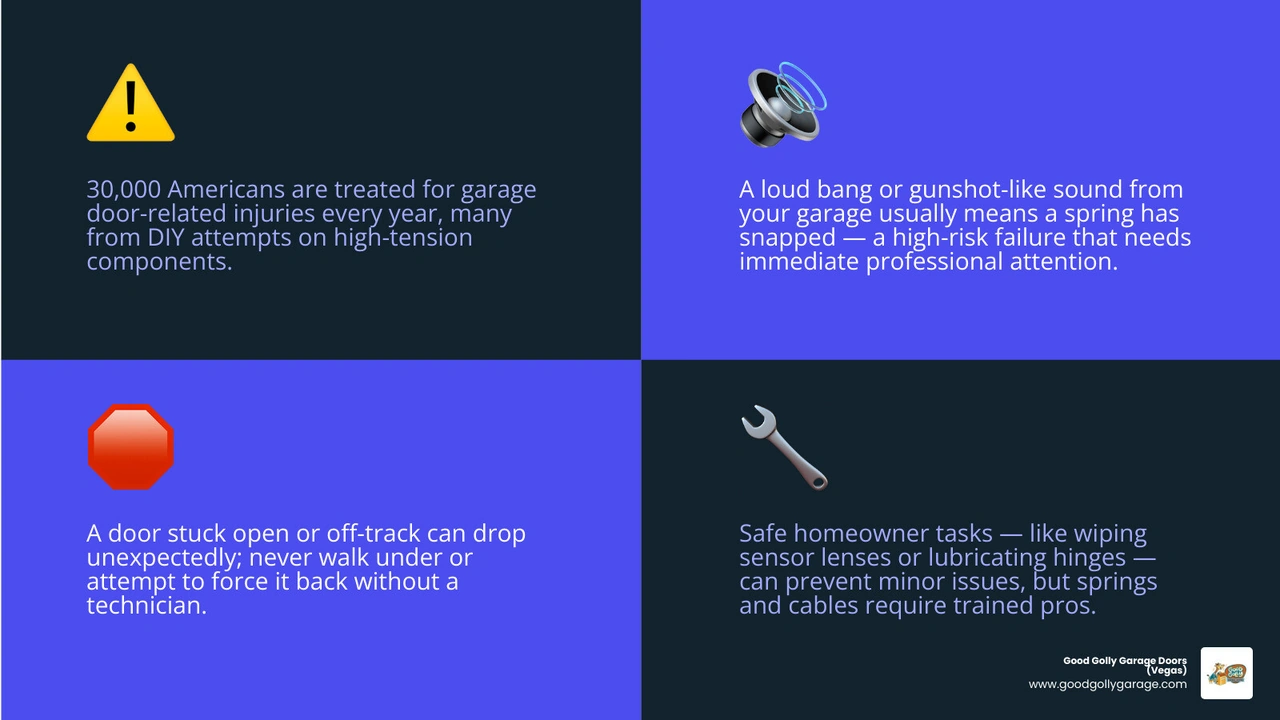
- You hear a loud bang or gunshot-like sound from the garage
- The door moves slowly, jerks, or reverses for no clear reason
- The opener motor runs but the door does not move
- Any structural panel is bent, buckled, or severely damaged
Safe to handle yourself:
- Replacing a dead remote battery
- Wiping dirt off photo-eye sensor lenses
- Clearing visible debris from the tracks
- Applying silicone-based lubricant to hinges and rollers
Your garage door is the largest moving part in your home — and in Las Vegas, the extreme desert heat, dust storms, and year-round heavy use put extra stress on every component in the system. When something goes wrong, it rarely stays a small problem for long. A single failing part puts additional strain on everything around it, and what starts as a grinding noise or a sluggish opener can escalate into a complete system failure — or a genuine safety emergency — faster than most homeowners expect. Around 30,000 Americans are treated for garage door-related injuries every year, and many of those incidents happen when someone tries to handle a high-tension component without the right tools or training.
I’m Jason Henderson, founder and CEO of Good Golly Garage Doors, and with years of experience leading service operations in the home services industry, I’ve seen how quickly a misread garage door problem can turn dangerous — which is exactly why I put together this guide on when to call a professional for garage door problems to help Las Vegas homeowners make that call with confidence.
Quick when to call a professional for garage door problems definitions:
- Garage door making grinding noise what it means
- Garage door shaking or vibrating during operation
- Signs your garage door needs repair
Red Flags: When to Call a Professional for Garage Door Problems
As homeowners, we often love the satisfaction of fixing things around the house. However, a garage door is not a typical weekend DIY project. When a system weighs anywhere from 100 to 400 pounds, a mechanical failure is a major safety hazard. Understanding the clear warning signs of structural and mechanical failure is the first step in protecting your home and family.
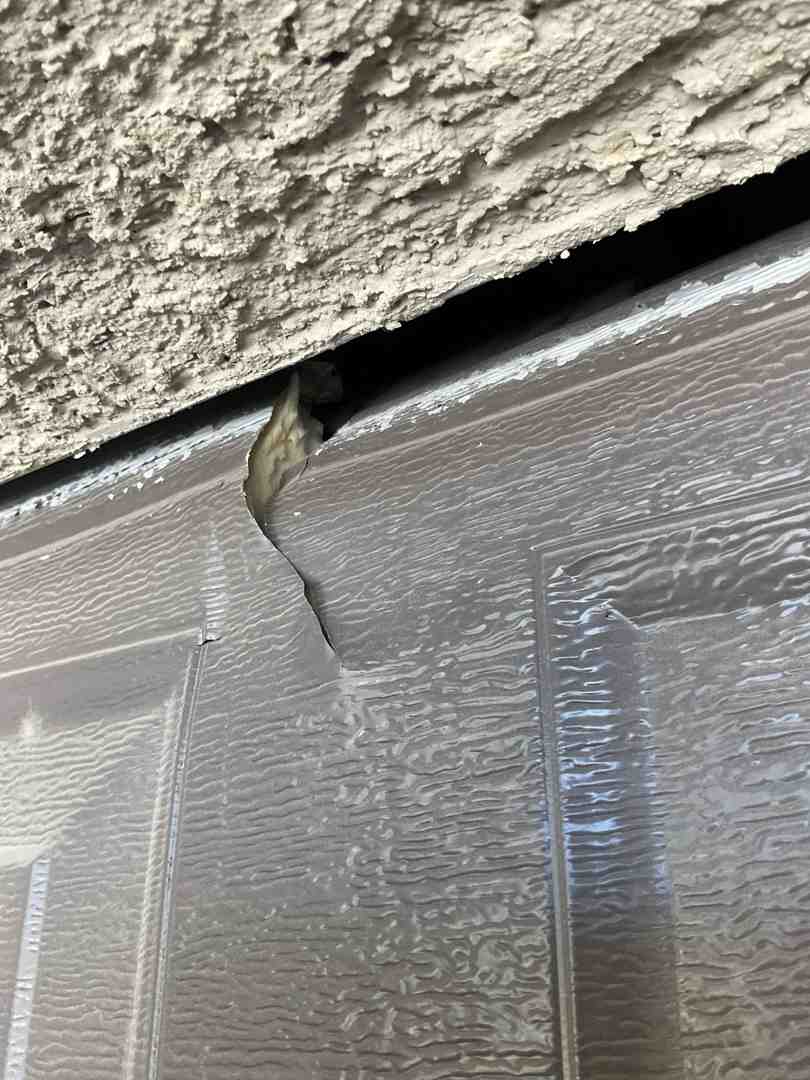
If your garage door is sagging, hanging at an angle, or shaking violently during operation, these are immediate red flags. Structural failures, such as bent or buckled panels, can ruin the door’s balance. When a door is unbalanced, it places immense stress on the opener motor and the high-tension springs. Over time, this extra strain can cause the entire system to fail catastrophically.
Another warning sign is a slow response time or erratic movement. If you press your wall button or remote and the door hesitates, moves in a jerky fashion, or takes twice as long as normal to open, the system is struggling. Ignoring these symptoms is like ignoring chest pain—it is an early warning of a major “cardiac event” for your garage door. To understand what these physical symptoms mean for your system’s health, read our guide on The Most Common Garage Door Problems and What They Actually Mean.
Identifying Sensor and Opener Malfunctions
Modern garage doors rely on advanced safety features, including photo-eye sensors located near the bottom of the tracks. These sensors project an invisible infrared beam across the opening. If anything breaks this beam while the door is closing, the safety mechanism triggers, and the door immediately reverses.
If your door refuses to close and the overhead opener lights flash repeatedly, your safety sensors are likely misaligned, dirty, or blocked. While wiping away a stray leaf or a spiderweb is a simple fix, sometimes the issue is electrical. Signal interference can also cause mysterious opener malfunctions.
For example, did you know that certain LED light bulbs installed in or near your garage can block your remote control signal? Many 12V LED carriage lights emit electromagnetic interference on the exact same frequency used by garage door remotes. If your remote only works during the day but fails at night when the outdoor lights turn on, LED interference is the prime suspect. Installing ferrite core rings on the light fixture wires can block this interference and restore your remote’s range. For a step-by-step breakdown of how to diagnose these electrical gremlins, check out our Garage Door Opener Troubleshooting Guide 2026.
Recognizing Structural and Track Misalignments
Your garage door tracks act as the highway for your door’s rollers. If those tracks become bent, warped, or misaligned, the rollers can easily bind or slip out entirely. Physical obstructions are a common cause of track damage. It only takes a misplaced leaf rake falling into the track or a piece of debris getting wedged in the runner to jam a roller.
If you attempt to force a stuck or misaligned door to close using the opener motor, you run the risk of stripping the internal nylon gears of the motor or bending the steel tracks completely out of shape. What could have been a simple adjustment can quickly turn into a major replacement. If you notice gaps between the rollers and the tracks, or if the tracks are visibly bent away from the garage wall, you need professional assistance. We highly recommend visiting our specialized page on Garage Door Track Repair to learn how we safely realign and secure damaged tracks.
High-Tension Hazards: Why Springs and Cables Are Too Dangerous for DIY
If there is one absolute rule in home maintenance, it is this: never attempt to repair or adjust garage door springs or cables on your own.
To lift a door that weighs up to 400 pounds, the garage door system relies on immense mechanical energy stored within the springs and transferred through the lift cables. This stored energy is incredibly powerful. If a spring snaps or a cable slips while you are working on it, that energy is released instantly. High-tension components can strike with enough force to tear through drywall, smash car windshields, or cause life-threatening bodily harm. Every year, around 1,500 emergency room injuries are caused by snapped springs or high-tension components striking homeowners. To fully understand the physical risks of these systems, please review our Garage Door Repairs Dangerous DIY Guide.
Understanding Spring Tension and When to Call a Professional for Garage Door Problems
Residential garage doors generally use one of two spring systems: torsion springs (mounted on a steel shaft directly above the door opening) or extension springs (mounted along the sides of the upper tracks).
Torsion springs are under the highest amount of tension. To adjust or install a torsion spring, a technician must use specialized steel winding bars to wind the spring to the precise tension required—typically requiring 30 to 40 quarter-turns. If a winding bar slips out of the winding cone during this process, the spring will unwind violently, spinning the steel bars with lethal force.
Most garage door springs are rated for approximately 10,000 cycles (one cycle is a single complete open and close). For an average family using the door 3 to 5 times a day, this translates to a lifespan of about 7 to 10 years. When a spring reaches the end of its life, it does not slowly stretch out; it snaps suddenly with a sound like a gunshot. If your spring has snapped, do not attempt to open the door, as the opener motor cannot handle the dead weight alone. Learn more about how we safely manage these repairs by reading our Garage Door Spring Repair Complete Guide or visit our dedicated Garage Door Spring Repair service page.
Handling Snapped Cables and When to Call a Professional for Garage Door Problems
The lift cables work in tandem with your springs, running from the bottom brackets of the door up to the cable drums at the top. These cables are rated for incredible tensile strength—typically between 1,800 and 2,200 pounds—because they carry the physical weight of the door as it moves.
Over time, exposure to moisture, dust, and friction can cause these steel cables to fray. A frayed cable is a ticking time bomb. If one cable snaps, the door will immediately lose its balance, causing it to hang at a dangerous 45-degree angle. This uneven weight distribution can pull the rollers completely out of the tracks, creating a severe crush hazard. If you notice loose, sagging, or frayed cables, keep everyone away from the door and contact a professional immediately. You can explore our expert solutions for this issue on our Garage Door Cable Repair page.
Safe Homeowner Maintenance vs. Professional Servicing
While heavy mechanical repairs must be left to experienced professionals, there are several simple preventative tasks that homeowners can safely perform to keep their doors operating smoothly.
| Maintenance Task | Safe for DIY? | Requires a Professional? |
|---|---|---|
| Replacing remote control batteries | Yes | No |
| Wiping photo-eye sensor lenses clean | Yes | No |
| Clearing leaves, dirt, and cobwebs from tracks | Yes | No |
| Tightening loose hinge bolts with a socket wrench | Yes | No |
| Applying silicone-based lubricant to metal rollers and hinges | Yes | No |
| Replacing worn bottom weatherstripping | Yes | No |
| Replacing snapped torsion or extension springs | No | Yes |
| Replacing frayed or broken lift cables | No | Yes |
| Realigning bent steel tracks | No | Yes |
| Repairing internal opener motor gears or logic boards | No | Yes |
| Balancing an uneven or heavy garage door | No | Yes |
By keeping up with safe homeowner tasks, you can prevent minor issues from turning into expensive breakdowns. For a complete checklist of seasonal care, refer to our Garage Door Tune Up Guide.
Safe DIY Maintenance Tasks for Homeowners
Performing basic visual inspections and light cleaning twice a year is the best way to extend the life of your garage door. Start by cleaning your tracks. Use a damp cloth to wipe away any built-up dirt, dust, or grease.
Next, inspect the hardware. The constant vibration of the door opening and closing can slowly loosen nuts and bolts over time. Use a standard socket wrench to gently snug up any loose hardware on the hinges and track brackets.
When it comes to lubrication, always use a high-quality silicone-based or lithium spray. Never use WD-40. While WD-40 is great for loosening rusted bolts, it is actually a degreaser, not a lubricant. It will quickly dry out, strip away existing grease, and attract abrasive desert dust and grime, which accelerates wear on your rollers and hinges. Gently spray the metal rollers, hinges, and springs every six months to keep them moving quietly.
Serious Problems That Require Expert Service
If your maintenance routine reveals issues beyond loose bolts or dirty tracks, it is time to call in the experts. Internal motor failures, stripped nylon gears, and complex track realignments require professional diagnostics.
For example, if your opener motor hums but the chain or belt does not move, the internal nylon gears inside the motor housing have likely stripped. Replacing these gears requires dismantling the opener unit and working with electrical wiring, which carries a risk of electrical shock and can easily void your manufacturer’s warranty. If you are experiencing structural or electrical issues, consult our Garage Door Service Guide 2026 to see how we handle complex system diagnostics.
Deciding to Repair or Replace Your Garage Door
When faced with a major garage door malfunction, many homeowners wonder whether it is better to repair the existing door or replace it entirely. A helpful rule of thumb is the 50 Percent Rule: if the cost of repairing your current door exceeds 50% of the cost of a brand-new door, a full replacement is usually the smarter long-term investment.
You should also consider the operational lifespan of your system. Most garage doors are designed to last 15 to 20 years. If your door is approaching this age and starting to require frequent repairs, upgrading to a modern, insulated model can save you money over time.
Environmental factors also play a major role in Las Vegas. While high humidity in other parts of the country can cause wooden doors to swell and absorb moisture, our intense desert heat and UV rays present a different challenge. The extreme heat can dry out lubricants rapidly, crack rubber weatherstripping, and cause metal components to expand and warp. Upgrading to a highly insulated steel door can protect your garage from temperature extremes and significantly lower your home’s energy bills. For a comprehensive breakdown of your options, read our Garage Door Repair vs Replacement Guide.
How Often to Schedule Professional Maintenance
Just like your car, your garage door requires regular professional servicing to stay in peak condition. We recommend scheduling a professional tune-up and safety inspection at least once a year.
During a professional maintenance visit, a trained technician will perform a comprehensive safety balance test, inspect all high-tension parts for hairline fractures, and ensure your auto-reverse safety features comply with modern standards. This preventative care is designed to catch minor wear and tear before it escalates into a sudden, expensive emergency. To see how routine service pays for itself over time, read about How a Maintenance Plan Prevents Costly Repairs and explore our primary Garage Door Maintenance page.
Frequently Asked Questions about Garage Door Problems
What immediate steps should I take if my garage door is stuck open or off-track?
If your garage door is stuck open or has slipped off its tracks, stop using the system immediately. Do not attempt to force the door closed by hand or by using the opener, as this can bend the tracks, damage the panels, or snap a cable.
First, clear the area of all people, pets, and vehicles to prevent injury if the door drops suddenly. Next, unplug the garage door opener from the ceiling outlet to prevent anyone from accidentally activating it. Finally, secure your home as best as possible and call for professional assistance. For urgent situations, we provide rapid-response dispatch through our Emergency Garage Door Repair service.
Why does my garage door remote only work at certain times?
If your remote control is inconsistent, the most common culprit is signal interference. As mentioned earlier, nearby LED light bulbs (especially cheap or unshielded bulbs in carriage lights) can emit electromagnetic frequencies that block the remote’s signal when the lights are turned on.
Other sources of interference include nearby home security systems, wireless routers, or even a neighbor’s new electronic device. To resolve this, you can try replacing your garage light bulbs with specialized, shielded LED bulbs designed specifically for garage door openers, or install ferrite core rings on the power leads of interfering appliances. If the issue persists, the receiver on your opener’s logic board may be failing. Learn more about diagnostic steps on our Garage Door Opener Repair page.
How common are garage door accidents and injuries?
Garage door accidents are far more common than most people realize. Nationally, between 20,000 and 30,000 Americans are injured in garage door accidents every single year. Over 12,500 of these injuries are severe enough to require emergency room treatment.
Pinching injuries—often caused by people placing their fingers between interlocking door panels while closing the door manually—result in finger amputations in over 7,000 cases each year. Additionally, over 2,000 injuries occur annually when individuals attempt to run under a closing door to “beat” the auto-reverse sensor. These statistics highlight why safety must always come first when dealing with a heavy, moving garage door.
Conclusion
Your garage door is a vital part of your home’s security, convenience, and curb appeal. While simple tasks like wiping your safety sensors or lubricating your hinges are perfectly safe to handle on your own, high-tension springs, frayed cables, and misaligned tracks require the specialized tools and training of a professional.
At Good Golly Garage Doors, we are proud to be a family-owned business serving the entire Las Vegas valley, including Summerlin, Henderson, North Las Vegas, Sun City, Boulder City, Anthem, Green Valley, and Paradise. Our team of trusted local technicians is dedicated to providing fast response times, transparent communication, and reliable workmanship to give you complete peace of mind.
Don’t wait for a minor squeak or a sluggish opener to turn into a dangerous emergency. If you suspect your garage door needs expert attention, Schedule Service with Good Golly Garage Doors today, and let us make sure your door stays operating safely and smoothly for years to come.

Need Garage Door Help ASAP?
We answer the phone 24/7 for emergency spring, track, panel, and opener repairs, so you can reach a real person any time. Our technicians arrive in clearly marked service vehicles carrying common replacement parts, and most jobs can be completed the same day. If the door appears unstable or unsafe, keep people and pets clear and let our team handle the repair.