
What Do Garage Door Cables Do and Why Are They Important?
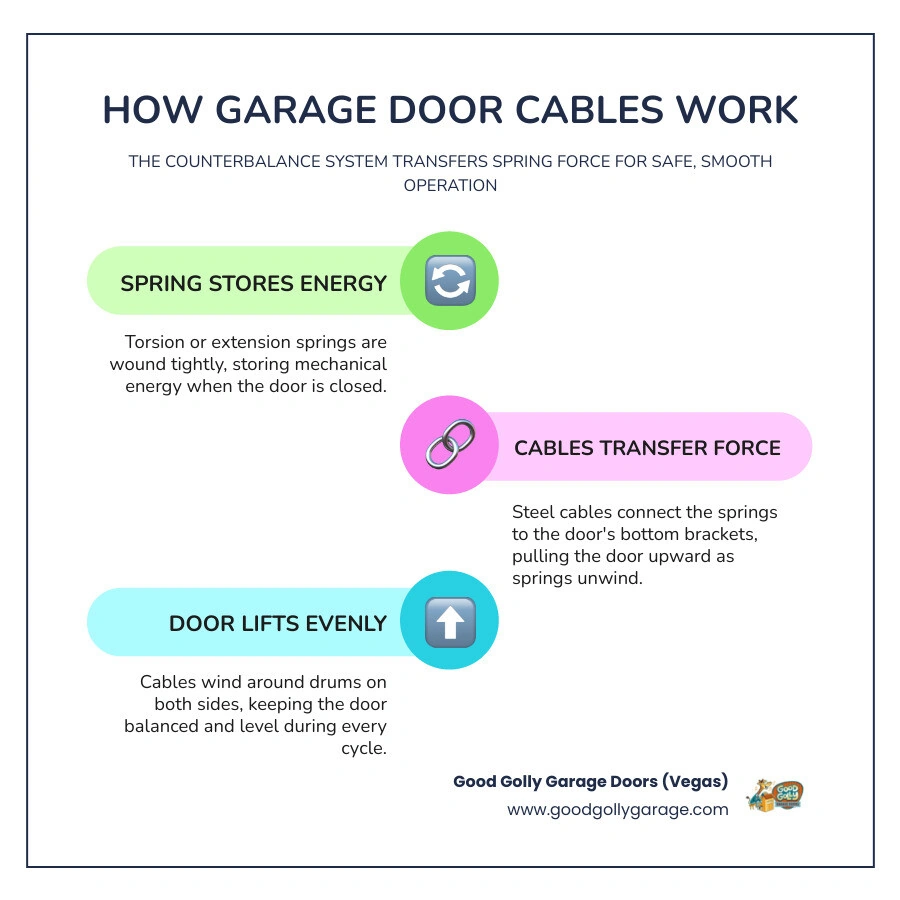
Garage door cables transfer the lifting force from the springs to the door, helping it open, close, and stay level.
Why Garage Door Cables Matter for Safe, Smooth Operation
Garage door cables transfer the lifting force from the springs to the door, helping it open, close, and stay level. They are important because a typical two-car door can weigh 150 to 400 pounds, and damaged cables can leave that weight unevenly supported. For homeowners needing Garage Door Cable Repair in Las Vegas, NV, signs such as fraying, rust, slack cable, or a crooked-moving door mean it is time to stop using the door and have the full counterbalance system checked.
Learn About Garage Door Repair | Schedule Garage Door Service
Lift cables do the working: they connect to the bottom of the door and work with torsion springs or extension springs to control movement. Safety cables have a different job in extension-spring systems: they run through the springs to contain a broken spring before it can fly loose.
A cable problem is rarely just a cable problem. Worn springs, misaligned tracks, damaged drums, and heavy daily use can all add strain. Good Golly Garage Doors is a licensed, family-owned company serving Las Vegas, Summerlin, Henderson, North Las Vegas, Sun City, and Boulder City with repair, maintenance, and 24/7 emergency service.
If your door is uneven, stuck, or showing cable wear, schedule garage door service in Las Vegas.
I am Jason Henderson, founder and CEO of Good Golly Garage Doors, and my experience leading service teams has taught me how important safe, dependable garage door systems are for homeowners. This guide explains What Do Garage Door Cables Do and Why Are They Important so you can spot concerns early and make informed decisions about your door.
What Do Garage Door Cables Do and Why Are They Important in Overhead Systems?
When you press your wall console or click your remote, you hear the electric opener hum into action. Many people assume the overhead motor is doing the heavy lifting. In reality, the opener merely acts as the director of traffic; the actual mechanical muscle comes from the counterbalance assembly, where heavy-duty steel cables do the heavy work.
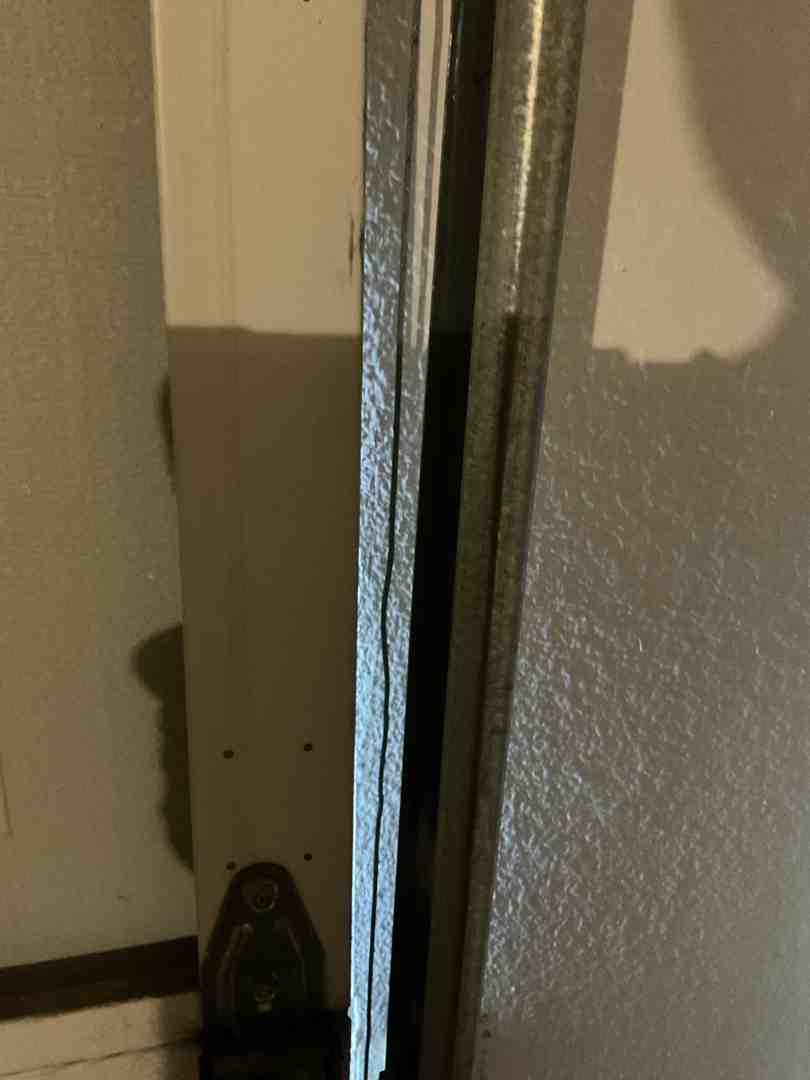
Without high-tension cables, an overhead door is deadweight. A typical residential door weighs anywhere from 150 to over 400 pounds depending on its size, insulation, and materials. Specialized aircraft-grade braided wire ropes link the door sections directly to the springs. Every time the door travels along its vertical and horizontal tracks, these cables wind around aluminum drums or glide over pulleys to bear the physical load. If you notice any strain or slippage, scheduling garage door cable repair in Las Vegas NV protects your entire mechanical setup from cascading failures.
Primary Function: What Do Garage Door Cables Do and Why Are They Important for Daily Operation?
The primary job of a garage door cable is force transfer. Counterbalance springs—whether torsion or extension—store immense mechanical potential energy. Torsion springs twist tightly on a shaft above the door opening, while extension springs stretch along the upper horizontal tracks. However, springs cannot lift the door on their own because they do not attach directly to the bottom panels.
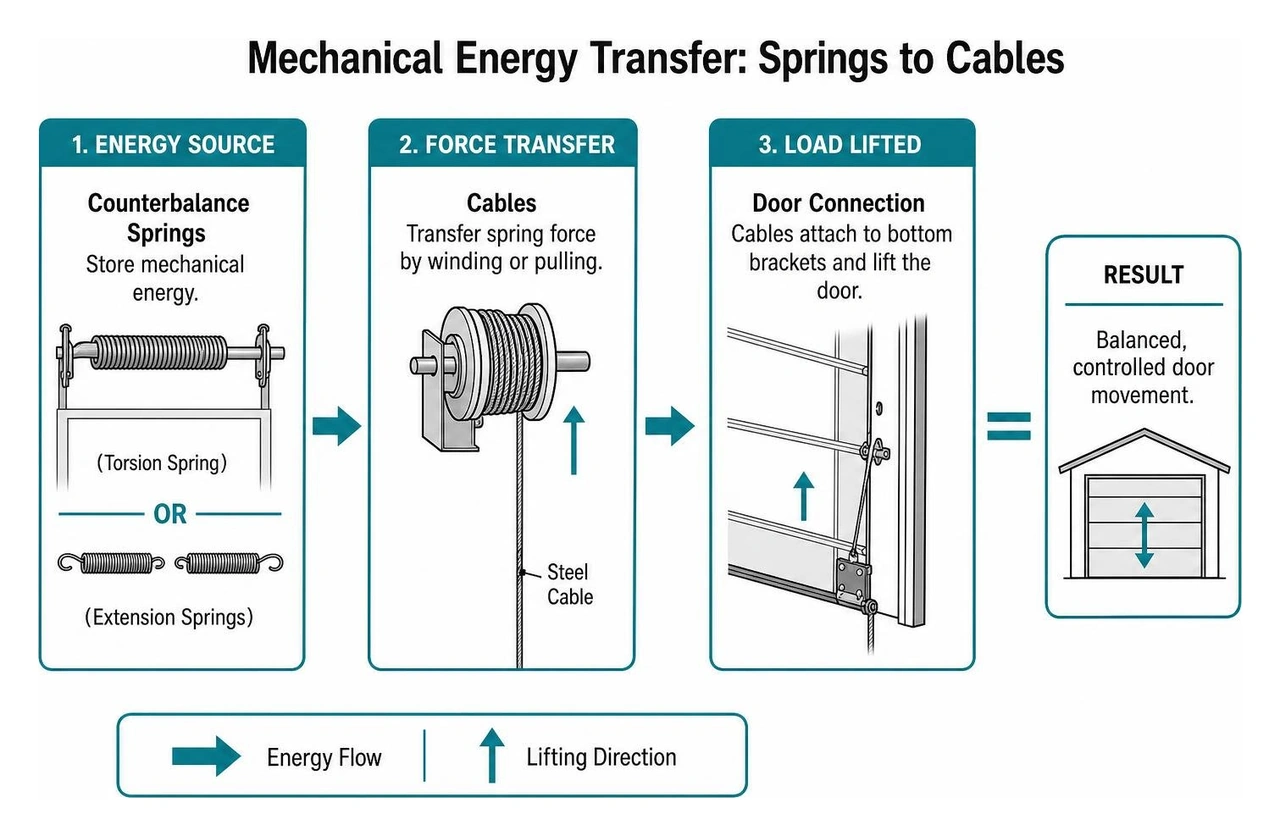
Cables serve as the physical bridge. Fastened securely to heavy-gauge bottom corner brackets, they travel upward to the spring assembly. As the springs release their stored energy, the cables wind around grooved aluminum drums or pull through precision pulleys. This action lifts the bottom corners in perfect synchronization, distributing hundreds of pounds of deadweight evenly across the framework so the door glides effortlessly along its tracks.
Safety and Stability: What Do Garage Door Cables Do and Why Are They Important Under High Tension?
Beyond basic operation, cables provide critical safety and structural balance. Because overhead sectional doors consist of hinged panels moving on tracks, equal tension on both sides is mandatory.
- Preventing Free-Fall Collapses: If a cable snaps or slips off its drum while the door is elevated, the balance is lost. The unsupported side can drop violently, wedging the door crookedly inside the tracks and putting families and vehicles below at severe risk.
- Preserving Track and Roller Alignment: Equal tension keeps rollers centered smoothly within the track channels. When cables lose tension, rollers bind against steel track edges, warping track sections and causing roller stems to pop out.
- Safeguarding the Motor: When cables fail, the electric opener suddenly absorbs hundreds of pounds of deadweight it was never designed to hold, which can quickly burn out drive gears and internal circuit boards.
Types of Garage Door Cables and How They Operate
Garage door cables are engineered specifically for the extreme physical demands of overhead assemblies. Most residential cables range in diameter from 1/8 inch to 3/16 inch and are fabricated from galvanized high-carbon steel or stainless steel aircraft wire rope. The internal wire construction commonly uses either a 7×7 pattern (seven strands composed of seven individual wires) for sturdy drum winding or a 7×19 pattern (seven strands of nineteen wires) for maximum flexibility around tight pulleys.
| Cable Type | Location & Setup | Primary Function | Failure Risk If Damaged |
|---|---|---|---|
| Torsion Spring Lift Cables | Bottom brackets to overhead torsion drums | Winding around grooved drums to transfer rotational torque and lift door weight | Door hangs crookedly, jams tightly in track, or drops rapidly on one side |
| Extension Spring Lift Cables | Bottom brackets through track pulleys | Running over pulleys to transfer pulling force as extension springs contract | Extreme door binding, bent tracks, and complete loss of vertical lift |
| Safety Retention Cables | Threaded through the hollow center of extension springs | Passive containment line securing springs to overhead framing | Broken spring coils can become high-velocity projectiles across the garage |
Torsion Spring Lift Cables
In a torsion spring system, the springs are mounted on a stationary steel torsion shaft directly above the door header. At both ends of this shaft sit grooved aluminum cable drums.
Torsion lift cables are anchored to the bottom brackets of the lowest door panel, routed straight up the wall, and secured into specialized slots on each drum. When the door opens, the torsion spring unwinds, spinning the shaft and winding the cables evenly into the drum grooves. Because torsion systems lift both sides synchronously from a central live shaft, they deliver exceptional balance, durability, and smooth performance for heavy residential doors.
Extension Spring Cables and Pulley Assemblies
Extension spring systems use a different mechanical approach. The springs mount horizontally above the upper tracks on both sides of the door and stretch backward into the garage when the door closes.
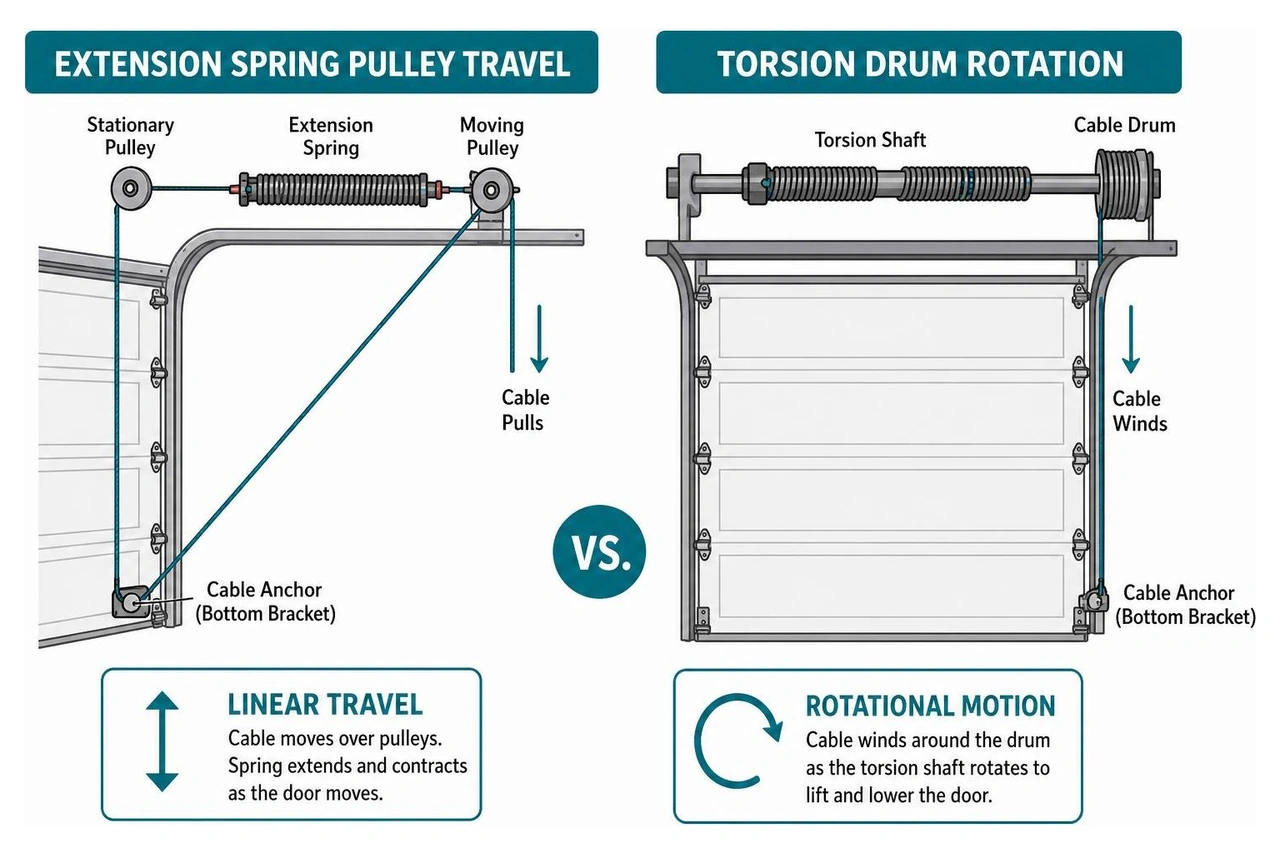
Lift cables in these setups attach to the bottom corner brackets, travel vertically up to a stationary pulley above the door opening, and loop around a movable pulley attached to the front of the extension spring before anchoring to the track framework. As the door closes, the extending springs pull against the cables, storing tension. When opening, the springs contract, pulling the cables to hoist the door. Because extension setups feature multiple moving pulleys and connection points, getting prompt Las Vegas garage door cable repair is vital whenever you spot cable slack, uneven stretching, or pulley wobbling.
Safety Retention Cables
Safety retention cables are a non-negotiable safety feature on all extension spring systems. While lift cables actively move the door, safety cables serve a vital passive containment purpose.
Extension springs operate under extreme mechanical tension, repeatedly stretching and contracting during every cycle. When an extension spring eventually reaches metal fatigue and snaps, it releases all of its stored mechanical energy in a fraction of a second. Without safety cables, heavy steel spring fragments can rocket through drywall, shatter vehicle windows, or cause catastrophic bodily injury.
Safety retention cables run straight through the hollow center core of each extension spring and anchor firmly to the ceiling framing at both ends. If the spring breaks, the safety cable safely catches and contains the whipping coils, completely eliminating projectile hazards in compliance with DASMA 110 industry safety standards.
Warning Signs of Failing or Damaged Garage Door Cables
Garage door cables rarely fail without warning. Because they are constructed from dozens of interwoven steel strands, wear develops gradually over thousands of cycles before a total snap occurs. Performing regular visual checks from the ground allows you to spot trouble before an emergency takes place.
Physical Damage and Cable Fraying
The most direct indicator of cable failure is visible physical degradation along the steel wire rope. Inspect the entire length of the cable, paying close attention to where it connects to the bottom bracket post and where it spools over the overhead drum:
- Strand Separation and Fraying: Look for small, individual wire “whiskers” sticking out from the braided bundle. When outer strands break, the remaining core must carry the entire load, accelerating total failure.
- Rust and Corrosion: While galvanized coatings protect against moisture, exposure to humidity, vehicle road grime, or standing floor water causes oxidation. Rust hardens the wire, causing individual strands to snap under flexural tension.
- Kinks and Crushed Sections: If a cable jumps its drum groove or catches on a track bolt, it forms sharp kinks that permanently weaken the steel structure.
Operational Imbalances and Uneven Movement
Mechanical warning signs often appear during daily operation before physical damage is easily spotted. Watch and listen to your door as it travels:
- Crooked Door Travel: If one cable stretches, slips, or unravels faster than the other, the door will hang noticeably higher on one side during opening and closing.
- The Door Slams Down Quickly: When lift cables lose tension or slip off the drums, the counterbalance system cannot support the door’s weight, causing it to drop heavily during the final few feet of descent.
- Jerky, Shaky Motion: If a cable has jumped out of its drum groove, it will wrap irregularly, causing the door to shudder, shimmy, or squeak loudly as it moves.
- Motor Resistance and Humming: If an opener motor strains, hums without moving, or reverses unexpectedly, the safety sensors and force limits may be responding to the deadweight created by loose or bound cables. In these scenarios, calling for professional Las Vegas garage door repair ensures the system is evaluated safely.
Why Garage Door Cables Fail and How to Maintain Them
Garage door cables undergo rigorous stress every single day. A standard residential garage door cycles roughly 1,500 to 2,000 times per year. In regions like Southern Nevada, environmental conditions add extra stress to moving garage hardware.
Common Causes of Premature Cable Wear
Understanding why cables deteriorate helps homeowners take proactive steps to safeguard their garage systems:
- Intense Desert Heat and Dry Dust: In Las Vegas, extreme summer heat thins out conventional lubricants, while fine desert dust and grit blow into the garage, sticking to greasy components. This creates an abrasive paste that wears down cable strands and drum grooves.
- Spring Fatigue and Unbalanced Tension: As counterbalance springs age, they lose their calibrated lifting torque. When springs weaken, the lift cables bear excessive deadweight friction, speeding up wear.
- Misaligned Pulleys and Worn Drums: If an overhead cable drum develops burrs or track pulleys wear out their ball bearings, the cable rubs against sharp metal edges rather than tracking smoothly in its designated groove.
- Floor Moisture and Chemical Exposure: Standing water near the garage threshold from car washes or pool chemical storage can corrode the bottom brackets and cable loops, degrading the steel.
Essential Preventative Maintenance and Inspection Habits
Routine preventative care extends the working life of your counterbalance system and prevents unexpected breakdowns:
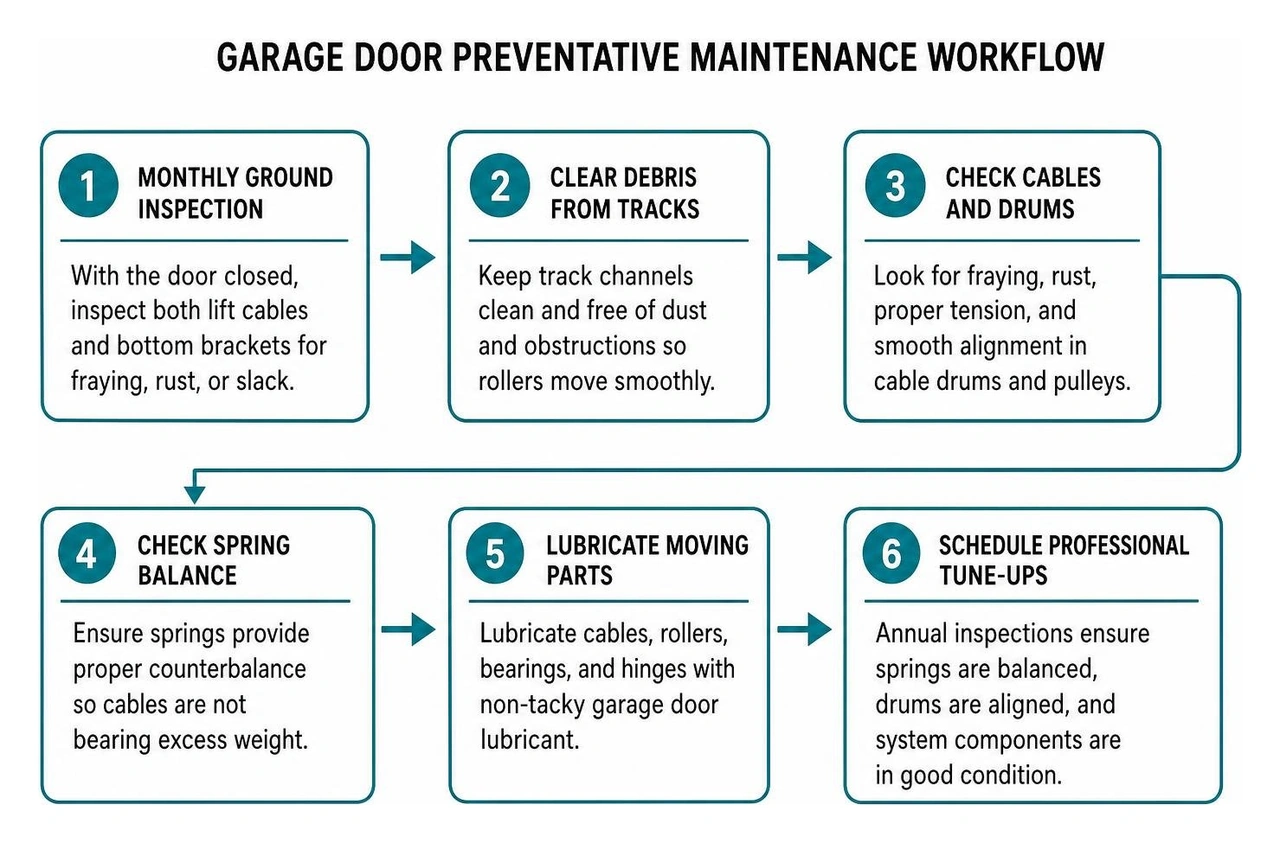
- Conduct a Monthly Ground Inspection: With the door closed, visually inspect both cables from the garage floor. Check the bottom brackets for fraying, rust spots, or slack.
- Clear Debris from Tracks: Keep the track channels clean and free of dust buildup or obstructions so the rollers glide without catching and jarring the cables.
- Schedule Professional Tune-Ups: An annual inspection by a trained technician ensures that spring tension is balanced, drums are aligned, and bearings are lubricated with proper non-tacky garage door formulations. Booking Las Vegas garage door maintenance keeps your entire overhead system running smoothly year-round.
Frequently Asked Questions About Garage Door Cables
How long do garage door cables typically last?
Under standard residential use, hot-dip galvanized garage door cables typically last between 7 and 15 years, or roughly 10,000 to 15,000 operational door cycles. Extension spring lift cables tend to have a shorter lifespan of 5 to 10 years due to the friction of moving over pulleys, whereas torsion spring cables generally last 7 to 15 years. Environmental factors like high heat, blowing dust, lack of lubrication, or excessive daily cycling can shorten this timeframe.
Why should both garage door cables be replaced at the same time?
Both lift cables are installed on the same day and endure the exact same physical load, stress, and operational cycle count. When one cable snaps or frays, the opposite cable is almost certainly at the very end of its service life. Replacing only one cable leads to uneven tension, as a brand-new cable will not have the same mechanical stretch as a worn one. Installing a matched pair guarantees synchronized movement, proper balance, and dependable operation.
What should I do if a garage door cable snaps while the door is moving?
If a cable snaps while the door is in motion, stop using it immediately:
- Clear the Entire Area: Keep family members, pets, and vehicles away from the garage door opening.
- Do Not Pull the Emergency Cord: Never pull the red emergency release cord on a crooked or partially raised door with a snapped cable. Releasing the opener carriage can cause the unsupported door to crash down under full deadweight.
- Do Not Attempt Manual Operation: Never try to force, push, or straighten a crooked door back into its tracks by hand.
- Call a Certified Professional: Contact a professional garage door technician equipped with winding bars, locking clamps, and proper safety equipment to secure the door and perform repairs.
Conclusion
Garage door cables are the unsung heroes of your home’s overhead door system. By transferring immense mechanical energy from the counterbalance springs to the door panels, these high-strength steel wire ropes make opening and closing a multi-hundred-pound door safe, smooth, and effortless. Understanding the warning signs of cable wear—such as strand fraying, rust buildup, loose drum alignment, and uneven movement—empowers you to address issues before an unexpected failure leaves your car trapped or compromises home security.
Because counterbalance springs and lift cables remain under extreme tension at all times, system repairs require specialized tools and expert training. At Good Golly Garage Doors, our friendly, family-owned team is committed to providing reliable, customer-first service across Las Vegas, Summerlin, Henderson, North Las Vegas, Sun City, and Boulder City. Whether you need a routine seasonal inspection, precision drum alignment, or 24/7 emergency repair, our certified technicians arrive promptly with fully stocked trucks to restore your peace of mind.
Protect your home and ensure your garage door operates dependably every single day. If you notice sagging cables, unusual noises, or uneven travel, contact our team today to schedule garage door service in Las Vegas.

Need Garage Door Help ASAP?
We answer the phone 24/7 for emergency spring, track, panel, and opener repairs, so you can reach a real person any time. Our technicians arrive in clearly marked service vehicles carrying common replacement parts, and most jobs can be completed the same day. If the door appears unstable or unsafe, keep people and pets clear and let our team handle the repair.