
What Does A Garage Door Tune Up Include? 2026 Expert Guide
Discover what does a garage door tune up include with our complete Las Vegas maintenance guide covering safety checks, lubrication, and professional tune-up…
What a Garage Door Tune-Up Includes — and Why It Matters for Las Vegas Homeowners
What does a garage door tune up include is a fair question for any homeowner who wants to stay ahead of costly breakdowns — and the short answer is this:
A professional garage door tune-up typically covers:
- Visual inspection of all components — springs, cables, rollers, tracks, hinges, and hardware
- Hardware tightening — bolts, brackets, and fasteners that loosen over time from daily vibration
- Precision lubrication — applying silicone or lithium-based lubricant to rollers, springs, hinges, and bearings
- Balance and alignment check — manually testing the door to confirm it holds position and moves evenly
- Safety sensor testing — verifying photo-eye sensors detect obstructions and trigger correctly
- Auto-reverse and force limit adjustment — confirming the opener reverses properly and doesn’t strain the motor
- Weather seal inspection — checking bottom, side, and top seals for gaps, cracks, or pest entry points
- Written report — a documented summary of findings and any recommended follow-up work
Most professional tune-ups cover 25 to 32 checkpoints and take between 45 and 90 minutes for a standard residential door.
Here in Las Vegas, that list matters even more than it does in milder climates. Desert heat, relentless dust storms, and the sheer number of daily door cycles all accelerate wear on springs, rollers, and seals. A door that looked fine in spring can develop real problems by summer. Most homeowners don’t think twice about their garage door — until it stops working at the worst possible moment.
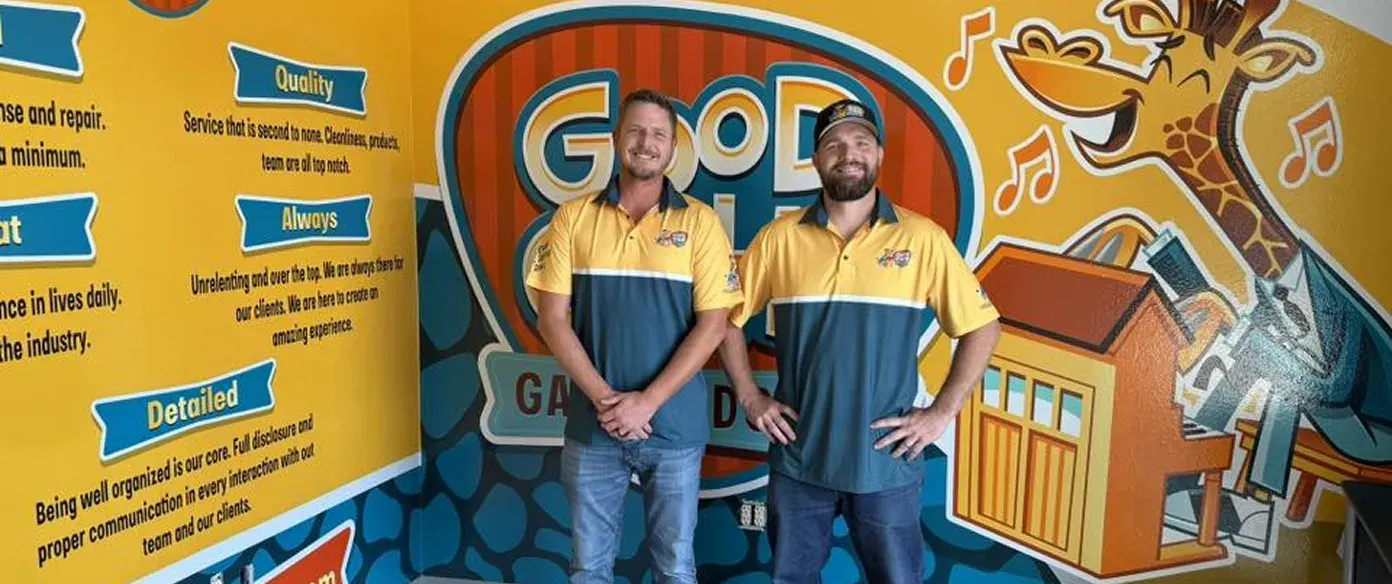
I’m Jason Henderson, founder and CEO of Good Golly Garage Doors, and I’ve built my career around understanding exactly what does a garage door tune up include and what separates a thorough maintenance visit from a rushed one. In the sections below, I’ll walk you through every component of a professional tune-up so you know precisely what to expect — and what to ask for.

Relevant articles related to what does a garage door tune up include:
What Does a Garage Door Tune-Up Include?
At Good Golly Garage Doors, we treat a tune-up like an oil change for your home’s largest moving part. Your garage door works hard, opening and closing thousands of times a year. In our dry, dusty Nevada environment, airborne grit combines with intense heat to create a harsh operating environment. When we perform a professional tune-up, we don’t just spray some oil and call it a day; we execute a comprehensive 26-point inspection designed to catch minor wear before it turns into an emergency.
This systematic approach covers everything from the heavy-duty mechanical elements to the delicate electronic safety systems. By looking at the system as a whole, we can ensure that every part works in perfect harmony, reducing strain on your opener and extending the overall lifespan of your door. For a complete look at how to care for your system year-round, check out our Garage Door Maintenance Complete Guide.
Below is a detailed breakdown of the primary phases involved in a professional tune-up.
Mechanical Inspection and Hardware Tightening
Every time your garage door opens and closes, the entire system vibrates. Over months of heavy use, this continuous movement naturally loosens the nuts, bolts, and screws holding your door together. If left unaddressed, loose hardware causes parts to shift out of alignment, leading to uneven wear, loud grinding noises, and eventual mechanical failure.
During the mechanical inspection, we meticulously inspect and tighten:
- Hinges and Brackets: We check for hairline cracks in the metal and tighten the fasteners holding the hinges to the door panels.
- Track Fasteners: We secure the brackets that mount the steel tracks to your garage walls and ceiling, preventing track warping or widening.
- Torsion Brackets: We examine the heavy-duty brackets holding the spring system to the wall, ensuring they remain solidly anchored.
This simple process of tightening and securing hardware dramatically reduces system vibration, resulting in a much quieter, smoother ride every time you push the button.
Precision Lubrication of Moving Parts
Lubrication is the lifeblood of a healthy garage door system, but there is a right way and a wrong way to do it. One of the most common mistakes we see homeowners make is spraying WD-40 all over their tracks and rollers.
WD-40 is actually a solvent, not a true lubricant. It strips away existing protective grease and leaves behind a sticky residue that acts like a magnet for desert dust and sand. This creates an abrasive grinding paste that accelerates component wear.
During a professional tune-up, we use high-quality, professional-grade silicone or lithium-based lubricants. We apply thin, targeted coats to:
- Rollers: We lubricate the steel or nylon roller bearings (never the track surface itself, as this causes the rollers to slide rather than roll).
- Springs: We coat the entire length of the torsion springs to reduce friction between the coils as they wind and unwind.
- Hinges and Bearings: We apply lubricant to the pivot points on all hinges and the end-bearing plates to ensure silent, low-resistance rotation.
Balance and Alignment Calibration
A garage door that is out of balance puts immense strain on your automatic opener, which can lead to premature motor burnout. To test the balance, we temporarily disengage the automatic opener and lift the door manually.
A perfectly balanced garage door should require only 8 to 15 pounds of force to lift and should stay in place when left halfway open. If the door falls shut or shoots upward, the spring tension is incorrect and must be carefully calibrated.
Additionally, we check the alignment of the vertical and horizontal tracks. We use a professional level to verify that the vertical tracks are perfectly plumb and that the horizontal tracks angle slightly upward toward the back of the garage. This slight angle ensures the door remains stable and secure when fully open.
Critical Safety Checks and Opener Testing
A garage door is the heaviest moving object in your home, and it can pose a significant safety risk if its built-in safety mechanisms fail. Federal safety regulations (such as UL 325) mandate that all automatic garage door openers include safety features designed to prevent entrapment and injury. A major component of what does a garage door tune up include is verifying that these safety systems function flawlessly.
We take safety seriously at Good Golly Garage Doors, especially in busy household environments where children and pets are constantly running around. To learn more about our dedicated local services, read about our Garage Door Service Summerlin NV options.
Photo-Eye Sensor Alignment
Your garage door opener relies on two photoelectric safety sensors located a few inches off the garage floor on either side of the door. These sensors project an invisible infrared beam across the opening. If anything breaks this beam while the door is closing, the door must immediately stop and reverse to the fully open position.
During our safety check, we:
- Clean the Lenses: Dust and wind-blown dirt from Las Vegas storms frequently coat these lenses, causing the door to reverse randomly (often accompanied by flashing lights on the opener motor).
- Check the Alignment: We verify that the sending and receiving sensors are perfectly aligned. Solid green and yellow lights typically indicate a healthy connection, while blinking lights signal misalignment.
- Test the System: We physically block the beam with an object while the door is closing to ensure the auto-reverse triggers instantly.
Auto-Reverse and Force Limit Adjustments
Even if the photo-eye sensors are working, the opener must have a mechanical backup system. If the door physical contacts an object, it must detect the resistance and reverse immediately.
To test this, we perform the industry-standard “2×4 test.” We place a solid block of wood flat on the garage floor directly under the door’s path and activate the close cycle. When the door strikes the wood, it should reverse within two seconds. If it presses down hard on the block without reversing, the opener’s force limits are set too high, which can cause serious property damage or injury. We adjust these limits to ensure the motor operates safely and efficiently.
Signs Your Las Vegas Home Needs a Garage Door Tune-Up
How do you know when it is time to schedule a maintenance visit? While we recommend annual service, our local climate can sometimes accelerate wear, making more frequent tune-ups necessary.
Our intense Summerlin and Henderson summer heat dries out lubricants quickly, while seasonal windstorms blow fine desert dust into tracks and bearings, creating friction.
If you notice any changes in how your door behaves, don’t wait for your annual appointment. You can keep track of your door’s condition between visits by using our Garage Door Maintenance Checklist for Homeowners.
Understanding What Does a Garage Door Tune-Up Include for Noisy Systems
If your garage door sounds like a screaming metal monster every time you open it, it is trying to tell you something. Common noises include:
- Grinding or Screeching: This usually indicates dry metal-on-metal contact. The bearings inside your rollers or pulleys are likely dry and wearing down.
- Popping or Banging: This sound often points to binding spring coils or worn hinges that are catching as the door panels bend.
A professional tune-up addresses these issues directly by cleaning out abrasive dust, replacing worn rollers, and applying specialized lubricants to eliminate metal friction.
Recognizing Sluggish or Jerky Movement
Your garage door should open and close with a smooth, continuous motion. If you notice the door moving slower than usual, vibrating heavily, or jerking as it travels along the tracks, it is likely struggling against friction or dealing with spring fatigue.
Jerky movement can also indicate that the tracks have shifted out of alignment, causing the rollers to bind. A professional tune-up resolves this by resetting the track alignment and balancing the door’s weight.
Why Professional Maintenance Beats DIY for High-Tension Systems
While minor tasks like sweeping out your tracks or wiping down your door panels are great DIY projects, a complete garage door tune-up is best left to trained professionals. Your garage door system relies on heavy-duty components operating under extreme physical tension. Attempting to adjust these parts without specialized tools and training can lead to catastrophic failure, property damage, or severe injury.
To understand how professional care fits into your long-term home maintenance plan, read our guide on How Often Should You Service Your Garage Door.
The table below highlights the differences between what you can safely handle yourself and what requires our team’s expertise:
| Maintenance Task | Safe for DIY? | Requires Professional Expertise? | Why? |
|---|---|---|---|
| Cleaning tracks and wiping down panels | Yes | No | Simple task; no safety risks involved. |
| Clearing debris from photo-eye sensors | Yes | No | Simple cleaning; maintains sensor safety. |
| Tightening loose hinge bolts | Yes | No | Requires basic hand tools; safe if springs aren’t touched. |
| Lubricating rollers and hinges | Yes | No | Safe if using correct silicone-based lubricants. |
| Adjusting torsion spring tension | No | Yes | Extreme tension; high risk of severe injury. |
| Replacing lift cables | No | Yes | Connected to bottom brackets under extreme spring tension. |
| Aligning and plumbing tracks | No | Yes | Requires precise leveling to prevent door binding. |
| Calibrating opener force limits | No | Yes | Requires testing and adjustment to meet safety standards. |
The Dangers of High-Tension Springs and Cables
The torsion springs located above your closed garage door store an immense amount of energy. They are wound tightly to support the weight of a door that can weigh anywhere from 150 to over 400 pounds. The steel lift cables attached to the bottom brackets are under this same high tension.
If a cable snaps or a spring unwinds unexpectedly during a DIY adjustment, the metal can whip with enough force to break bones, cause severe lacerations, or worse. Our professional technicians have the specialized winding bars, tension gauges, and safety training required to service these high-tension components safely.
Knowing What Does a Garage Door Tune-Up Include to Protect Your Warranty
Many modern garage doors and automatic openers come with manufacturer warranties that cover parts and motor failures for several years. However, these warranties often include a clause stating that the system must be maintained regularly by a experienced professional.
If you attempt a DIY repair or skip maintenance altogether, you could void your warranty. Keeping detailed records of your professional tune-ups from Good Golly Garage Doors ensures that your warranty remains intact, protecting you from unexpected out-of-pocket costs down the road.
Frequently Asked Questions About Garage Door Tune-Ups
How often should I get my garage door tuned up in Las Vegas?
For most homes in Las Vegas, Anthem, and Green Valley, we recommend scheduling a professional tune-up once per year. However, if your garage door serves as the primary entrance to your home (cycling four or more times daily), or if your neighborhood experiences frequent dust storms, scheduling a tune-up every six months (in the spring and fall) is highly beneficial.
How long does a professional garage door tune-up take?
A standard, comprehensive residential garage door tune-up typically takes between 45 and 90 minutes. This gives our technician plenty of time to run through our complete 26-point checklist, perform precision lubrication, adjust your track alignment, and run all necessary safety tests.
What is the difference between a tune-up and a repair?
A tune-up is proactive, preventative maintenance performed on a fully functioning door to keep it running smoothly and prevent future breakdowns. A repair is reactive service scheduled after a component (like a spring, cable, or roller) has already broken or failed, rendering the door inoperable.
Conclusion
Your garage door is an essential part of your home’s security, convenience, and curb appeal. Investing in regular maintenance is the smartest way to prevent unexpected breakdowns, extend the life of your equipment, and keep your family safe.
At Good Golly Garage Doors, we are proud to serve our neighbors throughout Las Vegas, Summerlin, Henderson, North Las Vegas, Paradise, and Sun City. As a licensed, family-owned company, we provide the honest, dependable service you deserve.
Don’t wait for a broken spring to leave you stranded in the desert heat. Contact us today to Schedule Garage Door Maintenance in Las Vegas and enjoy the peace of mind that comes with a perfectly tuned door!

Need Garage Door Help ASAP?
We answer the phone 24/7 for emergency spring, track, panel, and opener repairs, so you can reach a real person any time. Our technicians arrive in clearly marked service vehicles carrying common replacement parts, and most jobs can be completed the same day. If the door appears unstable or unsafe, keep people and pets clear and let our team handle the repair.