

A Quick Start Guide to Making Your Garage Door More Secure
Knowing how to make your garage door more secure is one of the most practical steps you can take to protect your home.
Your Garage Door Might Be an Open Invitation — Here’s How to Change That
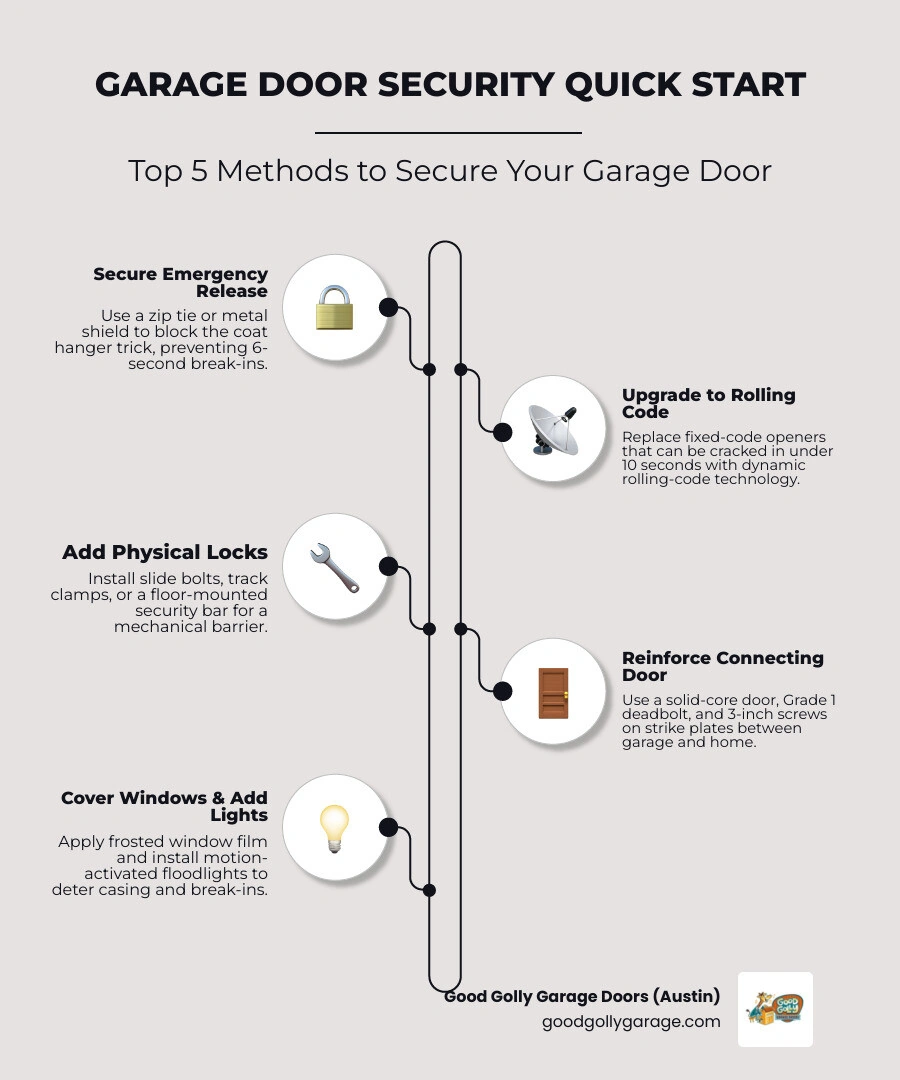
Knowing how to make your garage door more secure is one of the most practical steps you can take to protect your home. Here’s a quick overview of the most effective methods:
- Secure the emergency release cord with a zip tie or metal shield to stop the “coat hanger trick”
- Upgrade to a rolling-code opener to prevent signal grabbing on older fixed-code units
- Add physical locks such as slide bolts, track clamps, or a floor-mounted security bar
- Reinforce the door between your garage and home with a solid core, deadbolt, and heavy-duty strike plate
- Cover garage windows with frosted film so burglars can’t case what’s inside
- Install motion-activated lighting and a security camera near the garage entry
- Keep the garage door closed even when you’re home and working nearby
- Switch from a visor-mounted remote to a keychain remote so it doesn’t get stolen from your car
About 9% of all residential break-ins happen through the garage, and with 1.5 million home burglaries occurring across the U.S. each year, the garage is one of the most overlooked weak points on a property. Many of these incidents don’t involve sophisticated tools — just an unlocked side door, an open garage, or a 30-year-old opener that a cheap scanner can crack in under 10 seconds. The good news is that most of the fixes are simple, affordable, and something any homeowner in Austin, TX can act on today.
I’m Jason Henderson, founder and CEO of Good Golly Garage Doors, and securing garage entry points is something my team works on every day across Austin and the surrounding communities. My experience leading garage door professionals through hundreds of service calls gives me a front-row view of exactly how and where garage doors fail — and what it takes to fix them so they hold up against real-world threats. In the sections below, I’ll walk you through every layer of garage door security, from fast zero-cost habits to smart hardware upgrades worth considering.
How to make your garage door more secure terms to learn:
Understanding Common Garage Vulnerabilities and Break-In Methods
Before we look at solutions, we need to understand how intruders target garages. Garages are attractive to criminals for two major reasons: they store valuable items like tools, vehicles, and electronics, and once an intruder steps inside, they are completely shielded from the view of neighbors and street traffic.
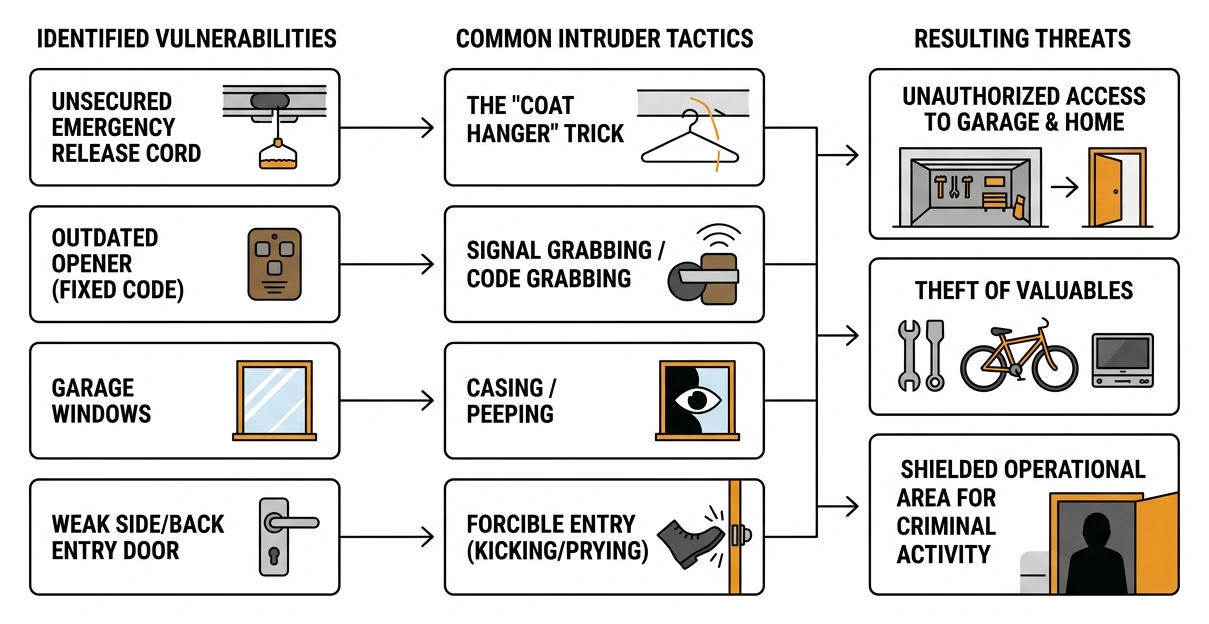
Many home burglaries stem from simple, predictable weaknesses in a home’s perimeter. When an entry point is left unguarded, a break-in can take less than a minute.
How Burglars Exploit Unsecured Garage Entry Points
In our work across Austin, Round Rock, and Cedar Park, we frequently see four main attack vectors:
- Unlocked Side Service Doors: Secondary access points account for 58% of garage burglaries. Homeowners often lock their front doors religiously but forget to lock the garage side service door.
- Garage Window Casing: Windows at eye level allow intruders to peek inside, audit high-value equipment, and check whether a vehicle is present. Clear glass also allows thieves to see where the emergency release cord hangs.
- Manual Lifting and Panel Prying: Burglars check whether a door can be manually forced or wedged open. If weather seals are worn or degraded by extreme heat, prying open a gap at the top panel becomes significantly easier.
- Signal Spoofing and Code Grabbing: Older garage door openers manufactured before 1997 rely on static dip-switch codes. Intruders equipped with cheap code-grabbing devices can scan and replicate these fixed signals in under ten seconds.
Understanding these vulnerabilities helps us build a multi-layered defense strategy.
Practical DIY Strategies on How to Make Your Garage Door More Secure
You don’t need a massive budget to boost your garage security dramatically. Several high-impact improvements take just a few minutes and require minimal tools. For a comprehensive overview of home protection techniques, review our guide on Garage Door Security Tips.
Securing the Emergency Release Cord and How to Make Your Garage Door More Secure
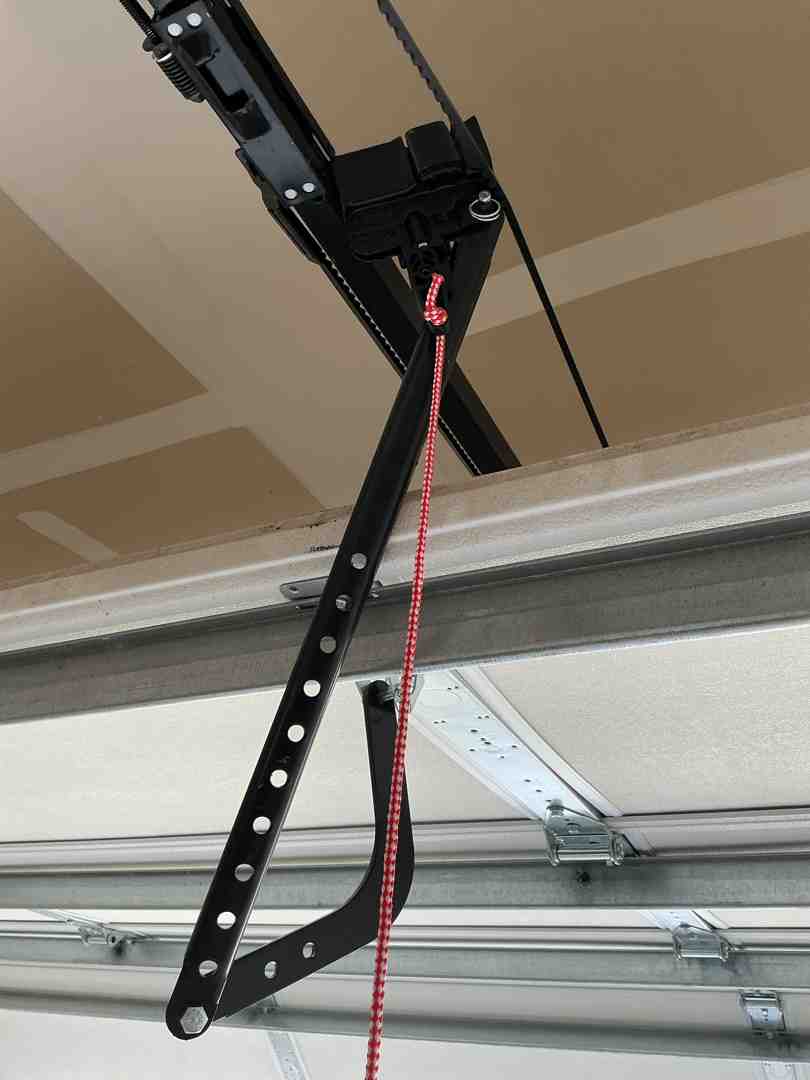
The most notorious physical bypass method is the “six-second break-in.” An intruder pushes in on the top section of the garage door to create a small gap in the weather stripping. They insert a wire coat hanger or long hook, snag the emergency release cord, and pull down. This disengages the opener trolley from the drive carriage, allowing them to lift the door manually.
To defeat this trick, you can deploy three easy modifications:
- The Zip-Tie Method: Loop a standard plastic zip tie through the hole in the emergency release lever and anchor it to the trolley carriage frame. This prevents a coat hanger wire hook from pulling the lever downward. However, in a real interior emergency or power loss, an adult pulling down hard on the cord will snap the zip tie easily.
- Emergency Release Shielding: Install a retrofitted metal or plastic shield around the carriage assembly. This physical barrier blocks wire hooks from reaching the lever entirely.
- Cord Shortening: Shorten the emergency cord rope so it stays elevated near the trolley carriage, well out of reach of any fishing tool inserted through the top door gap.
Low-Cost Habits on How to Make Your Garage Door More Secure
Habits play as large a role in security as physical hardware. According to Department of Justice statistics, nearly 28% of house burglaries take place while an occupant is at home. Developing daily security routines keeps your home safe:
- Nightly Closing Routines: Perform an exterior perimeter check every evening before bed to verify that all garage doors and service access points are fully shut and locked.
- Remove Visor Remotes: Leaving a garage door remote clipped to your car’s sun visor parked in the driveway is like handing a thief the keys to your home. Switch to a keychain remote or use a smartphone app.
- Hide Valuables from Line of Sight: Place tools, bicycles, and expensive power equipment inside locked storage cabinets or cover them so they are not visible from outside windows.
- Never Leave the Door Open: Avoid leaving the garage open while working in the backyard or running brief errands. In an Arizona community trial, enforcing a closed garage door policy cut residential break-ins by 50%.
Physical Locks and Strengthening Secondary Access Doors
When you leave for an extended vacation or want ultimate peace of mind, mechanical locks provide an impenetrable physical barrier. Learn more about integrated door protections in our detailed resource on Garage Door Safety Features Every Homeowner Should Know.
When selecting physical locks, homeowners generally choose between two primary mechanical solutions:
- Interior Slide Bolt Locks: Installed on the inside of the garage door panel, these slide a steel bolt directly through a slot in the side vertical track. They prevent the door rollers from moving upward even if the opener trolley is disengaged. Important note: Always disengage the physical slide lock before activating an automatic door opener to prevent motor burnout or track damage.
- Track-Mounted C-Clamps or Padlocks: If your door lacks a built-in slide bolt, you can clamp a standard C-clamp or snap a heavy-duty padlock through the open alignment holes on the vertical door track directly above one of the rollers. This mechanically jams the roller in place.
Reinforcing the Connecting Door Between the Garage and the House
Treat the interior door that leads from your garage into your living area with the exact same safety standards as your front door. If an intruder does breach the garage, a reinforced interior door stops them from entering your main home.
- Solid-Core Construction: Ensure the interior connecting door is made of solid wood or insulated steel rather than hollow-core material.
- Grade 1 Deadbolts: Install a high-security deadbolt with a minimum 1-inch throw bolt.
- Heavy-Duty Strike Plates and 3-Inch Screws: Replace short 3/4-inch factory screws on the door hinge and strike plate with 3-inch steel screws. These pass through the thin decorative door jamb and anchor deep into the structural wall framing studs, preventing the door from being kicked open.
- Anti-Kick Devices and Peepholes: Consider adding a metal reinforcement plate along the jamb edge and a wide-angle 180-degree peephole so you can inspect the garage space before unlocking the door.
Upgrading to Smart Openers and Dynamic Code Technology
Older garage door openers transmit static radio signals, making them highly vulnerable to digital interception. Upgrading to modern opener technology eliminates code theft completely. Explore options for modern opener retrofits with our guide to Smart Garage Door Technology and Home Security.
| Security Feature | Fixed-Code Openers (Pre-1997) | Modern Rolling-Code Openers |
|---|---|---|
| Code Combinations | 256 to 4,096 static codes | Over 100 billion dynamic codes |
| Hacking Vulnerability | Cracked in under 10 seconds via code grabbers | Signal changes automatically after every single press |
| Remote Access | Physical visor remote only | Encrypted smartphone integration |
| Monitoring | None | Real-time open/close mobile notifications |
| Power Outage Lockout | Unlocks manually via emergency cord | Battery backup keeps motor locked electronically |
Fixed-code openers rely on manual dip switches inside the remote. Criminals using off-the-shelf radio receivers can record the signal as you open your garage door and replay it later. Modern rolling-code systems (such as Security+ 2.0 or Intellicode) change the encryption code to a completely new combination out of billions every time the button is pressed.
Benefits of Upgrading to Smart Garage Door Openers
Upgrading to modern Smart Garage Door Openers brings powerful control over your home’s entry points. Discover additional convenience and security capabilities in our guide on Ways a Smart Garage Door Opener Makes Your Home Safer and Smarter.
Key benefits of smart openers include:
- Real-Time Push Alerts: Receive instant notifications on your smartphone whenever your garage door opens, closes, or remains open past a designated timeframe.
- Auto-Close Scheduling: Set custom rules (e.g., automatically closing the door at 10:00 PM every night) so you never wake up to an open garage.
- Remote Status Verification: If you’re sitting at work in Pflugerville or Georgetown and wonder if you forgot to shut the door, you can verify its status and close it remotely with one tap.
- Battery Backup Integration: Modern smart openers come equipped with internal battery backups. During severe Central Texas storms or power outages, the door remains powered and securely locked without needing manual disengagement.
Outdoor Perimeter Defense: Windows, Lighting, and Landscaping
A complete security approach pairs mechanical and electronic door protections with strong perimeter defenses around your driveway and yard.
Enhancing Visual Privacy and Exterior Lighting
Intruders prefer working in dark, concealed spaces. By eliminating shadow zones and hiding your garage interior, you drastically reduce your home’s target appeal.
- Window Privacy Protection: Apply translucent frosted privacy film or decorative window tinting to garage door glass. This allows natural light to enter while completely obscuring the view of tools and the emergency release cord from passersby.
- Top-Panel Window Placement: When selecting a new door design, choose panels where glass inserts are restricted to the very top section. This keeps windows well above eye level and out of arm’s reach.
- Motion-Activated Floodlights: Position motion-sensing LED floodlights 10 to 12 feet off the ground near garage driveways and side service doors. High placement prevents intruders from unscrewing bulbs or tampering with wires.
- Visible Security Cameras: Installing a visible security camera or video floodlight camera overlooking the garage can cut your property’s break-in risk by half.
- Defensive Landscaping: Keep hedges and tree branches trimmed near garage entryways to maintain clear lines of sight from the street. Planting low-growing, thorny vegetation (like spiky rose bushes or bougainvillea) directly beneath garage side windows acts as an effective natural physical barrier.
Frequently Asked Questions About Garage Door Security
Can Burglars Open a Garage Door from the Outside?
Yes, burglars can open an unsecured garage door from the outside using a few common methods. The most frequent attack is inserting a bent wire hook through the top door seal to snag and pull the internal emergency release cord. Intruders may also use fixed-code signal grabbers on outdated openers or attempt to manually force the panel upward if the opener trolley is weak or damaged. Installing an emergency release shield, zip-tying the lever, and upgrading to rolling-code technology neutralizes these techniques.
How Do I Lock My Garage Door When Going on Vacation?
To lock your garage door securely while away on vacation:
- Enable Opener Vacation Mode: Most modern wall control consoles feature a lock button. Holding this button down disables all handheld remote signals, preventing unauthorized wireless access while keeping smart app control active.
- Engage an Interior Slide Lock: Slide a manual bolt lock through the door track on the inside of the door.
- Use Track C-Clamps: If your door lacks a slide lock, tighten a heavy-duty C-clamp onto the track directly above one of the door rollers.
- Unplug the Motor: Unplugging the automatic opener power cord from the ceiling outlet prevents any electronic operation entirely.
Is a Rolling-Code Garage Opener Safe Against Hacking?
Yes, rolling-code garage door openers are exceptionally secure against hacking. Unlike older fixed-code systems that transmit static signals, rolling-code systems generate a brand-new, unique security code out of over 100 billion combinations every time you press the remote button. Once a code is used, it is discarded immediately, making traditional code-grabbing and replay attacks ineffective.
Conclusion
Securing your garage door doesn’t require overcomplicating your routine. By pairing zero-cost habits like closing your door and securing the emergency cord with reliable hardware upgrades like dynamic rolling-code openers and reinforced side access doors, you create a robust barrier that keeps your family and property safe.
Our Central Texas climate brings intense heat, high humidity, and sudden storms in areas like Bee Cave, Lakeway, Leander, Liberty Hill, and West Lake. These conditions can degrade weather stripping, warp side door frames, and throw sensitive opener alignment out of balance. Regular professional maintenance guarantees that your door panels seal tightly, your mechanical safety features function properly, and your home remains protected year-round.
When you’re ready to upgrade your opener, reinforce your existing doors, or complete a professional security inspection, our local team is here to help. Schedule Garage Door Service in Austin with Good Golly Garage Doors today for fast, friendly, and dependable service you can trust!

Need Garage Door Help ASAP?
We answer the phone 24/7 for emergency spring, track, panel, and opener repairs, so you can reach a real person any time. Our technicians arrive in clearly marked service vehicles carrying common replacement parts, and most jobs can be completed the same day. If the door appears unstable or unsafe, keep people and pets clear and let our team handle the repair.




