

Residential Garage Door Installation in Las Vegas, NV
Residential garage door installation in Las Vegas NV by Good Golly Garage Doors improves home security and style. Call us to schedule installation service.
Stuck with a Broken Garage Door? Get It Fixed Today!
When your garage door fails, it compromises both your schedule and security, leaving your home vulnerable and your car trapped. Get fast, reliable installation and repair services that ensure your peace of mind. Secure an appointment now to restore function to your home by visiting schedule service.
Residents in Las Vegas, NV cannot afford to leave their garage open to the elements or potential intruders. A malfunctioning door is not just an inconvenience; it is a breach of your home’s primary entry point. Whether you are dealing with a door that has jumped its track, a snapped spring, or a panel that has been damaged by an accidental impact, immediate action is required.
- Same-day service available to restore your garage door promptly.
- Comprehensive warranties that protect your investment long-term.
- Flexible financing options to make your repair or install stress-free.
All installations are compliant with local codes, ensuring peace of mind with every job.
What You Get With Professional Installation Services
Choosing to install a new garage door or replace a failing system is a significant decision that impacts your home’s energy efficiency, security, and aesthetic appeal. When you engage Good Golly Garage Doors for this service, you are not simply buying a product; you are investing in a complete architectural solution designed to withstand the local environment.
The scope of a standard installation goes beyond hanging panels. It involves a comprehensive assessment of the garage opening to ensure the framing is square and capable of supporting the weight of a modern, insulated door. Most older homes in the area were built with non-insulated, single-layer steel doors. Upgrading provides immediate benefits in terms of thermal regulation, which is critical given the intense desert heat.
A complete installation package typically includes:
- Site Inspection and Measurement: Precise measurements of the rough opening, side room, and headroom to ensure the selected door operates smoothly without obstruction.
- Removal and Disposal: Safe removal of the existing door panels, old tracks, and worn-out hardware. This includes hauling away the debris so you are not left with a mess.
- New Hardware Installation: Mounting of new high-grade steel tracks, heavy-duty rollers, and torsion or extension springs calibrated to the specific weight of the new door.
- Weather Sealing: Application of perimeter weatherstripping and a bottom seal (astragal) to prevent dust, pests, and hot air from entering the garage.
- Opener Integration: Reconnecting your existing opener or installing a new motor, followed by setting the travel limits and force sensitivity for safe operation.
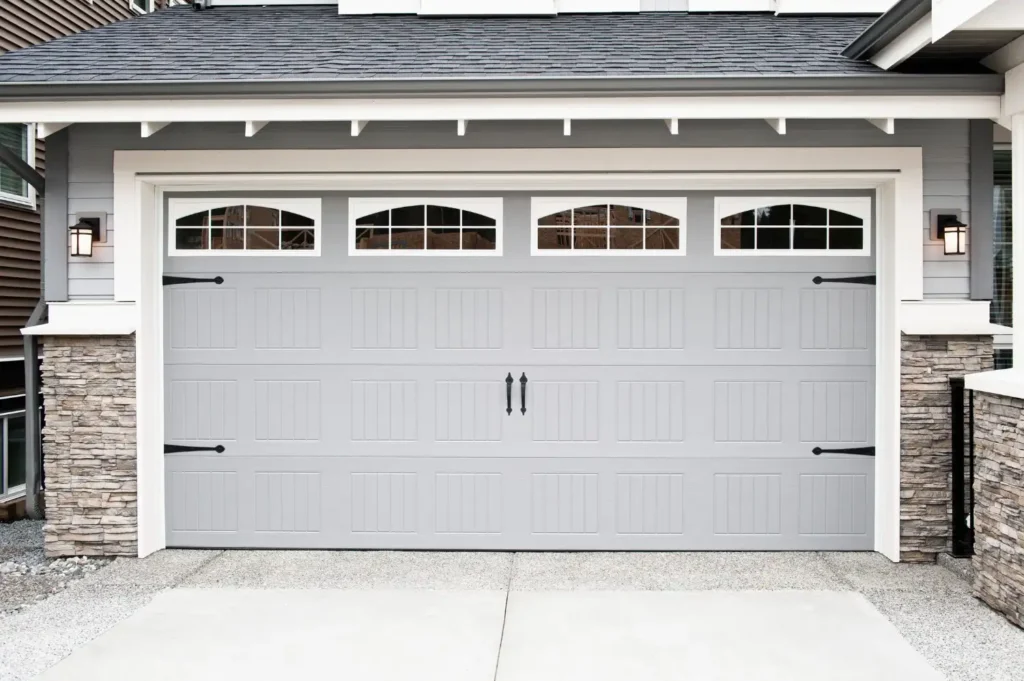
Selecting the Right Material for the Desert Climate
Not all garage door materials perform equally well in the Nevada climate. The intense UV exposure and extreme temperature fluctuations between day and night can cause inferior materials to warp, crack, or fade rapidly.
- Steel Doors: This is the most popular choice for durability and low maintenance. Steel doors come in various gauges (thicknesses). A lower gauge number indicates thicker steel. For this region, a sandwich construction (steel-insulation-steel) is highly recommended. It prevents the door from becoming a radiant heater in the summer and adds rigidity against wind.
- Aluminum and Glass: Modern homes often utilize full-view aluminum doors with glass panels. These offer high curb appeal and natural light. However, it is vital to use insulated glass and thermally broken aluminum frames to manage heat transfer; otherwise, the garage can become unbearably hot.
- Wood Composite: While real wood is beautiful, it requires significant maintenance to prevent drying and cracking in the desert. Faux wood composite offers the aesthetic of timber but is engineered to resist rot, cracking, and fading, making it a superior choice for the local environment.
- Insulation Types: You will generally choose between Polystyrene and Polyurethane insulation. Polystyrene comes in sheets inserted between steel layers, while Polyurethane is injected as a foam, filling every crevice and bonding to the steel walls. Polyurethane offers a higher R-value (thermal resistance) and makes the door much quieter and sturdier.
The Installation Process: Step-by-Step
Understanding the installation workflow helps homeowners prepare for the appointment. The process is systematic and emphasizes safety, as garage doors are the largest moving objects in a home and operate under high tension.
- Step 1: Site Preparation and Safety Check: The technicians arrive and cordon off the work area. They verify that the framing is solid and free of rot or termite damage. If the jambs are compromised, they must be reinforced before installation begins.
- Step 2: Releasing Tension: This is the most dangerous part of the process. The technician manually unwinds the old springs to release the stored energy. This must never be attempted by a homeowner. Once tension is released, the old door panels are disassembled and removed.
- Step 3: Installing the Tracks and Vertical Sections: New vertical tracks are bolted to the door jambs. The technician uses a level to ensure they are perfectly plumb. If the tracks are even slightly tilted, the door will bind or derail during operation.
- Step 4: Stacking the Panels: The new door is assembled from the bottom up. The bottom section, which holds the weather seal, is set first. Subsequent panels are stacked on top, connected by hinges. Rollers are inserted into the hinges and guided into the vertical tracks.
- Step 5: Installing the Spring System: A torsion tube is mounted above the door header. The springs are slid onto the tube, and the cables are attached to the bottom brackets of the door. The technician then winds the springs to the exact tension required to counterbalance the door’s weight. A properly balanced door should stay in place when lifted halfway manually.
- Step 6: Opener Connection and Testing: The electric opener is connected to the door using a drawbar arm. The technician programs the travel limits (how far the door opens and closes) and tests the safety reversal system. This system ensures the door reverses automatically if it encounters an object while closing.
When Replacement Beats Repair
Homeowners often struggle to decide whether to invest in a repair or opt for a full replacement. While a quick fix is often cheaper upfront, it can be more expensive in the long run if the door is nearing the end of its lifecycle.
- Severe Structural Damage: If a vehicle has backed into the door, or if high winds have buckled more than one panel, the structural integrity of the system is compromised. Replacing a single panel is possible if the model is still in production and the color matches, but often a full replacement is more cost-effective and safer.
- Lack of Safety Features: Doors installed prior to 1993 may lack modern safety reversal sensors (photo-eyes). If your current system does not have these sensors, or if the sensors are failing and parts are obsolete, replacement is a safety necessity.
- Recurring Breakdowns: If you are paying for service calls every few months—replacing rollers one month, a hinge the next, and a spring shortly after—the system is nickel-and-diming you. A new door resets the clock on all hardware wear and tear.
- Energy Inefficiency: If your garage is attached to your home and acts as a heat sink in the summer, an uninsulated door is likely the culprit. Swapping to a high R-value insulated door can lower the ambient temperature in the garage by double digits, reducing the strain on your home’s HVAC system and lowering energy bills.
- Cosmetic Obsolescence: If you are planning to sell your home, an old, dented, or rusted garage door significantly detracts from curb appeal. A new door has a high return on investment (ROI) regarding home resale value.
Local Notes: Permits, Heat, and HOAs
Operating in Las Vegas requires specific attention to local conditions that do not apply in other regions. The environment and regulatory landscape dictate how installations should be handled.
- Extreme Heat Impact: Summer temperatures frequently exceed 100°F and can peak above 115°F. This heat dries out lubricants, causes metal to expand, and degrades plastic components. Local installation standards involve using synthetic lubricants that do not liquefy in heat and installing nylon-coated steel rollers that resist heat-induced warping.
- Permitting and Codes: Structural modifications to the garage opening or electrical work for new outlets may require permits. While a direct swap of a door usually does not require a structural permit, the work must still adhere to safety codes. Professional installers ensure that the spring containment and safety reversal systems meet all current safety regulations.
- HOA Guidelines: Many residential communities in the area are governed by Homeowners Associations (HOAs). These organizations often have strict rules regarding the style, color, and material of garage doors to maintain uniformity. It is crucial to check with your HOA board before selecting a design. A professional installer can help match new doors to approved styles to ensure compliance and avoid fines.
- Wind Load Considerations: While not a hurricane zone, the valley can experience high wind gusts during summer storms. Doors must be braced properly to resist positive and negative wind pressures, preventing them from being blown in or sucked out of the tracks.
Differentiators: Why Professional Execution Matters
The difference between a functional door and a high-performing system lies in the quality of the installation. While the hardware is standard, the expertise applied during the setup determines the longevity of the system.
- Precision Balancing: A door that is not perfectly balanced puts excessive strain on the opener. Professional technicians spend extra time adjusting spring tension so that the opener acts merely as a regulator, not a heavy lifter. This extends the life of your motor significantly.
- High-Cycle Springs: Standard builder-grade springs are rated for 10,000 cycles (open/close). Professional installers can upgrade this to 20,000 or high-cycle springs, effectively doubling the lifespan of the most critical component in the system. This is particularly important for households that use the garage as the main point of entry.
- Quiet Operation: Noise is a common complaint. By using nylon rollers rather than steel, isolating the motor vibration, and properly lubricating the hinges during installation, professionals can make the door operation nearly silent. This is essential if there is a bedroom located directly above or adjacent to the garage.
- Warranty Integrity: Garage door manufacturers offer warranties on panels and hardware, but these are often voided if the installation is performed by an uncertified individual. Good Golly Garage Doors ensures that all manufacturer guidelines are followed strictly, keeping your warranty valid and enforceable.
Securing Your Home with Reliable Service
Your garage door is the largest moving part of your home and a critical barrier against the outside world. It requires professional attention to ensure it operates safely, efficiently, and securely. Whether you need an emergency repair to get your car out for work or a full replacement to improve your home’s energy efficiency and curb appeal, professional execution is non-negotiable.
Don’t wait for a catastrophic failure to address issues with your garage door system. Proactive replacement and timely repairs save money and prevent accidents. Trust the experts to handle the heavy lifting, tensioning, and electrical integration required for a perfect result. Schedule your consultation today and experience the difference of a professionally installed system — schedule service.
Proudly Serving Las Vegas and Surrounding Areas
From Summerlin to Henderson, we provide the best garage door services you can find across Las Vegas. Wherever you are, Good Golly Garage Doors is ready to deliver. Let’s get your garage door in Las Vegas or beyond back in top shape with service that’s fast, friendly, and built to last.
View All Cities
 All Service Areas