

Residential Garage Door Installation In Bee Cave, TX
Need urgent garage door installation in Bee Cave? Contact Good Golly Garage Doors for same-day service, transparent pricing, and expert installation. Schedule now!
Resolve Your Garage Door Issues With Immediate Professional Installation
Is your garage door failing at the worst possible time, leaving your home exposed or your vehicle trapped? You need a reliable, quick solution that doesn’t put your day on hold, so schedule service for an urgent consultation:
- Same-day service availability to get your garage doors working without delay.
- Transparent pricing and free consultation—no surprises or hidden fees.
- Professional installation from local experts who know your neighborhood.
- All installations are fully licensed, with extended warranties and flexible financing options available.
Good Golly Garage Doors understands that a malfunctioning door is more than an inconvenience; it is a breach of your home’s security and a disruption to your daily routine. Homeowners in Bee Cave need functional, durable entry points that can withstand local weather patterns while maintaining curb appeal. Whether you are dealing with a door that refuses to open, structural damage from a vehicle impact, or an outdated system that compromises energy efficiency, immediate replacement is often the most cost-effective path forward.
Comprehensive Installation Services for Modern Homes
When you commission a new installation, you are purchasing more than just a slab of steel or wood; you are investing in the mechanical reliability of the largest moving object in your home. A professional installation addresses the entire assembly, ensuring that the tracks, springs, openers, and panels work in unison.
In Bee Cave, where architectural standards are high and the climate can be demanding, a standard off-the-shelf solution is rarely sufficient. A proper installation includes a full assessment of your garage opening’s dimensions, headroom, and backroom to ensure the selected door operates smoothly without obstructing overhead storage or lighting.
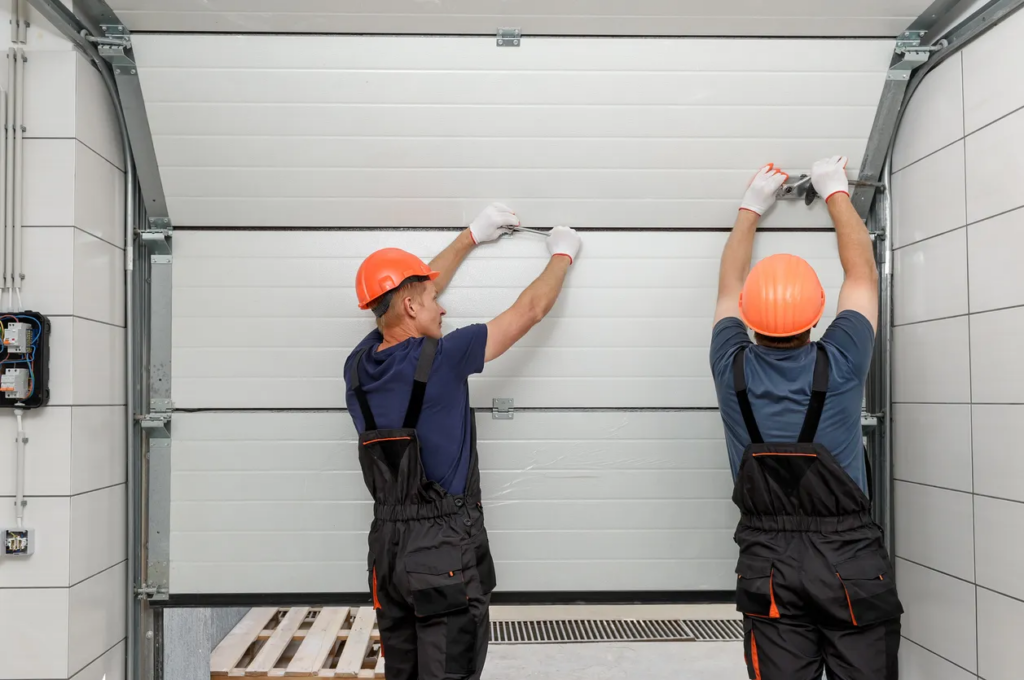
What Is Included in Your Installation
A complete installation service covers every aspect required to take your garage from a liability to an asset:
- Site Inspection and Measurement: Technicians verify rough opening sizes, side room availability for tracks, and depth for the opener rail. This prevents common issues where doors catch on frames or fail to seal at the bottom.
- Old Door Removal and Disposal: Handling heavy panels and high-tension springs is dangerous. The service includes the safe dismantling and hauling away of your existing system, ensuring no debris is left on your driveway.
- Track and Hardware Mounting: The vertical and horizontal tracks must be perfectly aligned. Misalignment by even a fraction of an inch can cause premature roller wear or catastrophic derailment. Heavy-duty brackets and 14-gauge steel hinges are used to support the door’s weight.
- Torsion or Extension Spring Setup: The springs do the heavy lifting. Your installation includes calculating the correct spring cycle rating and tensioning them to balance the door perfectly. A balanced door should be liftable with one hand when disconnected from the opener.
- Opener Integration: If you are upgrading the motor simultaneously, the team installs the unit, sets the travel limits, and programs remote controls, keypads, and Wi-Fi-enabled smart features.
- Weather Seal Application: To combat humidity and pests, a vinyl weather strip is applied to the perimeter, and a bottom seal is secured to the door panel.
The Installation Process: From Assessment to Operation
Understanding the workflow helps you prepare your home for the installation team. The goal is efficiency and safety, minimizing the time your garage is open to the elements.
Preparation and Safety Zoning
The first step involves clearing the work area. The technicians will establish a safety zone to prevent accidents, as garage door components are heavy and under extreme tension:
- You should clear vehicles and storage items from the area immediately underneath and behind the door.
- Power to the existing garage door opener is cut to prevent accidental activation during disassembly.
- The crew inspects the framing (jambs and header) to ensure the wood is solid and capable of holding the lag screws for the new hardware.
Hardware and Panel Assembly
Modern sectional doors are assembled vertically, one panel at a time. This stacking method ensures a tight seal between sections:
- The bottom section is leveled perfectly. If the floor is uneven, the technician may scribe the bottom seal to match the concrete contour, though a level door is prioritized for track alignment.
- Rollers are inserted into the hinges and placed into the vertical track as each section is stacked.
- Struts are installed on the interior of the panels to provide wind load resistance, which is critical during storm seasons.
Spring Tensioning and Balancing
This is the most technical part of the process. The springs counteract gravity.
- For torsion systems, the spring is mounted on a header bar above the door. The technician winds the spring to a specific torque based on the door’s weight.
- Cables are routed from the bottom bracket to the drums on the torsion bar.
- The system is tested manually to check for “dead spots” or binding. The door must stay in place when lifted halfway; if it slams down or shoots up, the tension requires adjustment.
Final Adjustments and Sensor Calibration
Once the door is mechanically sound, the electric opener is connected.
- Travel limits are set so the door presses firmly against the floor without bowing the rail.
- Force settings are adjusted so the door reverses if it encounters an obstruction, but pulls continuously during normal operation.
- Photo-eye sensors are aligned and tested using a physical obstruction to verify safety compliance.
Repair vs. Replacement: Making the Right Financial Decision
Homeowners often hesitate between repairing an existing unit and investing in a new installation. While repairs are suitable for minor component failures, there are specific thresholds where replacement becomes the smarter financial move.
Structural Integrity Compromised
If your door has been hit by a vehicle or sustained storm damage, the structural integrity of the panels is likely compromised:
- Bent sections cannot simply be hammered out; the metal is stretched and will never regain its original rigidity.
- Compromised panels can cause the door to flex during operation, stripping gears in your opener and bending the tracks.
- Replacement ensures the entire barrier is structurally sound and rated for current safety standards.
Safety Features and Code Compliance
Older doors often lack modern safety features required by law and insurance companies:
- If your system lacks auto-reverse safety sensors (photo-eyes), it is a significant hazard to pets and children.
- Older extension springs without safety containment cables can become lethal projectiles if they snap.
- New installations come with tamper-resistant bottom brackets and pinch-resistant panel designs that prevent finger injuries.
Energy Efficiency and Insulation
In climates with extreme heat, an uninsulated metal door acts as a thermal bridge, transferring outside temperatures directly into your garage:
- If you have living space above the garage, an old, uninsulated door forces your HVAC system to work harder.
- Upgrading to a door with a high R-value (polyurethane or polystyrene core) reduces heat transfer.
- Modern doors feature thermal breaks between the exterior and interior skins, preventing heat conduction.
Cost of Cumulative Repairs
The “nickel and diming” of an aging system adds up:
- If you are facing a major repair (like a broken spring or blown motor) on a door that is over 15 years old, the cost of the repair often exceeds 50% of the cost of a new system.
- Replacing the entire unit resets the warranty clock on all components, whereas a repair only guarantees the specific part that was changed.
Local Considerations for Bee Cave Installations
Installing a garage door in Bee Cave requires specific attention to regional factors. The local environment influences material selection and installation techniques:
- Heat and Humidity Management: Summers here frequently exceed 95°F with high humidity. Wood doors, while beautiful, require significant maintenance to prevent warping and rot due to the moisture. Steel doors with a composite overlay or wood-grain finish offer the aesthetic of wood without the susceptibility to humidity.
- Wind Load and Storms: Spring and fall bring thunderstorms and gusty winds. Your garage door is the largest opening in your home; if it fails during a storm, the change in internal pressure can blow the roof off the structure. Installations must meet specific wind load ratings to withstand positive and negative pressure spikes.
- HOA and Aesthetic Guidelines: Many neighborhoods in the area have strict Homeowners Association guidelines regarding the style, color, and material of exterior fixtures. A professional installation team can help you select a carriage-house style or contemporary aluminum model that satisfies architectural review boards while enhancing curb appeal.
- Sun Exposure: For garages facing west, the afternoon sun can bake the door’s finish. High-quality factory finishes with UV inhibitors are recommended to prevent fading and chalking of the paint.
Differentiators and Safety Protocols
Choosing the right partner for your installation ensures longevity and peace of mind. The difference lies in the details of the execution and the quality of the components used. Good Golly Garage Doors prioritizes heavy-duty hardware over “builder-grade” parts that often fail within a few years.
High-Cycle Springs vs. Standard Springs
Most standard installations use springs rated for 10,000 cycles (roughly 3-5 years of usage). Upgrading to high-cycle springs (25,000+ cycles) extends the lifespan of the system significantly, delaying the need for future maintenance.
Nylon Rollers for Quiet Operation
Standard steel rollers can be noisy and vibrate. Utilizing nylon rollers with ball bearings reduces operational noise and stress on the opener, which is particularly important if you have a bedroom adjacent to the garage.
Reinforced Struts and Brackets
To prevent panel sagging over time, especially on double-wide doors, additional reinforcement struts are installed. This keeps the door rigid when in the open position, preventing the “smiling” effect where the center of the door bows downward.
Smart Home Integration
Modern access needs have changed. Integration with home automation systems allows you to monitor and control your garage door from your smartphone. This feature is invaluable for letting in service workers or verifying that the door is closed after you have left for the day.
Warranty and Workmanship
A robust warranty covers both the materials and the labor. While manufacturers provide warranties on panels and motors, the installation company backs the workmanship. This covers issues like track alignment, sensor calibration, and spring tension adjustments that may be needed as the new door settles.
Don’t Wait for a Total Failure: Install a New Garage Door Today
Investing in a professional installation protects your property and improves your home’s energy efficiency. Don’t wait until the door is completely stuck or creates a safety hazard. Contact us to schedule your garage door installation or consultation now.
 All Service Areas