

Preventive Garage Door Maintenance in Surprise, AZ
Ensure your garage door functions flawlessly with our preventive tune-up services in Surprise, AZ. Contact us today for a comprehensive safety inspection and service.
Eliminate the Risk of Sudden Garage Door Malfunctions
Preventive maintenance is the key to a safe, reliable, and long-lasting garage door. Good Golly Garage Doors offers expert preventive garage door maintenance in Surprise, AZ, helping homeowners identify and fix minor issues before they turn into costly repairs. Our skilled technicians perform thorough inspections, lubrication, and adjustments to ensure every spring, roller, hinge, and opener is in top condition. Regular preventive maintenance keeps your door operating smoothly, quietly, and safely for years to come. Contact us today to schedule your preventive maintenance and protect your garage door investment.
What a Professional Tune-Up Includes
A garage door is the largest moving object in your home, comprised of numerous components under extreme tension. A professional tune-up is not merely a visual glance; it is a rigorous mechanical intervention designed to reset your system to factory specifications. When you engage Good Golly Garage Doors for preventive maintenance, the service involves a detailed checklist covering every critical moving part of the assembly.
The core of the service focuses on the counterbalance system. This includes the torsion or extension springs, which bear the weight of the door. Over time, springs lose tension, forcing the opener to work harder, which can burn out the motor. Technicians measure the tension and adjust it precisely so the door is perfectly balanced, meaning you should be able to lift it manually with one hand. If the balance is off, the rest of the system suffers.
Rollers and hinges are inspected next. Steel rollers often develop flat spots or rusted bearings, causing that familiar “rumble” and vibration. These are lubricated or flagged for replacement if they are seizing. Hinges are tightened to ensure the door sections remain rigid as they travel through the radius of the track.
The track and cable system is also scrutinized. Cables are checked for fraying, a dangerous condition that requires immediate attention, and tracks are cleaned of debris and grease build-up. Unlike other components, tracks should not be lubricated, as sticky grease traps dust and grit, creating a grinding paste that wears down rollers. Technicians ensure the tracks are plumb and parallel, preventing binding or friction that slows the door down.
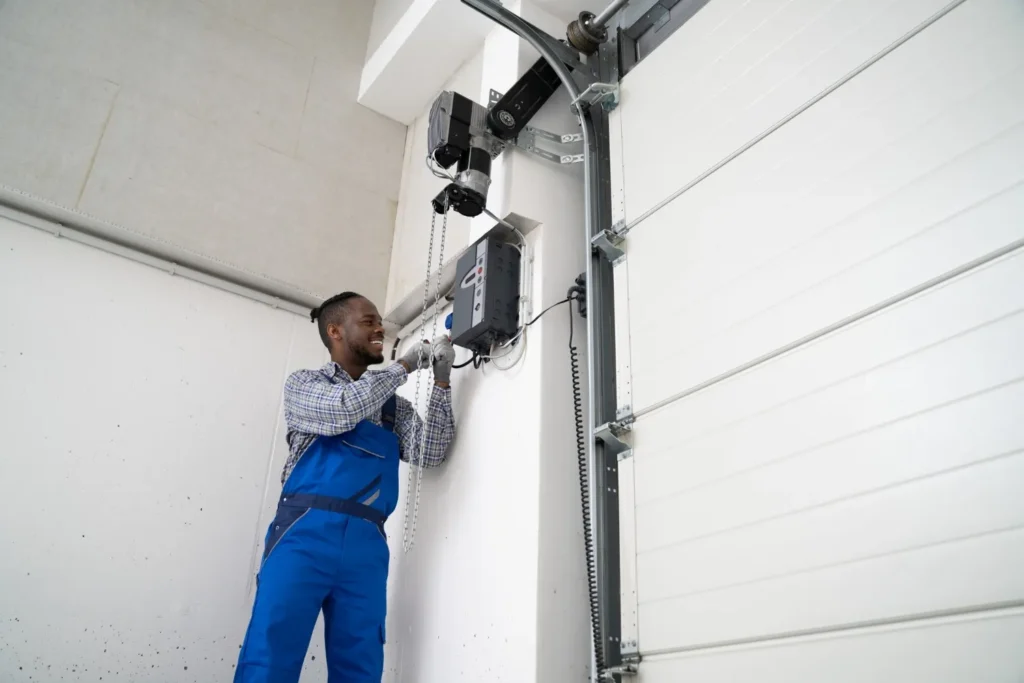
Finally, the opener itself is tested. This involves checking the drive belt or chain for slack, testing the internal gears, and adjusting the force and limit settings. These settings tell the motor how far to travel and how much force to exert. If set incorrectly, the door may not close all the way or might reverse unexpectedly.
The Maintenance Process: Step-by-Step
Understanding the workflow of a maintenance visit helps homeowners know what to expect. The process follows a logical sequence to ensure safety and thoroughness.
Visual Inspection and Balance Test
The technician begins by disconnecting the opener to operate the door manually. This reveals how the door naturally hangs. A properly balanced door should stay in place when lifted halfway. If it slams shut or shoots up, the springs require adjustment. The technician visually scans the panels, struts, and hardware for stress cracks or fatigue.
Hardware Tightening and Alignment
Garage doors vibrate during operation, which inevitably loosens nuts and bolts over time. Every bolt securing the hinges, struts, and track brackets is tightened. The technician checks the alignment of the vertical and horizontal tracks, ensuring the gap between the door and the track is consistent on both sides to prevent jamming.
Lubrication of Moving Parts
Friction is the enemy of mechanical longevity. A specialized non-silicone, lithium-based lubricant is applied to the rollers, hinge pivots, and spring coils. This reduces metal-on-metal wear and significantly quiets the operation of the door. The opener rail (if screw or chain drive) is also lubricated to ensure smooth travel.
Safety Systems Testing
This is the most critical phase for household safety. The technician tests the photo-eye sensors to ensure they instantly reverse the door if the beam is broken. They also perform a “force reversal test” by placing a block of wood under the door; when the door touches the block, it must retract immediately. If it does not, the opener’s force settings are recalibrated to meet current safety standards.
When to Repair vs. Maintenance
While preventive maintenance is powerful, it is not a cure for broken components. It is vital to understand the distinction between a system that needs a tune-up and a system that requires repair or replacement.
Maintenance is appropriate when the door is working but sounds loud, feels heavy, or hasn’t been serviced in over a year. It is a proactive measure to keep good parts working well.
However, specific scenarios indicate that a repair service is necessary instead:
- Broken Springs: If you see a clear gap in your torsion spring or the door refuses to open despite the motor running, the spring is likely broken. Maintenance cannot fix this; the part must be replaced.
- Off-Track Doors: If the rollers have popped out of the guide tracks, forcing the door to hang crookedly, do not attempt to operate it. This requires an emergency reset and repair, not a standard tune-up.
- Frayed or Snapped Cables: If a cable is hanging loose or looks like an unraveled rope, it is a safety hazard. This requires immediate part replacement.
- Damaged Panels: If a vehicle has backed into the door, causing the sections to bend or buckle, maintenance will not correct the structural integrity issues. Panel replacement or total door replacement is required.
Key Components That Require Regular Attention
To fully appreciate the value of a service visit, it helps to understand the specific parts that carry the workload. Neglecting these specific items usually leads to the most common failures homeowners experience.
- Torsion Springs: These act as the muscles of the door. They are rated for a specific number of cycles (one open and one close equals a cycle). Without lubrication, the coils bind against each other, creating friction that shortens their life cycle. Regular adjustments keep the tension accurate, ensuring the opener doesn’t drag dead weight.
- Nylon vs. Steel Rollers: Many builder-grade doors come with steel rollers without ball bearings. These are noisy and wear out the track. During maintenance, technicians inspect the wobble and wear on these wheels. Upgrading to nylon rollers with sealed ball bearings is often recommended during maintenance to dramatically reduce noise and vibration.
- The Operator Rail and Trolley: The trolley is the piece that connects the door arm to the opener rail. In chain-drive systems, the chain can stretch over time, causing it to slap against the rail. Tightening the chain or belt to the correct tension prevents slippage and ensures the door opens fully every time.
The Financial Benefit of Proactive Care
Many homeowners view maintenance as an optional expense, but the data suggest it is a cost-saving strategy. An emergency repair call, often required on nights or weekends when a car is trapped, typically costs significantly more than a scheduled tune-up.
Furthermore, a well-maintained door places less strain on the electric opener. Replacing a burnt-out motor is a significant investment. By keeping the door balanced and the path of travel smooth, you add years to the life of the motor.
Additionally, the safety aspect translates to financial protection. A door with faulty safety sensors or incorrect force settings can damage vehicles or injure people, leading to liability and insurance claims. Ensuring these safety mechanisms function correctly is the most responsible financial decision a homeowner can make regarding their garage setup.
Why Professional Inspection Beats DIY Efforts
While lubricating a squeaky hinge seems simple, a comprehensive garage door tune-up involves dangerous components that should not be tampered with by untrained individuals. The garage door springs and bottom brackets are under immense tension, enough to cause severe injury if loosened incorrectly.
Professional technicians arrive with the correct tools to wind torsion springs safely and the diagnostic equipment to read opener error codes. They have access to high-quality replacement parts that are not typically available at big-box home improvement stores.
Good Golly Garage Doors utilizes technicians who understand the specific load requirements of different door materials, from heavy wood carriage doors to lightweight insulated steel. They can spot hairline cracks in hinges or slight bends in tracks that a homeowner might miss, preventing a small issue from becoming a total system failure. This level of expertise ensures that when the job is done, the door is safe, compliant with local codes, and reliable.
Securing Your Home’s Largest Entrance
Your garage door serves as the primary entrance for your home, a shield against the elements, and a safeguard for your vehicles and storage. Leaving its operation to chance invites inconvenience and potential safety hazards. Regular care ensures that when you press the button, the door responds instantly and quietly, regardless of the season or weather conditions.
Don’t wait for the spring to snap or the motor to smoke. Take control of your home maintenance schedule and ensure your system is operating at peak performance. Call us now to book your preventive maintenance service and secure the reliability of your garage door.
Proudly Serving Phoenix, AZ, and Surrounding Areas
We provide the best garage door services you can find across Phoenix, AZ. Whether it’s the impact of Phoenix’s heat and sudden storms on garage door components, we ensure our solutions are tailored to your needs. Wherever you are, Good Golly Garage Doors is ready to deliver.
Call (602) 399-7054 All Service Areas