

Preventive Garage Door Maintenance in Pflugerville, TX
Ensure your garage door operates smoothly and safely in Pflugerville with our comprehensive tune-ups. Secure enhanced performance and safety. Schedule now!
Is Your Garage Door Operating Inconsistently or Making Excessive Noise?
An unreliable garage door creates immediate security risks and disrupts your daily routine, especially when you need to leave for work or secure your home for the night. If your system is squeaking, moving slowly, or reversing unexpectedly, you need a professional assessment to prevent a complete mechanical failure. Contact us today to schedule a comprehensive safety inspection and tune-up.
Homeowners in Pflugerville rely on their garage doors as the primary entry point to the home, meaning high-cycle usage often leads to wear and tear on springs, cables, and openers. Good Golly Garage Doors provides thorough preventive maintenance designed to catch small issues before they become expensive emergency repairs.
- Immediate inspection of safety sensors, balance, and mechanical components.
- Lubrication and adjustment services that extend the operational life of your hardware.
- Transparent, upfront pricing for any necessary adjustments or minor repairs.
All maintenance services are backed by a comprehensive labor warranty for your peace of mind.
Comprehensive Garage Door Maintenance: What Is Included
Preventive maintenance is not simply a visual check; it is a rigorous tune-up of a complex mechanical system involving high-tension parts and heavy electrical equipment. When a technician arrives at your property, the goal is to restore the door to factory specifications regarding balance, noise levels, and safety compliance.
A full-service tune-up addresses the hardware that bears the weight of the door and the electronics that control its movement. Neglecting these components often leads to the door coming off its tracks or the opener burning out prematurely.
Mechanical Component Inspection and Adjustment
- Tightening Hardware: The vibration caused by daily operation loosens nuts, bolts, and hinges over time. Technicians tighten every fastener on the door and track to ensure structural integrity.
- Roller Inspection: Rollers are checked for cracks, chips, or wear. Steel rollers that are wobbling are identified for potential replacement, while nylon rollers are checked for degradation.
- Cable and Pulley Check: Lift cables are inspected for fraying or kinking. Frayed cables are a major safety hazard and are identified immediately.
- Spring Tension Balance: The torsion or extension springs do the heavy lifting. Technicians test the balance of the door to ensure the springs are providing the correct amount of lift. If the door feels heavy when lifted manually, the springs require adjustment.
Lubrication and Smooth Operation
- Track and Rail Cleaning: Debris in the tracks causes friction and strain on the opener. The tracks are cleaned to remove grit and old grease.
- Moving Parts Lubrication: Specialized garage door lubricant (never standard WD-40) is applied to rollers, hinges, and springs. This reduces friction, eliminates squeaking, and prevents rust accumulation, which is common in humid environments.
- Bearing Greasing: End bearings and center bearings are lubricated to ensure the torsion tube rotates freely.
Opener and Safety System Testing
- Force Setting Adjustments: The opener is tested to ensure it stops closing if it encounters resistance. If the force is too high, it creates a crushing hazard; if too low, the door may not close fully.
- Travel Limit Calibration: Technicians adjust how far the door opens and closes. Improper limits can cause the door to slam into the concrete or not seal properly against the weather stripping.
- Safety Eye Alignment: Photo-eye sensors are cleaned and aligned. If the beam is misaligned, the door will refuse to close.
- Reverse Mechanism Test: A physical block test ensures the door automatically reverses when it touches an object, a critical safety feature for families with children or pets.
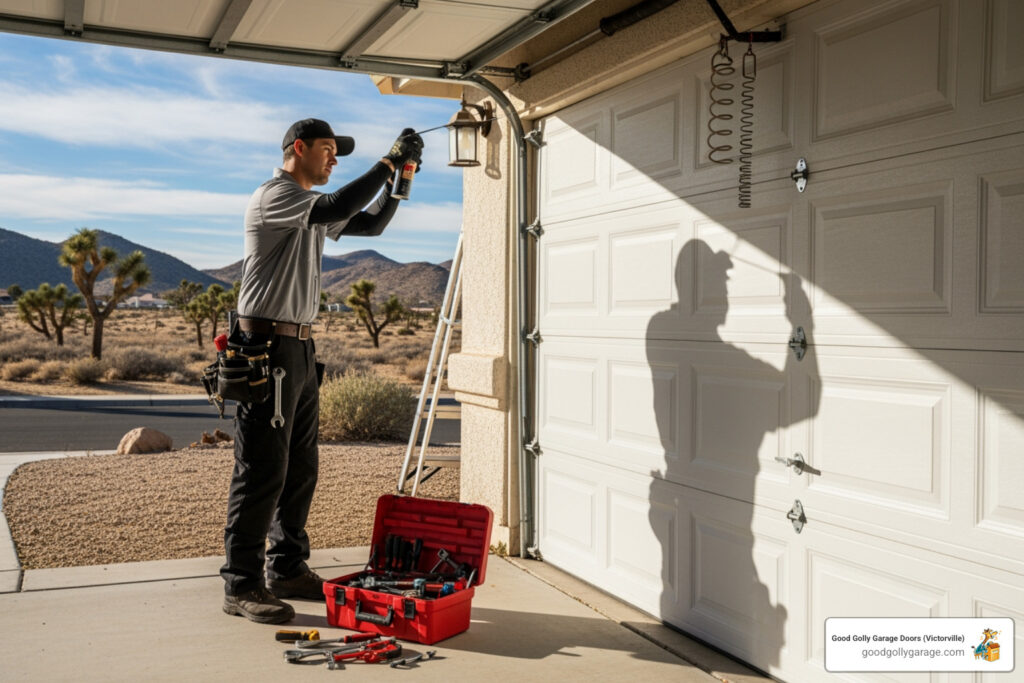
The Professional Maintenance Process
Understanding the workflow of a professional maintenance visit helps you know what to expect. The process is systematic, ensuring no component is overlooked.
- Initial Operation Assessment: The technician begins by operating the door to listen for specific noises—grinding, scraping, or popping—that indicate underlying issues.
- Visual Safety Scan: A complete visual inspection identifies visible rust, bent tracks, or separated cables.
- Balance Testing: The technician disconnects the electric opener to operate the door manually. This isolates the door mechanics from the motor to test the spring balance. A properly balanced door should stay open about halfway without falling or shooting up.
- Torque and Tightening: Using impact tools and wrenches, the technician systematically tightens the hardware connecting the door panels and the track system to the framing.
- Lubrication Application: High-quality silicone or lithium-based lubricants are applied to specific pivot points.
- Opener Diagnostics: If you have a smart opener or a standard chain/belt drive, the technician runs a diagnostic check on the motor and logic board.
- Final Safety Test: The auto-reverse features are tested with a physical obstruction to verify compliance with current safety standards.
- Report and Recommendations: You receive a detailed report of the door’s condition, highlighting any parts that are nearing the end of their lifecycle.
Deciding Between Maintenance, Repair, or Replacement
One of the primary goals of a maintenance visit is to determine the longevity of your current system. While routine lubrication and adjustments can solve many issues, there are distinct signs that indicate whether a simple tune-up is sufficient or if components need repair or replacement.
When Maintenance is Sufficient
- Squeaking and Minor Noises: If the door is noisy but moves smoothly, lubrication and tightening usually resolve the issue.
- Minor Sticking: If the door sticks slightly due to dirt in the tracks or lack of grease, a tune-up will restore smooth operation.
- Routine Seasonal Care: If the door is operating well but hasn’t been serviced in over a year, maintenance is the correct path to prevent future failure.
When Repairs are Required
- Frayed Cables: Maintenance cannot fix a frayed cable; it must be replaced immediately to prevent the door from falling.
- Broken Springs: If a spring has snapped, the door will not open. This is a repair scenario, not a maintenance one, although maintenance can prevent premature spring failure.
- Bent Tracks: If a vehicle has bumped the track or the door has come off the rails, physical repair or replacement of the track is necessary.
When Replacement is the Best Option
- Rotted Wood or Rusted Steel Sections: If the door panels themselves are structurally compromised by rust or rot, maintenance cannot restore them. Replacement is necessary for security and insulation.
- Obsolete Openers: If your opener lacks modern safety sensors (pre-1993 models) or parts are no longer available, upgrading to a modern unit is safer and more cost-effective than attempting to maintain the old one.
- Recurring Expensive Failures: If you are paying for repairs multiple times a year, investing in a new system is often more economical in the long run.
Good Golly Garage Doors technicians provide honest assessments. If a component is borderline, they will explain the timeline for expected failure so you can plan accordingly without pressure.
Local Considerations for Garage Doors in Pflugerville
Operating a garage door in Central Texas presents unique challenges due to the specific climate and soil conditions. A maintenance plan must account for these local factors to be effective.
Heat and Humidity Impact
Pflugerville experiences long, hot summers with significant humidity. This environment accelerates the breakdown of standard lubricants. Grease can dry out or become gummy, attracting dust and dirt that creates abrasive paste in the tracks. Furthermore, metal components expand in the heat. A door that is perfectly adjusted in the winter may bind or stick during a 100-degree summer day. Preventive maintenance adjusts the spacing and travel limits to account for this thermal expansion.
Foundation Shifts and Track Misalignment
The soil in this region is known for shifting with moisture levels. As the ground expands and contracts, the foundation of a home can move slightly. Even a fraction of an inch of movement in the garage framing can throw the vertical tracks out of alignment. This causes the rollers to drag against the track, putting immense strain on the opener. Regular maintenance includes checking the track plumb and spacing to ensure the door floats freely, regardless of minor foundation settling.
Moisture and Corrosion
While winters are generally mild, the transition seasons can bring moisture that attacks the bottom of the garage door. The bottom seal (weather stripping) is the first line of defense against water entering the garage. During maintenance, this seal is checked for brittleness or cracks. A compromised seal allows water to rust the bottom brackets and cables. In coastal-adjacent areas or humid zones, using galvanized or rust-resistant rollers and hinges is often recommended during part replacements.
Insulation and Energy Efficiency
For homeowners with attached garages or bedrooms above the garage, the seal of the door is critical for energy efficiency. Hot Texas air infiltrating the garage can raise the temperature of the entire home. Maintenance ensures that the door closes tightly against the header and side stops, minimizing air leakage and reducing the load on your HVAC system.
The Risks of Neglecting Garage Door Maintenance
Skipping routine service intervals often leads to “creeping failure,” where small issues accumulate unnoticed until a catastrophic break occurs. The garage door is likely the heaviest moving object in your home, and its safe operation depends on the balance of high-tension forces.
Safety Hazards
The torsion spring system operates under extreme pressure. If a spring breaks due to rust or cycle fatigue, the resulting release of energy can be dangerous to anyone standing nearby. Regular inspections measure the fatigue on springs and cables, allowing for proactive replacement before a snap occurs. Additionally, failed safety sensors increase the risk of the door closing on a vehicle or a person.
Security Vulnerabilities
A door that does not close all the way or can be easily forced open due to loose mechanical parts creates a security weakness. Intruders often look for garage doors with gaps at the top or bottom that can be manipulated. Keeping the door tightly adjusted ensures the locking mechanisms of the opener engage correctly, keeping your home secure.
Increased Repair Costs
Running a garage door with unlubricated rollers or an unbalanced spring puts excessive load on the electric opener. The internal plastic gears of the opener can strip, or the motor can overheat. Replacing an entire opener unit is significantly more expensive than the cost of an annual lubrication and balance service.
Why Professional Service Outperforms DIY
While many homeowners attempt to lubricate their doors themselves, professional maintenance goes far beyond a can of spray. The distinction lies in the diagnostic capability and the handling of high-tension components.
- Tension Management: Adjusting springs requires specific tools and knowledge of winding bars. Mishandling a torsion spring is a leading cause of DIY injuries. Professionals have the training to adjust tension safely.
- Alignment Precision: Aligning tracks requires understanding the geometry of the door’s travel. Incorrect alignment can cause the door to bind or fall out of the tracks.
- Component Knowledge: A professional can spot the difference between a surface scratch on a cable and a structural fray that indicates imminent failure. They know which noises are benign and which signal a destroyed bearing.
- Proper Lubricants: Using grease on tracks is a common DIY mistake that actually attracts dirt and ruins rollers. Professionals use non-tacking silicones and lithium preparations specifically designed for door hardware.
Extend the Life of Your Garage Door System
Your garage door system is an investment in your home’s functionality and curb appeal. Rather than waiting for the inconvenience of a car trapped in the garage or a door that won’t close during a storm, proactive care ensures reliability year-round. Consistent maintenance reduces noise, improves safety, and delays the need for costly replacements.
Good Golly Garage Doors is ready to ensure your system operates at peak performance, handling the heavy lifting so you don’t have to. Protect your home and ensure seamless access to your property.
Secure your garage door’s reliability and safety—schedule your preventive maintenance service now.
Proudly Serving Austin, TX, and Surrounding Areas
From the neighborhoods of Austin to Round Rock and Buda, we provide the best garage door services you can find across the area. Whether it’s the impact of Texas heat and sudden storms on garage door components, we ensure our solutions are tailored to your needs. Wherever you are, Good Golly Garage Doors is ready to deliver.
View All Cities
 All Service Areas