

Preventive Garage Door Maintenance in Green Valley, NV
Protect your garage door from the extreme weather of Green Valley with our proactive maintenance services. Ensure safety and efficiency year-round.
Is Your Garage Door Ready for Green Valley’s Extremes?
The intense Green Valley heat can take a toll on your garage door’s life and efficiency, leading to unexpected failures when you need access the most. Stay ahead of breakdowns and expensive repairs with proactive maintenance designed for the local climate. Schedule your maintenance service today.
Neglecting routine care often results in loud operation, stuck doors, or safety hazards for your family. Good Golly Garage Doors provides comprehensive tune-ups that address wear and tear before it becomes a major issue.
- Extend your door’s lifespan and ensure its reliability during both scorching summers and chilly winters.
- Catch small problems early, reducing the need for costly repairs or full replacements later.
- Enhanced safety and performance through detailed checkups, balance testing, and efficient lubrication.
Licensed, bonded, and insured for your peace of mind.
What Comprehensive Maintenance Covers
A garage door is the largest moving object in most homes, comprised of numerous heavy-duty components working under high tension. Preventive maintenance is not simply a glance at the system; it is a rigorous, multi-point inspection and adjustment process. The goal is to restore the system to factory specifications, ensuring smooth travel and reducing strain on the automatic opener.
Torsion and Extension Spring Evaluation
Springs do the heavy lifting every time the door cycles. Over time, they lose tension and fatigue. Maintenance involves checking the cycle life and adjusting tension to ensure the door is perfectly balanced. A balanced door should be able to be lifted manually with one hand and stay in place halfway up. If the springs are weak, the opener works too hard, shortening its lifespan.
Roller and Hinge Inspection
Rollers allow the door to move smoothly along the tracks. Nylon and steel rollers can develop flat spots, crack, or suffer from bearing failure. Inspection involves checking every roller for wobble and wear. Hinges are tightened to prevent the door sections from sagging, which can cause the door to bind in the tracks.
Cable and Drum Analysis
Lift cables are under immense tension and are prone to fraying or rusting, especially near the bottom brackets. A snapped cable can cause the door to slam shut or hang clearly. The drums at the top of the door must be free of cracks and securely fastened to the torsion tube to ensure the cables wind evenly.
Track Alignment and Security
Tracks that are misaligned, even by a fraction of an inch, create friction. This friction forces the motor to work harder and causes loud, grinding noises. The maintenance process involves tightening the track brackets to the wall and ensuring the vertical and horizontal tracks are parallel and plumb.
Opener Gear and Motor Check
The automatic opener requires specific checks. This includes inspecting the internal plastic gears for shavings, which indicate impending failure. The drive chain or belt is tightened to prevent slippage.
Safety Sensor Calibration
Photo-eye sensors are a critical safety feature. They must be perfectly aligned to prevent the door from closing on a vehicle or person. Technicians clean the lenses and check the wiring for any corrosion or damage that might cause intermittent signal loss.
The Preventive Maintenance Process
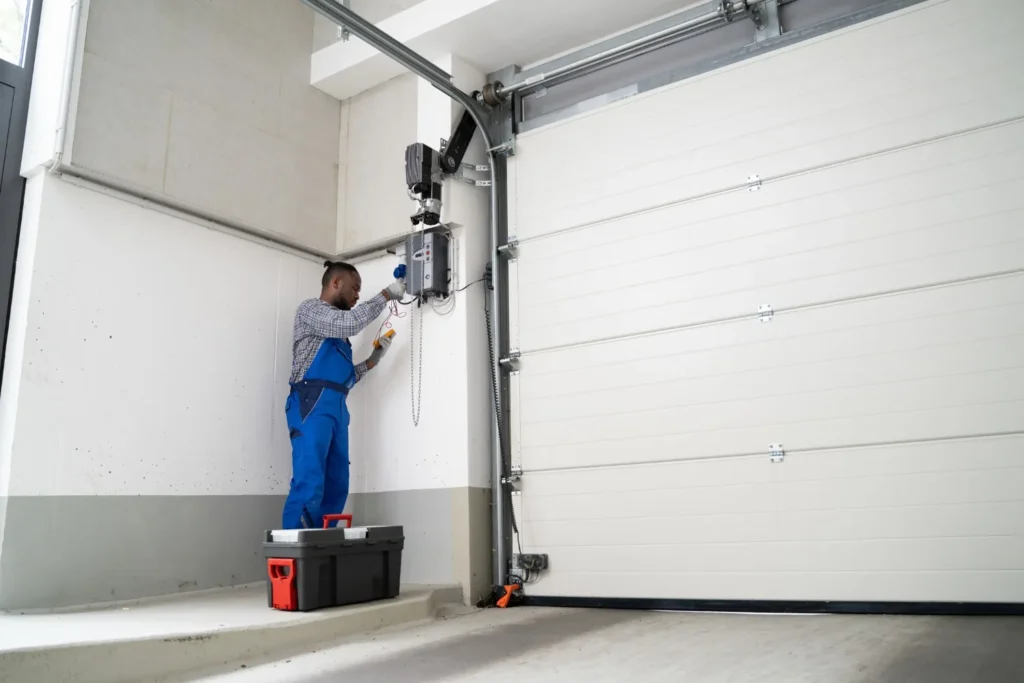
Securing the long-term functionality of your garage door involves a systematic approach. Rather than reacting to a noise or a break, this process follows a strict protocol to cover every mechanical and electrical aspect of the system.
Initial Diagnostic Assessment
The process begins with a complete visual inspection and operation test. The technician listens to the door during travel to pinpoint sources of scraping, squeaking, or grinding. This baseline establishes which components are under the most stress.
Tightening and Hardware Torque
Vibration is the enemy of garage door hardware. Over hundreds of cycles, bolts on the hinges, struts, and brackets loosen. Every bolt is checked and tightened to the manufacturer’s specifications. This simple step significantly reduces noise and stabilizes the door panels.
Lubrication of Moving Parts
Friction causes heat and wear. Specialized lubricants are applied to rollers, hinges, springs, and bearings. It is vital to use the correct type of lubricant; heavy greases can trap dust and grit, which acts like sandpaper on moving parts. A silicone-based or lithium spray is typically used to provide a slick surface without attracting debris.
Balance and Force Adjustment
The technician disconnects the opener to test the door manually. If the door falls when released, the springs are tightened. If it shoots up, tension is reduced. Once balanced, the opener is re-engaged, and the force settings are adjusted. This ensures the motor applies just enough power to move the door without overcoming safety obstructions.
Safety Reverse Testing
Federal safety standards require garage doors to reverse automatically if they encounter an object. A block test is performed by placing a 2×4 board in the door’s path. If the door strikes the wood and does not reverse, the down-limit and force settings are recalibrated immediately.
Recognizing When Maintenance Isn’t Enough
While maintenance extends the life of your system, there are specific scenarios where a component has reached the end of its service life. Recognizing the difference between a part that needs adjustment and a part that needs replacement is key to decision-making.
Structural Panel Damage
If a car has backed into the door or a storm has caused significant denting, maintenance cannot restore the structural integrity of the sections. Cracked panels can buckle under the weight of the door, creating a severe safety hazard. In these cases, section or door replacement is required.
Excessive Spring Rust or Gaps
Springs have a fixed cycle life (often 10,000 cycles). If a spring has a visible gap (indicating a break) or deep pitting from rust, lubrication will not save it. Attempting to repair a broken spring is impossible; it must be replaced to restore function.
Opener Motor Failure
If the opener hums but does not move the chain, or if it runs intermittently despite good power connections, the internal logic board or motor windings may be failing. While gears can sometimes be replaced, an opener older than 15 years is often more cost-effective to replace with a modern, safer unit.
Track Damage
Tracks that are bent, crimped, or split cannot be hammered back into perfect shape effectively. The rollers will always catch on the damaged spot, causing recurring issues. Replacement of the vertical or horizontal track is the only permanent solution.
Seasonal Considerations for Garage Doors in Nevada
Green Valley presents a specific set of environmental challenges that dictate how garage doors should be maintained. The climate is classified as hot semi-arid, meaning the equipment faces extreme heat fluctuations and occasional moisture surges.
Thermal Expansion and Contraction
Metal components expand in the heat and contract in the cold. In the peak of summer, temperatures in a garage can exceed the ambient outdoor temperature significantly. This expansion can cause the door to bind in the tracks if the spacing is too tight. Maintenance ensures that spacing allowances are correct so the door operates smoothly regardless of the thermometer reading.
Lubricant Breakdown
The intense heat can cause inferior lubricants to liquefy and drip off the parts they are meant to protect, or dry out completely. This leaves metal-on-metal contact exposed. Seasonal maintenance involves stripping away old, ineffective grease and applying high-heat tolerance lubricants that stay in place during the summer months.
Monsoon Moisture and Rust
While the climate is generally dry, winter months and summer thunderstorms bring moisture. If the bottom seal (weatherstripping) is cracked or brittle, water can seep under the door. This not only damages the garage floor but can cause the bottom brackets and cables to rust. Rust is a primary cause of snapped cables. Checking and replacing the bottom seal is a critical defense against the elements.
Electronics and Heat Exposure
Garage door opener logic boards are sensitive to heat. Over time, the soldering points on the circuit boards can become brittle due to constant heating and cooling cycles. Routine inspections check the responsiveness of the electronics to ensure the receiver is picking up signals from the remote controls effectively.
Why Professional Maintenance Matters
Many homeowners attempt to lubricate their doors themselves, but professional maintenance goes far beyond a can of spray. A trained technician identifies “silent” problems that an untrained eye would miss, such as micro-cracks in the spring coils or subtle misalignment in the tracks.
Safety and Tension Management
The garage door system operates under extreme tension. Bottom brackets and torsion springs store enough energy to cause severe injury if mishandled. Professionals have the winding bars and containment tools necessary to adjust tension safely. Attempting to adjust these components without the proper tools is a significant safety risk.
Warranty Preservation
Many garage door manufacturers and opener brands require proof of regular professional maintenance to keep warranties valid. If a major component fails and there is no record of care, the warranty claim may be denied. Routine service provides the documentation needed to protect your investment.
Specialized Tools and Parts
Technicians arrive with service trucks stocked with high-cycle parts that are generally superior to what is available at big-box home improvement stores. Whether it is a specific gauge of cable or a reinforced strut, having the right part immediately available prevents delays and ensures the repair holds up over time.
Long-Term Cost Savings
Emergency repairs are almost always more expensive than scheduled maintenance. By paying a smaller fee for an annual tune-up, you avoid the premium costs associated with after-hours emergency calls when a door is stuck shut on a Monday morning. It changes the dynamic from reactive crisis management to predictable home upkeep.
Your Garage Door Deserves Proactive Maintenance: Schedule Today
Good Golly Garage Doors focuses on delivering thorough, checklist-based maintenance that leaves nothing to chance. The result is a quieter, safer, and more reliable entry to your home.
Don’t wait for the spring to snap or the motor to burn out. Secure the reliability of your home’s largest moving system today. Contact us to schedule your preventive maintenance service.
Proudly Serving Las Vegas and Surrounding Areas
From Summerlin to Henderson, we provide the best garage door services you can find across Las Vegas. Wherever you are, Good Golly Garage Doors is ready to deliver. Let’s get your garage door in Las Vegas or beyond back in top shape with service that’s fast, friendly, and built to last.
View All Cities
 All Service Areas