
Preventive Garage Door Maintenance in Carefree, AZ
Ensure your garage door works flawlessly with Good Golly's preventive maintenance in Carefree. Schedule an inspection to secure your home today.
Prevent Unexpected Garage Door Failures in Your Home
Facing unexpected issues with your garage door can disrupt your daily routine and compromise the security of your home. A malfunction often happens at the worst possible time, leaving your vehicle trapped or your home exposed to the elements. Contact us now to schedule a safety inspection or inquire about our flexible financing options for urgent system overhauls.
Good Golly Garage Doors provides specialized preventive maintenance services ensure your garage door functions smoothly year-round. Residents in Carefree know that a reliable door is essential for convenience and safety. We eliminate the guesswork and provide a clear path to a fully functional system.
- Skilled technicians equipped to handle all types of garage door models and opener brands.
- Preventive maintenance plans to extend the life of your garage door and avoid costly repairs.
Licensed and fully insured for your peace of mind, with flexible financing options available.
What Professional Maintenance Includes
A garage door is the largest moving object in your home, comprised of numerous mechanical parts under high tension. Preventive maintenance goes far beyond a cursory visual check. It involves a systematic examination and adjustment of every component to ensure they operate in unison. When you schedule professional maintenance, the focus is on identifying wear patterns that lead to catastrophic failure if left unaddressed.
The scope of a comprehensive tune-up covers the entire counterbalance system. This includes the torsion springs, which bear the weight of the door, and the cables that lift it. Technicians check for fraying, rust, or loss of tension that could cause the door to slam shut or fail to open. The hardware inspection includes tightening every bolt and screw on the hinges and brackets, which often loosen due to the vibration of daily operation.
- Lubrication of Moving Parts: Proper lubrication is critical. Technicians apply specialized non-silicone-based lubricants to rollers, hinges, and springs. This reduces friction, minimizes noise, and prevents the metal-on-metal grinding that accelerates wear.
- Roller Inspection: Rollers are checked for cracks or flat spots. Nylon rollers are inspected for degradation, while steel rollers are checked for bearing play.
- Track Alignment: The vertical and horizontal tracks must be perfectly aligned. Any misalignment can cause the door to bind, putting excessive strain on the opener.
- Opener Calibration: The motor is tested for proper force and limit settings. If the opener pulls too hard, it can strip gears; if it pushes too gently, the door may not close completely.
- Safety Feature Testing: This includes testing the auto-reverse mechanism and aligning the photo-eye sensors to ensure the door stops and reverses if an object obstructs the path.
The Preventive Maintenance Process
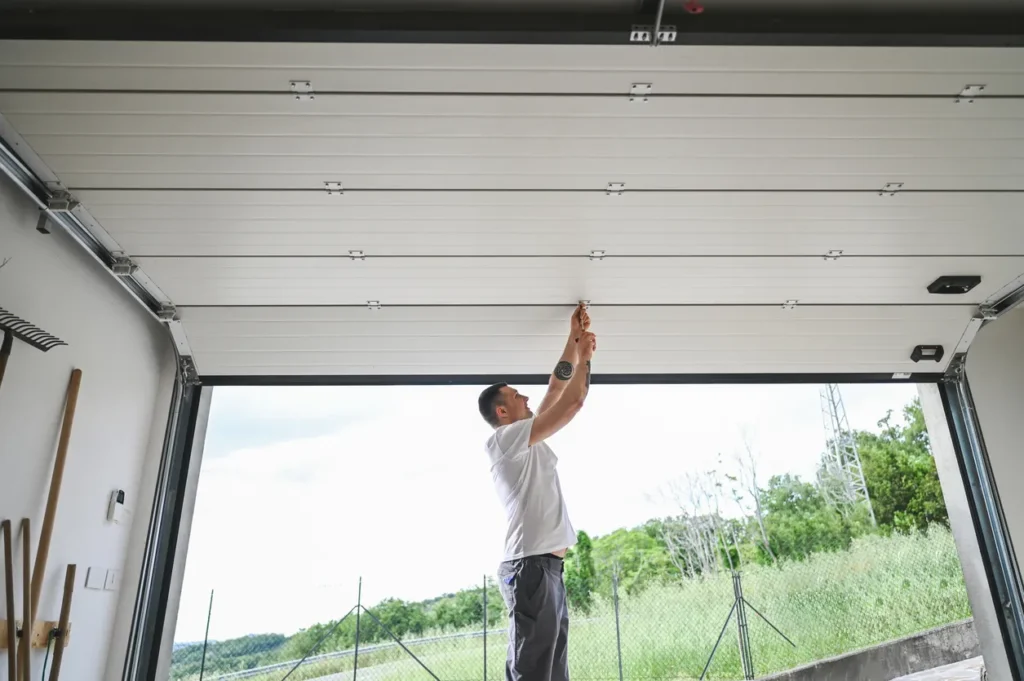
Understanding the workflow of a maintenance visit helps homeowners know what to expect. The process is designed to be efficient while leaving no component unchecked. It begins with a diagnostic evaluation before any tools are applied to the hardware.
- Initial Operation Test: The technician operates the door to listen for irregularities. Grinding, squeaking, or rattling noises provide clues about where the system is struggling. The speed and balance of the door are observed during this phase.
- Balance Test: The door is disconnected from the opener and operated manually. A properly balanced door should be able to be lifted with one hand and stay in place when released halfway up. If the door falls or shoots up, the spring tension requires adjustment.
- Hardware Tightening: Starting from the bottom brackets and moving up, every hinge and track bolt is tightened. Vibration from normal use naturally loosens these connections over time.
- Sensor Alignment: The safety sensors are cleaned and realigned. Even a slight bump can knock these out of alignment, preventing the door from closing. The technician ensures the beam is strong and uninterrupted.
- Final System Check: Once adjustments and lubrication are complete, the door is reconnected to the opener. Several cycles are run to verify smooth, quiet operation. The technician then provides a report on the condition of the system and any recommendations for future repairs.
When to Repair vs. When to Replace
Deciding between continuing to repair an aging system and opting for a full replacement is a common dilemma. Preventive maintenance extends the life of the door, but there are specific thresholds where replacement becomes the more economical and safer choice.
- Severe Structural Damage: If the door panels are cracked, warped, or rusted through, maintenance cannot reverse the damage. Compromised panels affect the structural integrity of the door and can cause it to collapse under wind load.
- Obsolete Safety Standards: Older garage door openers may lack modern safety features, such as photo-eye sensors or rolling code technology which prevents code grabbing. If your system lacks these features, replacement is recommended for security and safety.
- Recurring Mechanical Failures: If you find yourself paying for repairs multiple times a year, the cost of upkeep may exceed the cost of a new, warrantied system. Continuous breakdowns indicate that the system has reached the end of its useful life.
- Noise Levels: While maintenance can reduce noise, older chain-drive openers and metal rollers will always be louder than modern belt-drive openers and nylon rollers. If silence is a priority, replacement is the solution.
Why Professional Service Outperforms DIY
Many homeowners attempt to perform maintenance themselves to save money, but garage door systems present specific dangers and complexities that require professional attention. The difference between a professional tune-up and a DIY attempt often comes down to safety and long-term reliability.
- High-Tension Spring Dangers: The torsion spring system is under immense tension. One slip while adjusting a spring or a bottom bracket can result in severe injury or property damage. Professionals have the proper winding bars and training to handle this energy safely.
- Proper Lubricant Selection: Using the wrong lubricant, such as WD-40 or heavy grease, can actually attract more dirt and cause the system to gum up. Professionals use specific lithium-based or silicone sprays designed for garage door components.
- Hidden Wear Detection: A trained eye can spot hairline cracks in hinges or fraying in cables that a homeowner might miss. Identifying these issues early prevents the door from falling or jamming unexpectedly.
Comprehensive Tooling: Technicians carry specialized tools for checking tension, leveling tracks, and diagnosing electrical faults in the opener. This ensures the job is done correctly to factory specifications.
Secure Your Garage Door Investment
Your garage door is a critical entry point to your home. Neglecting its care can lead to inconvenient breakdowns, security vulnerabilities, and expensive emergency repairs. A proactive approach ensures that your door operates quietly, safely, and reliably, regardless of the weather conditions or frequency of use.
Take control of your home’s security and functionality today. Don’t wait for the spring to snap or the motor to burn out. Establish a routine that protects your property and extends the lifespan of your garage door system. Call us to schedule your preventive maintenance service or to discuss your garage door repair needs.
Proudly Serving Phoenix, AZ, and Surrounding Areas
We provide the best garage door services you can find across Phoenix, AZ. Whether it’s the impact of Phoenix’s heat and sudden storms on garage door components, we ensure our solutions are tailored to your needs. Wherever you are, Good Golly Garage Doors is ready to deliver.
Call (602) 399-7054 All Service Areas