

New Garage Door Installation In Leander, TX
Opt for our professional garage door installation in Leander to boost your home's security and aesthetics. Contact us today for a seamless installation experience with a full warranty.
Need a Reliable Garage Door Quickly Installed?
Facing an unexpected garage door failure or dealing with an outdated system that compromises your home’s security? Schedule a quick, professional installation today to restore function and curb appeal by calling our local office or requesting financing details online.
Homeowners in Leander need functional entry points that can withstand daily use and local weather conditions. Whether the current door has suffered structural damage from a vehicle impact or simply reached the end of its lifespan, immediate replacement is often necessary to protect the contents of the garage and the home itself. Good Golly Garage Doors provides comprehensive installation services designed to minimize downtime and maximize long-term performance.
- Same-day installation availability to restore your home’s security and accessibility fast.
- Wide range of doors, including steel, wood, and composite, to fit your home’s aesthetic and budget.
- Full warranty on all labor and parts, ensuring total peace of mind after the job is done.
- Licensed and insured—your installation is in safe hands.
Comprehensive Installation Services: What to Expect
When you commission a new garage door installation, you are purchasing more than just the panels. A complete installation package covers the removal of the old infrastructure and the precise integration of a new, heavy-duty system. The goal is to provide a turnkey solution where the homeowner does not need to worry about disposal, parts sourcing, or technical configuration.
A standard installation service includes the delivery of the selected door model and all necessary hardware. This includes the track assembly, torsion or extension springs, rollers, hinges, and weather stripping. High-quality weather seals are particularly important in Leander to prevent dust, pests, and moisture from entering the garage. The service also involves reconnecting or installing a new garage door opener, ensuring the motor is calibrated to the weight of the new door.
Professional installers also handle the haul-away of the old door and hardware. Garage doors are heavy and cumbersome; safe removal is a critical part of the service. Installers ensure that tension is released from the old springs safely before dismantling the system. Following the installation, a full cleanup is performed so the driveway and garage floor are free of debris, screws, or packaging materials.
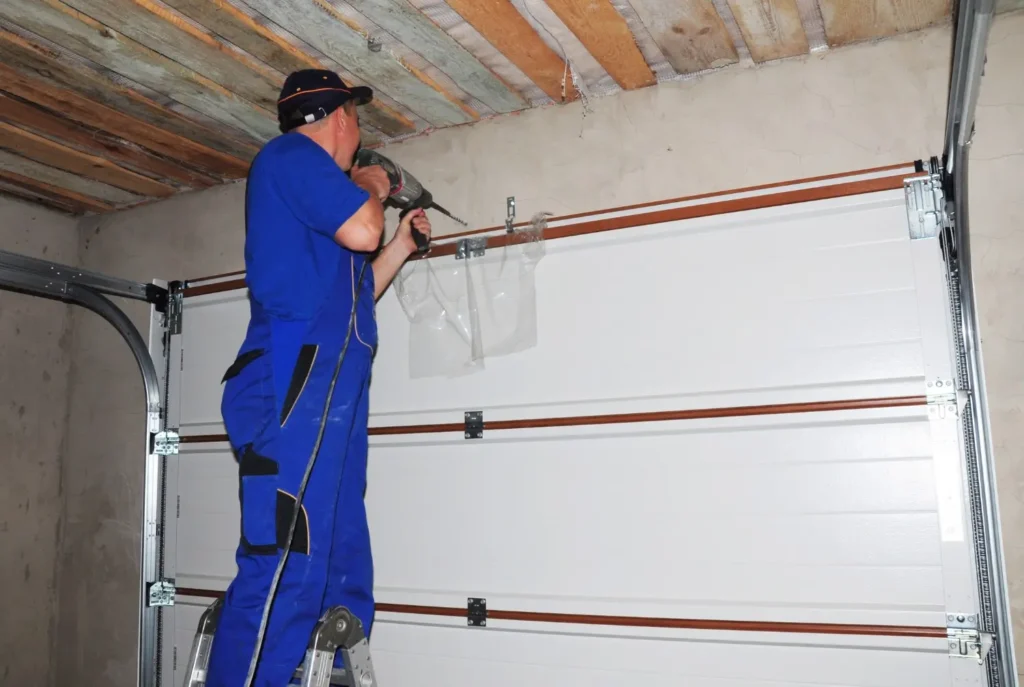
The Installation Process: From Assessment to Operation
A professional installation follows a strict protocol to ensure safety and mechanical precision. Improper installation is the leading cause of premature failure in garage door openers and springs. The process is methodical, ensuring every component acts in harmony with the rest of the system.
- Site Inspection and Preparation:
The process begins with confirming the measurements of the rough opening. Installers verify that the framing is sound and capable of supporting the new track and spring assembly. If the header (the structural beam above the door) requires reinforcement, this is identified immediately. The work area is cleared to allow safe movement of large panels.
- Hardware and Track Installation:
Vertical tracks are attached to the door frame, followed by the horizontal tracks suspended from the ceiling. Laser levels are used to ensure these tracks are perfectly parallel. Misaligned tracks will cause the door to bind, scrape, or derail during operation. The spacing is adjusted down to the millimeter to ensure smooth travel for the rollers.
- Panel Assembly and Stacking:
The door panels are installed one by one, starting from the bottom. As each section is stacked, rollers are inserted into the tracks, and hinges are secured to connect the panels. If the door includes insulation or windows, these elements are checked for integrity during the stacking process. Struts are added to the interior of the panels to prevent bowing, especially for double-wide doors.
- Spring System Installation and Tensioning:
This is the most technical and dangerous part of the process. The torsion tube is mounted above the header, and springs are wound to a specific tension calculated based on the door’s weight. Correct tension allows the door to be lifted manually with minimal effort. If the tension is too high, the door won’t close; if too low, the opener will struggle and eventually burn out.
- Opener Connection and Safety Calibration:
Once the door is balanced, the electric opener is connected via the drawbar arm. The limit switches are set to control how far the door opens and closes. Safety sensors (photo-eyes) are aligned near the floor to prevent the door from closing on obstructions. Finally, the force settings are tested to ensure the door reverses automatically if it encounters resistance.
Repair vs. Replace: Making the Right Decision
Determining whether to repair an existing unit or invest in a new installation is a common dilemma. While minor issues like a single broken spring or a misaligned sensor are easily repairable, there are specific scenarios where replacement is the more improved financial and practical decision.
- Severe Structural Damage:
If a vehicle has backed into the door, or if storms have warped the panels, replacement is usually required. Bent sections often cannot be straightened perfectly. A compromised panel affects the alignment of the whole system, dragging on the tracks and ruining the opener. In these cases, swapping out the entire system ensures structural integrity.
- Age and Obsolescence:
Garage doors typically last between 15 and 30 years. If the door is nearing the two-decade mark and requires frequent repairs, the cost of upkeep will soon exceed the cost of a new unit. Older doors often lack modern safety features, such as pinch-resistant panels and auto-reverse mechanisms, making replacement a safety upgrade.
- Energy Efficiency Upgrades:
Older wooden or uninsulated steel doors offer little protection against heat transfer. If the garage is attached to the house, or if there is a room above the garage, a non-insulated door acts as a massive thermal leak. upgrading to a modern, multi-layer insulated door can significantly reduce energy bills and stabilize indoor temperatures.
- Rust and Corrosion:
In humid seasons or coastal-adjacent areas, rust can eat away at the bottom panels and hardware. Surface rust can be sanded, but deep corrosion compromises the strength of the steel. If rust has penetrated the panel or the track system, Good Golly Garage Doors recommends a full replacement to prevent catastrophic failure.
Critical Considerations for Leander Homeowners
Installing a garage door in this region requires attention to specific environmental and regulatory factors. A generic installation that does not account for the local climate or building codes will likely result in dissatisfaction or compliance issues later.
- Heat Resistance and Insulation:
Summer temperatures in Leander frequently exceed 90°F. A garage facing west acts as a heat trap, raising the temperature inside the garage to dangerous levels for vehicles, freezers, and stored chemicals. Homeowners should prioritize doors with high R-values. Polyurethane insulation, which is injected as foam between steel layers, offers superior thermal resistance compared to polystyrene sheets. This keeps the garage cooler in summer and protects plumbing in the garage during winter freezes.
- Wind Load and Storm Durability:
While not directly on the coast, the area experiences severe thunderstorms and high winds. Standard doors may buckle under high wind pressure, leading to the door blowing out of the tracks. Choosing a door with verified wind-load ratings ensures the assembly stays intact during severe weather events, protecting the home from internal pressure changes that can damage the roof.
- HOA Guidelines and Aesthetics:
Many neighborhoods in the area are governed by Homeowners Associations (HOAs) with strict architectural guidelines. These rules often dictate the color, material, and style of the garage door. A carriage-house style might be required in one subdivision, while a modern flush panel is required in another. It is vital to review these covenants before ordering materials to avoid fines or forced removal.
- Permitting and Codes:
Structural alterations often require adherence to local building codes. This includes ensuring the header is appropriate for the load and that the electrical connections for the opener meet current safety standards. Professional installers navigate these requirements to ensure the work is compliant with city regulations.
Technical Specifications and Material Selection
Selecting the right material is paramount for longevity and maintenance. The market offers several core options, each with distinct advantages depending on the homeowner’s lifestyle and the home’s architecture.
- Steel Doors:
Steel is the most popular choice due to its durability and low maintenance. It is available in various gauges (thicknesses). A lower gauge number indicates thicker steel. For maximum durability, a 24-gauge or 25-gauge steel door is recommended. Steel doors can be embossed with wood grain textures to mimic the look of wood without the susceptibility to rot or termites.
- Wood Doors:
For custom aesthetics, wood offers an unmatched natural look. However, wood requires regular staining or painting to prevent warping and water damage. These doors are significantly heavier than steel, requiring robust springs and heavy-duty openers. They are ideal for high-end homes where curb appeal is the primary driver.
- Composite and Faux Wood:
Composite doors offer the best of both worlds: the visual appeal of wood and the durability of synthetic materials. They are resistant to moisture, cracking, and rot. These doors often feature a steel core with a composite overlay, providing high insulation values and excellent impact resistance.
- Glass and Aluminum:
Modern homes often utilize full-view aluminum doors with glass panels. These provide natural light and a contemporary industrial look. Options range from frosted glass for privacy to tempered glass for safety. The aluminum frame is resistant to rust, making it a low-maintenance option for modern facades.
Why Professional Installation Matters
The garage door is the largest moving object in a home. The tension stored in the torsion springs is enough to cause severe injury if mishandled. Professional installation mitigates these risks through training and specialized tools.
DIY installations often void manufacturer warranties. Manufacturers require proof of professional installation to honor claims regarding defective parts or panel rust. By hiring a certified service, homeowners ensure their investment is protected. Furthermore, professionals can identify underlying issues with the garage framing that a layperson might miss, preventing future structural problems.
Correct balancing is the hallmark of a pro install. A perfectly balanced door floats in the opening and puts minimal strain on the automatic opener. This extends the life of the motor and reduces noise during operation. Installers also lubricate all moving parts with non-silicone-based lubricants specifically designed for garage doors, ensuring quiet and smooth travel from day one.
Secure Your Home with a New Installation
A failing garage door is a security risk and an energy liability. Waiting until the door completely fails can leave vehicles trapped inside or the home exposed to the elements. Investing in a new system improves functionality, enhances curb appeal, and increases property value.
Good Golly Garage Doors delivers precise, code-compliant installations tailored to the specific needs of Leander residents. From selecting the right R-value to ensuring the torsion springs are perfectly wound, the focus remains on safety, reliability, and longevity. Do not compromise on the safety of the home’s largest entry point.
Take action now to secure your property.
 All Service Areas