

New Garage Door Installation in Crestline, CA
Enhance your home's security and energy efficiency with our insulated, weather-resistant garage doors in Crestline. Schedule your consultation today!
Secure Your Home Against Mountain Weather With A New Garage Door
Tired of your garage door giving out during the worst weather conditions or letting freezing drafts into your workspace? An unreliable garage door in the mountains is not just an inconvenience. It is a security risk and an energy drain that deserves professional attention. Contact us to schedule a site assessment and discuss available financing options.
Good Golly Garage Doors provides robust installation services designed to withstand the unique environmental challenges found in high-altitude regions. Whether you are dealing with a door that has buckled under snow load or an outdated mechanism that refuses to seal, we deliver the hardware and expertise necessary to restore functionality:
- Experience professional installation options designed to secure your property ahead of seasonal weather changes.
- Choose from a variety of heavy-duty, insulated doors specifically engineered to resist freezing temperatures and high moisture levels.
- Enjoy years of reliable operation with high-cycle springs and reinforced hardware designed for longevity.
All installations comply with local building codes and include applicable manufacturer warranties, which typically cover around one year, for your safety and satisfaction.
Immediate Installation with Long-lasting Benefits
Investing in a new garage door is one of the most impactful decisions a homeowner can make regarding property value, thermal efficiency, and physical security. In areas like Crestline, where the climate shifts dramatically from cool winters with highs in the mid-40s to freezing lows in the 20s, the garage door serves as the primary shield against the elements. A standard, non-insulated builder-grade door is often insufficient for these conditions.
When you upgrade your system, you receive improved protection against heat transfer. Modern garage doors are constructed with layers of steel and insulation, typically Polystyrene or Polyurethane, injected between the panels. This thermal break helps reduce the amount of freezing air that enters the garage, which is essential if you use the space for storage, a workshop, or if your garage is attached to living quarters. A properly installed, insulated door stabilizes the temperature, reducing the workload on your home’s HVAC system and lowering energy costs.
Beyond energy savings, a new installation provides reinforced structural integrity. Older doors often rattle or shake during operation, indicating loose hardware or worn rollers. New installations utilize heavy-duty tracks, solid steel rollers, and reinforced struts that stiffen the door sections. This reinforcement is critical for resisting wind loads and the added weight of snow accumulation against the base of the door during winter storms.
Security is another important benefit. Modern doors are compatible with advanced openers featuring rolling code technology, which helps prevent unauthorized access methods that affect older systems. By installing a new garage door, you reduce a common vulnerability in your home’s perimeter.
Our Seamless Installation Process Explained
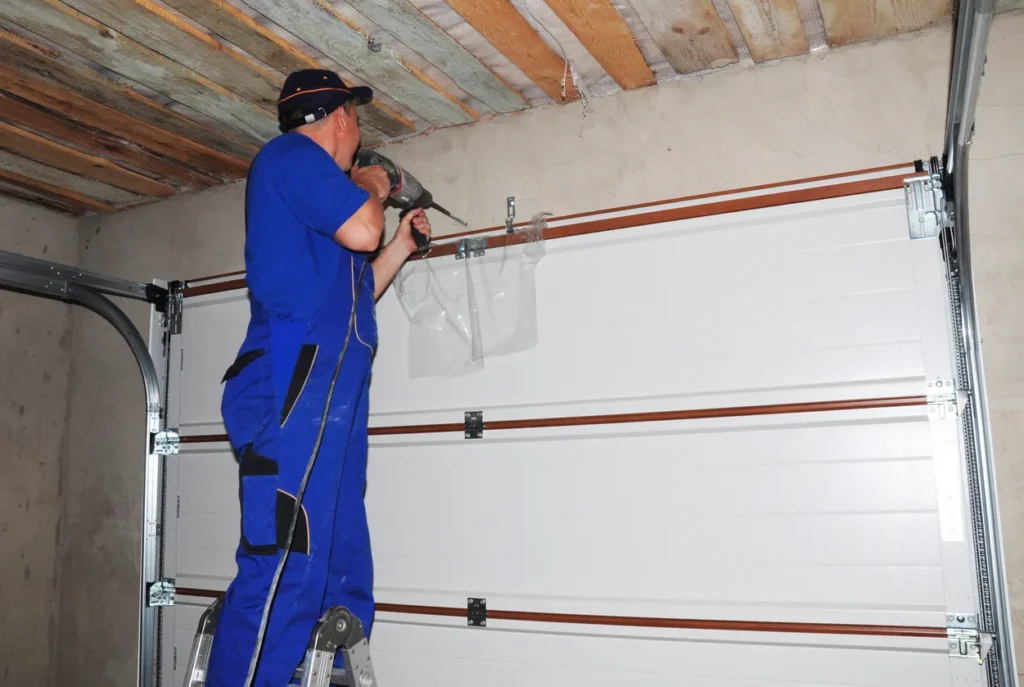
A professional installation is a complex construction project that involves high-tension mechanics, electrical integration, and precise carpentry. The process begins long before the new door is hung. Technicians first verify that the framing of the garage opening is square, plumb, and capable of supporting the static and dynamic loads of the new garage door system.
The installation workflow generally follows a strict sequence to ensure safety and proper operation:
- Site Inspection and Measurement: Technicians measure the width and height of the opening, ensuring there is adequate headroom, space above the door, and sideroom, space to the left and right, for the tracks and springs. In Crestline homes, where uneven floors or older framing is common, this step determines if custom adjustments to the track alignment are necessary.
- Safe Removal of Existing Hardware: The most dangerous part of the process is releasing the tension from the old torsion springs. These springs hold a significant amount of stored energy. Professionals use winding bars to carefully unwind the springs before dismantling the panels, tracks, and opener assembly. All debris is removed from the site.
- Preparing the Opening: If the weatherstripping around the perimeter is rotted or damaged, it is replaced. This seal is the first line of defense against rain and snow. The door jambs are checked for rot, and brackets are prepared for the new track installation.
- Section Assembly and Stacking: The new door panels are stacked one by one, starting from the bottom. Rollers are inserted into the hinges, and the vertical tracks are secured around them. This stacking phase requires precision. If the bottom section is not perfectly level, the entire door will be misaligned, leading to premature wear on the rollers and opener.
- Spring System Installation: Once the door sections are stacked and the tracks are secured, the torsion tube and spring assembly are mounted above the header. The cables are attached to the bottom brackets and wound onto the drums. The springs are then wound to a specific tension calculated based on the exact weight of the door. This counterbalances the door, making it manageable to lift manually.
- Opener Integration and Testing: The electric opener is mounted to the ceiling and connected to the door via a drawbar arm. Safety sensors, photo-eyes, are installed approximately six inches from the floor to detect obstructions. The system undergoes a series of cycle tests to adjust the force and limit settings, ensuring the door opens fully and closes tightly against the concrete without rebounding.
Deciding Between Repair and Replacement: A Guide
Homeowners often struggle to determine if a malfunction warrants a simple repair or a full system replacement. While replacing a single roller or a snapped cable is cost-effective, there are specific structural and mechanical indicators that suggest a new installation may be the more practical long-term choice:
- Severe Panel Damage: If a vehicle has hit the door, or if wind debris has dented multiple sections, replacement is usually necessary. Garage door panels are engineered to interlock. When a panel is bent, it disrupts the tongue-and-groove seal, causing the door to bind in the tracks. Sourcing matching panels for older models can be difficult, making full replacement the most viable option.
- Recurring Mechanical Failures: If you find yourself scheduling frequent repairs, such as replacing a spring, then a roller, then a hinge, the system has likely reached the end of its useful life. The cost of repeated repairs can approach or exceed the investment in a new, warrantied garage door.
- Lack of Safety Features: Doors installed prior to the early 1990s may lack essential safety features, such as infrared reversal sensors or pressure-sensitive auto-reverse mechanisms. If your door does not automatically reverse when it contacts an object, it presents a safety concern. Upgrading brings your home closer to current safety standards.
- Energy Inefficiency: If your garage remains cold during winter despite heating efforts, heat loss is often occurring through the door. Wooden doors, while visually appealing, offer minimal insulation and require ongoing maintenance to prevent rot. Upgrading to a steel sandwich door with a thermal break can improve energy efficiency and help reduce utility costs.
- Rust and Corrosion: In environments with significant precipitation, metal components near the bottom of the door can corrode. Once rust compromises the bottom section or the retainer holding the bottom seal, the garage door may no longer provide an effective barrier against pests or water intrusion.
Adapting to Crestline’s Climate: What You Need to Know
Installing a garage door in Crestline requires considerations that differ from lowland areas. The local climate, characterized by seasonal snowfall and annual precipitation averaging 35 to 45 inches, influences both material selection and installation methods.
- Insulation R-Value: The R-value measures a material’s resistance to heat flow. For mountain homes, a higher R-value is important. We recommend doors with polyurethane insulation, which expands to fill the cavity of the door panel, providing enhanced thermal protection and added rigidity. This helps maintain a more stable temperature inside the garage, protecting vehicles and stored items during colder months.
- Water and Snow Management: Snow accumulation against the garage door can melt and refreeze repeatedly. This cycle can degrade standard vinyl weatherstripping. We use heavy-duty bottom seals and recommend retainers designed to withstand exposure to ice and moisture. Proper installation ensures the door sits flush against the floor to help limit water intrusion and refreezing inside the garage.
- Battery Backup Systems: Mountain weather can contribute to power outages during storms. A garage door opener equipped with a battery backup allows continued operation when utility power is unavailable. California law, SB 969, requires that newly installed garage door openers include a battery backup. Good Golly Garage Doors ensures compliance with this regulation during every applicable installation.
- Wind Load Considerations: In addition to snow, strong winds moving through mountain passes can place pressure on a large surface area like a garage door. High-wind rated doors incorporate reinforced struts running horizontally across the interior of the panels. These struts help prevent bowing or failure during high-wind events, supporting the overall integrity of the garage structure.
Why Reliable Installation Matters
The difference between a door that operates smoothly for many years and one that develops problems prematurely often comes down to installation quality. A garage door is the largest moving component of a home and can weigh several hundred pounds. If tracks are misaligned or torsion springs are not balanced precisely, the opener motor may experience excessive strain and wear out sooner than expected.
Professional technicians understand the mechanical principles behind the garage door system. They ensure the weight of the door is supported by the springs rather than the opener. This balanced condition allows the door to remain in place when partially open without drifting up or down. Achieving this balance requires proper tools and training to safely handle the high-tension spring system.
Correct installation also includes securing track brackets directly into wall framing. In many garages, drywall conceals the studs, and improper anchoring can lead to hardware pulling loose over time. Technicians locate framing members and use appropriate fasteners to ensure a stable, long-term attachment.
Finally, professional installation includes a thorough inspection and adjustment of safety systems. Photo-eye sensors must be accurately aligned to communicate with the opener, and the closing force must be set so the door reverses when it encounters an obstruction while still sealing properly at the floor. This level of calibration is essential for safe and dependable operation.
Contact Us Today
When you need a new garage door installation, it is important to work with a team familiar with the specific conditions of the Crestline region, from colder winters to state regulations regarding opener technology. We provide clear assessments to help you select the appropriate material, style, and insulation level for your home. Trust a service that emphasizes structural integrity and long-term performance.
Ready to upgrade your home with a secure, weather-resistant garage door? Contact Good Golly Garage Doors to schedule your consultation and discuss installation timelines.
Proudly Serving Victorville and Surrounding Areas
We provide the best garage door services you can find across Victorville, CA. Wherever you are, Good Golly Garage Doors is ready to deliver. Let’s get your garage door in Victorville, CA or beyond back in top shape with service that’s fast, friendly, and built to last.
Call (760) 979-0605 All Service Areas