
New Garage Door Installation in Barstow, CA
Experience professional garage door installation in Barstow to enhance your home's security and curb appeal with Good Golly Garage Doors. Contact us today for a rapid, detailed on-site assessment.
Reliable Garage Door Installation When You Need It
Struggling with an old or broken garage door in Barstow’s extreme climates? We offer rapid, reliable installation services to secure and enhance your home. Contact our team today to schedule your onsite assessment and installation.
A malfunctioning or outdated garage door is more than just an inconvenience; it is a breach in your home’s security and a major energy drain, especially given the intense High Desert heat. Good Golly Garage Doors provides comprehensive installation solutions designed to withstand the local environment while improving your property’s curb appeal.
- Same-day installation options to quickly secure your property against theft and weather.
- Durable, weather-resistant doors specifically selected for Barstow’s desert conditions.
We are fully licensed and ensure thorough compliance with all local California building codes.
Benefits of a Professional Installation
Investing in a new overhead door installation provides operational improvements and long-term value. Homeowners in Barstow often face unique challenges due to the stark contrast between blistering summer highs and chilly winter lows. A modern installation addresses these thermal fluctuations directly.
When you authorize a new installation, you are purchasing a complete overhaul of the entry system. This process replaces worn-out components that cause grinding noises, slow operation, and potential safety hazards. Modern systems come equipped with advanced safety sensors and reinforced tracking systems that far outperform builder-grade models installed a decade ago.
Included in a standard professional installation:
- Complete removal and environmentally responsible disposal of your existing door and hardware.
- Installation of new tracks, heavy-duty rollers, and high-cycle torsion or extension springs.
- Weather-stripping and perimeter sealing to block dust, pests, and drafts.
- Connection and calibration of existing openers or installation of new smart-motor systems.
- A thorough 25-point safety inspection and balance test upon completion.
Understanding the Installation Process
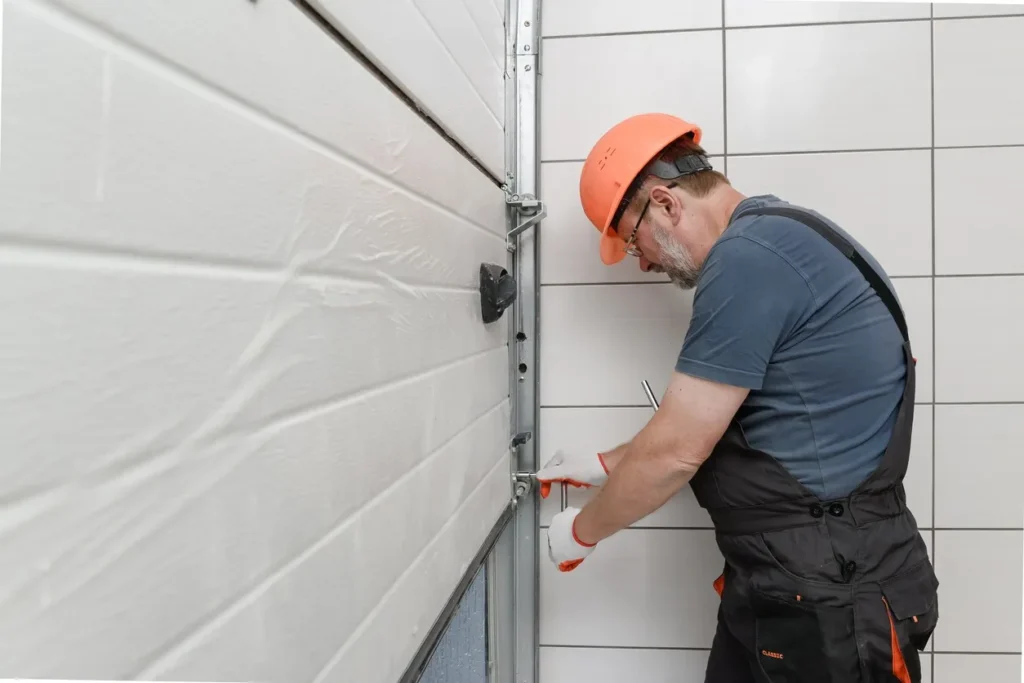
A proper installation relies on precision and structural integrity. Our technicians follow a rigorous, step-by-step protocol to ensure the new system operates smoothly and safely. We do not skip steps, ensuring that the heavy moving equipment is balanced perfectly to reduce strain on the opener and extend the lifespan of the system.
- Site Inspection and Measurement: The process begins with precise measurements of the rough opening, side room, and headroom (backroom). Technicians assess the condition of the jambs and header to ensure they can support the weight of the new assembly. This is the time when insulation needs and material preferences, such as steel, fiberglass, or composite, are finalized based on the property’s exposure to the sun.
- Preparation and Removal: Technicians carefully disassemble the old system. This involves releasing the tension on the old springs, which is a dangerous task requiring specialized tools. The panels are removed section by section, and old track hardware is unscrewed from the jambs. The work area is cleared of debris to prepare for the new setup.
- Hardware Installation and Track Alignment: New vertical and horizontal tracks are installed. The vertical tracks are leveled and plumbed to the jambs, while the horizontal tracks are secured to the ceiling. Proper alignment here is critical; even a fraction of an inch off-level can cause the door to bind or derail.
- Panel Assembly and Spring Tensioning: The new door panels are stacked and hinged together. Rollers are inserted into the tracks. Once the door structure is in place, the spring system (torsion or extension) is installed and wound to the specific tension required to counterbalance the door’s weight. A properly balanced door should lift manually with minimal effort.
- Final Calibration and Safety Testing: The operator is reconnected, and the limit switches are set to ensure the door closes fully without slamming. Safety reverse sensors are tested to verify they stop and reverse the door if an object crosses the threshold.
Deciding Between Repair and Full Replacement
Homeowners often hesitate between repairing a single broken component and opting for a full replacement. While repairs are suitable for minor issues like a single broken spring or a misaligned sensor, there are clear indicators when a new installation is the more financially sound decision.
Consider replacement if the following conditions apply:
- Severe Impact Damage: If panels are cracked or deeply dented from vehicle impact, the structural integrity of the section is compromised. Replacing multiple panels can often cost nearly as much as a brand-new system.
- Persistent Mechanical Failures: If you are calling for repairs every few months, replacing rollers one month, a hinge the next, and a cable later, the system has reached the end of its lifecycle. A new installation resets the clock on all hardware.
- Lack of Insulation: Older, non-insulated steel or wood doors transfer heat directly into the garage. In an area like Barstow, where summer temperatures regularly exceed 100°F, a non-insulated door turns the garage into a furnace, increasing cooling costs for the adjacent living spaces.
- Rust and Corrosion: Desert environments can sometimes lead to dry rot in wood or oxidation in metal if the finish fails. Once rust penetrates the section joints, the door becomes dangerous to operate.
Material Selection for Desert Climates
Selecting the right material is critical for longevity in the High Desert. The material must withstand intense UV radiation, high heat, and occasional high winds without warping, fading, or cracking.
- Steel Doors: Steel is the most popular choice for durability and security. For this region, a multi-layer steel door with a high R-value insulation core (polyurethane) is recommended. The steel exterior resists cracking under the sun, while the insulation keeps the interior cooler. Look for low-gauge steel (lower numbers mean thicker steel) for better dent resistance.
- Fiberglass Doors: Fiberglass is resistant to denting and does not rust, making it a low-maintenance option. It can be molded to mimic wood grain without the maintenance requirements of real wood. However, high-quality UV-resistant finishes are necessary to prevent the material from fading over time.
- Aluminum and Glass: Modern aluminum frames with glass panels offer a sleek, contemporary look. Aluminum is naturally rust-resistant. In hot climates, it is essential to use insulated / tempered glass or frosted glazing to limit heat gain while still allowing natural light into the space.
- Wood Doors: While aesthetically pleasing, wood requires significant maintenance in arid climates. The dry air can cause wood to shrink and crack, and the sun destroys finishes rapidly. If wood is chosen, it typically requires frequent sealing and staining to maintain its appearance and structural integrity.
Local Installation Factors: Permits and Seasonality
Operating in Barstow requires adherence to specific local factors that influence the installation timeline and technical requirements. Ignoring these factors can lead to code violations or premature equipment failure.
- Building Codes and Permits: California building codes are strict regarding garage door installations, particularly concerning fire safety and wind load resistance. Installations typically require a permit to ensure the work meets safety standards. Professional installers handle the permitting process, ensuring the door is rated for the wind speeds relevant to the region and that the opener meets current electrical safety mandates (such as battery backup requirements).
- Insulation and Energy Efficiency (Title 24): While garage doors themselves are not always strictly governed by Title 24 in unconditioned spaces, the thermal transfer affects the whole home. Installing a door with a high R-value (R-12 to R-18) helps buffer the home against the extreme diurnal temperature variations found in the desert, where temps drop significantly at night after scorching days.
- Seasonality and Scheduling: Installation can occur year-round, but demand often peaks during late spring and early summer as homeowners prepare for the heat. Winter installations are fully viable, though sealants and lubricants must be chosen to perform well in near-freezing overnight lows. The low precipitation generally means fewer weather delays compared to coastal regions.
Why Professional Execution Matters
The difference between a DIY attempt and a professional installation lies in the precision of the counterbalance system. A garage door is the largest moving object in a home, often weighing hundreds of pounds. Improperly installed springs can snap with lethal force, and poorly aligned tracks place excessive stress on the automatic opener, leading to early motor burnout.
Good Golly Garage Doors utilizes industrial-grade components that are not typically available at big-box retail stores. We use solid steel rails, high-cycle springs rated for 10,000+ cycles, and nylon-coated rollers that operate silently. This attention to component quality ensures that the system requires less maintenance over its lifespan.
Furthermore, professional installation guarantees that the door is “back-hung” correctly. This refers to the suspension of the horizontal tracks from the ceiling. If the back-hangs are not triangulated and secured to structural framing (joists), the tracks can sway during operation, causing the door to fall. Our team locates the proper anchor points to ensure rigid stability.
Technical Specifications: The Spring System
The heart of the new installation is the spring system. There are two primary types encountered during residential projects, and understanding the difference helps in making an informed purchase.
- Torsion Springs: Located above the door opening on the header. Torsion springs are generally safer and smoother than extension springs. They wind and unwind to lift the door via a shaft. For double-car garages or heavier insulated doors, torsion springs are the industry standard and provide better balance.
- Extension Springs: Located along the horizontal tracks on the sides. These stretch and contract to lift the door. While common in older homes or lighter single-car doors, they heatrequire safety cables to prevent the spring from becoming a projectile if it snaps. We often recommend converting from extension to torsion systems during a new installation for increased reliability.
Securing Your Home Investment
A new garage door yields one of the highest returns on investment (ROI) of any home improvement project. It instantly modernizes the façade of the house and improves energy efficiency. For residents in Barstow, the added benefit of superior insulation cannot be overstated. By stabilizing the temperature in the garage, you protect your vehicle’s battery and fluids, as well as any storage items sensitive to heat.
We focus on delivering a seamless customer experience from the initial consultation to the final demonstration of the new system.
Ensure your home is equipped to handle the elements and secure against intruders. A new installation is a critical upgrade for safety, functionality, and comfort.
Get your free installation quote now and upgrade your home’s functionality. Contact Us
Proudly Serving Victorville and Surrounding Areas
We provide the best garage door services you can find across Victorville, CA. Wherever you are, Good Golly Garage Doors is ready to deliver. Let’s get your garage door in Victorville, CA or beyond back in top shape with service that’s fast, friendly, and built to last.
Call (760) 979-0605 All Service Areas