

Garage Door Tune Up in Sun City, NV
Discover top-quality garage door maintenance in Sun City to eliminate noises and boost efficiency. Schedule a comprehensive tune-up today to ensure your door operates smoothly.
Eliminate Grinding Noises and Slow Response Times
Is your garage door screeching during operation, moving unevenly on the tracks, or taking longer than usual to respond to the remote? You are likely overdue for professional maintenance that restores functionality and safety to your system. Schedule your service visit immediately by contacting us.
Residents in Sun City often ignore minor irregularities in their garage door operation until the system fails, trapping vehicles inside. A proactive tune-up addresses the friction, wear, and misalignment that naturally occur over thousands of cycles. Good Golly Garage Doors provides comprehensive inspections and adjustments designed to catch issues before they become expensive repairs.
- Restore smooth, silent operation by eliminating friction in hinges, rollers, and tracks.
- Extend the operational lifespan of your opener and hardware through precise balancing.
- Secure same-day service to address vulnerabilities in your home’s largest entry point.
- All maintenance services are performed by licensed technicians and backed by a satisfaction guarantee.
Comprehensive 21-Point Inspection and Tune-Up Scope
A garage door is a complex system of moving parts under high tension. A proper tune-up goes far beyond a simple visual check; it involves the physical manipulation, tightening, and lubrication of every component that facilitates movement. When you book a service, the goal is to return the door to factory specifications regarding balance and safety.
The core of the service focuses on the counterbalance system. The springs and cables lift the heavy weight of the door, while the opener simply initiates the movement. If the door is out of balance, the opener works harder, leading to premature motor failure. Technicians check the torque on the torsion tube and the integrity of the lift cables to ensure the weight is evenly distributed.
Hardware tightening is another critical aspect of the scope. Vibration from daily use gradually loosens the bolts connecting the hinges, brackets, and track supports. A loose hinge can cause a door panel to sag, leading to binding or cracking. The service includes a systematic tightening of all lag screws and bolts, ensuring the structural integrity of the door remains intact.
Lubrication is applied strategically, not indiscriminately. Using the wrong lubricant, such as heavy grease on tracks, attracts dust and grit, which is particularly problematic in desert environments like Sun City. The scope includes applying non-silicone, lithium-based lubricants to rollers, hinges, and bearings, reducing metal-on-metal friction without creating a trap for debris.
Safety testing is the final, non-negotiable component. This involves testing the auto-reverse mechanism to ensure the door reverses immediately upon striking an object. Sensors are cleaned and realigned to ensure the invisible beam is uninterrupted. This detailed attention to safety protocols protects both your vehicle and your family.
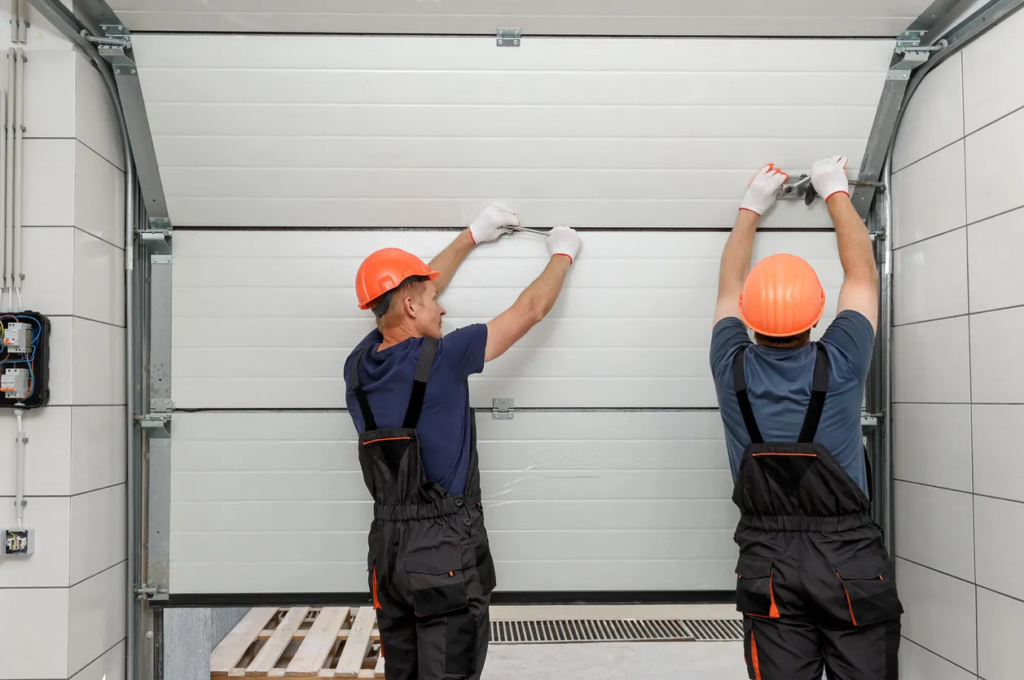
The Systematic Calibration Process
The process of tuning up a garage door follows a strict, logical sequence to ensure no component is overlooked. This systematic approach allows technicians to isolate variables and identify the root cause of noise or sluggishness.
- First, the technician performs a complete visual inspection of the door panels, looking for stress cracks or warping that might affect structural integrity. The track alignment is checked with a level to ensure the vertical and horizontal sections are plumb and parallel. Any deviation here causes the rollers to drag, creating significant noise.
- Next, the technician disengages the opener to operate the door manually. This “balance test” reveals the true health of the springs. A properly balanced door should lift easily with one hand and stay suspended halfway up. If the door slams shut or shoots upward, the spring tension is adjusted accordingly. This step is critical for relieving strain on the electric opener.
- Following the balance test, the focus shifts to the hardware. Every hinge and roller bracket is inspected. Nylon rollers are checked for flat spots or bearing wear. If the rollers are wobbling in the track, the door will vibrate excessively. The technician tightens all mounting hardware, ensuring the door sits firmly against the frame when closed to create a proper seal.
- Then, the focus moves to the opener rail and chain or belt. If the chain is sagging, it hits the rail, creating a clapping noise. The tension is adjusted to the manufacturer’s specifications. The limit switches, which tell the door exactly where to stop at the top and bottom of the cycle, are calibrated. This prevents the door from slamming into the concrete or over-retracting into the motor head.
- Finally, the safety systems are rigorously tested. The photo-eye sensors are cleaned of dust and cobwebs, and their alignment is corrected. A physical block test is performed to guarantee the motor’s force settings are sensitive enough to reverse when an obstruction is detected.
Deciding Between Routine Maintenance and Component Replacement
Homeowners often struggle to distinguish between a door that needs a simple adjustment and one that requires component replacement. While a tune-up can extend the life of a system, it cannot fix broken or end-of-life parts. Understanding the difference saves money and prevents future emergencies.
When a Tune-Up is Sufficient:
A tune-up is the correct solution when the door is intact but noisy. High-pitched squeaking typically indicates dry rollers or hinges that simply need lubrication. If the door moves a bit slower than it used to but still opens completely, a force adjustment and spring tension correction usually resolve the issue. Minor shaking or vibration is also typically solved by tightening hardware and aligning tracks.
When Repair or Replacement is Required:
If the technician discovers frayed cables, this is an immediate replacement scenario. A frayed cable cannot be “tuned” back to health; it is a safety hazard that will eventually snap. similarly, if a torsion spring has a gap in the coils, it is broken and must be replaced. Rusted or bent tracks generally require replacement rather than repair, as bending them back often weakens the metal.
The Role of Rollers:
Rollers are a common wear item. If you have steel rollers that are grinding, a tune-up may involve upgrading to nylon rollers. Steel rollers are noisy and require frequent lubrication, whereas nylon rollers with ball bearings are sealed, quiet, and maintenance-free. If the bearing in a roller has failed, no amount of lubrication will fix it; the roller must be swapped out.
Panel Damage:
A tune-up cannot fix structural damage to the door sections. If a car has backed into the door and cracked a panel, the structural integrity is compromised. While the door might still move, the bent section will force the rollers out of alignment with every cycle. In this case, section replacement is necessary before regular maintenance can be effective.
Seasonal Maintenance for the High Desert Climate
Operating a garage door in Sun City presents unique challenges due to the specific climate conditions of the region. The extreme heat and low humidity accelerate wear on specific components in ways that differ from more temperate climates.
Impact of Extreme Heat:
Summer temperatures that frequently exceed 100°F affect the viscosity of lubricants. Standard grease can liquefy and drip off the opener rail or harden into a gummy paste that obstructs movement. Maintenance in this region requires high-temperature synthetic lubricants that maintain consistency despite the heat. Furthermore, heat causes metal expansion. The tracks and the door itself expand during the day and contract at night. This thermal cycling can loosen hardware faster than in cooler regions, making regular tightening essential.
Dry Air and Rubber Components:
The lack of humidity dries out rubber and vinyl components rapidly. The bottom weather seal, which keeps out dust, pests, and hot air, is prone to cracking and shrinking. Once this seal is compromised, the energy efficiency of the garage drops, allowing heat to transfer into the home. Maintenance visits include inspecting this seal and the vinyl weatherstripping around the perimeter (stop molding) to ensure a tight fit.
Dust and Debris Management:
Wind in the desert carries fine dust and sand that settles into the lubricated tracks and opener rails. This mixture turns into an abrasive compound that grinds down nylon rollers and plastic gears inside the opener. Regular cleaning of the tracks—wiping them out completely before relubricating—is a critical step for Sun City homes to prevent premature failure of the drive gears.
Insulation and Energy Efficiency:
For homes with attached garages, the garage door is a massive thermal bridge. If the door is not closing fully due to limit switch errors, or if the panels have shifted, hot air infiltrates the garage. NV Energy often recommends ensuring localized seals are intact to reduce the load on HVAC systems. While a tune-up isn’t a construction renovation, ensuring the door seals tightly against the floor and header is a vital energy-saving measure.
Technical Expertise and Safety Assurance
The primary differentiator in professional garage door service is the handling of stored mechanical energy. The torsion spring system holds enough tension to lift a 300-pound door. Attempting to adjust these springs without the proper winding bars and training leads to severe injury. Professional calibration ensures that this tension is managed safely and accurately.
Modern garage door openers are also sophisticated electronic devices. Troubleshooting intermittent issues often requires diagnosing logic boards and capacitor health. A professional technician brings the diagnostic tools necessary to check voltage drops and sensor wiring continuity, ensuring that the issue is fixed at the source rather than just treating the symptom.
Another key aspect of professional service is the holistic view of the system. A technician looks at the geometry of the door arm, the position of the header bracket, and the clearance of the radius. Incorrect geometry forces the opener to push the door into the track rather than guiding it up. Correcting these installation errors during a tune-up prevents the top panel from buckling over time.
Warranties also play a significant role. Good Golly Garage Doors provides warranties on labor and parts installed during maintenance. If a part fails shortly after a service, the homeowner is protected. This contrasts with DIY repairs where a mistake voids the manufacturer’s warranty on the opener or the door itself.
Professional service also ensures compliance with safety standards. Since 1993, federal law has required specific safety features on all automated doors. Technicians verify that your system is compliant with UL 325 standards. If the opener is too old to meet these safety requirements, the technician provides honest assessments regarding the necessity of an upgrade for safety reasons, rather than just trying to sell a new unit.
Restore Your Garage Door Performance Today
A noisy, sluggish, or unbalanced garage door is more than a nuisance; it is a security risk and a potential safety hazard. Ignoring the signs of wear leads to emergency failures that are inconvenient and costly. Regular professional maintenance ensures your system operates silently, seals tightly against the desert heat, and functions reliably every time you press the button.
Prioritize the longevity of your home’s largest moving appliance. Contact our team to schedule a comprehensive inspection and tune-up. We ensure your hardware is tightened, your springs are balanced, and your safety sensors are calibrated for peak performance. Schedule your garage door tune-up now!
Proudly Serving Las Vegas and Surrounding Areas
From Summerlin to Henderson, we provide the best garage door services you can find across Las Vegas. Wherever you are, Good Golly Garage Doors is ready to deliver. Let’s get your garage door in Las Vegas or beyond back in top shape with service that’s fast, friendly, and built to last.
View All Cities
 All Service Areas