

Garage Door Tune Up in Round Rock, TX
Is your garage door making noise or acting up? Book a professional tune-up in Round Rock to ensure safety and reliability. Don't wait, secure your appointment today.
Eliminate Noise and Prevent Failure With a Precision Garage Door Tune-Up
A noisy, shaking, or inconsistent garage door is not just a minor annoyance; it is a security risk and a clear indicator of looming mechanical failure, especially in the intense heat of Central Texas. Secure your appointment for a comprehensive system inspection and tune-up today by visiting schedule service.
Residents in Round Rock know that ignoring these early warning signs can lead to being trapped in or out of your garage at the most inconvenient times. Good Golly Garage Doors provides a thorough maintenance service designed to catch small issues before they become expensive catastrophes. Whether your system is suffering from the mid-90s°F summer heat or the wear and tear of daily use, our technicians restore functionality and safety efficiently.
- Rapid same-day service ensures minimal disruption to your daily schedule.
- Detailed safety inspections identify hidden wear to prolong the life of your door.
- Cost-effective maintenance solutions help you avoid expensive full-system replacements.
Licensed, bonded, and insured – your peace of mind is our priority.
Silence and Smoothness: Your Garage Door Perfected
The average garage door opens and closes more than a thousand times a year. This heavy operational cycle puts immense stress on the moving parts that lift and lower the heavy panels. Without regular intervention, the metal components begin to grind, the lubrication dries out, and the balance of the door shifts. This results in the loud screeching noises and shuddering movements that disrupt your home environment. A professional tune-up is not merely about silencing the noise; it is about restoring the mechanical geometry of the system.
When a technician performs a tune-up, the goal is to return the door to its factory specifications. Over time, vibrations loosen hardware, and thermal expansion—common in Round Rock summers—can shift the alignment of tracks and sensors. A perfected garage door should move almost silently and require very little force to operate manually. If the door feels heavy when you lift it by hand, the springs are not doing their job, putting dangerous strain on your automatic opener. Our service addresses these core mechanical issues to ensure smooth, effortless operation.
Regular maintenance serves as the first line of defense against security breaches. A door that does not close flush with the ground or bounces back unexpectedly leaves your home vulnerable. By perfecting the alignment and travel limits of the opener, we ensure that your garage remains a secure entry point. This level of attention to detail transforms a clunky, unreliable barrier into a seamless extension of your home’s architecture.
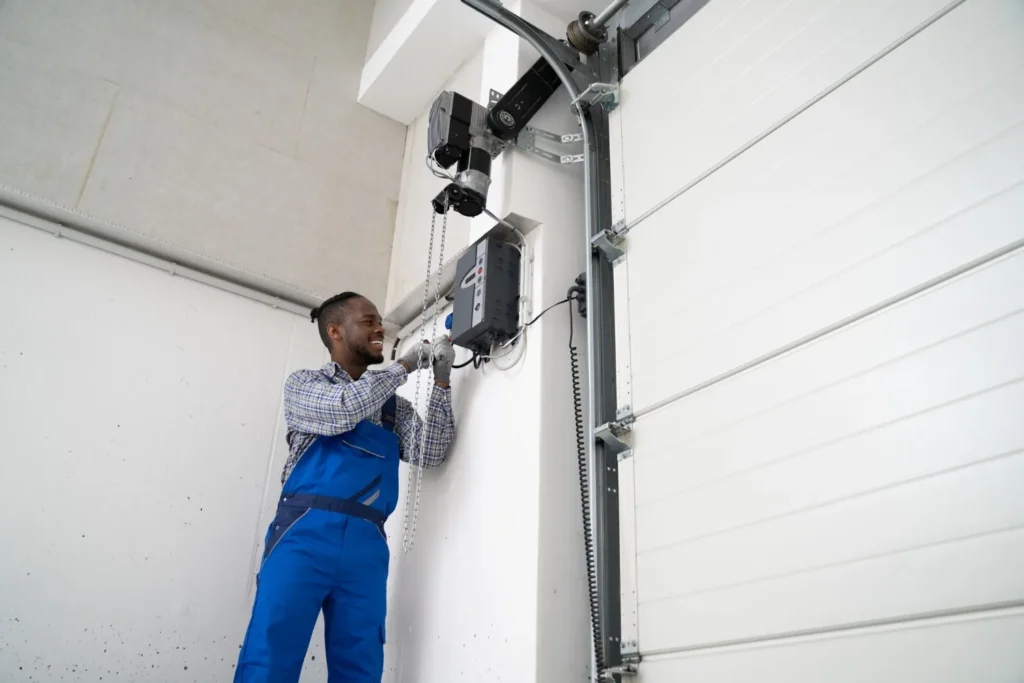
Today’s Tune-Up: What We Check and Adjust
A comprehensive tune-up goes far beyond simply spraying lubricant on the hinges — learn about our process. It involves a systematic examination of every component that contributes to the door’s movement and safety. We utilize a multi-point inspection checklist to ensure no bolt is left unchecked and no safety hazard is overlooked.
The Torsion and Extension Springs
The springs are the muscles of your garage door system. They bear the weight of the door, making it easy for the opener to lift. During a tune-up, we inspect springs for signs of rust, elongation, or fatigue. We check the tension to ensure the door is properly balanced. If a door is out of balance, the opener works harder, shortening its lifespan. We apply specific lubricants designed to penetrate the coils and reduce friction, preventing the loud “bang” associated with spring binding.
Cables and Drums
Lift cables are under extreme tension and are prone to fraying over time. A snapped cable can cause the door to slam shut or hang crookedly. We examine the full length of the cables for any broken strands or corrosion. We also inspect the cable drums at the top of the door to ensure the cables are winding neatly and are not slipping out of the grooves, which is a common cause of jammed doors.
Rollers, Hinges, and Bearings
These components facilitate the movement of the door panels through the tracks. Steel rollers often degrade, causing metal-on-metal grinding. We inspect each roller for flat spots or wobbly bearings. We also tighten all hinges, as loose hinges can cause the door sections to sag, leading to binding in the tracks. We check the end bearing plates to ensure the torsion tube rotates freely.
Track Alignment and Security
The tracks guide the door’s path. If they are misaligned, the door may stick or pop out of place. We check the spacing between the tracks and the door to ensure it is uniform from top to bottom. We also inspect the mounting brackets that hold the tracks to the wall and ceiling, tightening any hardware that has vibrated loose over years of operation.
Opener Logic and Sensors
The automatic opener requires calibration to know how far to travel and how much force to use. We test and adjust the up and down force limits. Crucially, we test the auto-reverse safety mechanism. We also align and clean the photo-eye sensors, which are easily knocked out of position or obscured by dust and cobwebs, preventing the door from closing.
Our Tune-Up Process: Step-by-Step Comfort
We follow a rigorous protocol to ensure every tune-up yields consistent, high-quality results. This structured approach allows us to identify root causes of failure rather than just treating symptoms.
- Initial Diagnostic Inspection: The process begins with a visual and auditory inspection. We operate the door to listen for specific noises—grinding indicates bearing issues, while popping often points to spring problems. We perform a balance test by disconnecting the opener and lifting the door manually to gauge spring health.
- Hardware Tightening and Adjustment: Garage doors vibrate during operation, which naturally loosens bolts and screws. We traverse the entire door, tightening every hinge, roller bracket, and track bolt. We pay special attention to the center stile and the connection points between the opener arm and the door, which are high-stress areas.
- Precision Lubrication: Good Golly Garage Doors uses professional-grade, non-silicone-based lubricants specifically formulated for garage doors. We lubricate the springs, rollers (bearings only, not the track), hinges, and the opener’s rail or screw drive. Proper lubrication reduces friction, heat, and noise.
- Safety and Limit Calibration: We adjust the opener’s travel limits to ensure the door seals tightly against the floor without pushing down too hard, which can bow the rail. We then test the safety reversal system by placing a block of wood under the door. If the door does not reverse upon contact, we adjust the force settings until it complies with safety standards.
- Final Operational Test: After all adjustments are complete, we run the door through several cycles to ensure smooth, quiet operation. We demonstrate the improvement to the homeowner and provide a report on the condition of the system, noting any parts that are nearing the end of their service life — read expert tips.
Deciding Between Repair or Replacement: A Simple Guide
While a tune-up can extend the life of your system significantly, there comes a point where repair is no longer the most economical or safe option. Understanding when to maintain and when to replace is key to managing your home maintenance budget effectively.
When a Tune-Up is Sufficient
- The door is noisy but moves freely: If the primary complaint is squeaking or minor shaking, but the panels are intact and the door is balanced, a tune-up is the correct solution.
- The door is less than 10 years old: Most quality garage doors are built to last 15 to 20 years. If the door is relatively new, maintenance is usually all that is required to restore performance.
- Cosmetic issues are minor: If the panels have small dents but are structurally sound and not sagging, a tune-up can keep the mechanical parts running smoothly despite cosmetic imperfections.
When Replacement is Necessary
- Structural damage to panels: If the door sections are cracked, sagging in the middle, or separating, a tune-up cannot fix the structural integrity. Compromised panels can collapse under wind load or their own weight.
- Severe rust or rot: In humid climates, rust can eat through the bottom sections of steel doors, or wood doors can rot. Once the material is compromised, hardware has nothing solid to grip, making repairs temporary and dangerous.
- Safety features are obsolete: If your opener lacks modern safety eyes or auto-reverse mechanisms (common in units pre-dating 1993), it is safer to replace the unit than to attempt to service an unsafe machine.
- Cost of repair exceeds 50% of replacement: If you need new springs, new rollers, a new opener, and track adjustments all at once, the total cost may approach the price of a brand-new, warrantied system.
Round Rock Garage Regulations: Staying Compliant
Operating a garage door service in Round Rock requires an understanding of local environmental factors and building standards. While a standard tune-up generally does not require a municipal permit, the functionality of your door is tied closely to local code compliance regarding safety and weather resistance.
Weatherproofing for Central Texas
The climate in this region fluctuates between intense heat and sudden, heavy storms. High temperatures in the mid-90s cause metal tracks and springs to expand. If the door was installed or adjusted during a cooler period without accounting for this thermal expansion, it may bind during the summer. Our tune-up process accounts for these seasonal shifts. We also check the bottom weather seal. A brittle or cracked seal allows heat, humidity, and pests into the garage, increasing energy bills and risking damage to stored items. Ensuring a tight seal is critical for storm preparedness.
Safety Sensor Compliance
Local building codes strictly enforce the presence and functionality of safety sensors (photo-eyes) on all automatic garage door openers. A non-compliant door is a liability, particularly if you plan to sell your home. During our maintenance visit, we verify that these sensors are installed at the correct height (no more than 6 inches from the floor) and are functioning correctly to prevent entrapment accidents.
HOA and Community Standards
Many neighborhoods in the area have strict Homeowners Association guidelines regarding the appearance and noise levels of garage doors. A loud, screeching door can be a nuisance to neighbors and a violation of noise ordinances in dense subdivisions. Regular maintenance ensures your door operates quietly, keeping you in good standing with community regulations.
Why Choose Us: Local Experience, Quality Service
Selecting the right service provider means finding a team that prioritizes technical accuracy over quick fixes. We understand the specific mechanical stresses placed on garage doors in this region. Our trucks are stocked with high-quality, professional-grade parts, allowing us to perform necessary minor repairs on the spot during a tune-up without needing a second appointment.
We do not use generic “one-size-fits-all” lubricants or parts. We utilize products specifically engineered for heavy-duty garage door applications. Our technicians are trained to spot the difference between a part that just looks old and a part that is about to fail, giving you honest advice on how to manage your system’s health. We provide transparent assessments, explaining exactly what was adjusted and why, so you are never left guessing about the state of your home’s largest moving object.
Furthermore, we believe in preventative care. By identifying issues like fraying cables or worn bearings early, we save our customers the stress and high cost of emergency calls. Our commitment is to the longevity of your door and the safety of your family. Good Golly Garage Doors delivers reliable, expert service that keeps your day moving smoothly.
Ensure your garage door remains safe, quiet, and reliable for years to come — contact us today to schedule your precision tune-up.
Proudly Serving Austin, TX, and Surrounding Areas
From the neighborhoods of Austin to Round Rock and Buda, we provide the best garage door services you can find across the area. Whether it’s the impact of Texas heat and sudden storms on garage door components, we ensure our solutions are tailored to your needs. Wherever you are, Good Golly Garage Doors is ready to deliver.
View All Cities
 All Service Areas