

Garage Door Tune Up In Lakeway, TX
Explore our professional garage door tune-up services in Lakeway to secure and optimize your system. Book an appointment today for a safer, quieter door!
Eliminate Noise and Restore Balance with a Precision Garage Door Tune-Up
A screeching, jerking, or slow-moving garage door creates unnecessary stress and potential safety hazards for your home. If your system isn’t operating smoothly, contact us today to schedule a comprehensive inspection and maintenance service. At Good Golly Garage Doors, our technicians provide thorough tune-ups in Lakeway that address the root causes of wear and tear, ensuring your door operates quietly and reliably for years to come:
- Same-day service availability helps you restore security and convenience immediately.
- Comprehensive 21-point safety inspections cover lubrication, balance adjustments, and hardware tightening to prevent costly breakdowns.
- Clear, upfront quotes ensure you know exactly what the maintenance entails with no hidden fees.
All services are performed by fully licensed and insured technicians backed by a satisfaction guarantee.
What a Professional Tune-Up Includes
A garage door system is a complex machine consisting of hundreds of moving parts that must work in unison to lift a heavy barrier safely. Over time, vibration loosens hardware, grease dries out, and springs lose their tension. A professional tune-up is not merely a quick visual check; it is a rigorous maintenance process designed to reset the system to factory specifications.
Our technicians perform a systematic evaluation and adjustment of the entire assembly. This service focuses on preventative care, catching minor deviations before they become catastrophic failures.
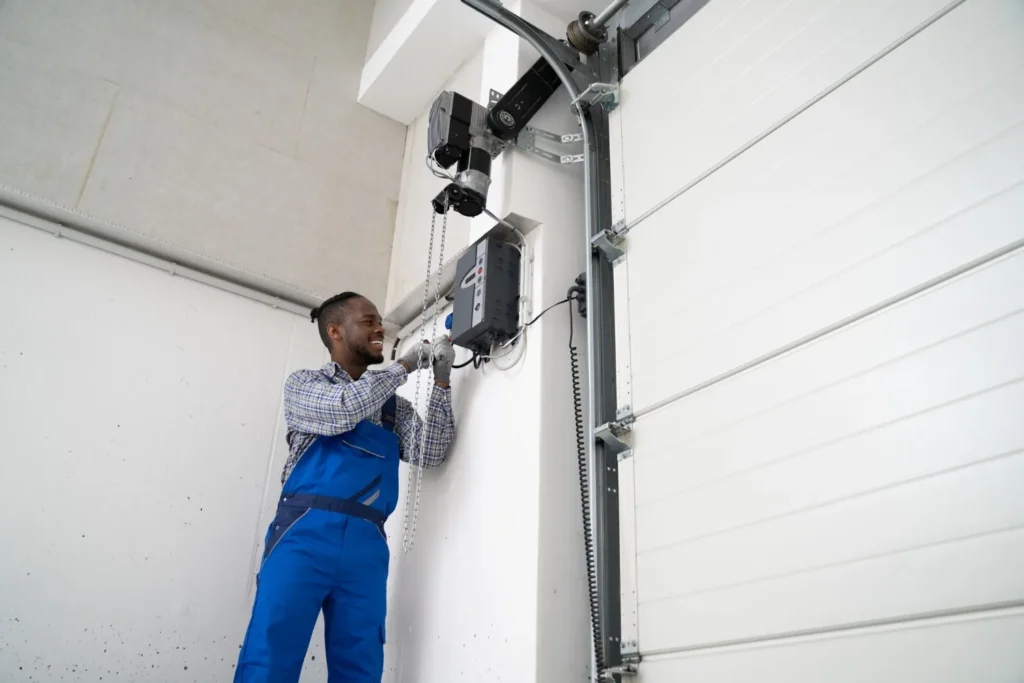
Hardware Inspection and Tightening
The constant movement of the door creates vibration that inevitably loosens bolts and screws. We meticulously examine every hinge, bracket, and fastener on the door and the track system:
- Technicians tighten all roller brackets and bolts to ensure the door sits firmly in the track.
- Hinges are inspected for stress cracks or signs of fatigue.
- We secure the opener mounting hardware to prevent the motor unit from swaying during operation, which can damage the internal gears.
Lubrication of Moving Parts
Proper lubrication is the difference between a silent door and a noisy one. However, using the wrong lubricant, such as standard WD-40, can actually attract dust and grit, causing more wear. We use professional-grade lithium or silicone-based sprays specifically designed for garage door components:
- We lubricate the springs to reduce friction between coils, which is a common source of loud banging noises.
- Steel rollers and bearings are treated to ensure smooth rotation within the track.
- Hinges and pivot points are coated to prevent metal-on-metal grinding.
Door Balance and Alignment
The most critical aspect of the tune-up is ensuring the door is properly balanced. If the springs are not providing the correct amount of lift, the electric opener has to work harder, shortening its lifespan:
- We disconnect the opener to test the door manually. A properly balanced door should stay open halfway without falling or shooting up.
- Spring tension is adjusted to correct any imbalance.
- Tracks are measured and aligned to ensure they are parallel and plumb, preventing the door from binding or dragging.
Safety Features Testing
Modern garage doors are equipped with safety mechanisms to protect people, pets, and vehicles. Verifying these systems is a non-negotiable part of our maintenance visit:
- Photo-eye sensors are cleaned and aligned to ensure the beam is strong and uninterrupted.
- The auto-reverse mechanism is tested by placing an object in the door’s path to confirm it reverses immediately upon contact.
- Emergency release cords are checked for accessibility and functionality.
The Systematic Maintenance Process
Understanding how our technicians approach a tune-up helps you prepare for the service. We operate with efficiency and transparency, ensuring that your daily routine in Lakeway is minimally disrupted while we maximize the performance of your garage door:
- Initial Assessment and Operation Check: The technician arrives and begins by operating the door to listen for specific noises. Grinding indicates bearing issues, while popping suggests spring binding. We visually inspect the panels, tracks, and cables for obvious damage. This initial diagnostic phase allows us to pinpoint specific areas that require aggressive maintenance or potential repair.
- Cleaning and Clearing: Debris in the tracks allows rollers to skip or slide, leading to misalignment. We clean the tracks and the photo-eye sensors. Accumulated spiderwebs, dust, and grime are removed from the motor housing and the sensor lenses to prevent false positives that stop the door from closing.
- Adjustment and Calibration: This is the hands-on phase where tools are applied to the hardware. We adjust the limit settings on the opener, which dictate how far the door travels up and down. If the door slams into the concrete or doesn’t seal completely, we fine-tune the down-limit. We also adjust the force settings, which control how much power the opener uses. Good Golly Garage Doors ensures these settings are optimized so the door reverses properly if it encounters an obstruction but doesn’t reverse unnecessarily due to wind or minor friction.
- Final Safety Test and Report: Once the adjustments and lubrication are complete, we run the door through several full cycles. We demonstrate the silent operation and the functioning safety reverse system. Finally, we provide a detailed checklist of what was serviced and flag any parts that are nearing the end of their lifecycle, allowing you to plan for future replacements without pressure.
Deciding Between Maintenance and Replacement
While a tune-up extends the life of your system, there are specific scenarios where maintenance is no longer a viable financial decision. Understanding the difference between a system that needs adjustment and one that has reached terminal failure helps you avoid throwing money at a temporary fix.
When to Tune Up and Repair
If the door is generally in good shape but has become noisy or slightly sluggish, a tune-up is the correct path:
- Choose a tune-up if the door moves but squeaks, squeals, or rattles.
- Schedule maintenance if the door feels heavy when lifted manually but stays in the tracks.
- Opt for adjustment if the sensors are flickering or the wall button works but the remotes are intermittent.
When to Replace Components or the Entire System
Structural damage or catastrophic part failure requires more than lubrication and tightening:
- If a torsion spring has snapped, the door will not open. This requires a specific repair service, not just a tune-up.
- If the door panels are rusted through, cracked, or bent from an impact, no amount of adjustment will fix the structural integrity. Replacement panels or a new door are necessary.
- If the opener is over 15 years old and lacks modern safety sensors (pre-1993 models), replacement is recommended for safety and compliance with current codes.
- Recurring breakdowns despite regular maintenance indicate the system is worn out. If you are calling for repairs every few months, investing in a new, warrantied system is often more cost-effective in the long run.
Local Factors Affecting Garage Doors in Lakeway
The environment in Central Texas plays a significant role in how frequently your garage door requires attention. The specific climate conditions in Lakeway dictate a need for vigilant maintenance to combat thermal expansion and humidity.
Impact of Heat and Humidity
Summer temperatures consistently exceeding 90°F cause metal components to expand:
- Metal tracks and springs expand in the heat, which can cause the door to bind if the spacing was set too tight during cooler months.
- Lubricants can thin out and drip off in extreme heat, leaving moving parts unprotected.
- High humidity, particularly during the rainy peaks in May and September, accelerates oxidation. Rust on steel rollers or springs creates friction and can lead to premature snapping.
Seasonal Debris and Storms
Lakeway is subject to storms that bring wind and debris:
- Leaves, twigs, and dust often blow into the garage tracks, obstructing the rollers.
- Strong winds can exert pressure on the door panels. A tune-up ensures the reinforcement struts are securely fastened to help the door withstand wind loads.
Compliance and Permits
For standard tune-ups and minor repairs, permits are generally not required. However, if maintenance reveals the need for a full door replacement, local codes regarding wind load ratings must be followed. We ensure that any recommended major repairs or replacements comply with local safety standards to protect your home and investment.
Why Professional Maintenance Matters
Attempting to DIY a garage door tune-up can be dangerous and often ineffective. Garage door springs are under immense tension, capable of causing severe injury if mishandled. Furthermore, professional technicians have the trained eye to spot “invisible” problems—like a fraying cable that looks fine from a distance or a hairline crack in a hinge—that a homeowner might miss.
We utilize specialized tools to measure spring tension and door balance precisely. Our service trucks are stocked with the correct gauge of hardware and professional-grade lubricants that are not available at standard hardware stores. By relying on professional service, you ensure that the warranty on your door and opener remains valid, as many manufacturers require proof of professional maintenance for warranty claims.
Restore Quiet, Smooth Performance: Schedule Your Tune-Up Today
Regular maintenance is an investment in the longevity of your home’s largest moving appliance. It prevents the inconvenience of a car trapped in the garage on a Monday morning and ensures the safety of your family. Secure your home and ensure seamless operation today; contact our team.
 All Service Areas