

Garage Door Tune Up in Anthem, AZ
Struggling with a stuck garage door in Anthem? Secure your home with our expert tune-up services. Contact us today for rapid, reliable maintenance.
Is Your Garage Door Stuck Again?
Garage doors experience gradual wear from daily use, especially in Anthem, where dust and thermal expansion place added stress on mechanical components. Many homeowners encounter issues such as uneven movement, increased noise, or delayed response that indicate the system is no longer operating as efficiently as it should. At Good Golly Garage Doors, we provide professional garage door tune-up services in Anthem, AZ, designed to restore proper operation and help reduce long-term wear. Contact us today to restore your garage door’s performance and peace of mind!
Comprehensive Maintenance: What is Included in a Tune-Up
A garage door tune-up involves a detailed, multi-point inspection and adjustment process intended to return the system to proper operating condition. Over time, vibration loosens hardware, and desert conditions dry out lubrication. Our tune-up process addresses both mechanical and safety-related components to help the system operate as designed.
By identifying worn parts, balance issues, or alignment concerns early, homeowners can plan future service rather than dealing with unexpected breakdowns. We evaluate the counterbalance system, track alignment, opener settings, and safety features to ensure all components work together properly.
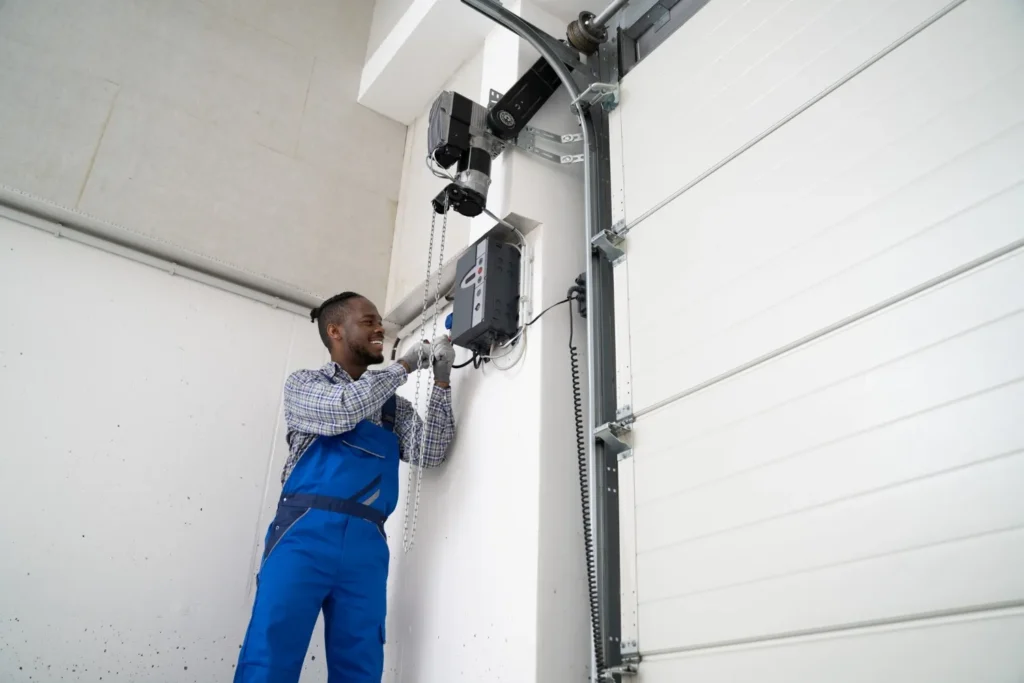
The 25-Point Safety and Performance Inspection
Your tune-up begins with a systematic evaluation of the door’s physical condition. We examine the door sections for stress cracks, warping, or separation, which can occur after years of exposure to the elements.
- Torsion and Extension Spring Analysis: We measure the tension and integrity of your springs. These components bear the brunt of the door’s weight. We check for gaps in the coils, signs of corrosion, or loss of tension that puts strain on the opener.
- Cable and Drum Inspection: We inspect lift cables for fraying, kinking, or unraveling strands. A snapped cable is a dangerous failure point; catching a frayed cable early prevents heavy doors from crashing down.
- Roller and Hinge Assessment: We check every roller for flat spots and bearing wear. Worn rollers cause vibration and noise. We also inspect hinges for stress fractures and ensure they hold the door panels firmly together.
- Track Alignment Check: We measure the vertical and horizontal tracks to ensure they are plumb and parallel. Even a fraction of an inch of misalignment can cause the door to bind, drag, or pop off the tracks entirely.
Hardware Tightening and Stabilization
Garage doors are massive moving walls that generate significant vibration during every cycle. Over hundreds of cycles, this vibration naturally loosens the bolts and nuts holding the hardware together. A loose system is a noisy, dangerous system.
- Fastener Tightening: We systematically tighten every lag screw, bolt, and nut on the door and the track brackets. This rigidity reduces noise and prevents parts from shearing off under load.
- Strut reinforcement: We ensure the U-shaped struts running across the door panels are securely fastened. These struts prevent the door from bowing when in the open position.
- Anchor Bracket Security: We verify that the mounting brackets holding the track to the wall are secure, preventing the entire assembly from pulling away from the structure.
Precision Lubrication and Adjustment
Friction is the enemy of your garage door system. We utilize specialized lubricants designed for high-temperature environments.
- Moving Parts Lubrication: We apply non-drip, silicone-based lubricant to rollers, hinges, and bearings. This reduces metal-on-metal grinding, significantly quieting the door’s operation.
- Spring Lubrication: We lubricate the coils of the torsion springs to reduce friction between the coils as they expand and contract, which extends the cycle life of the spring.
- Opener Force Adjustment: We test and adjust the force settings on your garage door opener. If the force is too low, the door stops mid-cycle; if too high, it creates safety risks and unnecessary wear on the gears.
- Limit Switch Calibration: We reset the travel limits to ensure the door opens fully without hitting the stop bolt and closes tightly against the floor without reversing unnecessarily.
How the Tune-Up Process Works
We have structured our maintenance process to be methodical, thorough, and transparent. Our goal is to evaluate every critical operating component without unnecessary delays or guesswork. A professional tune-up follows a clear sequence so nothing is overlooked and adjustments are made with intention rather than trial and error.
- Initial Diagnostics: The technician begins by operating the door to listen for irregularities. Grinding, squeaking, or rattling noises provide clues about where friction or wear is occurring.
- Balance Test: We disconnect the opener to manually lift the door. A properly balanced door should stay suspended halfway up. If it falls, the springs are weak; if it shoots up, they are too tight. We adjust the tension to achieve neutral buoyancy.
- Safety Reverse Test: We place a standardized block in the door’s path to ensure the opener senses resistance and reverses immediately upon contact. This is a critical safety requirement for all automated doors.
- Sensor Alignment: We inspect the photo-eye sensors at the base of the tracks. We clean the lenses and align the beams to ensure the door will not close if an obstruction (like a child or pet) breaks the beam.
- Final Operation Check: After all adjustments and lubrications are complete, we run the door through several automatic cycles to verify smooth, quiet, and reliable operation.
When to Repair vs. When to Replace
While a tune-up can significantly extend the service life of a garage door system, there are circumstances where maintenance alone may no longer provide meaningful improvement. We believe homeowners should have clear technical information to make informed decisions based on condition rather than pressure.
Recognizing the Point of Diminishing Returns
If your garage door requires frequent adjustments just to remain operational, the structural integrity may be compromised beyond what a tune-up can fix.
- Structural Damage: If the door sections are cracked, sagging, or bowed, a tune-up cannot restore the structural rigidity. Sagging panels can cause the door to bind in the tracks regardless of lubrication.
- Rot and Rust: In older wood or un-galvanized steel doors, extensive rot or rust weakens the connection points for hinges and rollers. If the hardware cannot be tightened because the material underneath is crumbling, replacement is necessary.
- Obsolete Safety Standards: Some older systems were built before modern safety standards became common. In these cases, replacement may offer improved protection and compatibility with current safety requirements.
- Cost-Benefit Ratio: If the cost of the parts required to fix the current door (springs, cables, rollers, opener gears) exceeds 50% of the cost of a new, modern door system, replacement is generally the smarter long-term investment.
Why Professional Inspection Matters
Attempting to tune up a garage door without professional training can be dangerous and often results in incomplete maintenance. The garage door is the largest moving object in your home, and the spring system is under extreme tension.
Safety and Compliance
Garage door springs store enough potential energy to lift hundreds of pounds. Mishandling these components during a DIY adjustment can result in severe injury.
- Specialized Tools: We utilize winding bars and tension gauges specifically designed for garage door torsion systems. Makeshift tools can slip, releasing the spring’s energy instantaneously.
- Code Compliance: We ensure that your system meets current safety codes regarding entrapment protection and fire egress.
- Holistic Diagnostics: A homeowner might grease a squeaky wheel, missing the fact that the squeak is caused by a fraying cable about to snap. We look past the symptoms to find the root cause.
Maximizing System Longevity
Routine professional maintenance pays for itself by delaying the need for expensive capital replacements. A well-tuned door places less strain on the opener motor, allowing it to last years longer than a motor that is constantly fighting a balanced or sticky door.
- Supporting Proper System Care: Regular professional maintenance helps demonstrate that a garage door system has been properly cared for over time. Our service records provide homeowners with clear documentation of inspections and adjustments, which can be useful for tracking system condition and planning future service needs.
- Quiet Operation: A rattling, grinding door is a nuisance to you and your neighbors. Professional balancing and lubrication make the door whisper-quiet, improving the quality of life in your home.
What’s more? With the Good Golly Gold Plan, members enjoy routine inspections and exclusive discounts on services, helping prevent unexpected failures and keeping your garage door safe, reliable, and whisper-quiet.
Secure Your Home with a Precision Tune-Up
Subtle changes in garage door performance, such as slower movement, hesitation, or increased noise, often indicate that adjustments are needed. Addressing these signs early through routine maintenance helps restore consistent operation and reduces the likelihood of unexpected mechanical issues.
Our process focuses on balance, alignment, lubrication, and safety verification so your garage door continues to operate smoothly as part of your home’s primary access point. Good Golly Garage Doors is ready to help keep your system operating at peak performance with thorough diagnostics and precise adjustments. Contact us today to schedule your garage door tune-up and maintain quiet, dependable operation.
Proudly Serving Phoenix, AZ, and Surrounding Areas
We provide the best garage door services you can find across Phoenix, AZ. Whether it’s the impact of Phoenix’s heat and sudden storms on garage door components, we ensure our solutions are tailored to your needs. Wherever you are, Good Golly Garage Doors is ready to deliver.
Call (602) 399-7054 All Service Areas