

Garage Door Track Repair in Scottsdale, AZ
Stuck with a jammed garage door in Scottsdale? Contact us for rapid, expert garage door track repair and ensure your property's security and functionality.
Garage Door Track Repair
A misaligned or bent track stops your day cold, trapping your vehicle and leaving your home vulnerable to security risks. If your door is jammed, off-balance, or making grinding noises, contact Good Golly Garage Doors to schedule a diagnostic inspection or repair.
Residents in Scottsdale rely on functional garage systems to handle daily routines. When the track fails, the entire system becomes a heavy, dangerous hazard. We provide rapid response services to stabilize the door, realign the hardware, and restore full functionality without unnecessary delays.
- Get your garage door back on track within hours, not days.
- Experienced technicians available for urgent repairs.
Fully licensed and insured; satisfaction guaranteed.
What to Expect From Professional Track Service
When you request service for a garage door track issue, the focus is on stabilization and long-term correction. A track does not simply bend or misalign on its own; there is almost always an underlying cause, such as loose hardware, a vehicle impact, or a frayed cable. Good Golly Garage Doors approaches every job with a comprehensive diagnostic process to ensure the repair lasts.
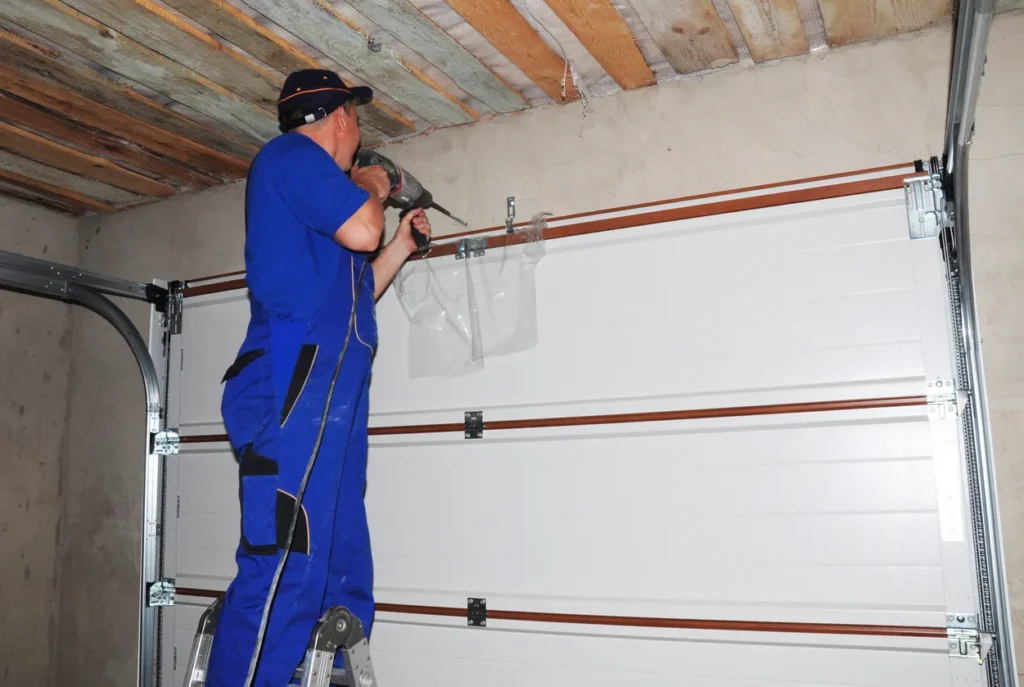
Upon arrival, the technician assesses the severity of the misalignment. Small deviations can cause significant friction, leading to premature wear on rollers and the opener motor. The service includes a complete inspection of the vertical and horizontal tracks, looking for crimps, dents, rust, or loose mounting brackets.
The scope of work generally covers the following:
- Site Safety Check: The first priority is securing the heavy door panels to prevent them from falling while the track is serviced.
- Alignment Correction: Technicians use precision levels and specialized tools to adjust the track back to the manufacturer’s specifications.
- Hardware Tightening: Vibration often loosens the bolts holding the track to the wall or ceiling; these are tightened to specific torque settings.
- Roller Inspection: Damaged tracks often chew up rollers; technicians verify if rollers need replacement to ensure smooth operation.
- Lubrication: High-grade, silicone-based lubricant is applied to the track and rollers to reduce friction and noise.
Detailed Restoration and Realignment Process
Restoring a garage door track requires a systematic approach to ensure the door travels smoothly from the floor to the ceiling without resistance. The process is technical and dangerous due to the tension in the counterbalance system. Professionals follow a strict workflow to manage these risks while delivering a precise repair.
Initial Assessment and Stabilization:
The technician identifies exactly where the door has derailed or where the track is compromised. Before any bolts are loosened, the tension on the garage door springs is evaluated. If the door is stuck halfway open, it is clamped or blocked to prevent a sudden crash. This step is critical for safety.
Releasing Tension:
If the track needs to be removed or significantly adjusted, the tension on the torsion or extension springs may need to be carefully released. This allows the door to be moved manually without the resistance of the opener or the pull of the springs, granting the technician better access to the damaged area.
Metal Work and Reshaping:
For minor bends, specialized heavy-duty tools are used to reshape the metal track back to its original form. This is often possible with standard steel tracks. However, if the metal is crimped or cracked, the technician will prepare the area for a section replacement. The goal is to create a seamless path for the rollers.
Alignment and Spacing:
The distance between the track and the door framing must be consistent from top to bottom. Technicians measure the gap precisely. If the track is too tight, the door binds; if it is too loose, the door could fall out. Adjustments are made to the mounting brackets to achieve perfect vertical and horizontal alignment.
Roller Re-insertion and Testing:
Once the track is secured, the rollers are guided back into the channel. The door is manually operated up and down several times to check for “catch points” or unusual resistance. The technician listens for the smooth hum of operation rather than metal-on-metal grinding.
Final System Check:
The automatic opener is re-engaged. The force settings and travel limits on the motor are recalibrated to match the newly aligned track. This ensures the motor doesn’t overwork itself pushing a door that now moves freely.
When to Replace vs. Repair Your Tracks
Homeowners often wonder if a bent track can be hammered out or if it requires full replacement. The decision depends on the location of the damage, the age of the system, and the severity of the structural compromise. While repairs are often cheaper upfront, a compromised track that fails again can damage the expensive door panels or the opener.
Minor Bends and Dents:
If the damage is slight, perhaps caused by a bicycle bumping the track, and the rollers can still pass through with minor adjustments, a repair is usually sufficient. Technicians can reshape the lip of the track to restore flow.
Cracks or Splits:
Once the metal track has cracked or split, its structural integrity is gone. No amount of welding or hammering will make it safe for a heavy garage door. In this scenario, replacement is the only safe option to prevent catastrophic failure.
Vehicle Impact:
If a car has backed into the vertical track, it is often twisted beyond repair. A twisted track changes the geometry of the door movement. Replacing the vertical section is usually faster and safer than attempting to straighten complex twists.
Age and Compatibility:
Older garage doors may use track sizes or gauges that are less common today. If a system is over 20 years old and showing signs of general fatigue, upgrading to a modern, heavy-duty track system often provides better security and smoother operation.
Why Professional Alignment Matters
Attempting to fix a garage door track with a hammer and pliers is a common mistake that leads to further damage. The track system works in unison with the springs and cables to lift hundreds of pounds. A misalignment of just a few degrees puts immense strain on the torsion tube and can cause cables to snap.
Professional alignment ensures that the weight of the door is evenly distributed. This balance prevents “racking,” where one side of the door moves faster than the other, causing it to jam in the opening. Precision alignment extends the life of every other component in the system, from the nylon rollers to the gear assembly in the motor.
Furthermore, professionals have access to the correct gauge of steel. Residential tracks come in different thicknesses. Replacing a section with a flimsy, big-box store track on a heavy, insulated wood door will result in buckling. Good Golly Garage Doors utilizes heavy-gauge steel tracks designed to handle the specific weight class of your garage door.
Securing Your Garage Door System
A functional garage door is vital for the security and convenience of your home. A broken track compromises this access, leaving your home open to elements and intruders. Addressing the issue with professional assistance ensures the safety of your property and family.
Proper maintenance and timely repairs prevent minor issues from spiraling into costly system replacements. By choosing expert service, you ensure that the geometry of the door is restored, the safety sensors are aligned, and the heavy lifting mechanisms are operating without strain.
Don’t let a jammed door disrupt your schedule or compromise your safety. Contact us today to schedule your track repair and restore smooth, quiet operation to your garage door.
Proudly Serving Phoenix, AZ, and Surrounding Areas
We provide the best garage door services you can find across Phoenix, AZ. Whether it’s the impact of Phoenix’s heat and sudden storms on garage door components, we ensure our solutions are tailored to your needs. Wherever you are, Good Golly Garage Doors is ready to deliver.
Call (602) 399-7054 All Service Areas