

Garage Door Spring Repair in Peoria, AZ
Encounter a broken garage door spring in Peoria? Contact Good Golly Garage Doors for quick, reliable spring replacement and ensure your garage door's safety and functionality.
Is Your Garage Door Stuck Because of a Broken Spring?
When your garage door spring snaps, you need a quick and reliable fix to avoid security risks and the inconvenience of a vehicle trapped inside. If you are currently unable to lift your heavy garage door, contact us for emergency spring replacement services. Good Golly Garage Doors delivers prompt, professional spring repair services to get your garage operational again.
- Prompt Response: Our team is ready for same-day emergency service.
- Expert Technicians: Professionally trained experts who ensure quality and safety.
- Long-term Reliability: Durable repairs that extend your garage door’s lifespan.
Backed by fully licensed for your peace of mind.
What You Can Expect From Our Spring Repair Service
A broken spring renders your garage door system useless. The spring is the muscle behind the operation, counterbalancing the weight of the door so the opener can lift it easily. When that muscle fails, the door becomes dead weight often weighing between 150 to 300 pounds. Homeowners in Peoria often face this issue unexpectedly, usually accompanied by a loud “gunshot” sound from the garage.
We provide a comprehensive solution that goes beyond a simple swap. Our service focuses on restoring the perfect balance to your door system. An unbalanced door puts excessive strain on your electric opener, stripping gears and shortening the motor’s life. We identify the exact specifications required for your specific door model, weight, and track radius.
Whether you have a standard torsion spring system mounted above the door or extension springs running along the side tracks, we have the hardware and expertise to resolve the issue.
The Signs Your Spring Has Failed
Before discussing the repair process, it is helpful to confirm that the spring is indeed the culprit. While the loud noise is the most obvious indicator, other symptoms confirm the diagnosis.
- The Door Will Not Open: The electric opener hums or pulls the chain/belt, but the door refuses to move more than a few inches before shutting off.
- Visible Gap in the Coils: If you look at the torsion spring above the door, you will likely see a two-inch separation where the steel has snapped.
- Door Falls Fast: If you disengage the opener and try to lift the door manually, it feels incredibly heavy, or it crashes down when you let go.
- Cables Appear Loose: When a spring breaks, the tension on the cables is lost, causing them to slacken or fall off the drums.
- Crooked Door: If you have extension springs and only one breaks, one side of the door may try to lift while the other stays down, causing the door to jam in the tracks.
How The Spring Replacement Process Works
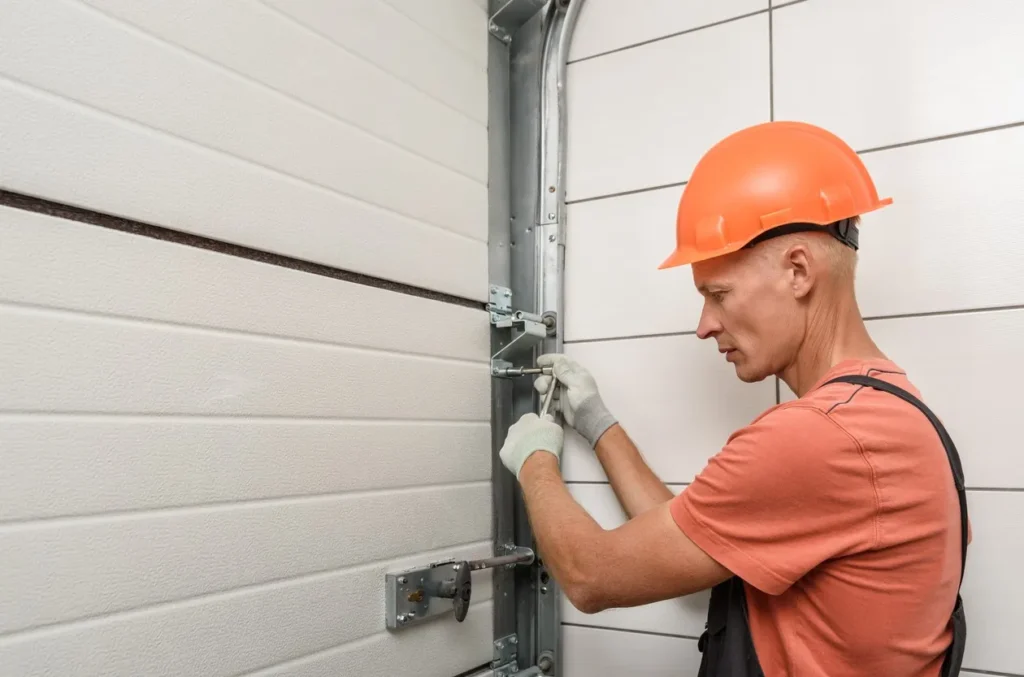
Replacing a garage door spring is a dangerous task involving high tension and heavy components. Our professional replacement process follows a strict safety protocol to ensure the door is balanced correctly and safe for operation.
- Site Assessment and Safety Check: First, the technician secures the work area. We clamp the door to prevent it from moving during the repair. We inspect the entire system, including rollers, hinges, and cables, to ensure no collateral damage occurred when the spring snapped.
- Unwinding and Removal: Next, if there is any remaining tension on an unbroken spring (in a dual-spring system), we carefully unwind it using solid steel winding bars. We then loosen the set screws on the winding cones and cable drums to slide the old springs off the center shaft.
- Precise Measurement: We do not guess the spring size. We measure the wire diameter using a micrometer, check the inner diameter, and measure the length of the broken coils. We also weigh the door if necessary to calculate the required IPPT (Inch Pounds Per Turn) to ensure the new springs match the door’s weight perfectly.
- Installation of New Hardware: We slide the new high-cycle springs onto the torsion tube. We replace the center bearing if it shows signs of wear, as a seized bearing can cause the new springs to bind. The cable drums are reset, and the cables are inspected for fraying or rust.
- Winding and Tensioning: This is the most critical step. We wind the new springs to the specific number of turns required for the door’s height. This requires physical strength and precision to prevent injury.
- Balancing and Testing: Finally, we test the door manually. A perfectly balanced door should stay halfway open without being held and should lift with minimal effort. We lubricate the coils to reduce friction and noise, then reconnect the electric opener and set the travel limits.
Why We Replace Both Springs
A common question homeowners ask is whether they can replace just the one broken spring. While it is technically possible, it is rarely the right decision. Garage door springs are installed in pairs (on most double doors) and are rated for the same life cycle.
If one spring breaks today, the second spring is likely on its last legs. The metal fatigue is identical in both springs because they have been lifted the same number of times. Replacing only one spring creates an imbalance. The new spring will be strong and tight, while the old spring has lost tension over time. This mismatch causes the door to roll up unevenly, wearing out rollers and track hardware.
Furthermore, relying on an old spring means you will likely be paying for another service call in the very near future when the second one inevitably snaps. We replace both springs simultaneously to reset the life cycle of your door system, ensuring consistent performance and saving you the cost of a second emergency visit. Schedule service today.
High-Cycle vs. Standard Springs
When Good Golly Garage Doors performs a replacement, we prioritize longevity. Builders often install “standard cycle” springs in new homes to save costs. These springs are typically rated for 10,000 cycles. While that sounds like a lot, a busy household can easily cycle the door 4 to 6 times a day. At that rate, standard springs may only last 4 to 5 years.
We offer high-cycle springs as a standard for our replacements. These springs use a slightly thicker wire and a larger diameter or length to achieve the same lift power but with less stress on the metal. High-cycle springs are rated for 20,000 to 50,000 cycles. By upgrading to these durable components, you are effectively doubling or tripling the time before you need another repair. This investment provides significant value and reduces the frequency of maintenance headaches.
Repair vs. Replacement: Making the Right Call
There is often confusion regarding “repairing” a spring versus replacing it. It is important to clarify that a snapped spring cannot be repaired. You cannot weld the coils back together, as the heat would ruin the temper of the steel, making it brittle and unsafe. Once a spring snaps, replacement is the only option.
However, there are scenarios where the system needs adjustment rather than replacement.
- Adjustment: If the door is heavy but the springs are not broken, they may just need to be re-tensioned. This happens as springs relax over time.
- Conversion: If you have an older extension spring system (springs that stretch along the sides), we often recommend a conversion to a torsion spring system. Torsion systems are safer, smoother, and less likely to cause damage when they break because the spring is contained on a shaft.
- Component Replacement: Sometimes the spring is fine, but the winding cone has cracked or the cable drum has slipped. In these cases, we repair the specific hardware without replacing the steel coil itself.
The Risks of DIY Spring Repair
We strongly advise against attempting to replace garage door springs yourself. This is not a typical home improvement project like painting or fixing a leaky faucet. The energy stored in a wound torsion spring is sufficient to inflict serious injury.
- Tool Hazard: Professional technicians use hardened steel winding bars that fit the winding cones perfectly. makeshift tools like screwdrivers can slip under the torque, becoming dangerous projectiles.
- Sudden Release: If a set screw is loosened before the tension is removed, the spring can unwind instantaneously, spinning the bar or the cone with tremendous force.
- Incorrect Tension: Without the proper knowledge of IPPT and door weight, a DIYer often over-winds or under-winds the spring. An overwound spring makes the door fly up uncontrollably, damaging the opener and potentially hitting anyone in its path. An under-wound spring leaves the door too heavy, burning out the opener motor.
- Wrong Spring Size: Buying a spring off the shelf at a big-box store rarely works. If the wire size is off by even a fraction of an inch, the door will never balance correctly.
Restoring Safety and Function
Your garage door is likely the largest moving object in your home and the primary entry point for your family. Maintaining its safety features is our priority. When we finish a spring repair, we verify that the safety reverse mechanism is functioning correctly and that the photo-eye sensors are aligned. We treat the repair as a comprehensive system tune-up.
We understand that a broken spring brings your day to a halt. You cannot get your car out, you cannot secure your home, and you are left with a heavy, dangerous door. Our process is designed to alleviate that stress instantly. From the moment you notice the break to the final safety check, we handle the heavy lifting, the technical calculations, and the hazardous tensioning.
Ready to Restore Your Garage Door?
Don’t let a snapped spring disrupt your life or compromise your safety. We have the tools, the parts, and the expertise to handle the job correctly on the first visit.
For a fast, professional spring replacement that gets your door moving again, contact us today for an appointment.
Proudly Serving Phoenix, AZ, and Surrounding Areas
We provide the best garage door services you can find across Phoenix, AZ. Whether it’s the impact of Phoenix’s heat and sudden storms on garage door components, we ensure our solutions are tailored to your needs. Wherever you are, Good Golly Garage Doors is ready to deliver.
Call (602) 399-7054 All Service Areas