

Garage Door Spring Repair in Paradise Valley, AZ
Stuck with a broken garage door in Paradise Valley? Contact us for urgent spring replacement and ensure your safety and convenience with professional, reliable service.
Is Your Vehicle Trapped Behind a Heavy Garage Door?
When a garage door spring snaps, it often sounds like a gunshot, followed by the realization that your vehicle is stuck inside. This mechanical failure disrupts your entire schedule and renders your heavy garage door immovable or incredibly dangerous to lift manually. If you are in Paradise Valley and cannot open your garage door, contact us immediately to resolve the issue safely.
A broken spring is not just an inconvenience; it is a significant safety hazard that requires professional intervention. The tension stored in these components is immense, and attempting to force the door open can damage the opener or cause injury. Good Golly Garage Doors team specializes in diagnosing the specific weight and tension requirements of your door system to install the correct replacement parts:
- Same-day dispatch ensures you regain access to your vehicle and home without unnecessary delays.
- Certified technicians handle high-tension torsion and extension spring replacements safely.
- We utilize high-cycle springs backed by a comprehensive warranty to extend the lifespan of your repair.
All replacement work is performed in strict accordance with safety standards and manufacturer specifications for a balanced, functional door.
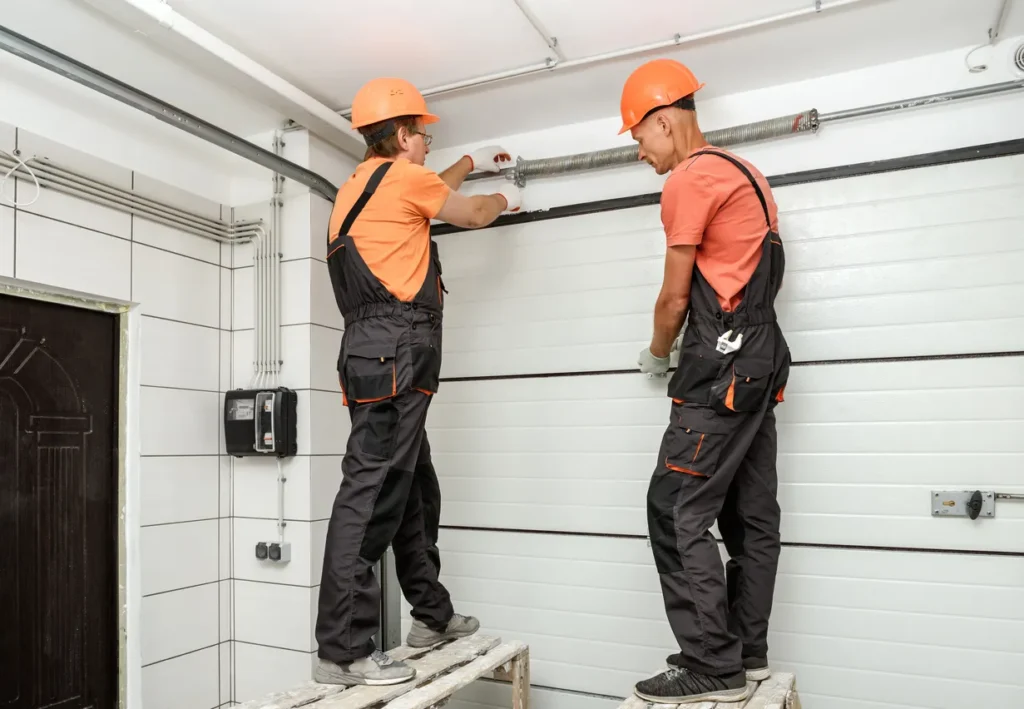
Detailed Assessment and Spring Replacement Options
Upon arrival, the primary objective is to identify exactly why the failure occurred and determine the correct specifications for replacement. Garage door springs are not “one size fits all.” Installing a spring that is even slightly off in terms of wire gauge or length can destroy your garage door opener or cause the door to crash down unexpectedly. In Paradise Valley, where custom homes often feature heavy wood-overlay doors or glass aluminum frames, accurate calculation of the IPPT (Inch Pounds Per Turn) is critical.
Good Golly Garage Doors technicians arrive with trucks containing a wide variety of spring sizes. We do not use “close enough” parts; we match the spring specifically to the weight of your door.
Torsion Spring Systems
Most modern residential doors utilize a torsion spring system mounted above the door opening. These springs wind up and down as the door moves, doing 90% of the lifting work. When we address a torsion spring failure, we look at several factors:
- Wire Size and Diameter: We measure the existing spring coils to the nearest 1/16th of an inch to ensure the replacement provides the exact lift power required.
- Cycle Rating: Standard builder-grade springs usually last 10,000 cycles. We offer high-cycle options rated for 25,000 to 50,000 cycles, which is a smarter investment for households that use the garage as the main entry point.
- Corrosion Factors: We check for rust or pitting on the shaft and bearing plates, replacing worn hardware that could cause friction and premature failure of the new spring.
Extension Spring Systems
Some older homes or garages with low headroom utilize extension springs that run parallel to the ceiling tracks. These stretch and contract to lift the door. Because these springs operate under tension while fully extended, they pose a significant whipping hazard if they break:
- Safety Cable Installation: If your system lacks safety containment cables, we install them as a mandatory safety protocol during the repair. These cables catch the spring if it snaps, preventing it from damaging your car or injuring a bystander.
- Sheave and Pulley Check: Extension springs rely on a system of pulleys and cables. We inspect these for fraying or wear, as a snapped cable can mimic the symptoms of a broken spring.
The Professional Spring Replacement Process
Repairing a garage door spring is a precise mechanical process that involves handling extreme tension. We follow a rigid workflow to ensure the safety of the technician and the long-term functionality of your door. This process is designed to return your door to a “neutral” balance, where it can be lifted with one hand and stays in place when half-open:
- Site Safety and Tension Release: First, we secure the door in the closed position using vice grips or clamps to prevent movement. If the door has two springs and only one is broken, we carefully unwind the tension from the unbroken spring before removing any hardware.
- Disassembly and Removal: Next, we loosen the set screws on the winding cones and slide the old springs off the torsion tube. We also inspect the center bearing plate and end bearing plates. If these bearings are seized, the new spring will not rotate smoothly, so we replace them if necessary.
- Installation of New Hardware: We slide the new, calibrated springs onto the shaft. We ensure the stationary cones are bolted securely to the center bracket. For dual-spring systems, we ensure the left-wound and right-wound springs are placed on the correct sides of the center bracket.
- Winding and Tensioning: This is the most critical step. Using solid steel winding bars, we wind the new springs to the specific number of turns required for the door’s height. A standard 7-foot door requires a different amount of tension than an 8-foot custom door found in many Paradise Valley estates.
- Balancing and Testing: Once wound, we test the door manually. We disengage the automatic opener and lift the door by hand. A properly balanced door should sit in the middle of the opening without drifting up or falling down. If the door is too heavy, we add tension; if it shoots up, we reduce it.
- Lubrication and Final Inspection: Finally, we lubricate the coils with a non-silicone-based garage door lubricant. This prevents coil binding and reduces noise. We reconnect the opener and run a full cycle test to ensure the force settings on the motor do not need adjustment.
When to Replace vs. Repair: Making the Right Decision
Customers often ask if they can repair a snapped spring (by welding or re-hooking) or if they need to replace both springs when only one breaks. We provide direct answers based on physics and safety standards.
Why You Cannot Repair a Snapped Spring
Once a spring snaps, its structural integrity is compromised. Steel fatigue has caused the metal to separate. Similarly, stretching a broken spring to re-hook it changes the tension properties, resulting in an unbalanced door that will damage your opener. Full replacement is the only viable option.
The Two-Spring Rule
If your garage door utilizes a dual-spring system and one breaks, we strongly recommend replacing both simultaneously:
- Matched Cycle Life: Springs are installed in pairs and undergo the same number of cycles. If one has reached its fatigue limit and snapped, the second spring is likely mere days or weeks away from failure.
- Cost Efficiency: Paying for a second service call and trip charge a week later is far more expensive than replacing both springs during the initial visit.
- Balanced Tension: An old, stretched spring will not have the same tension properties as a brand-new spring. Mixing old and new springs makes balancing the door nearly impossible, leading to uneven movement that wears out rollers and tracks.
Conversion Opportunities
If you currently have an extension spring system (the kind that stretches along the side), this is the ideal time to convert to a torsion spring system. Torsion systems are safer, smoother, quieter, and require less maintenance. This conversion involves installing a new header bracket, tube, and drum assembly, providing a significant upgrade to the operation of your garage door.
Why Professional Installation is Mandatory
Garage door spring replacement is consistently ranked as one of the most dangerous home repairs for untrained individuals. The potential for injury comes from the stored energy in the spring. A standard torsion spring holds enough force to lift a 300-pound object. If a winding bar slips or a casting breaks during a DIY attempt, the result can be severe impact injuries or lacerations.
Beyond safety, professional installation protects your investment in the garage door opener. The opener is designed to push and pull a door that is perfectly balanced by the springs. It is not designed to lift dead weight. If a spring is installed with incorrect tension, the opener motor will strain, strip its plastic gears, or burn out its capacitor.
We utilize solid steel winding bars and professional-grade winding cones that prevent slippage. We also verify that the shaft is level and that the cable drums are synchronized. If the drums are not perfectly aligned, the door will lift unevenly, causing it to jam in the tracks. Our process ensures that the entire system, springs, cables, drums, and opener works in unison.
Safe, Reliable Spring Repair by Good Golly Garage Doors
A broken garage door spring brings your entire household to a halt and introduces serious safety risks. With same-day, precise spring calibration, and warranty-backed workmanship, Good Golly Garage Doors delivers dependable spring repair solutions tailored to Paradise Valley homes. Do not attempt a dangerous DIY fix or wait for further damage to occur. Schedule your professional garage door spring repair today through Good Golly Garage Doors Contact Page and restore safe, effortless access to your home with confidence.
Get your garage door moving again today. Call us now to schedule your spring repair service.
Proudly Serving Phoenix, AZ, and Surrounding Areas
We provide the best garage door services you can find across Phoenix, AZ. Whether it’s the impact of Phoenix’s heat and sudden storms on garage door components, we ensure our solutions are tailored to your needs. Wherever you are, Good Golly Garage Doors is ready to deliver.
Call (602) 399-7054 All Service Areas