

Garage Door Spring Repair in Leander, TX
Experiencing a stuck or malfunctioning garage door in Leander? Get immediate, reliable repair from certified experts. Secure your home with professional service now!
Garage Door Refusing to Lift After a Sudden Loud Bang?
Is your garage door completely stuck or lifting unevenly after hearing a gunshot-like noise coming from the garage? You are likely dealing with a broken torsion or extension spring, a critical failure that traps your vehicle and poses a severe safety risk; contact us immediately to restore access to your home.
Residents in Leander rely on functional garage doors for security and convenience, but spring failure is inevitable over time. When a spring snaps, the door becomes dead weight, often exceeding 300 pounds, making it impossible for the opener to lift. We provide a definitive solution to get your door moving again today.
- Secure same-day repair availability to safely restore the functionality of your garage door system.
- Deploy certified technicians equipped with high-cycle, tempered steel springs designed for long-term durability.
- Receive transparent, upfront pricing with zero hidden fees, ensuring you know exactly what the repair entails.
- All spring replacements include a comprehensive warranty and adhere to strict safety standards.
Immediate Response for Broken Spring Failures
When a garage door spring breaks, the entire system fails. The spring provides the counterbalance necessary to lift the heavy door panels. Without it, the electric opener will simply hum, strain, and potentially burn out its motor gear if forced to operate. Good Golly Garage Doors prioritizes these service calls because we understand that a broken spring is not just an inconvenience—it is a security breach and a safety hazard.
Our service vehicle arrives fully stocked with a wide array of spring sizes. Unlike general repairs that might require ordering parts, spring replacement is almost always completed on the first visit. The goal is to remove the danger of the broken spring, install a perfectly matched replacement, and reset the tension so the door balances neutrally. This prevents the door from crashing down or flying up uncontrolled.
The scope of work involves a complete assessment of the counterbalance system. We do not simply swap the part; we analyze the weight of the door, the track radius, and the drum size to ensure the new spring provides the correct Inch Pounds Per Turn (IPPT). Installing the wrong size, even if it physically fits, will destroy your opener and cause the cables to jump the drums.
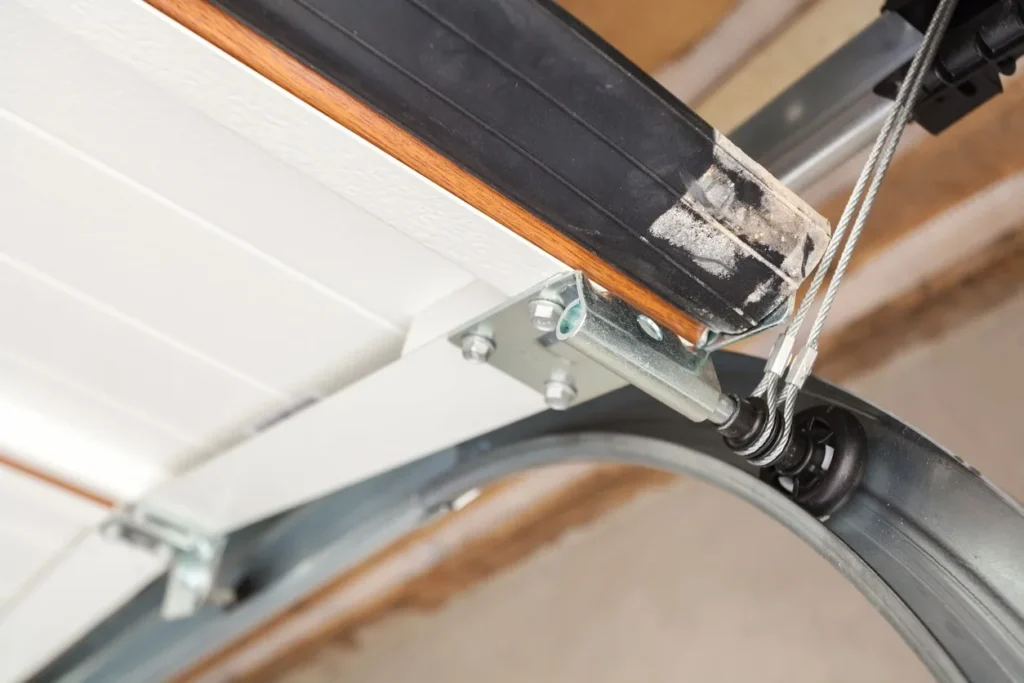
The Spring Replacement Process
Replacing a garage door spring is a calculated mechanical procedure that requires handling extreme tension. We follow a strict protocol to ensure the safety of your property and the longevity of the repair.
- Site Safety and Inspection
The technician first secures the door in the closed position to prevent movement. We inspect the condition of the cables, drums, and end bearing plates. A broken spring often causes shockwaves that damage these peripheral components.
- Unwinding and Removal
If one spring is broken but the other is still under tension (in a dual-spring system), the intact spring must be carefully unwound using winding bars. This releases the stored energy safely. The torsion tube is then disconnected, and the old springs are slid off the shaft.
- Calculated Selection
We measure the wire gauge, inside diameter, and length of the old spring. However, we also weigh the door to verify the original builder-grade spring was correct. Often, builders install undersized springs to save costs. We upgrade you to the correct size for the door’s actual weight.
- Installation and Winding
The new high-cycle springs are mounted to the torsion tube. The technician winds the springs to a specific number of turns based on the height of the door. This charges the spring with the kinetic energy required to lift the panels.
- System Balancing
Once wound, we test the door manually. A properly balanced door should stay halfway open without being held. If it drifts up or falls down, the tension is micro-adjusted until neutral buoyancy is achieved.
- Lubrication and Opener Reset
We lubricate the coils to prevent friction and rust. Finally, we reconnect the electric opener and adjust the force settings to accommodate the new springs, ensuring smooth automatic operation.
Why We Replace Both Springs Simultaneously
Homeowners often ask if they can replace only the broken spring to save money. While physically possible, this is considered poor industry practice and is not a service we recommend. Garage door springs are rated for a specific cycle life—usually between 10,000 and 15,000 open-and-close cycles.
If one spring has snapped, it means it has reached the end of its cycle life. The second spring, having been installed at the same time and subjected to the same workload, is on the verge of failure. Replacing only one results in an unbalanced door because the new spring is tight and strong, while the old spring is stretched and fatigued:
- Uneven Lift: A new spring pulls harder than an old one, causing the door to rack or tilt in the opening. This damages the rollers and bends the tracks.
- Double Service Fees: Leaving an old spring guarantees a second service call in the near future when it inevitably breaks. Replacing both now saves the cost of a second trip charge.
- Opener Strain: An unbalanced system forces the garage door opener to work harder on one side, leading to premature gear failure.
We install matching springs to ensure the lift is symmetrical and the tension is distributed evenly across the torsion shaft.
High-Cycle Springs vs. Standard Builder Grade
Most homes in Leander are constructed with “standard cycle” springs. These are designed to last roughly 3 to 5 years with average usage. For a family that uses the garage as the main point of entry—leaving for work, kids coming home from school, running errands—10,000 cycles can be consumed very quickly.
We offer high-cycle spring options. By increasing the wire gauge and length, or changing the inside diameter, we can engineer a spring that provides the same lifting force but lasts for 25,000 to 50,000 cycles. This effectively doubles or triples the lifespan of your suspension system:
- Standard Springs: Typically last 3-6 years. Lower upfront cost but more frequent replacement.
- High-Cycle Springs: Can last 10-15 years. Slightly higher material cost but significantly better value over time.
This upgrade is particularly important for heavy insulated doors or custom wood carriage house doors, which put immense strain on standard components.
Local Climate Factors Affecting Your Springs
The climate in Leander plays a significant role in the lifespan of your garage door hardware. The intense Texas heat during the summer months causes thermal expansion in the metal coils. When temperatures drop in the winter or fluctuate rapidly during spring storms, the metal contracts. This constant expansion and contraction weakens the steel lattice over time, contributing to metal fatigue.
Furthermore, humidity levels can lead to surface rust on the springs. Rust increases friction between the coils. As the spring winds and unwinds, the rusty coils drag against each other, creating a binding effect that increases the workload and speeds up failure:
- Rust Prevention: We use galvanized or oil-tempered springs that resist corrosion.
- Lubrication Needs: In this climate, springs should be lubricated every three to six months. We use a non-silicone, lithium-based spray that penetrates the coils without attracting dust and grit.
- Storm Safety: During severe weather or power outages, a broken spring means you cannot manually lift the door to get your car out. Maintaining your springs is a critical part of emergency preparedness.
Dangers of DIY Spring Repair
Garage door spring replacement is consistently ranked as one of the most dangerous home repairs. The springs are under immense tension—enough torque to lift 300+ pounds. The energy stored in a wound spring is lethal if mishandled.
The winding bars used to tighten the springs must be seated perfectly. If a bar slips, or if a homeowner uses a screwdriver instead of a solid steel winding bar, the tool can become a projectile, or the spring can unwind instantly, causing severe hand, facial, or head injuries.
Additionally, incorrect winding creates a “guillotine” door. If the tension is wrong, the door may appear to be fixed but can slam down unexpectedly when the opener is disengaged. Professional installers carry the liability insurance, specialized tools, and training to mitigate these risks completely.
Determining Between Repair and Full Replacement
While the focus here is on the springs, a spring failure sometimes reveals deeper issues with the garage door system. We assess the overall health of the door to help you decide if a spring repair is the best investment or if the door itself is nearing the end of its life:
- Repair (Spring Replacement) is best when: The door panels are in good condition, the tracks are straight, and the rollers are moving freely. If the door is structurally sound, replacing the springs returns it to like-new operation.
- System Overhaul is considered when: The door has been dropped due to the spring break, damaging the bottom panel or bending the section joints. If the door is rusted through, dented significantly, or lacks modern safety features, pouring money into new springs might be diminishing returns.
We provide an honest assessment. If the door can be saved, we fix the springs. If the cost of repair approaches the cost of a new unit, we will present that data so you can make an informed financial decision.
Comprehensive Warranty and Quality Assurance
Reliability is the cornerstone of our service. We back our spring installations with robust warranties that cover both parts and labor. If a spring we installed fails prematurely or requires adjustment, we return to correct it.
We utilize oil-tempered springs manufactured in the USA, ensuring consistent tensile strength and quality control. Cheap, imported steel often contains impurities that lead to early snapping. By strictly controlling our supply chain, Good Golly Garage Doors ensures that the hardware installed in your home meets the highest durability standards.
Our technicians also perform a 25-point safety inspection with every spring job. We check the reversal safety sensors, the force limits of the opener, and the integrity of the lift cables. This holistic approach ensures that when we leave, your garage door is safe for your family and pets.
Maintaining Your New Springs
Once your new springs are installed, simple maintenance can extend their life significantly. While the springs do the heavy lifting, friction is the enemy:
- Visual Inspection: Every few months, look at the springs (with the door closed). Check for gaps in the coils or signs of elongation.
- Listen: If the springs start making a “boing” or squeaking sound, they are dry.
- Lubricate: Apply a garage door-specific lubricant across the length of the spring. Run the door up and down to work the oil into the coils.
- Balance Test: Once a year, pull the red emergency release cord (when the door is closed) and lift the door by hand. It should lift smoothly and stay open at waist height. If it feels heavy, call us for a tension adjustment.
Restoring Access and Security
A broken spring puts your life on hold. You cannot get your car out, and your home is vulnerable if the door is stuck partially open. We recognize the urgency of this situation. Our team is structured to handle high-priority spring failures in Leander with speed and precision.
We do not use subcontractors; every technician is a trained employee committed to our standards of service. We arrive, we diagnose, and we fix the problem using the correct engineering data for your specific door. There is no guesswork, only mechanical precision.
Ensure your garage door is safe, balanced, and fully operational. Contact us now to schedule your spring replacement service.
 All Service Areas