

Garage Door Spring Repair in Georgetown, TX
Struggling with a snapped garage door spring in Georgetown, TX? Contact us today for same-day repairs, clear pricing, and expert service. Secure your appointment now!
Is A Snapped Spring Keeping Your Garage Door Shut?
Discover the sudden disruption that occurs when a high-tension spring snaps, rendering your heavy garage door immovable and potentially trapping your vehicle inside. You need a rapid, professional response to safely restore the balance of your door and get your day back on track. For immediate assistance and to dispatch a technician to your home in Georgetown, TX, contact us today to secure an appointment.
- Same-day service availability ensures that your garage door is functional again without unnecessary delays.
- Transparent pricing structures mean you receive a clear quote before any work begins, eliminating surprise fees.
- Expert technicians handle high-tension components safely, ensuring a precision repair that extends the lifespan of your door system.
All spring replacement services come with a robust warranty, guaranteeing peace of mind and long-term reliability.
Solving Your Garage Door Spring Issues Quickly
When a garage door spring breaks, it is rarely a subtle event. You might hear a loud gunshot-like bang from the garage, or simply find that the opener hums and struggles but fails to lift the door. This happens because the springs—not the opener—are responsible for lifting the 150 to 300-pound weight of the door. The opener merely guides the movement. Without the counterbalance provided by the springs, the door becomes “dead weight,” making it dangerous to attempt to lift manually and impossible for the automatic motor to handle.
In Georgetown, where daily vehicle use is essential for commuting, a broken spring effectively puts your day on hold. The primary objective is to restore the counterweight system so the door can cycle smoothly again. This requires identifying exactly which type of spring system you have—torsion or extension—and matching the replacement hardware precisely to the weight and dimensions of your specific door.
Attempting to operate the door with a broken spring can cause catastrophic damage to the top section of the door panels and strip the gears inside your electric opener. The most prudent course of action is to cease all attempts to move the door and bring in a professional equipped with the winding bars and safety knowledge required to manipulate high-torque steel coils.
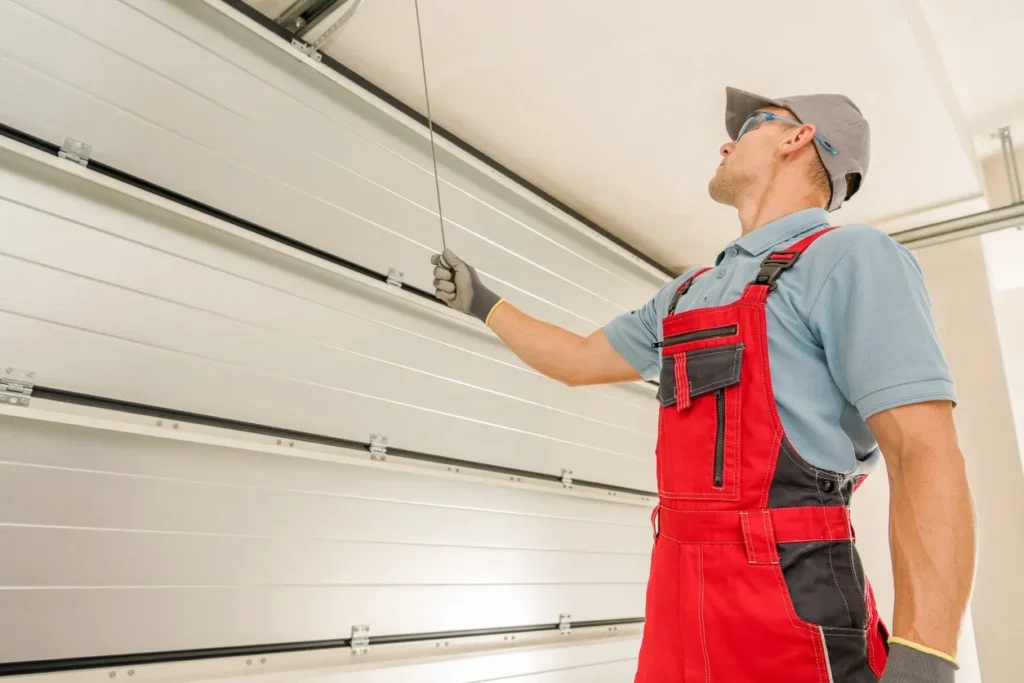
Immediate Service, Transparent Costs, and Comprehensive Repairs
When you request service for a spring failure, the goal is a complete resolution in a single visit. The service provided encompasses more than just swapping out a piece of metal; it is a recalibration of your entire garage door system.
Upon arrival, the service includes:
- System Diagnosis: Verification that the issue is indeed a spring failure and not a cable slip or opener malfunction.
- Weight Calculation: Technicians weigh the door to determine the exact IPPT (Inch Pounds Per Turn) required for the new springs. This ensures the new springs are not just “close enough” but mathematically perfect for your door’s weight.
- Hardware Inspection: A check of the bearing plates, center bracket, and cable drums to ensure the spring failure didn’t damage adjacent components.
- Lubrication and Tuning: Once the new springs are on, the entire door is lubricated, and the opener’s force settings are adjusted to match the new balance.
Good Golly Garage Doors stocks service vehicles with a wide variety of wire sizes and spring lengths. This preparation means that whether you have a standard 7-foot residential door or a heavier custom wood carriage house door, the correct parts are likely sitting in the driveway the moment the truck pulls up. The focus is on high-cycle replacement options, moving you from standard builder-grade springs (often rated for 10,000 cycles) to high-performance springs rated for 20,000 cycles or more. This effectively doubles the lifespan of the repair.
The Step-by-Step Process for Fixing Your Garage Door Spring
Repairing a garage door spring is a dangerous task due to the extreme potential energy stored in the coils. Professional technicians follow a rigid safety protocol to ensure the repair is performed correctly and without injury.
- Securing the Door: First, the technician clamps the door securely to the track to prevent it from free-falling or shooting upward unexpectedly during the tension release.
- Unwinding the Intact Spring: If you have a two-spring system and only one broke, the remaining unbroken spring is still under immense tension. The technician inserts winding bars into the winding cone and carefully removes the tension, quarter-turn by quarter-turn.
- Loosening Hardware: Next, the set screws on the winding cones and cable drums are loosened. The cables are detached from the bottom brackets, allowing the torsion tube to slide freely.
- Removal of Broken Components: The torsion tube is slid to the side, allowing the removal of the broken spring coils, the winding cones, and the stationary cones. At this stage, the center bearing is also inspected for wear.
- Installation of New Springs: The new springs are slid onto the torsion tube. The stationary cones are bolted to the center bracket. It is critical that the “left-wind” and “right-wind” springs are placed on the correct sides of the center bracket.
- Re-tensioning (Winding): This is the most critical step. Using solid steel winding bars, the technician winds the new springs to the specific number of turns required for the door’s height (usually 7.5 turns for a standard 7-foot door).
- Setting the Cables and Drums: The lift cables are re-seated in the drums, and the drums are tightened against the torsion tube to ensure equal lift on both sides.
- Checking the Balance: Finally, the door is disconnected from the opener and lifted manually. A properly balanced door should stay in place when lifted halfway—it should not crash down or shoot up. If it drifts, slight adjustments are made to the spring tension.
When It’s Time to Replace Instead of Repairing Your Garage Door Spring
A common question regarding springs is whether they can be repaired (i.e., welded or re-hooked) rather than replaced. The answer is almost universally no. A garage door spring acts as a battery for kinetic energy. When it snaps, it is because the metal has reached its fatigue limit. Stretching a broken spring to re-attach it changes the physics of the coil, making it weaker and ensuring it will break again almost immediately, often causing more damage.
Here is the guide on when and why replacement is the only viable option:
- The Two-Spring Rule: If your door has two springs and only one breaks, you must replace both. Springs are installed in pairs and undergo the same number of cycles. If one has reached its fatigue limit and snapped, the second spring is likely on the verge of failure. Replacing both saves you the cost of a second service call in the near future.
- Cycle Count Upgrades: If you use your garage as your front door—opening and closing it multiple times a day—standard springs may wear out in 3-5 years. In this scenario, replacing the entire spring setup with high-cycle springs is the smart financial decision. High-cycle springs use a thicker wire diameter and a larger coil size to achieve the same lift with less stress on the metal.
- Rust and Corrosion: If your springs are heavily rusted, they lose structural integrity. Even if they haven’t snapped yet, deep rust creates friction and weak points. If inspection reveals significant corrosion, preemptive replacement prevents a future emergency entrapment situation.
- System Conversion: Some older homes in the area still utilize extension springs (springs that stretch along the horizontal tracks). These are generally considered less safe than torsion springs (which mount on the wall above the door). A spring failure on an extension system can turn the spring into a projectile. Replacing the extension system with a torsion conversion improves safety and door operation.
Local Compliance and Seasonal Considerations for Garage Door Repair
Operating a home in Georgetown presents specific environmental challenges that affect the longevity of garage door hardware. The climate here involves hot summers, where temperatures in July can soar, followed by mild winters and a wet spring season with peak rainfall in April and May.
- Humidity and Rust: The high humidity levels common in the region accelerate oxidation on steel components. Standard oil-tempered springs can rust quickly if not maintained. We often recommend galvanized springs or a strict lubrication schedule for homeowners in this area to combat the moisture in the air.
- Temperature Fluctuations: Metal expands and contracts with temperature changes. While Georgetown winters are mild, the shift from a hot summer to a chilly January night can affect the tension of the springs and the viscosity of the grease in the opener rail. Repairs done in the height of summer may require slight tension adjustments if the door becomes sluggish in winter.
- Safety Cable Requirements: For homes utilizing extension springs, local safety standards and best practices mandate the installation of safety containment cables. These cables run through the center of the spring and are anchored to the wall and track. In the event of a snap, the cable holds the spring in place, preventing it from whipping around the garage and causing injury or property damage.
- Permits and HOAs: While simple repairs typically do not require municipal permits, structural changes or full door replacements might. Furthermore, many local neighborhoods have strict HOA guidelines regarding the appearance of the door. While spring repair is internal, it ensures your door closes fully, keeping you in compliance with HOA rules regarding aesthetics and security.
Why Choose Us: Local Expertise and Certified Quality
Selecting a service provider for spring repair requires trust. You are inviting technicians into your home to work on the largest moving object in your house. The focus is always on safety, precision, and longevity.
- Local Understanding: Understanding the specific builder trends in Georgetown allows for faster diagnosis. Technicians are familiar with the common door brands and spring setups used in local subdivisions, ensuring the right parts are on hand.
- Warranty Protection: A repair is only as good as the guarantee behind it. High-quality springs are backed by warranties that cover both parts and labor, ensuring that your investment is protected against premature failure.
- Safety Certification: Technicians undergo rigorous training to handle the dangers of torsion systems. This expertise protects your property from the damage that often results from amateur repair attempts.
- Complete System Health: The service does not stop at the spring. By checking the drums, cables, and bearings, the repair ensures that the new spring isn’t being worn down by other failing components.
Your garage door is the primary entry point for your home. When the spring fails, security and convenience are compromised. Good Golly Garage Doors delivers the precise, heavy-duty solutions required to lift that burden—literally. Do not let a broken coil leave you stranded or compromise the safety of your family — contact us today.
Contact us now to schedule your spring repair and restore the smooth, silent operation of your garage door.
Proudly Serving Austin, TX, and Surrounding Areas
From the neighborhoods of Austin to Round Rock and Buda, we provide the best garage door services you can find across the area. Whether it’s the impact of Texas heat and sudden storms on garage door components, we ensure our solutions are tailored to your needs. Wherever you are, Good Golly Garage Doors is ready to deliver.
View All Cities
 All Service Areas