
Garage Door Spring Repair in Crestline, CA
Need quick garage door spring repair in Crestline? Contact Good Golly Garage Doors for fast, reliable service with no hidden costs and a full warranty.
Immediate Relief for Broken Garage Door Springs
A snapped garage door spring often occurs without warning, leaving your vehicle trapped inside the garage and creating a significant safety hazard for your household. Contact Good Golly Garage Doors to arrange service with a qualified technician who can safely restore your door’s lift mechanism and secure your property. When a spring fails, the heavy lifting falls entirely on the garage door opener or the user, neither of which is designed to handle the full weight of the door. Attempting to operate the door in this condition can lead to further damage to the opener, tracks, or cables, escalating the cost of repair. Residents in Crestline need reliable access to their vehicles, especially given the local terrain and weather conditions.
- Prompt repair services help ensure your garage can be secured properly.
- Clear, upfront pricing on spring repairs, with details reviewed before work begins.
- Expert technicians equipped to handle both torsion and extension spring repairs.
All services comply with local building codes, with standard parts and labor warranty coverage, typically around one year, to ensure your peace of mind.
Quick Fix for Your Garage Door Spring Issues
The spring system is the powerhouse of your garage door assembly, bearing the immense tension required to lift a door that can weigh several hundred pounds. When this component fails, the door effectively becomes dead weight. This type of mechanical failure often presents as a loud, gunshot-like noise from the garage, followed by the door refusing to open or only lifting a few inches before slamming shut. Over time, repeated stress and normal wear can lead to fractures in aging springs, resulting in sudden breakage.
Professional attention is required not just for convenience, but for safety. A door with a broken spring is unstable. If the door is open when the spring snaps, it can crash down with crushing force. If the door is closed, attempting to force it open manually can cause severe back injury or cause the door to come off its tracks. These service calls are prioritized based on safety considerations and scheduling availability. A trapped car can disrupt work, school runs, or medical appointments. Our service vehicles carry commonly used spring sizes and components to address most residential doors during the scheduled visit, depending on door specifications.
Understanding the urgency involves recognizing the signs of a failing spring before it snaps completely. If your door seems heavier than usual when lifted manually, moves jerkily, or if you see gaps in the coils of the spring itself, the metal has likely reached the end of its fatigue life. Addressing these symptoms early allows for a scheduled replacement rather than an unplanned repair, though our team is prepared to evaluate both scenarios.
Service Scope and Timeline: Fast Repairs, Lasting Results
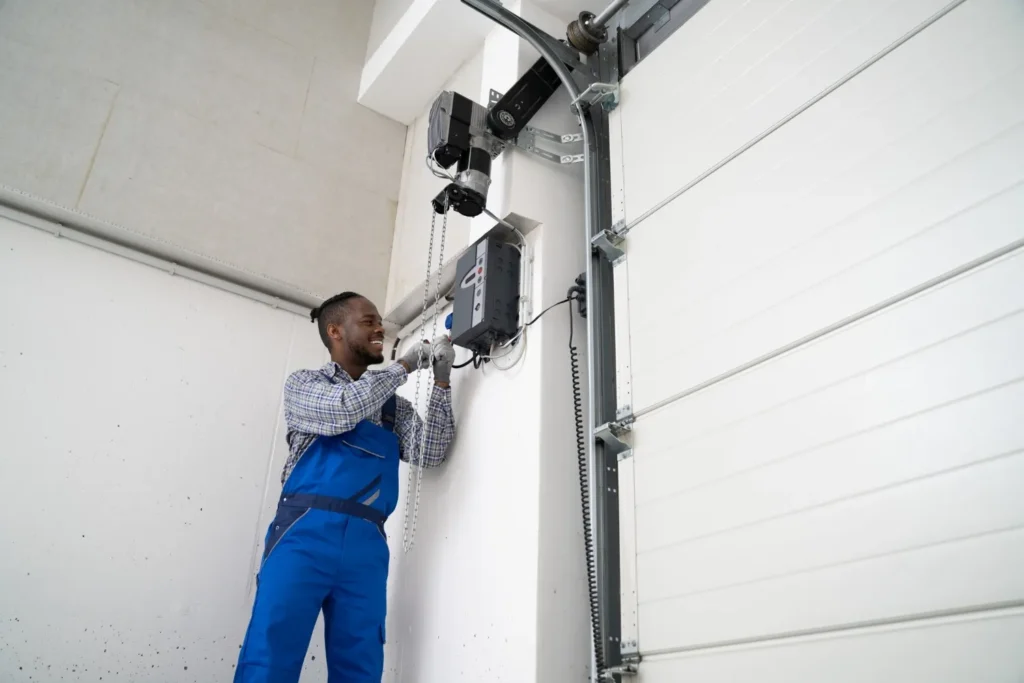
When you engage a professional service for spring repair, the goal is to return the system to a state of proper balance. Good Golly Garage Doors approaches every service call with a systematic evaluation process. We do not simply swap out a part, we analyze the entire counterbalance system. This includes measuring the wire size, inside diameter, and length of the existing spring to ensure the replacement matches the specific lift requirements of your garage door panels. Installing a spring that is even slightly off-spec can cause the door to move too quickly or feel excessively heavy, both of which shorten the lifespan of your garage door opener.
Our service timeline is designed to minimize disruption to your day.
- Assessment: Upon arrival, the technician inspects the broken spring, cables, drums, and bearings.
- Measurement: Precision measurements are taken to calculate the requisite Inch Pounds Per Turn (IPPT) for your specific door weight.
- Installation: The broken components are removed, and new springs are installed.
- Balancing: The tension is adjusted so the door can be lifted by hand with minimal effort and stays in place when half-open.
- Lubrication: The entire spring coil and bearing plates are lubricated to reduce friction and noise.
Most residential spring repairs are completed within one to two hours, depending on door configuration and condition. This efficiency is possible because we use quality oil-tempered and galvanized springs selected to suit local humidity and temperature fluctuations found in the mountains. We focus on longevity. Standard builder-grade springs are typically rated for about 10,000 cycles, with one cycle defined as one open and close action. We often recommend higher-cycle springs rated for 20,000 cycles or more, which can extend service life and provide better long-term value for the homeowner.
Understanding the Repair Process: What to Expect
The physics involved in garage door torsion and extension springs represent a significant amount of stored potential energy. This energy is what makes the door feel light, but it is also what makes improper repair attempts dangerous. Our process is strictly controlled to manage this energy safely.
- Site Safety and Containment: The technician first secures the workspace. If the door is stuck open or halfway, it is clamped and braced to prevent free-falling. Power to the electric opener is disconnected to prevent accidental activation while hands are near the mechanism.
- Unwinding the Tension: If a torsion spring has snapped, the tension is already released from that specific spring. However, on a two-spring system, the unbroken spring still holds significant tension. The technician uses winding bars to carefully unwind the intact spring. This is a critical step where injury often occurs in untrained attempts.
- Disassembly of the Shaft: For torsion systems, the torsion tube, the metal bar above the door, may need to be slid over or partially dismantled. This requires loosening the drums and unwrapping the cables. This step also allows inspection of the bearings and the tube itself for wear or warping.
- Installation of New Springs: The new springs are slid onto the torsion tube. We typically recommend replacing both springs in a dual-spring system. Since both springs have performed the same amount of work over the same period, if one breaks, the other is often near the end of its service life. Replacing both can reduce the likelihood of a second repair visit.
- Winding and Tensioning: Once the hardware is reassembled, the new springs are wound to the specific number of turns required for the door’s height. A seven-foot door requires a different number of turns than an eight-foot door. This is done using solid steel winding bars, keeping the technician positioned safely.
- Final Balance Test: The opener remains disconnected while the technician manually lifts the door. A properly balanced door should remain at waist height without falling or rising. If the door drifts, the tension is adjusted. Only after balance is confirmed is the electric opener reconnected and the limit settings adjusted.
Deciding on Repair vs. Replacement: A Quick Guide
Homeowners often ask if a spring can be repaired, meaning welded or reconnected, rather than replaced. The answer is no. Once the steel coil has snapped, the structural integrity of the metal is compromised and replacement is required. The decision may also extend to other components of the garage door system.
- Age of the System: If your garage door system is over 15 years old and the spring breaks, it is prudent to inspect the rollers and cables. If the cables are frayed or the rollers are worn, addressing these components at the same time can be more cost-effective.
- Spring Type Conversion: Some older homes in Crestline may still utilize extension springs, the type that stretch along the horizontal tracks, without safety cables. This presents a safety concern. When an extension spring snaps, it can become a projectile. We may recommend converting from an extension spring system to a torsion spring system. Torsion springs are mounted on a shaft above the door, offering improved containment and smoother operation.
- Cycle Count Needs: Consider your usage patterns. If you use the garage door as the primary entry point multiple times a day, a standard spring may only last several years. In this case, upgrading to a higher-cycle spring can be a practical long-term choice. The cost difference is generally modest compared to the extended service life, read expert tips.
- Rust and Corrosion: In mountain environments where moisture or road salts are tracked into the garage, springs can rust. Rust increases friction and weakens the metal, leading to earlier failure. If your existing springs show heavy corrosion, replacement is recommended even if they have not yet broken, as their tension rating may no longer be accurate.
Adhering to Crestline’s Safety and Compliance Standards
Operating in Crestline presents specific challenges that affect garage door maintenance. Repeated use and mechanical movement place ongoing stress on metal components, which can accelerate wear on garage door springs over time. Additionally, many homes in the area use insulated, heavy-gauge steel or wood overlay doors to improve efficiency and durability. These doors are significantly heavier than non-insulated options and require properly rated hardware and professional servicing to ensure safe, reliable operation.
This added weight requires precise spring calculations. Using an undersized spring on a heavy, insulated mountain home door can lead to poor balance or damage to the opener. We ensure that every spring installed is rated for the specific weight of your insulated garage door.
Compliance with safety standards is non-negotiable.
- Safety Containment: For extension springs, California code and general safety standards require the use of containment cables. These cables run through the center of the spring and are secured to the wall and track. If the spring breaks, the cable helps prevent it from causing damage or injury. We verify these are in place during service.
- Torsion Tube Rating: We check that the torsion tube is not sagging under the load of heavier springs used for insulated doors. If the tube shows signs of bowing, we may recommend reinforcement or replacement to meet safety requirements.
- Fire and Carbon Monoxide Safety: While servicing the spring, we also check that the garage door seal is intact. In cold climates, a proper seal supports energy efficiency and helps reduce the risk of exhaust fumes entering the home if the garage is attached.
Why Choose Us: Credentials and Local Presence
Selecting a service provider for high-tension mechanical repair requires trust in technical knowledge and safety practices. Our technicians are trained to work with the geometry and physics of garage door counterbalance systems. We understand that a one-size-fits-all approach can lead to premature opener wear and unsafe operation.
Our local presence means familiarity with the construction styles and door weights common in the area. We recognize which neighborhoods typically have heavier wood carriage-house doors and prepare accordingly. This local knowledge helps reduce delays and supports accurate repairs.
We stand behind our work with standard warranty coverage on parts and labor, typically around one year. When we replace a spring, our goal is to provide a repair that performs reliably over time. We use quality, corrosion-resistant steel designed to withstand local weather conditions. From the initial safety check to final lubrication and balance testing, our focus remains on precision, safety, and reliability.
If your garage door is not lifting properly or you have heard a loud noise consistent with a spring failure, do not attempt to force the door open. Secure the area and contact a qualified professional for evaluation. Good Golly Garage Doors is available to help restore the safe operation of your garage door system. Contact our team to schedule your spring repair service and get your door moving again.
Proudly Serving Victorville and Surrounding Areas
We provide the best garage door services you can find across Victorville, CA. Wherever you are, Good Golly Garage Doors is ready to deliver. Let’s get your garage door in Victorville, CA or beyond back in top shape with service that’s fast, friendly, and built to last.
Call (760) 979-0605 All Service Areas