
Garage Door Spring Repair In Bee Cave, TX
Experiencing a broken garage door spring in Bee Cave? Book same-day, emergency spring repairs with our certified technicians now—no hidden fees, full warranty.
Is Your Garage Door Spring Broken? We Can Fix It Today!
Facing sudden issues with a damaged garage door spring in Bee Cave? Relax, our certified repair teams are ready to deliver same-day service with quality and precision. Contact us immediately to schedule your emergency spring repair or discuss financing options available for comprehensive system overhauls.
When a spring snaps, your heavy garage door becomes dead weight, trapping your vehicle inside or leaving your home exposed. We understand that this is not a maintenance task that can wait weeks for an appointment. Our technicians arrive fully stocked with a variety of spring sizes and types to ensure the repair happens on the first visit:
- Same-day garage door spring repairs to get you back on track without delay.
- Comprehensive warranty on all repair work for assured quality and durability.
- No hidden fees; transparent pricing tailored to your specific garage door model.
All services come with a full warranty and adhere to local Bee Cave municipal guidelines regarding safety and structural integrity.
Immediate Spring Repair Services Without the Wait
A broken garage door spring is the most common point of failure for automatic garage systems, but it is also the most critical. The spring system provides the necessary torque to lift the weight of the door, which can range from 150 to over 400 pounds depending on the materials used. When this component fails, your electric opener cannot—and should not—lift the door. Attempting to force the door open with a broken spring can burn out the opener’s motor or cause the door to fall, creating a significant safety hazard.
Our service focuses on restoring functionality immediately. We do not operate on a “parts on order” basis for standard residential doors. Our trucks function as mobile warehouses, carrying high-grade steel springs compatible with the diverse range of homes found throughout Bee Cave, from standard subdivision builds to custom Hill Country estates with heavier, overlay carriage doors.
Upon arrival, we perform a complete system diagnostic. While the spring is the obvious failure point, the sudden release of tension during the break often shocks other components. We check cables for fraying, drums for cracks, and the center bearing plate for wear. This comprehensive approach ensures that once the new spring is installed, the entire system operates smoothly and quietly. You receive a fully balanced door that can be easily lifted by hand or by your automatic opener with minimal strain.
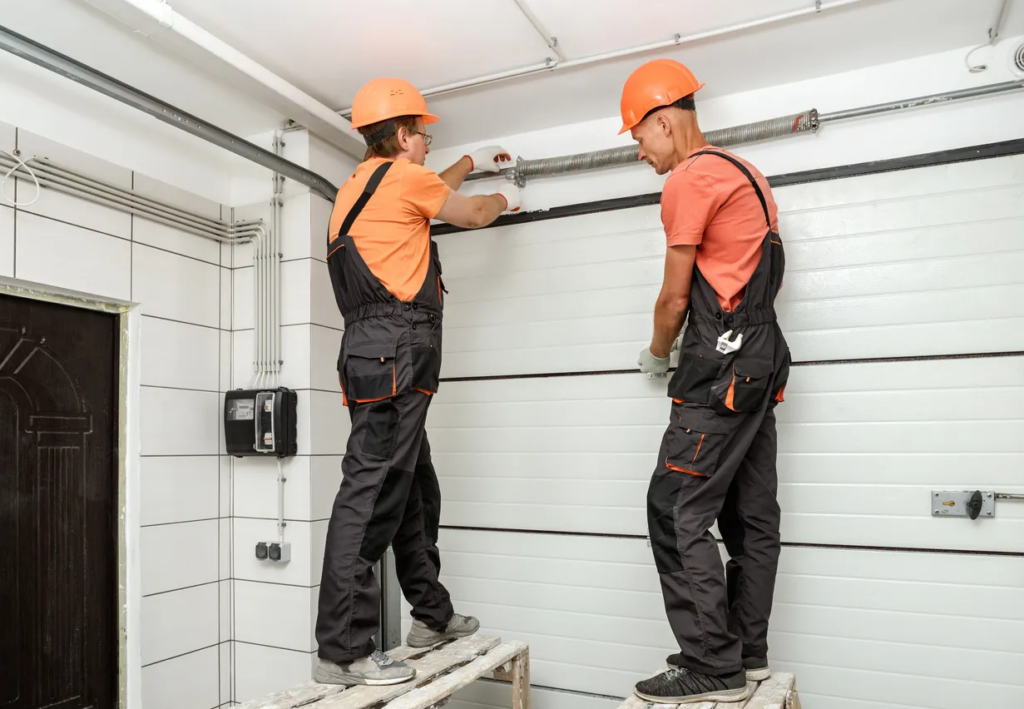
Our Professional Spring Replacement Process
Replacing a garage door spring is a precise mechanical task that requires adherence to strict safety protocols. The potential energy stored in a wound spring is immense, and improper handling can lead to severe injury or property damage. We utilize a systematic approach to ensure every replacement is safe, effective, and long-lasting:
Site Safety and Assessment
First, we secure the work area to prevent unauthorized access, particularly if the door is stuck in a partially open position. We identify the type of spring system currently in place, whether it is a torsion spring mounted above the header or an extension spring system running parallel to the horizontal tracks. We measure the wire gauge, inside diameter, and length of the broken coil to determine the exact specifications required for the replacement.
Releasing Remaining Tension
If you have a dual spring setup and only one spring has broken, the remaining spring still holds a massive amount of tension. We carefully unwind this tension using winding bars, ensuring the door is dead weight before any disassembly begins. This is a critical step that prevents the door from shooting up or crashing down during the removal process.
Removal and Preparation
We disconnect the winding cones and stationary cones from the torsion tube. The broken spring segments are removed, and the torsion tube is inspected for any bending or corrosion. If the bearings or end plates show signs of grinding or excessive wear, we prepare the area for new components. This ensures the new spring rotates without friction, which extends its lifespan.
Installation of High-Cycle Springs
We install new, oil-tempered springs designed for longevity. Unlike standard builder-grade springs that may only last 5,000 to 10,000 cycles, we prioritize high-cycle options that offer significantly longer service life. We slide the springs onto the torsion tube, secure the stationary cones to the center bracket, and ensure the winding cones are accessible.
Winding and Tensioning
Using professional winding bars, we wind the springs to the specific count required for your door’s height and weight. This is not a guessing game; it is a calculated process. Over-winding causes the door to fly open, while under-winding makes the door too heavy for the opener. We adjust the tension precisely until the door achieves neutral buoyancy.
Balancing and Testing
A properly fixed door should stay in place when lifted halfway manually. We test the balance point multiple times. If the door drifts up or down, we make micro-adjustments to the tension. Finally, we reconnect the opener, lubricate the coils to reduce friction and noise, and run the door through several full automated cycles to verify smooth operation.
Determining When to Repair or Replace Your Springs
Homeowners often ask if a broken spring can be welded or repaired. The answer is a definitive no. Once the structural integrity of the steel coil is compromised, it must be replaced. However, the decision-making process goes deeper than simply swapping out the broken part. There are strategic choices to be made regarding whether to replace just the broken unit or overhaul the entire spring system.
The Case for Dual Replacement
Most garage doors in Bee Cave utilize a two-spring system to distribute weight evenly. When one spring breaks, the second spring is usually near the end of its life cycle as well because they were installed at the same time and have lifted the door the same number of times. Replacing only one spring creates an imbalance; the new, stiff spring pulls harder than the old, fatigued spring. This causes the door to rack or twist in the opening, damaging the rollers and tracks. We almost exclusively recommend replacing both springs simultaneously to save you from a second service call and another trapped car in the near future.
Converting from Extension to Torsion
Some older homes or lighter doors utilize extension springs that stretch along the sides of the ceiling. These are generally less safe than torsion springs because they act like giant rubber bands. If an extension spring snaps without a safety cable, it can become a dangerous projectile. If your current system uses extension springs, we may recommend a conversion to a torsion spring system. Torsion springs are contained on a shaft, making them safer, quieter, and capable of lifting heavier loads with greater control.
Upgrading to High-Cycle Springs
Standard springs are rated for a specific number of “cycles” (one cycle is opening and closing the door once). If you use your garage door as the main entry point to your home—opening it multiple times a day for work, school runs, and errands—a standard 10,000-cycle spring may only last a few years. We can install high-cycle springs rated for 25,000 to 50,000 cycles. These springs use a thicker wire gauge and larger diameter, ensuring you won’t face this inconvenience again for a decade or more. Good Golly Garage Doors specializes in these high-durability upgrades for high-traffic households.
Environmental Factors Affecting Garage Doors in Central Texas
The climate in Bee Cave plays a significant role in the lifespan and performance of garage door springs. Understanding these local factors helps in selecting the right materials and maintenance schedules to prevent unexpected failures:
Temperature Fluctuations and Steel
While winters here are mild, the temperature swings can be significant. Steel contracts in the cold and expands in the heat. Over time, this thermal cycling impacts the molecular structure of the spring, making it more brittle. A sudden cold snap after a warm period is a common trigger for spring failure. If your springs are nearing the end of their lifecycle, the added stress of temperature change is often the final straw.
Humidity and Rust
Central Texas experiences high humidity, particularly during the late spring and early autumn months. Humidity is the enemy of steel. If springs are not properly lubricated or if they are made of lower-quality metal, rust will form between the coils. This increases friction as the coils rub against each other during winding and unwinding. The friction generates heat and wear, leading to premature snapping. We use oil-tempered or galvanized springs that offer superior resistance to corrosion, essential for combating the local humidity levels.
Storm Season Stress
May and September bring precipitation peaks and severe weather. During storms, atmospheric pressure changes and wind loads put extra stress on garage doors. If a spring is weak, the added resistance required to hold the door closed against high winds or to open it during a power outage (when you must disconnect the opener) can cause a break. Ensuring your springs are in top condition before storm season is a proactive measure to ensure you can always get your vehicle out in an emergency.
Why Specialized Tools and Training Matter
Garage door spring repair is widely considered the most dangerous aspect of residential door maintenance. It is not a candidate for DIY attempts. The energy required to lift a 300-pound door is stored entirely within the tension of the springs. Without the proper tools and knowledge, releasing or adding that tension can result in severe physical trauma.
Proper Winding Equipment
We strictly use hardened steel winding bars designed specifically for this task. Makeshift tools like screwdrivers or wrenches can slip or bend under the intense torque, causing the spring to unwind violently. Our technicians are trained to position their bodies outside the “cone of danger” during the winding process to ensure safety.
Calibration and Door Weight
Every garage door is different. A door with windows weighs more than a solid panel door; an insulated door weighs more than a hollow steel door. Installing the wrong size spring is a common amateur mistake. If the spring is too strong, the door will not close all the way or will bounce up. If it is too weak, the opener will struggle and eventually fail. We weigh the door on-site to calculate the precise IPPT (Inch Pounds Per Turn) required, ensuring the installed spring matches the physics of your specific door perfectly.
The Cable Connection
Springs and cables work in unison. When a spring breaks, the cables often come loose or unspooled from the drums. Re-spooling these cables requires ensuring equal tension on both sides of the door. An improper cable set will result in a crooked door that jams in the tracks. Our service includes a full reset of the cable and drum assembly to guarantee level operation.
Reliability You Can Trust: Connect With Us Today
A broken spring stops your day in its tracks, but the solution should be seamless and stress-free. We focus on providing a repair that extends the life of your entire garage door system, protecting your opener and ensuring safety for your family. By using higher-grade steel, correcting balance issues, and accounting for the specific climate challenges in Bee Cave, we deliver a fix that lasts.
When you choose professional service, you are investing in the long-term reliability of your home’s largest moving object. We handle the heavy lifting, the technical calculations, and the hazardous tension so you don’t have to. Good Golly Garage Doors is committed to restoring your access and security with speed and professional integrity.
Don’t let a trapped car ruin your schedule; contact us today to book your priority spring repair.
 All Service Areas