

Garage Door Spring Repair in Athens, AL
Need swift garage door spring repair in Athens, AL? Contact Good Golly Garage Doors for dependable, quick service, 24/7. Learn more about our same-day solutions.
A Broken Spring Doesn’t Have to Ruin Your Day
Dealing with a broken or faulty garage door spring can bring your daily routine to a halt, trapping your vehicle inside or leaving your home vulnerable. When you need assistance in Athens, AL, contact us to discuss repair or financing options. Good Golly Garage Doors offers professional repair services you can rely on, with after-hours phone support available.
- Service appointments are scheduled promptly to restore normal operation.
- Certified technicians mean your repair is handled safely and effectively.
- After-hours phone answering is available to address urgent concerns.
All repairs are insured, licensed, and follow local code compliance for your peace of mind.
Immediate Solutions for Spring Failure
When a garage door spring snaps, the entire counterbalance system fails. The door becomes dead weight, often weighing between 150 and 400 pounds, rendering the automatic opener ineffective. Trying to force the door open in this state can strip the gears in your opener or cause the door to come off its tracks. We provide spring replacement services designed to restore functionality properly.
Our service vehicles carry commonly required spring sizes and hardware. This preparation allows technicians to match the specific weight and height of your door on the first visit when possible. Whether your system utilizes torsion springs mounted above the door header or extension springs running parallel to the track, we bring the appropriate components to complete the job without unnecessary delays. Residents in Athens rely on efficient resolutions, and our inventory planning supports that demand.
Included in every spring repair service is a full system safety inspection. A broken spring often places stress on other components, such as cables, drums, and rollers. We assess the condition of the lifting cables to ensure they haven’t frayed or snapped under the sudden release of tension. We also examine the bearings and center bracket to verify the shaft can rotate freely. This holistic approach ensures that once the new springs are installed, the entire garage door system operates smoothly and quietly.
Detailed Process of Spring Replacement
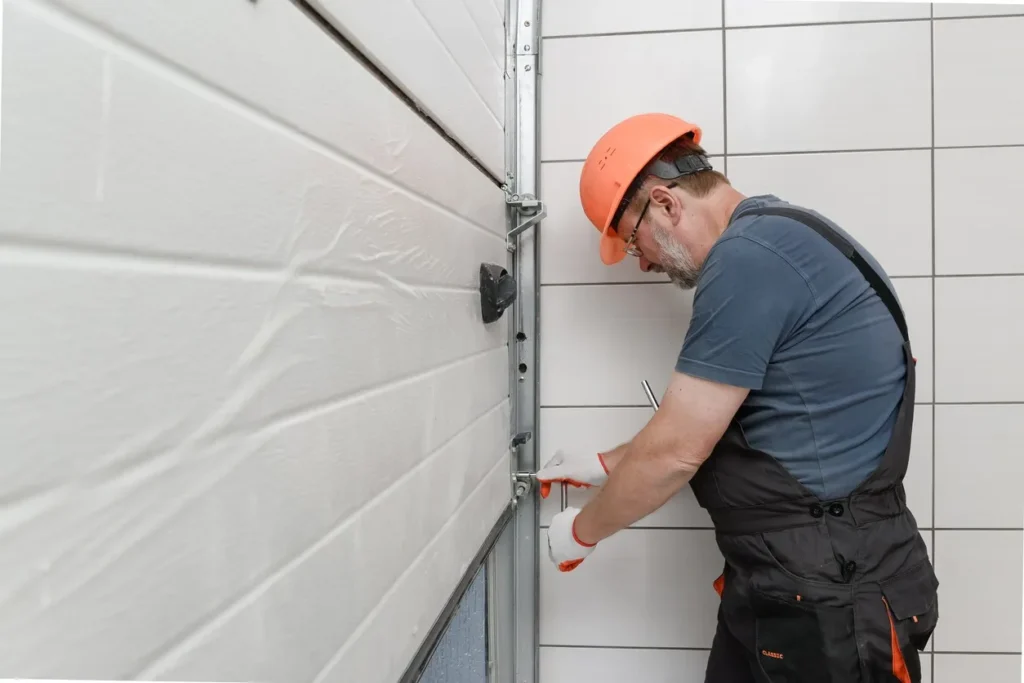
Replacing a garage door spring is a dangerous task involving high tension and heavy components. Professional technicians follow a strict, safety-first protocol to remove the damaged hardware and install new, high-cycle springs without risking property damage or injury.
- Securing the Door: The process begins with securing the garage door in the closed position. If the door is partially open or stuck, it must be carefully lowered and clamped to the track to prevent accidental movement. This is a critical step, as a door that moves unexpectedly during repair can cause serious injury.
- Unwinding and Tension Release: For torsion spring systems, the remaining tension on the unbroken spring, if applicable, must be released. Technicians use solid steel winding bars to slowly unwind the spring from the winding cone. This requires physical strength and precise control, as the stored energy in the spring is sufficient to cause severe injury if a tool slips.
- Removal of Damaged Components: Once all tension is neutralized, the spring shaft is slid sideways to allow for the removal of the broken spring coils and the stationary cone. In many cases, the cables must also be disconnected from the bottom brackets or drums. Technicians inspect the shaft for any warping or wear that might affect the new installation.
- Installation of New Springs: The new springs are slid onto the torsion tube. We select springs that are rated for higher lifecycles, typically offering 10,000 to 20,000 cycles, opens and closes. Using the correct wire size and coil diameter is essential for balancing the door properly. An undersized spring will wear out quickly, while an oversized spring will make the door difficult to close.
- Winding and Balancing: This is the most technical part of the repair. The new springs are wound to a calculated number of turns based on the door’s height. After winding, the technician tests the balance. A properly balanced door should stay in place when lifted halfway manually. If it falls, the springs need more tension. If it rises, they have too much.
- Lubrication and Final Testing: The final step involves lubricating the coils to reduce friction and noise. Technicians then reconnect the opener, if present, and run the door through several automatic cycles to ensure the force settings on the operator are calibrated correctly.
Repair Versus Full Replacement
Homeowners often ask if a spring can be repaired rather than replaced. In the context of garage door springs, repair almost always means replacement. A spring works by twisting or stretching metal. Once that metal fatigues and snaps, it cannot be welded back together. Welding creates a brittle point that will fail under tension. However, there are scenarios where adjustments may be sufficient, versus when a full replacement is required.
- The Spring is Broken, Gap in Coils: If you see a visible two-inch gap in the coil of a torsion spring, replacement is the only option. The metal has reached the end of its fatigue life.
- The Door is Heavy but Springs Look Intact: If the door feels extremely heavy to lift manually but the springs appear whole, the springs may have lost their tension over time. In some cases, a technician can add quarter-turns to the springs to rebalance the door. However, if the steel has lost its elasticity, adding tension is a temporary fix, and replacement is recommended to reduce the risk of failure.
- One Spring Broke in a Dual System: Most double-car garage doors use two springs. If one breaks, we recommend replacing both at the same time. Both springs were installed together and have lifted the door the same number of times. If one spring breaks today, the other is likely near the end of its lifecycle and may fail later. Replacing both helps avoid an additional service visit.
- Conversion Requirements: Older homes in Athens may have obsolete extension spring systems or TorqueMaster systems that are difficult to service. In these instances, converting to a standard torsion spring system can be a better long-term option. Torsion systems are safer, smoother, and easier to maintain.
Why Professional Service Matters
Attempting to repair a garage door spring without proper training and tools is one of the most hazardous DIY projects a homeowner can attempt. The energy stored in a wound spring is significant. A slipping winding bar or sudden cable release can cause serious injuries or property damage.
Professional technicians arrive with the correct winding bars that fit the winding cones properly, reducing the risk of slippage. They understand winding direction, left-wound versus right-wound, which is often confusing for untrained individuals. Professionals can also identify underlying issues that may contribute to premature spring wear, such as worn rollers, misaligned tracks, or opener arms mounted incorrectly.
Good Golly Garage Doors ensures every technician is trained in the mechanics of garage door systems. We calculate the necessary torque and lift requirements so the door moves smoothly within the tracks. This attention to detail helps extend the life of the opener and reduces operating noise.
High-Cycle vs. Standard Springs
When replacing springs, homeowners can choose between different durability levels. Builders often install standard-cycle springs in new homes to reduce initial costs. These are typically rated for about 10,000 cycles. For households that use the garage door as a primary entry point, 10,000 cycles may be reached within several years.
We offer high-cycle springs as an upgrade. These springs use a larger wire gauge and longer coil length. By spreading stress across more material, fatigue is reduced. High-cycle springs are often rated for 20,000 to 50,000 cycles. While the initial cost may be higher, the increased lifespan can provide better long-term value depending on usage.
- Standard Cycle (10k): Suitable for lower-usage doors or shorter-term housing plans.
- High Cycle (20k+): Recommended for frequent daily use and long-term homeowners.
Identifying Your Spring Type
Understanding your current system helps during the initial consultation.
- Torsion Springs: Located horizontally above the garage door opening and mounted on a metal shaft. This is the most common residential system.
- Extension Springs: Run alongside the horizontal tracks and stretch to lift the door. These should always include safety cables to contain the spring if it breaks.
- TorqueMaster or EZ-Set: Proprietary systems with springs enclosed in a tube or specialized winding mechanism. These often require conversion kits for effective servicing.
Troubleshooting Before You Call
If your door is not opening, a visual inspection can help determine whether a spring issue is present. Stand inside the garage with the door closed and look above the opening.
- Visual Gap: A visible separation in the spring coils indicates a break.
- Loose Cables: When a spring breaks, side cables may lose tension or come off the drums.
- Loud Bang: A sharp noise similar to a firecracker can indicate a spring failure.
- Heavy Door: Pull the emergency release cord to disconnect the opener and attempt to lift the door manually. If it is extremely heavy or will not lift, the spring may be broken. Avoid forcing the door to prevent injury.
Maintaining Your New System
Once springs are replaced, routine maintenance helps extend their lifespan. We recommend semi-annual checks.
- Listen: Unusual noises during operation may indicate the need for lubrication.
- Lubricate: Apply a garage door-specific lubricant, lithium or silicone-based, to springs, rollers, and hinges. Avoid WD-40, which can attract dust and debris.
- Balance Check: Disconnect the opener and lift the door manually to waist height. It should remain in place. If it drops, an adjustment may be needed.
Secure Your Garage
A broken spring can leave your garage door difficult to operate and place additional strain on the opener. Delaying service may lead to further wear on door panels, tracks, or hardware. Professional service helps restore safe and reliable operation. Good Golly Garage Doors provides experienced technicians and quality parts to support your garage door system and help you return to normal use. Contact us now.
Proudly Serving Decatur, AL, and Surrounding Areas
We provide the best garage door services you can find across Decatur, AL. Whether it’s the impact of Decatur’s heat and sudden storms on garage door components, we ensure our solutions are tailored to your needs. Wherever you are, Good Golly Garage Doors is ready to deliver.
Call (256) 686-4010 All Service Areas