
Garage Door Service in Crestline, CA
Get fast and secure garage door services in Crestine. Schedule your professional inspection or repair today and keep your home safe and efficient!
Is Your Garage Door Ready for Crestline’s Winter?
As temperatures drop in the mountains, a faulty garage door isn’t just inconvenient, it can be a security risk and a significant energy drain on your heating bill. Ensure your home is protected against the elements with fast, reliable garage door services, contact us to schedule an inspection or repair.
Good Golly Garage Doors understands that living at 4,600 feet presents unique challenges for home access systems. The stark contrast between warm, dry summers and freezing, wet winters can affect springs, openers, and tracks. When your door fails, delays can impact security and comfort. You need a solution that restores security and thermal efficiency as promptly as scheduling allows:
- Get professional garage door repairs to help secure your home before the weather turns.
- Benefit from certified local technicians with years of experience handling mountain-specific hardware issues.
- Access special seasonal offers to help you save as you safeguard your home against the cold.
All services are provided with applicable manufacturer warranties, typically around one year, and strict compliance with local building codes.
Responsive Service for Critical Failures
When a garage door malfunctions in Crestline, it rarely happens at a convenient time. The primary objective of professional service is to restore functionality as efficiently as possible. Service vehicles are equipped with commonly required springs, cables, rollers, and hinges suitable for heavy, insulated doors often found in mountain regions.
The scope of service covers every component of the door system. This includes realigning tracks that have shifted due to temperature fluctuations, replacing snapped cables that leave a door crooked, and swapping out torsion springs that have reached the end of their lifecycle. For homeowners dealing with openers, the service includes diagnostics on logic boards, gear kits, and motor capacitors. Whether the issue is a door that refuses to close, a motor that hums but does not move, or a loud grinding noise during operation, the goal is a complete and reliable repair.
Comprehensive service also involves a safety inspection. This is not just about getting the door to move, it is about ensuring the heavy moving wall of your home is safe for your family and vehicles. Technicians verify the balance of the door, test the auto-reverse safety mechanisms, and inspect the structural integrity of the panels.
The Installation and Repair Process
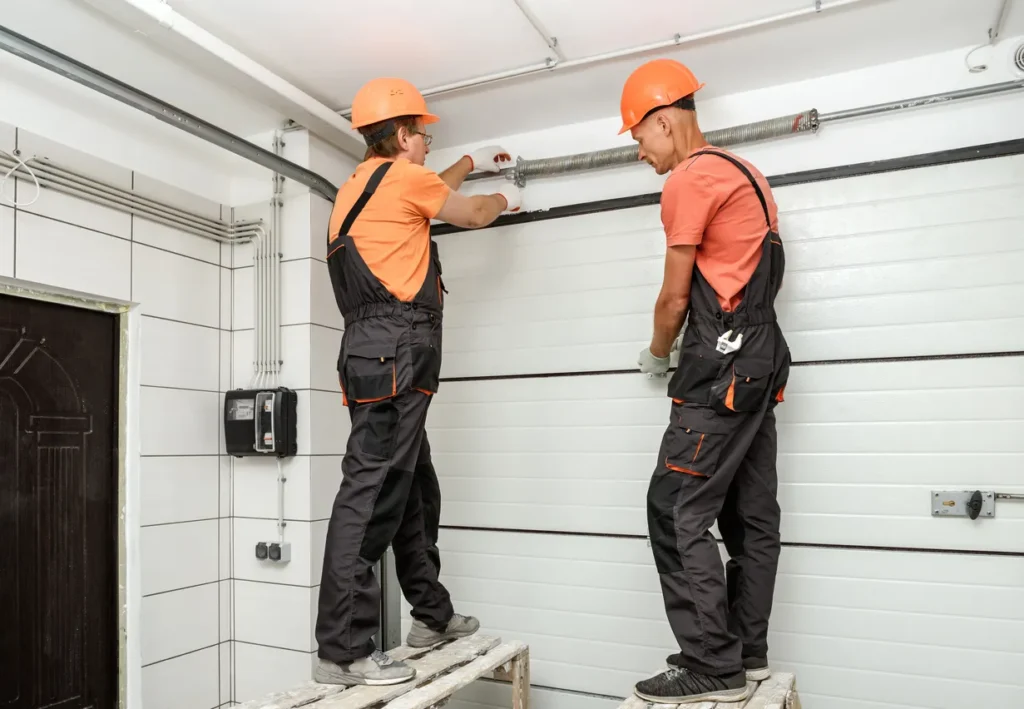
Understanding the workflow of a professional repair or installation helps homeowners prepare for the service visit. The process is designed to be transparent, efficient, and thorough, ensuring no underlying issues are missed.
Initial Assessment and Diagnosis
- The technician arrives on-site to inspect the entire system, not just the obvious point of failure.
- A 25-point safety inspection identifies wear patterns on rollers, fraying cables, and stress fractures in hinges.
- The balance of the door is tested manually to determine if the springs are providing the correct amount of lift.
Clear Options and Authorization
- After the inspection, the technician presents a clear report of the findings.
- You receive options ranging from immediate repairs to preventative maintenance or full replacement if the system is beyond its service life.
- Work begins only after you understand the scope and authorize the specific solution.
Execution and Hardware Replacement
- The technician performs the authorized work using professional-grade tools and parts.
- For spring replacements, two springs are often replaced simultaneously to ensure equal tension and longevity.
- All moving parts are lubricated with non-silicone, garage-door-specific lubricants designed to withstand cold temperatures without gumming up.
Testing and Calibration
- Once the repair is complete, the door is run through multiple cycles to ensure smooth operation.
- Opener force limits and travel settings are recalibrated to match the door’s weight and movement.
- Safety sensors are aligned and tested to ensure the door reverses immediately upon detecting an obstruction.
Deciding Between Repair and Replacement
Homeowners often struggle to decide whether to keep patching an existing system or to invest in a new one. This decision typically comes down to cost-effectiveness, safety, and energy efficiency.
A general industry standard is the “50% Rule.” If the cost to repair the current garage door is 50% or more of the cost of a brand-new system, replacement is usually the smarter financial move. However, other factors play a critical role in this decision.
When to Repair:
- The door is under 10 years old. Modern doors are built to last 15 to 20 years with proper maintenance. If the panels are in good shape, replacing hardware such as springs, rollers, or openers is cost-effective.
- Sudden impact damage. If a single panel is damaged due to a vehicle impact but the rest of the door is sound, a section replacement is often viable.
- Cosmetic issues. Surface rust or peeling paint can often be addressed without removing the entire system.
- Simple hardware failure. A broken spring or a stripped gear in the opener does not necessitate a full door replacement.
When to Replace:
- Severe structural damage. If the door has been hit hard enough to bend the track or warp the frame, repair may never restore smooth operation.
- Lack of insulation. In Crestline, an uninsulated or poorly insulated door allows significant heat loss. Upgrading to a sandwich-style steel door with polyurethane insulation, with a high R-value, can help reduce energy bills.
- Safety violations. Older doors lacking photo-eye sensors or auto-reverse features should be replaced to meet current safety standards.
- Recurring breakdowns. If you are calling for service multiple times a year, the system may be fatigued and continued repairs become costly over time.
Navigating Mountain Climate and Regulations
Operating a garage door in a mountain environment requires different considerations than in the valley. The altitude and weather patterns in Crestline dictate specific hardware choices and maintenance routines.
Temperature Fluctuations and Material Contraction
- Metal components contract in the cold and expand in the heat. In mountain climates, this thermal cycling can cause screws to loosen and tracks to shift slightly out of alignment.
- Professional service involves tightening all hardware to the correct torque specifications to help prevent operational failure during a freeze.
Insulation and Energy Efficiency
- A garage door is essentially a moving wall. In colder regions, a non-insulated door acts as a thermal bridge, allowing heat loss from the garage and adjacent rooms.
- Services often include upgrading bottom weather seals and perimeter weatherstripping, such as vinyl stops, to help seal gaps where cold drafts enter.
- High R-value doors are recommended to help keep the garage temperature more stable, which can assist in protecting your vehicle’s battery and engine fluids in winter.
Battery Backup Requirements
- California law, SB 969, requires all newly installed garage door openers to have a battery backup. This is particularly important in mountain areas prone to power outages during winter storms or wildfire season public safety power shutoffs.
- Ensuring your opener complies with this regulation helps provide access during outages, including emergency situations, even if the grid goes down.
Good Golly Garage Doors ensures that every installation and repair meets these specific regional requirements, prioritizing the safety and readiness of your home.
Technical Components Prone to Failure
To understand the value of professional service, it helps to understand the components that do the heavy lifting. Your garage door does not weigh a few pounds, it likely weighs several hundred. The lift is provided by the counterbalance system, not the electric opener.
Torsion Springs:
- Located above the door, these store mechanical energy. They are rated by cycles, one up and down movement. Standard builder-grade springs last about 10,000 cycles.
- In cold weather, steel becomes more brittle. This is why springs often break during the first deep freeze of the season.
- Professional replacement involves winding these springs with high tension, a task that requires proper training and tools.
Lift Cables:
- These aircraft-grade steel cables connect the bottom of the door to the counterbalance system.
- Over time, moisture near the floor can cause these cables to rust and fray. If a cable snaps, the door can shift sideways and jam in the tracks.
Rollers:
- The wheels that guide the door usually have ball bearings. Nylon rollers are preferred for quieter operation and durability in cold weather.
- Steel rollers can rust and seize, dragging against the track and putting unnecessary strain on the opener.
The Logic Board:
- The control board of your garage door opener. Power surges, which can occur during storms, can damage these circuit boards.
- Symptoms of a failing logic board include the door operating unpredictably or remote controls failing to work despite fresh batteries.
Why Professional Service Ensures Longevity
While DIY approaches are popular for minor home repairs, garage door systems involve high-tension mechanics that pose safety risks. The tension on a torsion spring is sufficient to cause serious injury if mishandled. Improper installation of an opener can also interfere with safety reversal systems.
Professional technicians utilize specialized tools, such as winding bars and tension gauges, to ensure the door is balanced correctly. A balanced door should stay in place when lifted halfway manually. Achieving proper balance reduces the workload on the electric opener and can help extend the life of the motor.
Additionally, professionals have access to manufacturer-approved parts that are not typically available at big-box hardware stores. This includes heavier gauge steel hinges, higher-cycle springs, and reinforced struts for door panels. Using higher-quality components can result in fewer service visits and smoother, quieter operation.
Secure Your Home Access Today
A functioning garage door is fundamental to the security and efficiency of your home. Ignoring minor noises or delays in operation can lead to a complete system failure, leaving your vehicle trapped or your home exposed to the elements.
Whether you require repair for a broken spring, an insulation upgrade to help manage mountain temperatures, or a new opener that meets battery backup requirements, the focus remains on reliability and safety. Good Golly Garage Doors provides the expertise needed to address the specific demands of the Crestline region.
Do not wait until the door is stuck halfway open. Help secure your home and ensure reliable access by scheduling service or requesting an estimate for a new installation.
Proudly Serving Victorville and Surrounding Areas
We provide the best garage door services you can find across Victorville, CA. Wherever you are, Good Golly Garage Doors is ready to deliver. Let’s get your garage door in Victorville, CA or beyond back in top shape with service that’s fast, friendly, and built to last.
Call (760) 979-0605 All Service Areas