

Garage Door Repair Round Rock, TX
Expert repair services for garage doors in Round Rock. Same-day availability, transparent pricing, with comprehensive diagnostics and parts warranty. Schedule now for professional, safe repair.
Immediate Garage Door Repairs to Secure Your Home
Struggling with a broken garage door poses an immediate risk to your property’s security and disrupts your daily access in Round Rock. For urgent assistance and to restore your system’s integrity, schedule service today.
Good Golly Garage Doors understands that a malfunctioning overhead door is not just an inconvenience; it is a breach of your home’s primary entry point. When cables snap or openers fail, homeowners need a solution that prioritizes speed without sacrificing technical precision.
- Rapid response protocols to ensure same-day service availability for critical failures.
- Deployment of high-quality, high-cycle parts designed for lasting repairs.
- Transparent pricing structures provided upfront with zero hidden fees.
All services performed come with comprehensive warranty options and strict adherence to local building codes to ensure your system remains compliant and safe.
Comprehensive Diagnostics and Scope of Repair
When a garage door fails, the symptoms are often obvious, but the root cause requires a trained eye to diagnose correctly. A door that refuses to close might be a simple sensor misalignment, or it could indicate a fractured logic board within the opener. Homeowners often encounter issues ranging from loud grinding noises to doors that come off their tracks entirely.
Professional intervention begins with a thorough multi-point inspection. This is not a cursory glance but a systematic check of the counterbalance system, the drive mechanism, and the structural hardware. The goal is to identify not just the part that broke, but why it broke. For example, a snapped cable is often the result of a fraying process caused by a rusted or seized bottom bracket. Replacing the cable without addressing the bracket ensures the problem will return.
Current industry standards dictate that repairs should restore the door to its original manufacturer specifications. This involves checking the weight balance of the door. A properly balanced door should lift manually with one hand; if it crashes down or shoots up, the spring tension is incorrect, placing immense strain on the opener. Ignoring these signs leads to catastrophic opener failure, transforming a minor spring adjustment into a costly motor replacement.
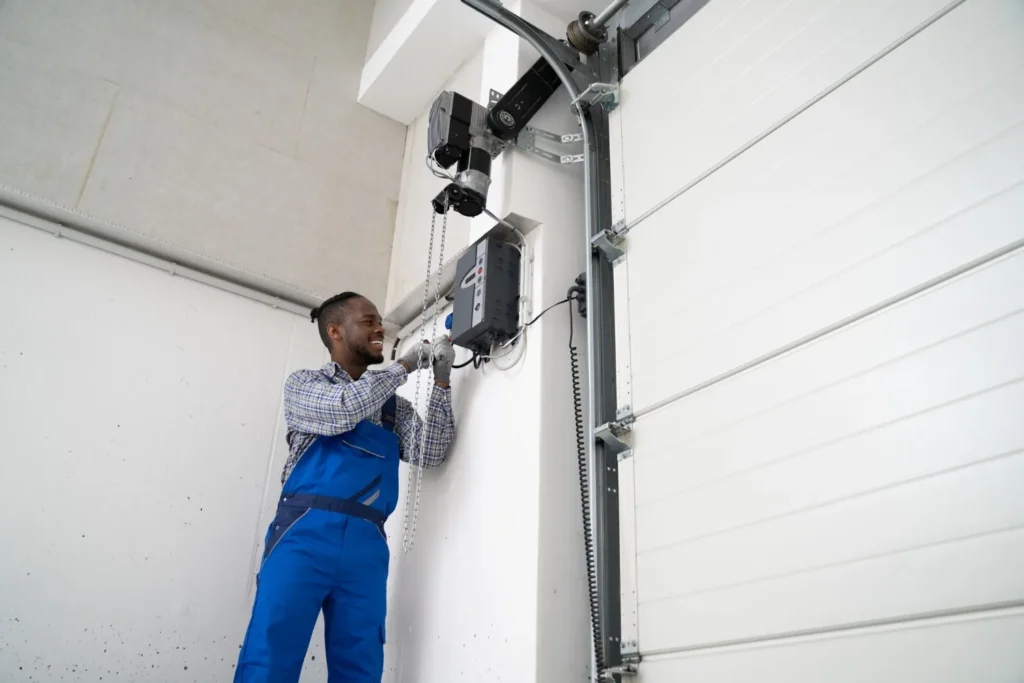
Critical Component Analysis
Understanding what goes into a repair helps in making informed decisions. The garage door system relies on several high-tension components working in unison.
- Torsion and Extension Springs: These bear the heavy lifting. Springs have a rated cycle life (e.g., 10,000 cycles). When one breaks, the door becomes dead weight. Professional replacement involves swapping both springs to maintain balanced tension and uniform wear.
- Lift Cables and Drums: The cables transfer the spring energy to the door. Over time, moisture and friction cause fraying. If a cable snaps, the door can tilt dangerously or freefall.
- Rollers and Tracks: Steel rollers on steel tracks create noise and vibration. Upgrading to nylon rollers with ball bearings dampens sound and reduces friction. Tracks must be perfectly parallel and plumb; even a slight deviation causes binding.
- Opener Logic and Gears: Inside the motor unit, plastic gears can strip due to age or excessive load. Capacitors, responsible for the initial jolt of power to start the motor, are prone to failure in high-heat environments.
Restoring Functionality: The Repair Process
The repair process is a methodical operation designed to ensure safety and longevity. Unlike general home maintenance, garage door repair involves parts under extreme tension, requiring specialized tools and winding bars.
- Site Safety and Stabilization: The technician first secures the workspace. If the door is stuck in a partially open position, it is blocked and clamped to prevent accidental movement during the repair.
- Tension Release: Before any hardware is removed, the tension from the springs must be safely released. This is the most critical step, as the potential energy stored in the springs is sufficient to cause severe injury.
- Component Replacement: Damaged parts are removed and replaced with OEM or superior-grade alternatives. For springs, the technician calculates the correct wire gauge and length based on the door’s weight, not just by guessing based on the old spring.
- System Balancing: Once new parts are installed, the technician winds the springs to the specific manufacturer-recommended turns. The door is tested manually to ensure it floats in the opening.
- Opener Reconnection and Calibration: The automatic opener is re-engaged. Force settings and travel limits are recalibrated so the door opens fully without hitting the stop bolt and closes tightly without reversing unnecessarily.
- Safety Sensor Alignment: The photo-eye sensors are aligned and tested. The technician performs a reversal test by placing a block under the door to confirm it retracts upon contact, a mandatory safety feature.
Determining When to Repair Versus Replace
Homeowners frequently face the dilemma of sinking money into an old system or investing in a new one. While repair is often the most cost-effective route for specific mechanical failures, there are thresholds where replacement becomes the smarter financial move.
When to Repair
- Isolated Mechanical Failures: If the issue is a single broken spring, a frayed cable, or a stripped gear in a relatively new opener, repair is the logical choice.
- Cosmetic Surface Damage: Minor dents on individual panels can sometimes be addressed, or a single panel can be replaced if the manufacturer still produces that specific model and color.
- Door Age Under 10 Years: Modern doors typically have a lifespan of 15 to 30 years. If the door is under a decade old, the structural integrity is likely intact, making component repair viable.
- Sudden Impact Damage: If a vehicle accidentally bumps the door at low speed, often only the bottom section and track need attention, provided the rest of the assembly remained square.
When to Replace
- Severe Structural Corruption: If the door sections are sagging, cracked, or bowing in the center, the door has lost its structural integrity. No amount of bracing will permanently fix a door that is folding under its own weight.
- Recurring Component Failure: If you find yourself calling for repairs every six months, the system is likely fatigued. Continuing to patch a failing system often costs more over two years than a full replacement.
- Safety Standard Obsolescence: Older doors lacking safety cables inside extension springs or openers manufactured before 1993 (without eye sensors) are non-compliant with modern safety standards. Replacement is necessary to reduce liability and injury risk.
- Energy Efficiency Gaps: In climates with temperature extremes, an uninsulated, single-layer steel door allows massive heat transfer. upgrading to a sandwich-style insulated door (steel-insulation-steel) drastically improves thermal efficiency.
Good Golly Garage Doors technicians provide honest assessments based on the condition of your hardware, ensuring you do not pay for repairs on a system that is past its service life.
Navigating Local Climate and Building Requirements
Operating a garage door in Central Texas presents specific challenges due to the environmental conditions found in Round Rock and the surrounding areas. The local climate directly impacts the lifespan of garage door components.
Heat and Electronics
The intense summer heat, often exceeding 90°F, can raise the temperature inside a garage significantly. This heat buildup affects the electronics within the garage door opener. Capacitors and logic boards are sensitive to thermal expansion and overheating. Regular maintenance involves checking the ventilation of the motor housing and ensuring the electronic components are not degrading due to thermal stress.
Humidity and Lubrication
While winters are mild, the fluctuations in humidity and the potential for spring storms introduce moisture to the system. Standard light oil lubricants often evaporate quickly in the heat or gum up with dust. Using a lithium-based or silicone spray lubricant is essential for this region to ensure rollers and hinges operate smoothly without attracting abrasive grit.
Storms and Wind Load
During storm season, high winds can put pressure on the door. While Round Rock may not face coastal hurricane forces, wind-blown debris can damage tracks or dent panels. Ensuring the weather seal on the bottom of the door is intact is vital not just for temperature control, but to prevent water ingress during heavy downpours which can rust the bottom brackets and cables.
Permitting and Codes
The City of Round Rock Permits and Inspections Department enforces specific codes regarding garage door installations, particularly concerning electrical connections for openers and structural modifications. While minor repairs like spring replacement typically do not require a permit, structural changes or full replacements must adhere to local building codes. This includes requirements for pinch-resistant panels and proper GFCI outlet usage for openers. Professional service providers ensure that all work remains within the scope of these local regulations to avoid fines or complications during future home sales.
Standards of Professional Service
The distinction between a DIY fix and a professional repair lies in the long-term reliability of the system. Garage doors are the largest moving object in a home, and the forces involved in their operation are substantial.
A professional approach involves accurate torque measurements. Every bolt and fastener on the door has a specific torque spec. Under-tightening leads to parts vibrating loose; over-tightening can crack hinges or strip threads. Professional technicians utilize tools that ensure these specifications are met precisely.
Furthermore, the alignment of the track system requires geometric precision. Tracks must be installed with the correct spacing and headroom. If the tracks are too tight against the door, the rollers bind. If they are too loose, the door can fall out. Professionals use templates and levels to set this geometry to the millimeter, ensuring smooth travel.
Warranty backing serves as the final differentiator. A reputable repair service stands behind the labor and the parts. If a spring fails prematurely or an adjustment slips, the recourse is clear and covered. This protection is absent in DIY repairs, where a mistake necessitates purchasing new parts and starting over.
Restore Security Fast with Good Golly Garage Doors
Don’t let a broken garage door put your home at risk. At Good Golly Garage Doors, we provide rapid, reliable garage door repair in Round Rock, delivering same-day response, precision diagnostics, and long-lasting repairs. With transparent pricing, high-cycle replacement parts, and full code-compliant service backed by warranties, we ensure your door is restored safely and efficiently. Contact us today to schedule your repair and secure your home with trusted local experts.
Ensure your home remains secure and your day remains uninterrupted.
Proudly Serving Austin, TX, and Surrounding Areas
From the neighborhoods of Austin to Round Rock and Buda, we provide the best garage door services you can find across the area. Whether it’s the impact of Texas heat and sudden storms on garage door components, we ensure our solutions are tailored to your needs. Wherever you are, Good Golly Garage Doors is ready to deliver.
View All Cities
 All Service Areas