

Garage Door Remote Repair in Round Rock, TX
Struggling with a garage door remote not responding? Discover quick, reliable solutions in Round Rock with Good Golly Garage Doors. Click to schedule now!
Garage Door Remote Not Responding When You Need It Most?
Is your garage door remote unresponsive, leaving you stuck in your driveway or locked out of your home? You need a quick, reliable fix that gets your day back on track immediately. Schedule your remote repair or replacement now.
When you press that button, you expect immediate access, but a malfunction can disrupt your entire schedule. Good Golly Garage Doors specializes in diagnosing communication failures between your transmitter and the opener unit. Whether it is a simple frequency drift or a complex logic board failure, our technicians restore access quickly.
- Rapid response times to get your door moving again.
- Expert troubleshooting for all major remote brands and opener models.
- Transparent quotes with no hidden service fees.
- All services backed by a full warranty and compliance with local codes.
Immediate Diagnosis and Repair for Unresponsive Openers
When a garage door remote stops working, the issue is rarely as simple as a dead battery, although that is the first thing homeowners check. If you have swapped the batteries and the door still refuses to budge, the problem likely lies within the radio frequency signals, the receiver’s logic board, or environmental interference. Residents in Round Rock often find that what looks like a broken remote is actually a symptom of a larger desynchronization issue within the garage door system.
We approach every service call with a comprehensive diagnostic checklist. We do not just sell you a new clicker and hope it works; we determine why the signal is not reaching the motor. This involves testing the radio frequency strength, checking the antenna position on the opener, and inspecting the internal circuitry for corrosion or heat damage.
Our technicians arrive fully equipped to handle:
- Signal Interference: Identifying external devices that block the signal between your remote and the receiver.
- Desynchronization: Resetting the connection between the handheld transmitter and the main operator unit.
- Receiver Failure: Diagnosing if the issue is the remote itself or the logic board inside the garage door opener.
- Physical Damage: Repairing or replacing remotes that have been dropped, crushed, or exposed to moisture.
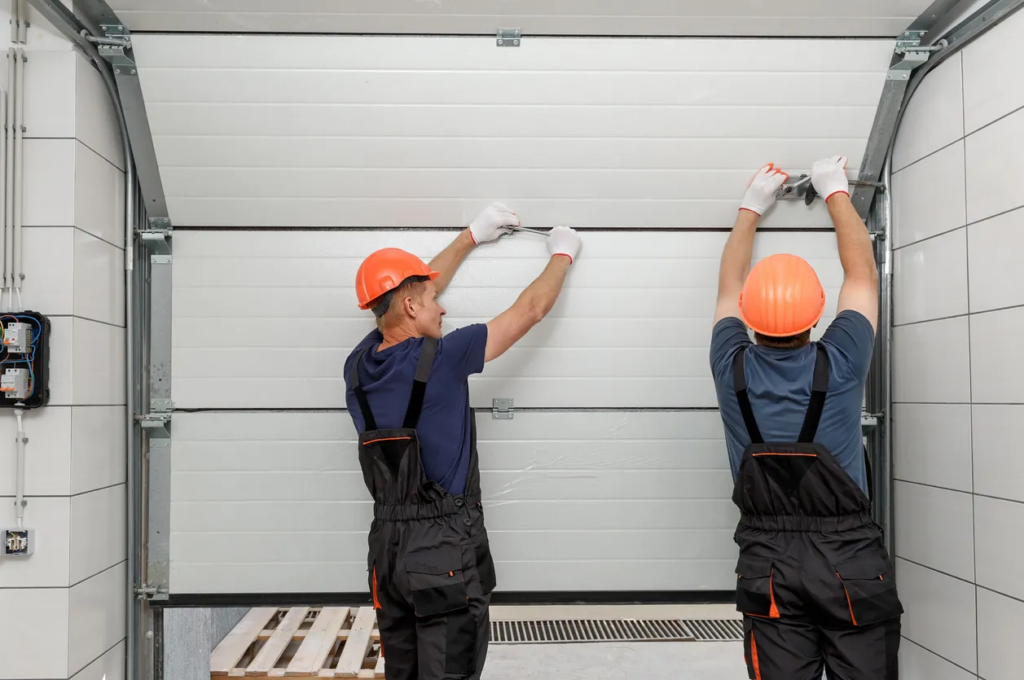
The Professional Protocol for Restoring Remote Access
Restoring a garage door remote involves a precise series of technical steps to ensure security and functionality. Modern garage door openers utilize rolling code technology, which changes the access code every time you use the remote to prevent theft. If this sequence gets out of sync, the door will not open even if the remote has power.
Our process ensures that your home remains secure while restoring your convenience. We clear the existing memory of your opener to wipe out any old codes—a crucial step if you have lost a remote or moved into a new home in the Round Rock area. This ensures that only the remotes currently in your possession will operate the door.
The service workflow typically includes:
- Frequency Testing: We use specialized meters to see if your remote is transmitting a strong, clear signal at the correct frequency (typically 315 MHz or 390 MHz).
- Interference Elimination: We scan for common household items, such as low-quality LED light bulbs or wireless security systems, that emit “noise” capable of jamming your garage door signal.
- Memory Reset and Reprogramming: We wipe the opener’s logic board memory and reprogram all transmitters, including keypads and car homelink systems, to ensure they are on the same encrypted channel.
- Logic Board Inspection: If the remote is transmitting but the door does not move, we inspect the solder points and capacitors on the opener’s receiver board for failure.
Troubleshooting: Repairing the Transmitter vs. System Replacement
Deciding whether to repair an existing remote or replace the entire control mechanism depends on the age of your equipment and the specific symptoms your system presents. While we always aim for the most cost-effective repair, there are scenarios where a replacement offers better security and reliability.
If your system uses older “dip switch” technology (common in units manufactured before the mid-1990s), the remote sends a fixed code that is easily intercepted by potential intruders. In these cases, repairing an ancient remote is often throwing good money after bad. Upgrading to a modern universal remote or replacing the receiver with a rolling code kit enhances your home’s security significantly.
Consider the following factors when deciding on the next steps:
- Intermittent Operation: If the remote works from close range but fails from the street, the issue is likely antenna degradation or interference. This can often be repaired by extending the receiver antenna.
- Physical Wear: Buttons that stick or require excessive pressure usually indicate worn internal contacts. While these can be cleaned, a replacement shell or unit is often a more permanent solution.
- Obsolete Frequencies: If your opener operates on discontinued frequencies, finding a compatible OEM remote may be impossible. In this instance, we install an external receiver kit that allows your old opener to accept signals from modern, secure remotes.
- Security Compromise: If a remote has been stolen, simply buying a new one is not enough. The system must be purged and reset.
Understanding Signal Interference and Range Issues
One of the most frustrating problems homeowners face is a remote that drastically loses range. You used to be able to open the door from two houses away, and now you have to be right in front of the door. This is rarely a battery issue; it is almost always an environmental variable affecting the radio waves.
In densely populated neighborhoods, the airwaves are crowded. Good Golly Garage Doors technicians are trained to hunt down “phantom interference.” This occurs when other devices operating on similar frequencies overpower the weak signal from your garage door remote.
Common culprits that we investigate include:
- LED Light Bulbs: Many generic LED bulbs installed in the garage door opener itself emit a frequency that jams the receiver. We replace these with shielded, garage-door-specific bulbs.
- Nearby Radio Towers: Proximity to commercial radio equipment can reduce range.
- Metallic Obstructions: New siding, insulation with foil backing, or metal shelving near the opener can act as a Faraday cage, blocking the signal.
We solve these range issues by relocating the receiving antenna or installing a repeater system that captures the signal from outside the garage and relays it to the motor inside.
Regional Factors Affecting Electronics in Texas
Operating electronic devices in Round Rock presents specific challenges due to the local climate. Garage environments are not climate-controlled, meaning your remote and the receiver inside the garage are subject to extreme temperature fluctuations.
During the hot summers, temperatures inside a closed garage can easily exceed the outside air temperature, baking the electronics within the opener unit. This heat can cause the solder joints on the logic board to expand and crack, leading to intermittent signal failure. A remote left in a car parked in the sun can also suffer from battery leakage or circuit board warping.
Conversely, the storm season brings lightning and electrical surges. Even a nearby lightning strike can send a surge through the home’s wiring or induce a current in the air that scrambles the memory of the garage door opener. If your remote suddenly stops working after a thunderstorm, it is highly likely the logic board has been reset or damaged.
Our local service considers these environmental factors:
- Heat-Resistant Batteries: We recommend and install high-quality lithium batteries that perform better in high-heat environments compared to standard alkalines.
- Surge Protection: We check if your opener is plugged into a surge protector to prevent memory loss during electrical storms.
- Humidity Damage: High humidity can lead to oxidation on the battery contacts of your remote. We clean and apply dielectric grease to prevent future corrosion.
Advanced Remote Features and Smart Integration
Modern access control has moved beyond the simple one-button clicker. Many homeowners are now looking to integrate their garage door remotes with vehicle Homelink systems or smart home hubs. However, syncing these systems can be notoriously difficult due to compatibility layers and “learn mode” timing requirements.
We assist with the programming of advanced control systems that go beyond standard open/close functions. If you have purchased a new vehicle and are struggling to program the built-in buttons on the rearview mirror or visor, our technicians can complete the bridging process. This often requires a specific sequence of “teaching” the car the code from a handheld remote before syncing it with the opener.
Additionally, we handle multi-button remotes that control different doors or gate systems. Ensuring that button A opens the main door, button B opens the third bay, and button C operates the community gate requires precise frequency matching. We eliminate the need to carry multiple clickers by consolidating your access needs into a single, high-quality transmitter.
Why Professional Troubleshooting Beats DIY
While buying a generic universal remote from a hardware store seems like a quick fix, it often leads to further frustration. Universal remotes are designed to work with hundreds of models, which makes their programming instructions complex and often contradictory. One wrong step during the programming sequence can inadvertently erase all other remotes programmed to the system, locking out other family members.
Furthermore, generic remotes often lack the range and build quality of OEM (Original Equipment Manufacturer) parts. They may not support the latest security encryptions, leaving your home vulnerable to code-grabbing devices used by tech-savvy thieves.
When you hire a professional service, you are paying for the guarantee that the system is secure and fully functional. We verify that the sensitivity settings are correct so that the door does not reverse unexpectedly, and we ensure that the new remote is fully compatible with the specific generation of your opener.
We also verify the safety features during the remote repair visit. Since we are already on-site, we check the safety sensors to ensure that the remote command does not override the auto-reverse safety mechanism—a critical safety check that is often overlooked during DIY attempts.
Securing Your Home Access Today
A malfunctioning remote is a breach in your home’s convenience and security. Whether it is due to heat damage, signal interference, or simply old age, the problem requires a specific, technical solution. You should not have to stand in the rain or heat pressing a button repeatedly, hoping for a response.
We provide a seamless repair experience that addresses the root cause of the signal failure. From reprogramming rolling codes to installing external receivers for extended range, we handle the technical details so you can rely on your door opening the first time, every time.
Good Golly Garage Doors is ready to restore your access immediately. Do not let a small electronic failure disrupt your routine or compromise your home security. Contact us for service!
Proudly Serving Austin, TX, and Surrounding Areas
From the neighborhoods of Austin to Round Rock and Buda, we provide the best garage door services you can find across the area. Whether it’s the impact of Texas heat and sudden storms on garage door components, we ensure our solutions are tailored to your needs. Wherever you are, Good Golly Garage Doors is ready to deliver.
View All Cities
 All Service Areas