

Garage Door Remote Repair In Leander, TX
Experiencing issues with your garage door remote in Leander? Our experts offer swift diagnostics and effective repairs. Secure your garage today. Call now!
If your garage door remote won’t respond, you’re likely facing a common but aggravating issue that disrupts your daily routine and compromises home security. Don’t worry, prompt and efficient repair is just a call away—call our team immediately to schedule a diagnostic visit. Homeowners in Leander often experience signal failures or hardware malfunctions that require professional intervention to restore access quickly. Good Golly Garage Doors delivers precise troubleshooting and repair solutions to get your system back online without delay.
- Get same-day repair services to restore your garage door’s functionalities.
- Enjoy peace of mind with warranties on all repairs and replacements.
- 24/7 service available to handle your emergency needs anytime.
Fully licensed and insured for your security and satisfaction.
Immediate Remote Repair Solutions Available Today
When a garage door remote fails, the disruption extends beyond simple inconvenience; it creates an accessibility issue for your vehicle and a security gap for your home. We provide comprehensive diagnostic and repair services tailored to modern and legacy garage door opener systems. Our technicians arrive equipped to handle the full spectrum of remote control failures, from simple frequency drift to complex logic board malfunctions.
We do not rely on guesswork. The repair process begins with a complete signal analysis. Often, the issue is not the handheld device itself but the interaction between the transmitter and the overhead receiver. We verify that the radio frequency (RF) signals are being transmitted at the correct strength and that the opener’s antenna is properly positioned to receive them. If you are experiencing intermittent operation where the door opens only when you are right in front of it, we assess the environment for RF interference that is increasingly common in residential areas.
Our scope of service covers every component of the remote system:
- Transmitter Circuitry Repair: We inspect the internal soldering and contact points of your remote. Drops and wear can crack the internal board or corrode battery terminals, breaking the electrical loop required to send a signal.
- Receiver Logic Board Diagnostics: The problem often lies within the garage door opener unit itself. We test the logic board to ensure it is capable of receiving and processing the signal. If the receiver module is burnt out or failing, simply buying a new remote will not solve the problem.
- Frequency Interference elimination: We identify external sources of interference, such as LED light bulbs installed in the opener that emit frequencies blocking the remote signal, or nearby security systems.
- Code Synchronization: Modern openers use rolling code technology to prevent code grabbing. If the synchronization between the remote and the opener desyncs, we reset the memory and reprogram all devices to ensure a secure, encrypted connection.
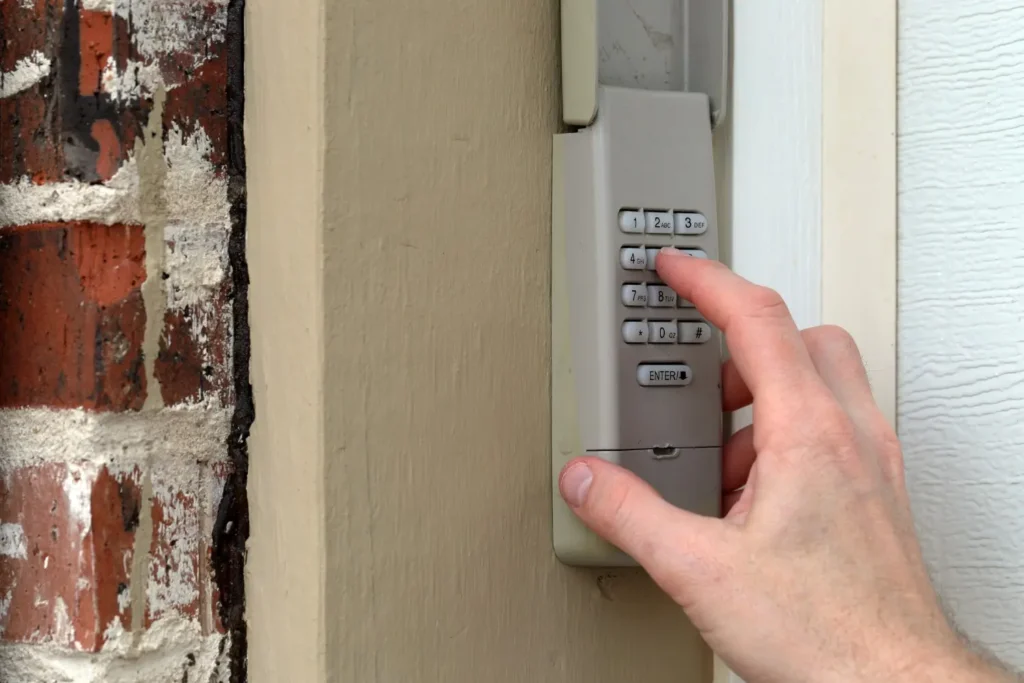
The Repair and Reprogramming Process
Restoring your garage door remote involves a systematic technical process designed to ensure long-term reliability. We strictly adhere to manufacturer protocols for all major opener brands to guarantee that your warranty remains intact and your safety features function correctly.
The technician follows a rigorous workflow to isolate the fault:
- Signal Testing: First, we use a specialized frequency tester to determine if the handheld remote is transmitting a signal at all. This confirms whether the failure is in the battery, the remote hardware, or the opener receiver.
- Memory Clearing: For security purposes and to resolve conflicts, we clear the garage door opener’s onboard memory. This erases all previous codes, ensuring that lost or stolen remotes can no longer access your home.
- Hardware Inspection: We inspect the wall console and the motor unit. Sometimes, the “lock” button on the wall console has been engaged accidentally, which overrides all handheld remotes. We verify that this feature is disengaged.
- Reprogramming: We program the remote to the opener using the specific “Learn” or “Program” protocols required by your specific model. This often involves establishing a new rolling code sequence.
- Range Testing: Once paired, we test the remote from various distances and angles outside your property. We aim to achieve operation from a standard driveway distance, adjusting the antenna wire on the motor unit if necessary to improve reception sensitivity.
- Accessory Syncing: If you have keyless entry keypads or vehicle-integrated systems (like HomeLink), we synchronize these devices immediately after the remote is repaired to ensure a unified access system.
Determining When to Replace vs. Repair Your Remote
While repair is often the most cost-effective route, certain scenarios dictate that replacing the remote or the receiver system is the smarter financial and security decision. We guide you through this decision based on the age of your equipment and the nature of the failure.
Repair is recommended when:
- The remote is less than ten years old and physically intact.
- The failure is caused by corroded battery contacts that can be cleaned.
- The issue is simply a desynchronization caused by a power outage or battery change.
- The garage door opener motor is running smoothly, and the issue is isolated to the handheld transmitter.
Replacement is the better option when:
- Obsolete Security Protocols: If your system uses “dip switch” technology (common in openers prior to 1993), your home is vulnerable to code scanners. Upgrading to a modern remote with rolling code technology significantly enhances security.
- Physical Damage: If the casing is cracked, buttons are stuck, or the circuit board has been exposed to water, internal corrosion will likely cause repeat failures. A replacement unit eliminates this frustration.
- Frequency Discontinuation: Federal regulations and manufacturer updates occasionally phase out certain radio frequencies (such as 390 MHz on older units). If your remote operates on a discontinued frequency, finding compatible parts is difficult and expensive. Upgrading to a universal or specific replacement remote is necessary.
- Logic Board Failure: If the receiver on the motor is failing, buying a new remote won’t help. In this case, we may install an external receiver kit that bypasses the faulty internal receiver, allowing you to use new, modern remotes without replacing the entire garage door opener.
Local Factors Affecting Electronics in Leander
Operating a garage door system in Leander presents specific challenges due to the local climate and environmental factors. Electronics, including the delicate circuit boards inside your remote and opener, are susceptible to the region’s weather patterns:
- Extreme Heat Impact: The intense summer heat can wreak havoc on batteries and electronics left inside vehicles. Temperatures inside a car parked in the driveway can soar well above 140°F. This heat degrades the chemical structure of remote batteries, causing them to leak or fail prematurely. It can also cause solder joints on the remote’s circuit board to expand and contract, leading to intermittent connection failures.
- Electrical Storms and Surges: The area is prone to thunderstorms which bring lightning and power surges. While a remote is battery-operated, the receiver unit in your garage is hardwired. A nearby lightning strike or grid surge can fry the logic board’s receiver component. If your remote stops working immediately after a storm, the damage is likely in the motor unit, not the handheld device.
- Humidity and Corrosion: High humidity levels can lead to oxidation on the metal battery contacts inside the remote. This creates a resistive layer that prevents power from flowing, even with a fresh battery. We inspect for this white or green corrosion during our diagnostic process.
- Interference from Development: As density increases with new construction, radio frequency interference becomes more common. Construction equipment, new security systems in neighboring homes, and even municipal radio towers can crowd the airwaves. We utilize dual-frequency remotes that can switch between 315 MHz and 390 MHz to find a clear signal channel amidst the local “noise.”
Why Professional Diagnostics Matter
Attempting to fix a remote by randomly buying universals from a big-box store often leads to frustration. Universal remotes are not truly “universal”; they have specific compatibility requirements regarding the “Learn” button color, manufacture year, and frequency. Incorrectly programming a remote can inadvertently wipe out the programming for other family members’ remotes or keypad entry systems.
Good Golly Garage Doors ensures that the correct components are used for your specific opener model. We understand the nuances of Security+ 2.0, Genie Intellicode, and other proprietary encryption methods. A professional diagnosis distinguishes between a simple dead battery and a failing logic board, saving you from purchasing multiple remotes that will never work because the root cause lies elsewhere.
Furthermore, we assess the overall health of the automation system. A remote that requires multiple presses to work might actually be masking a mechanical issue, such as a binding door or a failing capacitor, which requires more force (and thus a stronger signal signal interpretation) to activate. By viewing the system holistically, we prevent minor annoyances from turning into major mechanical failures.
Secure Your Access Today
A malfunctioning remote is a breach of your home’s convenience and security. Whether it is a simple battery corrosion issue, a complex logic board failure, or severe signal interference, the problem requires a technical solution that ensures reliable operation every time you press the button. Do not leave your garage door vulnerable to code grabbers or unreliable operation.
We provide the expertise required to diagnose the root cause and implement a lasting repair. Trust the local experts who understand the specific environmental and technical challenges in the region.
Contact Good Golly Garage Doors now to schedule your remote repair service and regain seamless access to your home.
Frequently Asked Questions About Remote Connectivity
Why does my remote work in the morning but not in the afternoon?
This is often due to RF interference or range reduction caused by heat. LED bulbs inside the garage door opener can also cause interference; some generic LED bulbs emit a frequency that jams the remote signal. This is often more noticeable at night when the lights are on. We recommend using low-interference LED bulbs designed specifically for garage door openers.
Can I program a new remote myself?
While many homeowners attempt this, the process varies significantly by brand. Some require a specific sequence of button presses on the wall console, while others require climbing a ladder to access the motor. If the memory is full, the opener will not accept a new remote until the memory is cleared and all existing remotes are reprogrammed. Professional service ensures this is done correctly without disabling other devices.
What is the range I should expect from my remote?
A healthy signal should operate the door from roughly three to five car lengths away. If you have to pull right up to the door for it to work, the receiver antenna may be damaged, or there may be electronic interference in the garage (like a metal building structure or faulty electronics nearby) shielding the signal.
 All Service Areas