
Garage Door Remote Repair in Cedar Park, TX
Struggling with a faulty garage door remote in Cedar Park? Contact Good Golly Garage Doors now for rapid diagnostic and repair services!
Is Your Clicker Refusing to Open the Garage Door?
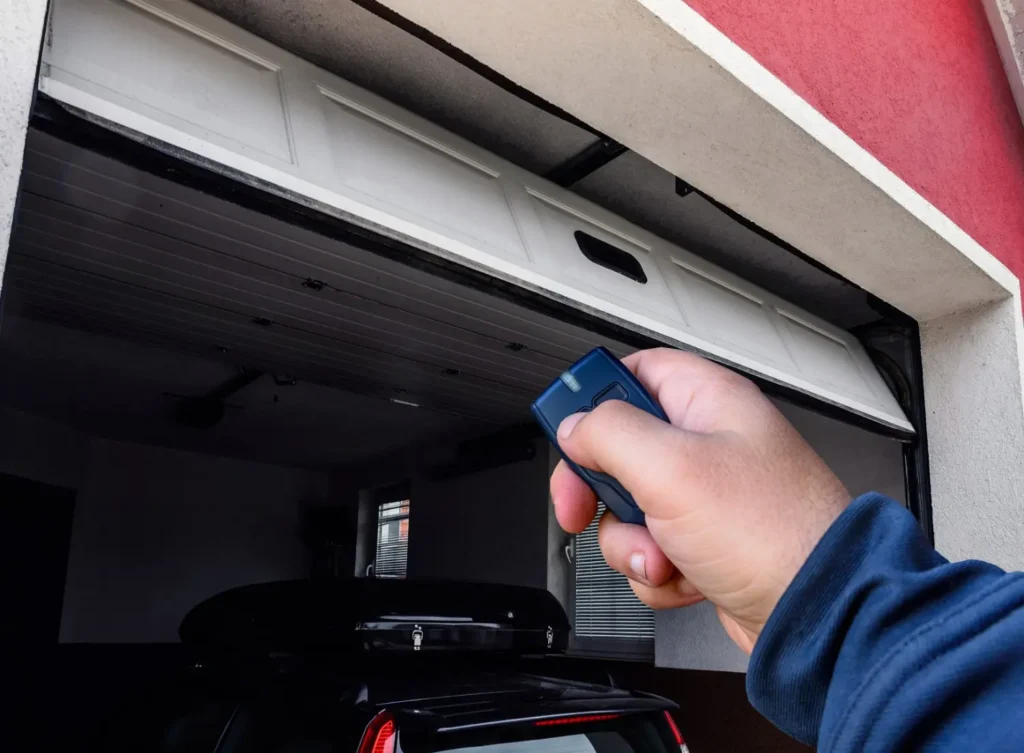
You press the button, the LED light blinks, but the heavy door sits motionless, leaving you locked out of your home or stuck in the driveway. In Cedar Park, dealing with an unresponsive remote during a humid summer storm or a chilly morning is more than a simple inconvenience; it is a security risk that disrupts your entire day. Contact us immediately to schedule a diagnostic visit or to inquire about our financing options for complete system upgrades.
When your access is denied, you need a solution that restores functionality without delay. We provide the following outcomes for every service call:
- Receive same-day repairs to ensure your garage access is seamless, secure, and restored before you need to leave for work or secure the home for the night.
- Benefit from our comprehensive warranty that covers all parts and labor, ensuring that if the signal fails again, you are not liable for the cost.
- Enjoy peace of mind with 24/7 service availability, meaning you never have to leave your vehicle exposed to the elements overnight.
We are fully licensed and insured, operating with transparent pricing structures and zero hidden fees.
Restore Your Garage Door Remote’s Functionality Fast
A non-functional remote is rarely just about dead batteries. It often signals a disconnect between the handheld transmitter and the receiver logic board inside the opener unit. Modern garage access systems utilize complex radio frequencies and rolling code technology to keep homes safe. When these desynchronize or fail, the solution requires more than a trip to the hardware store for a universal clicker that may not be compatible with your specific frequency.
Residents in Cedar Park face unique environmental factors that can accelerate the degradation of sensitive electronics. High humidity and heat can corrode battery terminals or warp internal circuit boards within the remote housing. Furthermore, if your opener is an older model, the receiver might be suffering from “frequency drift,” where it no longer “listens” on the correct channel. We address these issues immediately. Our technicians arrive with the diagnostic tools necessary to read radio frequency output, test the integrity of the opener’s antenna, and determine exactly why the signal is not triggering the motor.
What We Offer: Immediate Repairs, Durability Guarantees
When you request service for a remote issue, you are looking for a definitive answer, not a temporary fix. Our service approach focuses on the entire command chain of your garage door system. We do not simply hand you a new remote and leave; we ensure the opener, the wall console, and the remote are all communicating in perfect harmony.
The scope of our remote repair and replacement services includes:
- Signal Interference Analysis: We identify external sources that block your remote’s signal, such as LED light bulbs installed in the opener that emit radio frequency noise, or nearby electrical transformers.
- Logic Board Diagnosis: We test the receiver board on the main opener unit to ensure it is capable of accepting signals. If the board is fried, a new remote will not solve the problem.
- Universal and OEM Replacement: We carry a fully stocked inventory of transmitters for major brands like LiftMaster, Genie, Chamberlain, and Craftsman, as well as legacy units for older systems.
- Code Clearing and Reprogramming: To ensure security, especially if a remote was lost or stolen, we wipe the opener’s memory completely and reprogram all active remotes with new codes.
- Keypad Synchronization: We ensure your exterior wireless keypad is synchronized with the new frequency or encryption standard.
Our Repair Process: Quick, Professional, and Hassle-Free
Efficiency is the priority when your main entry point is inaccessible. We have refined our workflow to minimize downtime while ensuring the repair is technically sound. We do not use guesswork; we use a systematic approach to isolation and repair.
- First, the technician performs a physical inspection of the handheld unit, checking for battery corrosion, stuck buttons, or water damage that is common during the wet spring months.
- Next, we utilize a radio frequency reader to determine if the remote is transmitting a strong, consistent signal when the button is pressed.
- Then, we inspect the overhead opener unit to verify the antenna wire is intact and hanging correctly, not tucked inside the metal housing which acts as a Faraday cage.
- Following this, we attempt to clear the receiver’s memory and re-pair the device. This step often resolves issues caused by power surges that scramble the logic board’s memory.
- If the remote is dead, we program a high-quality replacement matched to your specific opener’s security version (Security+ 2.0, Intellicode, etc.).
- Finally, we test the range of the remote from the end of the driveway and from inside your vehicle to ensure consistent operation from a safe distance.
Deciding Between Repair or Replacement: What’s Best for Your Garage
There comes a point where repairing an aging remote or trying to patch a failing receiver is no longer cost-effective. Determining whether to repair the existing setup or upgrade the access system is a critical decision based on security and reliability.
Repair is the right choice when:
- The system is under 10 years old and the opener motor is mechanically sound.
- The issue is isolated to physical damage on the remote casing (e.g., dropped on concrete).
- The failure was caused by a specific, one-time event like a dead battery leak or a minor programming glitch.
Replacement of the opener or receiver system is better when:
- Security Vulnerabilities: If your system uses “fixed code” technology (common in units pre-1993) where the code is set via dip switches, it is highly vulnerable to “replay attacks” by thieves. Modern rolling code technology is essential for security.
- Frequency Abandonment: Older units operate on frequencies that are now crowded with interference from military and cellular towers. If you have to be right against the door for the remote to work, the frequency is likely the issue, and a modern upgrade cures this range anxiety.
- Logic Board Failure: If the opener runs from the wall button but refuses all remote signals despite troubleshooting, the internal receiver has failed. Replacing the logic board can be expensive; often, installing a new, smart-enabled opener is a better long-term investment.
At Good Golly Garage Doors, we provide an honest assessment of your equipment’s age and condition. If we see that a simple repair will only buy you a few weeks of functionality before another failure, we will present the data so you can make an informed choice about upgrading.
Navigating Cedar Park’s Requirements: Permits and Seasonal Considerations
Local conditions in Cedar Park play a significant role in the longevity of garage electronics. The intense heat of Texas summers can cause the solder points on circuit boards to expand and contract, leading to micro-fractures that break electrical continuity. This is often why remotes work intermittently—working on cool mornings but failing in the heat of the afternoon.
Additionally, our area experiences thunderstorm activity that brings lightning and power surges. A surge can travel through your home’s wiring and scramble the memory of a garage door opener or fry the receiver diode. While we recommend surge protectors for openers, once the damage is done, professional reprogramming or board replacement is required.
regarding compliance and regulations:
- Permitting: Generally, repairing a remote or replacing a receiver logic board does not require a municipal permit in Cedar Park. However, if the diagnosis reveals the need for a full opener replacement that involves altering electrical wiring, adherence to local building codes is mandatory.
- LED Compatibility: As homeowners switch to energy-efficient lighting, many unknowingly install standard LED bulbs in their garage door openers. These bulbs often emit frequency interference that blocks remote signals. We advise on and supply “garage-door rated” LEDs that do not interfere with radio waves.
- Safety Sensors: It is important to note that if your safety eyes (sensors near the floor) are misaligned or damaged, the system creates a lockout mode that mimics a remote failure. We always verify sensor alignment to ensure the issue is truly the remote and not a safety lockout.
Why Choose Us: Local Expertise, Rapid Response
Finding a service provider who understands the nuances of radio frequency technology and local interference issues is vital. You need a team that carries the right programming manuals and parts for every major manufacturer on their trucks. We do not rely on generic solutions; we troubleshoot the specific handshake between your transmitter and receiver.
- Technical Competence: We understand the evolution of garage door technology. From the old 390 MHz dip-switch units to the dual-frequency 315/390 MHz multi-band radios used today, we know how to make them talk to each other. We can program Homelink systems in your vehicle, set up exterior keypads, and ensure your smart phone apps (MyQ, Aladdin Connect) are fully integrated.
- Inventory Availability: Nothing is more frustrating than waiting weeks for a specific remote control to ship. We maintain a robust stock of OEM parts. Whether you have a LiftMaster, Genie, Linear, or Wayne Dalton system, we likely have the compatible control unit in our vehicle when we arrive.
- Transparency and Warranty: We stand behind the quality of our electronics and our labor. If we provide a new remote or receiver, it comes with a manufacturer warranty and our guarantee of proper installation. If the signal drifts or fails shortly after service, we return to rectify it without hassle.
Troubleshooting Common Signal Blockers
Before assuming the remote is broken, we investigate environmental factors that are increasingly common in modern homes. Radio Frequency Interference (RFI) is a silent killer of garage door range. If you find yourself having to press the button multiple times or pull right up to the door, RFI is likely the culprit.
Common sources of interference we investigate include:
- Wireless Security Cameras: Some wireless cameras operate on frequencies that bleed over into garage door bandwidths.
- Plug-in Transformers: faulty power adapters for appliances or game consoles can emit “noise” that drowns out the opener’s receiver.
- Metal Construction: If you have recently installed metal siding or a radiant barrier in the attic, it can act as a shield, reducing the range of your remote significantly. We can install antenna extensions to route the signal outside of this shielding.
We use spectrum analyzers to detect this invisible noise. This ensures that we don’t just sell you a new remote that will suffer from the same range issues as the old one. We solve the root cause of the communication failure.
Final Thoughts on Securing Your Garage
Your garage door remote is the key to your home. When it malfunctions, it is not just an annoyance; it creates a vulnerability in your home’s perimeter. You need a functioning, reliable, and secure access method immediately. Whether it requires a simple code reset, a battery terminal cleaning, or a complete upgrade to a smart-access system, Good Golly Garage Doors delivers the solution directly to your driveway.
Do not let a faulty clicker leave you stranded in the rain or compromise your home security. Action is required to restore convenience and safety.
Contact us today to schedule your remote repair service and regain instant access to your garage.
Proudly Serving Austin, TX, and Surrounding Areas
From the neighborhoods of Austin to Round Rock and Buda, we provide the best garage door services you can find across the area. Whether it’s the impact of Texas heat and sudden storms on garage door components, we ensure our solutions are tailored to your needs. Wherever you are, Good Golly Garage Doors is ready to deliver.
View All Cities
 All Service Areas