
Garage Door Panel Repair In Bee Cave, TX
Expert garage door panel repair in Bee Cave, TX. Same-day service, transparent pricing, and quality workmanship. Secure and beautify your home—call now!
Eliminate Dents and Structural Compromises in Your Garage Door
Is a damaged section of your overhead door ruining your home’s curb appeal or preventing the system from opening smoothly? Residents in Bee Cave, TX, rely on functioning garage doors for security and convenience, and a single compromised panel can escalate into a full system failure if not addressed immediately. Contact us today to schedule a panel assessment or request financing options for your repair.
We provide focused solutions to restore your door’s integrity:
- Same-day repair availability ensures your garage door is secured and operational without delay.
- Transparent, itemized pricing on single or multiple panel repairs so you never face hidden costs.
- Quality workmanship and precise color matching with a satisfaction guarantee to make your door look new again.
All repairs are carried out by licensed professionals, ensuring compliance with local codes and safety standards.
Restore Functionality Without Replacing the Entire System
Many homeowners assume that a crack, dent, or puncture in a garage door requires purchasing a completely new unit. This is frequently not the case. If the damage is localized to one or two sections, swapping out the specific panel is a cost-effective strategy that preserves the lifespan of the existing mechanism. Sectional overhead doors are designed with independent rectangular panels connected by hinges, allowing for modular repairs.
Good Golly Garage Doors approaches this service with a focus on structural stability and aesthetic continuity. When a panel is damaged, it disrupts the weight distribution of the door. This imbalance puts uneven strain on the opener, cables, and springs. By replacing only the affected section, we restore the proper balance required for the door to move smoothly along the tracks.
The scope of this service includes a comprehensive evaluation of the surrounding components. A heavy impact that dents a panel often bends the adjacent hinge or twists a roller stem. Our technicians inspect every connection point attached to the damaged area. We source matching panels from leading manufacturers to ensure the wood grain, rib pattern, and insulation value align perfectly with your current setup. This service is designed to be completed in a single visit once the correct parts are verified, minimizing downtime for your household.
The Technical Process of Panel Replacement
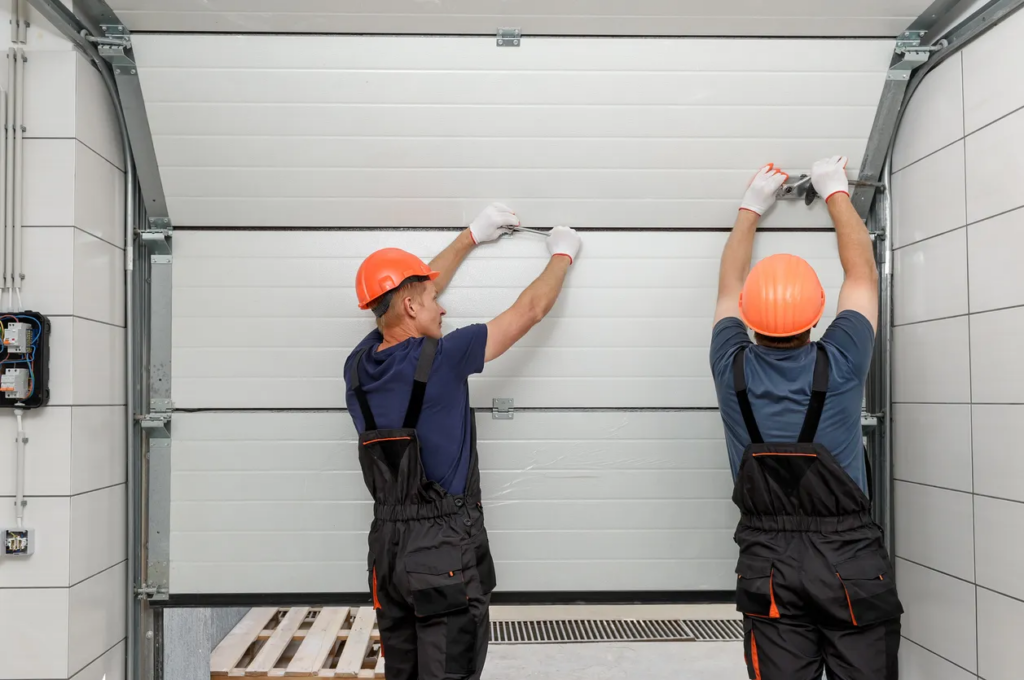
Replacing a panel is more complex than simply unscrewing a part and sliding a new one in. The garage door system operates under extreme tension, particularly the bottom brackets which are connected to the high-tension cables and springs. Attempting to remove a panel without relieving this tension or securing the door stack can result in serious injury or further property damage. Professional intervention guarantees the structural integrity of the door remains intact during the swap. Our technician’s workflow ensures precision and safety:
- Identification and Sourcing: The process begins with identifying the manufacturer and model of your door. Technicians look for the interior sticker or stamp usually located on the side or edge of the panels. This data is crucial for sourcing a replacement that matches the height, thickness, and design profile. We also verify the R-value (insulation rating) to ensure thermal efficiency is maintained.
- Securing the Door: Before any hardware is removed, the door is disconnected from the automatic opener and lowered to the closed position. If the damaged panel is under tension (typically the bottom panel), the spring tension must be carefully released or the door must be clamped securely in the tracks to prevent movement.
- Disassembly of Affected Sections: Technicians remove the hinges connecting the damaged panel to the sections above and below it. If the damage is in the middle of the stack, the upper panels may need to be slightly separated or stacked to create clearance. Struts (metal reinforcement bars) are removed and set aside for re-installation.
- Panel Swap and Alignment: The damaged panel is carefully slid out of the track or pulled free from the stack. The new panel is positioned in its place. Technicians ensure the tongue-and-groove or shiplap joints seat perfectly with the adjacent panels to prevent weather infiltration.
- Re-Hardware and Testing: Hinges, rollers, and struts are reattached. The technician then manually lifts the door to check for balance and smooth travel through the radius of the track. Finally, the opener is re-engaged, and safety sensors are tested to confirm the repair is successful.
Determining When to Repair vs. When to Replace
Making the decision between a panel repair and a full door replacement depends on several critical factors involving cost, age, and long-term performance. While a quick patch job is appealing, it is not always the most prudent financial decision. We help homeowners analyze the damage to make the right choice for their specific situation.
Repair is the right choice when:
- The Door is Relatively New: If your garage door is less than 10 years old, manufacturers likely still produce the exact model and color, making a seamless match easy.
- Damage is Isolated: If a car bumper hit a single panel or a storm threw debris into one section, and the rest of the door is in pristine condition, a repair restores the door to 100% functionality.
- Structural Components are Intact: As long as the tracks, springs, and opener are healthy, changing a cosmetic or structural panel is a straightforward maintenance task.
Replacement is the better option when:
- Multiple Panels are Damaged: A general rule of thumb in the industry is the “two-panel rule.” If more than two panels are damaged, the cost of parts and labor often approaches or exceeds the cost of a brand-new door installation.
- The Door is Obsolete: If the manufacturer has discontinued the model, finding a matching panel may be impossible. Installing a mismatched panel ruins curb appeal and can cause operation issues due to weight differences.
- Age and Wear: If the door is over 15 years old and showing signs of rust, delamination, or general fatigue, investing in a new panel is a temporary fix for a system that is nearing the end of its life cycle.
- Safety Updates: Older doors often lack modern safety features like pinch-resistant panels. Upgrading the whole unit improves safety for families with children or pets.
Addressing Regional Factors in Bee Cave, TX
Local environmental conditions play a significant role in how garage door panels perform and degrade over time. In Bee Cave, the climate presents specific challenges that dictate how repairs should be handled.
Impact of Heat and Humidity:
The region experiences hot summers with temperatures regularly reaching the mid-90s. Intense heat can cause metal panels to expand. If a panel is already dented or weakened, this thermal expansion can cause the metal to buckle or “oil can,” creating a popping noise and potential jamming. Furthermore, humidity can affect wood overlay panels, leading to rot or warping if the seal is compromised by a crack. When we replace a panel, we ensure proper weather stripping is applied to handle these thermal cycles.
Aesthetic and HOA Compliance:
Many neighborhoods in Bee Cave have strict Homeowner Association (HOA) guidelines regarding curb appeal. A dented, rusted, or mismatched garage door can lead to fines or notices. We understand the importance of maintaining property values in the area. Our sourcing process focuses heavily on exact aesthetic matching—not just color, but texture and window placement—to ensure the repair satisfies local architectural standards.
Storm Durability:
While winters are mild, the area sees evenly distributed rainfall and occasional spring storms. A cracked panel is a weak point in your home’s envelope. Wind-driven rain can penetrate cracks, leading to water damage inside the garage. Restoring the panel integrity is essential for maintaining a weathertight seal against the elements.
Detailed Assessment of Panel Damage Types
Not all panel damage is created equal. The type of damage dictates the urgency and the method of repair. Understanding the nature of the defect helps in planning the correct remediation strategy:
- Cosmetic Dents and Dings: Small dings from basketballs or bicycles are common. While they may look minor, deep creases can weaken the metal. If the crease crosses a structural rib on the back of the door, the panel loses its rigidity. While some minor dents can be popped out, replacement is often required to ensure the door can withstand wind loads.
- Cracks and Splits: Wooden doors can split, and steel doors can crack, usually at the top or bottom where the stress is highest. A crack is a structural failure. It allows the panel to flex excessively as the door moves from vertical to horizontal. This flexing puts immense strain on the center hinges, often causing them to snap. Immediate replacement of cracked panels is non-negotiable for safety.
- Rust and Corrosion: In humid environments, scratches on steel panels can lead to rust. If the rust eats through the metal, the panel loses its structural integrity. Rust also spreads. Replacing a rusted bottom section prevents the corrosion from migrating to the upper sections or the track system.
- Sagging or Bowing: When a door is in the open position (hanging horizontally), gravity pulls down on the panels. If a panel is weak or lacks a proper strut, it may bow in the center. This “smiling” effect causes the door to bind in the tracks when closing. We address this by installing a new, rigid panel often reinforced with a heavy-duty strut to prevent future sagging.
Why Specialized Tools and Training Matter
Garage door panel repair requires more than basic hand tools. The weight of a standard residential garage door can exceed several hundred pounds. Manipulating individual sections of this heavy moving wall requires specialized equipment and training:
- Proper Torque and Tensioning: Bolts and fasteners on a garage door vibrate. When installing a new panel, technicians use torque wrenches to ensure fasteners are tightened to specification—tight enough to hold, but not so tight that they crush the foam core of an insulated door.
- Counterbalance Calibration: Adding a new panel can slightly alter the weight of the door, especially if switching from a non-insulated to an insulated section or vice versa. The torsion spring system is calibrated to lift a specific weight. Our technicians check the door’s balance after the swap. If the door is too heavy or too light, we adjust the spring tension to prevent the opener from burning out.
- Safety Containment: When working with bottom panels (where the cables attach), the risk of cable snapping or spring recoil is high. Professionals use vice grips and winding bars to lock the shaft and contain the energy stored in the springs. This protects the homeowner and the property from high-velocity impact damage.
Ensuring Long-Term Performance
After a panel is replaced, maintenance is key to ensuring the repair lasts. The new section needs to integrate with the older sections. We lubricate the hinges and rollers on the new panel to match the operation of the existing hardware. We also check the weather seal on the bottom of the new panel (if applicable) to ensure it creates a tight barrier against the floor.
It is also vital to check the automatic opener’s force settings. A door with a new, rigid panel may move differently than it did with a bent, flexible one. Re-calibrating the opener ensures that the safety reversal system works correctly, reversing the door if it encounters an object. This attention to detail prevents future strain on the motor and gears.
The Importance of Insulation Continuity
Bee Cave residents know that energy efficiency is crucial during the hot summers. Garage doors act as a buffer between the outside heat and the interior of the home. If your door is insulated (polystyrene or polyurethane), replacing a damaged panel with a non-insulated one creates a “thermal bridge.” Heat will bypass the insulation of the other panels and flow through the single uninsulated section.
We ensure that replacement panels match the R-value of the existing door. This maintains the thermal barrier, keeping the garage cooler in the summer and protecting adjacent rooms from heat transfer. This is particularly important for homes with bedrooms located directly above the garage.
Differentiators in Service and Quality
Choosing a service provider for panel repair involves looking for reliability and technical knowledge. We prioritize accuracy in our diagnostic process. We do not upsell a new door when a repair is feasible, nor do we recommend a patch job that puts your family at risk:
- Inventory Access: We maintain relationships with major door distributors, giving us access to a wide library of panel designs, including long panel, short panel, flush, and carriage house styles. This reduces lead times for parts that might otherwise be on backorder.
- Precision Matching: We understand that paint fades over time. A brand new white panel might look starkly different from a 10-year-old white door. We advise homeowners on painting and finishing options to blend the new installation with the aged appearance of the rest of the system, ensuring the repair is invisible from the street.
- Comprehensive System Health Checks: Every panel repair includes a general inspection of the entire system. We look for frayed cables, worn rollers, and noisy bearings. By catching these issues during the panel appointment, we save you the cost of a second service call down the road.
Final Steps for a Secure Garage
Ignoring a damaged panel is a gamble with your home’s security and the longevity of your garage door system. Whether it is a cosmetic annoyance or a structural hazard, addressing the issue promptly saves money and restores peace of mind.
Don’t let a damaged panel compromise your home; secure your garage with a professional repair today. Good Golly Garage Doors is dedicated to providing efficient, high-quality repairs that respect your time and property. We navigate the technical complexities so you don’t have to. Contact us today.
 All Service Areas