

Garage Door Opener Replacement in Summerlin, NV
Need quick garage door opener replacement in Summerlin? Contact us for rapid, reliable service and secure your home today. Immediate bookings available.
Immediate Garage Door Opener Solutions Available
A malfunctioning garage door opener in the searing heat of a Summerlin summer is more than an inconvenience; it is a security risk and a disruption to your daily routine. When your automated system fails to engage, or the motor hums without lifting the heavy door, you require a rapid, technical intervention to restore access and security to your home immediately. Schedule your priority opener replacement service.
Residents in this area contend with extreme temperatures that can degrade internal capacitors and logic boards, necessitating robust hardware capable of withstanding thermal stress. Our service focuses on deploying high-torque, heat-resistant units that function reliably regardless of the external climate. We provide a seamless transition from broken equipment to fully modernized entry systems.
- Receive a comprehensive diagnostic consultation followed by immediate service booking options.
- Access a wide inventory of energy-efficient, heat-resistant openers designed for the Nevada climate.
- Secure your home with extended warranties and availability for 24/7 emergency response.
Fully licensed and insured – all services are backed by a satisfaction guarantee with flexible financing available.
Comprehensive Replacement Services for Modern Homes
When you commit to a replacement, you are not merely swapping out a motor; you are upgrading the central nervous system of your garage. The service includes the removal of the defunct unit, the installation of a new motor assembly, rail system integration, and the calibration of all safety protocols. Good Golly Garage Doors focuses on precision installation to ensure the longevity of the hardware.
Modern openers offer distinct advantages over models manufactured even a decade ago. The new systems installed are equipped with rolling code technology to prevent code grabbing, battery backup systems to ensure operation during power outages, and advanced logic boards that resist the power surges common during stormy seasons.
Types of Drive Systems Available
Selecting the right drive mechanism is critical for performance and noise control.
- Belt Drive Openers: These units utilize a steel-reinforced rubber belt to lift the door. They are the preferred choice for homes with living spaces directly above the garage due to their near-silent operation. The rubber material also withstands heat well, reducing the risk of the drive mechanism becoming brittle.
- Chain Drive Openers: Known for their raw power and durability, chain drives use a metal chain to pull the trolley. While slightly noisier, they are incredibly reliable for heavy, insulated wooden or steel doors often found in Summerlin custom homes.
- Jackshaft (Wall-Mounted) Openers: These units mount on the wall beside the garage door rather than the ceiling. This frees up overhead storage space and reduces vibration transfer through the ceiling joists. They are ideal for high-lift doors or garages with cathedral ceilings.
- Screw Drive Openers: Using a threaded steel rod, these openers have fewer moving parts, which translates to less maintenance. However, they are sensitive to temperature fluctuations, so we typically recommend specific high-end models that are rated for desert climates.
Smart Technology Integration
The modern standard includes connectivity. Replacement units now frequently come with integrated Wi-Fi capabilities. This allows users to monitor the door’s status, open or close it remotely via a smartphone application, and receive real-time alerts if the door is left open. This feature is particularly valuable for securing delivery packages or granting access to service personnel without sharing a keypad code.
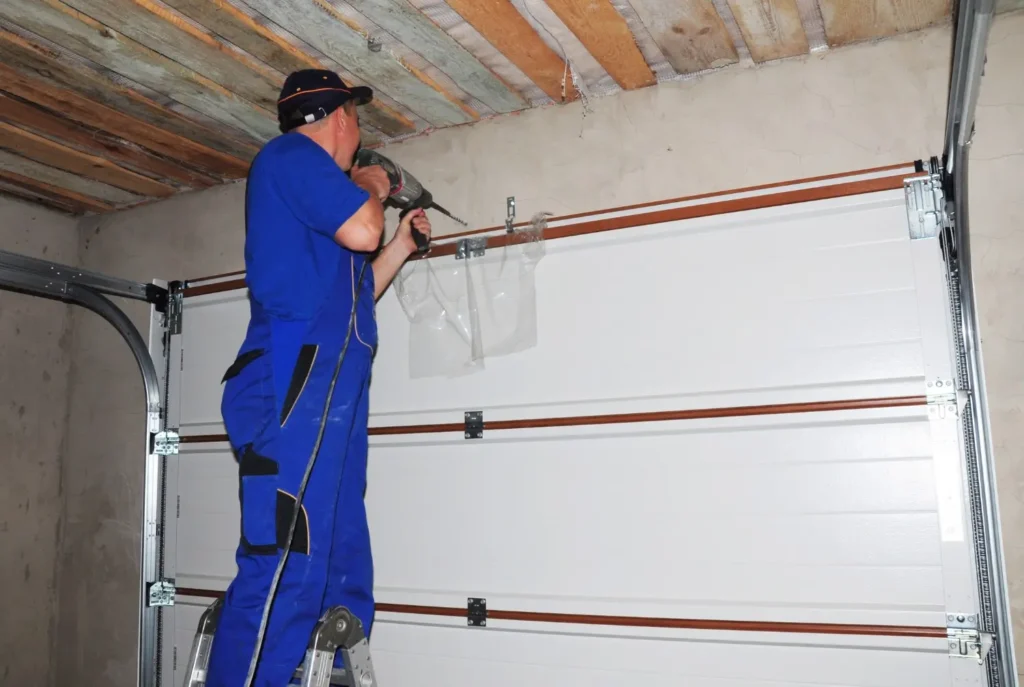
The Installation Process: From Diagnostic to Operation
A professional replacement follows a strict technical protocol to ensure safety and compliance with manufacturer specifications. The goal is to establish a system that is balanced, safe, and compliant with local building standards.
- Site Inspection and Balance Test: The technician begins by disconnecting the old opener and manually operating the door. This verifies that the door is properly balanced by the springs. An opener is designed to move a door, not lift dead weight; if the springs are weak, the new opener will burn out prematurely.
- Removal of Legacy Hardware: The existing motor head, rail assembly, and wall console are dismantled. Care is taken to remove old wiring that may be corroded or insufficient for the voltage requirements of modern DC motors.
- Assembly and Mounting: The new rail and carriage are assembled on the floor before being lifted. The motor head is secured to the ceiling joists using perforated angle iron to minimize vibration.
- Safety Sensor Alignment: Photo-eye sensors are installed six inches from the floor. These must be perfectly aligned to create an invisible beam. If this beam is broken, the door must reverse immediately. This is a non-negotiable federal safety requirement.
- Force and Limit Calibration: The technician programs the travel limits (how far up and down the door moves) and the force settings (how much power is used). Incorrect force settings can cause the door to slam into the ground, bending the bottom panel, or stop short, leaving a gap for rodents and debris.
- Accessory Configuration: Remotes, wireless keypads, and in-vehicle Homelink systems are programmed and tested to ensure signal strength and range.
Critical Decision Guide: When to Replace vs. Repair
Homeowners often grapple with the decision of whether to invest in a repair or opt for a full replacement. While minor issues can be fixed, there are specific technical thresholds where replacement becomes the only financially sound option.
The 50% Rule
If the cost of the repair—parts and labor included—exceeds 50% of the cost of a brand-new unit, replacement is the logical financial choice. Investing heavily in an old unit often leads to a “money pit” scenario where other components fail shortly after the initial repair.
Age of the Hardware
Garage door openers have an average lifespan of 10 to 15 years. If your unit is approaching or exceeding this age range, internal gears are likely worn, and capacitors are nearing the end of their operational life. Replacing an aging unit prevents sudden failure.
Safety Standard Compliance
Units manufactured prior to 1993 often lack external entrapment protection systems (safety sensors/photo-eyes). If your current opener does not have these sensors, it is not compliant with current safety standards (UL 325). Professional technicians cannot legally repair these units; they must be replaced to ensure the safety of the household.
Recurring Motor Noise or Vibration
Excessive grinding, rattling, or vibration indicates that the internal gear train or the drive sprocket is failing. While gears can be replaced, this symptom often points to a motor that is struggling to lift the door, usually due to years of strain. A new DC motor provides smoother, quieter operation with soft-start and soft-stop technology that reduces wear on the door hardware.
Lack of Security Features
Older openers operate on fixed codes, which can be intercepted by would-be intruders using code grabbers. Modern replacements utilize rolling code technology, which generates a new code every time the remote is pressed, offering billions of combinations and making code theft virtually impossible.
Regional Factors Affecting Hardware in Southern Nevada
Operating a garage door system in Summerlin presents unique challenges due to the specific environmental and infrastructural conditions of the region. Equipment that works well in milder climates often fails prematurely here without the right specifications.
Impact of Extreme Heat
The most significant factor is thermal stress. Garage interiors can reach temperatures well above 120°F during the peak of summer. This heat affects the viscosity of the grease on the rail and gears, causing it to liquefy and drip, leaving components unlubricated. Furthermore, extreme heat can cause logic boards (the computer brain of the opener) to delaminate or capacitors to swell and burst. We utilize high-temperature lithium grease and install openers with heat-shielded electronics to mitigate this.
Power Grid Fluctuations and Battery Backup
High demand on the electrical grid during summer months can lead to brownouts or rolling blackouts. Traditional openers are rendered useless without power, trapping vehicles inside. Under California SB 969, battery backups are mandatory in new installs in that state, and the trend is being adopted heavily in Nevada for safety. A battery backup system ensures the door can run up to 20 cycles during a power outage, ensuring you are never locked in or out.
Local HOA and Noise Regulations
Many neighborhoods in this area are governed by strict Homeowners Associations (HOAs). While the interior mechanics of a garage are rarely regulated, noise pollution is a concern in high-density residential zones. Upgrading to a belt-drive or a direct-drive unit significantly reduces the decibel level of operation, ensuring you do not disturb neighbors during early morning departures or late-night arrivals.
Permits and Compliance
While a simple swap of an opener often does not require a structural permit, any modification to the electrical wiring behind the drywall usually does. Professional installers adhere to the National Electrical Code (NEC) to ensure that the outlet powering the unit is grounded and capable of handling the amperage of the new motor.
Why Professional Installation is Essential
The complexity of modern garage door openers involves high-tension springs, electrical wiring, and precise calibration. Attempting a DIY installation often voids manufacturer warranties and poses significant safety risks.
- Warranty Preservation: Major manufacturers often restrict their full motor and parts warranty to units installed by certified professionals. Self-installation can reduce a lifetime motor warranty to a mere one-year limited coverage.
- Structural Integrity: An opener exerts significant force on the mounting point. If the header bracket is not securely fastened to a structural member, the torque can rip the opener from the ceiling, causing damage to the vehicle below and the door itself.
- Advanced Programming: Modern units require programming for travel limits, force sensitivity, and Wi-Fi integration. Incorrect travel limits can cause the door to slam into the ground, bending the bottom panel, or stop short, leaving a gap for rodents and debris.
Securing Your Home with Reliable Access
A garage door opener is the primary entrance for many families, used more frequently than the front door. Reliability is not a luxury; it is a necessity for daily logistics and home security. By choosing a professional replacement service, you ensure that the system installed is matched correctly to the weight and size of your door, calibrated for the local climate, and compliant with all safety regulations.
We prioritize efficiency and technical excellence. The technician arrives with a fully stocked truck, prepared to handle various door heights and drive types. From the initial takedown of the old equipment to the final demonstration of the new smart features, the process is handled with precision.
Don’t Let a Failing Mechanism Cause Costly Damage: Act Now
When the mechanism controlling the largest moving object in your home falters, immediate action prevents further damage to the door tracks and springs. Trust Good Golly Garage Doors to restore functionality with hardware built to last. Ready to upgrade your system? Contact us today.
Proudly Serving Las Vegas and Surrounding Areas
From Summerlin to Henderson, we provide the best garage door services you can find across Las Vegas. Wherever you are, Good Golly Garage Doors is ready to deliver. Let’s get your garage door in Las Vegas or beyond back in top shape with service that’s fast, friendly, and built to last.
View All Cities
 All Service Areas