
Garage Door Opener Repair in Paradise Valley, AZ
Struggling with a faulty garage door opener in Paradise Valley? Contact Good Golly Garage Doors for rapid, professional same-day replacement services. Call now to secure your home.
Immediate Garage Door Opener Fixes
Struggling with a faulty garage door opener in Paradise Valley can leave your vehicle trapped or your home exposed to security risks. Contact Good Golly Garage Doors to schedule a diagnostic visit or inquire about financing options for major repairs:
- Repair appointments are scheduled based on availability.
- Certified and experienced local technicians.
- Upfront pricing with no hidden fees.
All repairs are backed by workmanship guarantees, with manufacturer warranties typically covering parts for about one year.
What to Expect From Professional Service
When an automatic opener fails, the disruption to your daily routine is noticeable. The goal of a professional service visit is to restore functionality and security without unnecessary delays. Good Golly Garage Doors prioritizes a systematic approach to diagnostics, ensuring that the root cause of the failure is identified rather than just treating the surface symptoms.
Upon arrival, a technician evaluates the entire opening mechanism. This includes the motor head, the drive system (belt, chain, or screw), the rail assembly, and the wall-mounted controls. The focus is on determining whether the issue stems from electrical faults, mechanical wear, or interference with the safety sensors.
The scope of service includes a complete safety inspection. Technicians verify that the opener meets current safety standards, specifically testing the auto-reverse mechanism and the photo-eye sensors. If components are worn but not yet broken, they will be noted. The objective is to provide a clear, itemized explanation of what is required to get the door moving again, along with a realistic timeline for completion. Most repairs, from gear replacements to logic board swaps, are completed in a single visit due to standard service vehicle inventory.
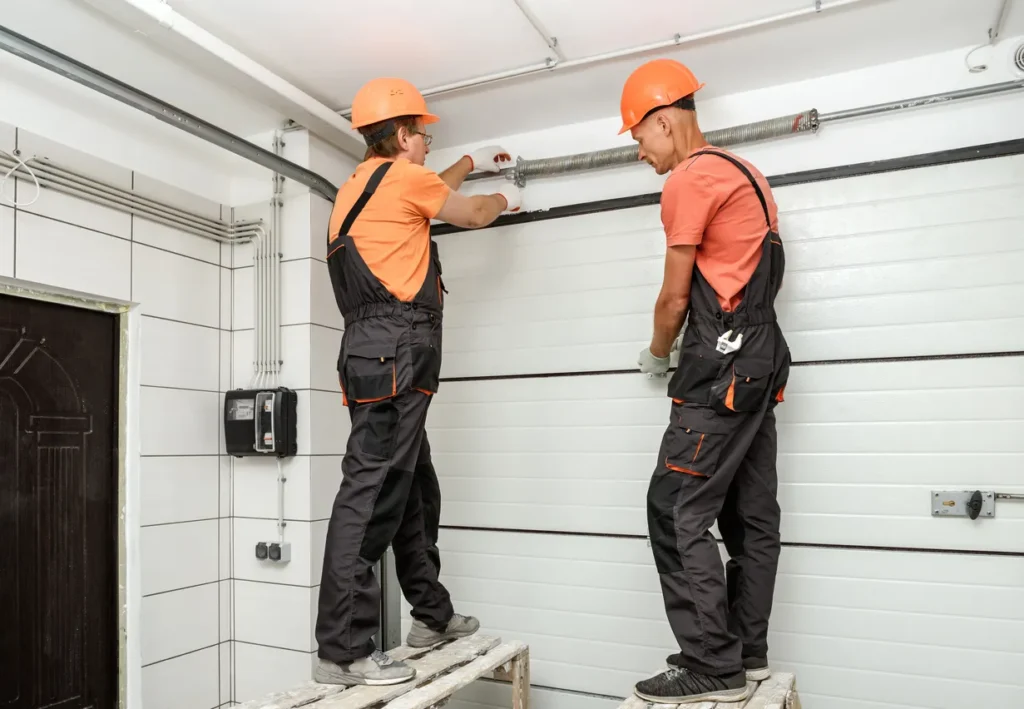
Detailed Breakdown of the Repair Process
Understanding how a technician approaches an opener repair helps homeowners make informed decisions. The process moves from external inspections to internal component testing:
- Initial Visual and Audible Inspection: The technician operates the door (if possible) to listen for specific sounds that indicate failure types. Grinding noises usually point to a stripped main drive gear, while a humming sound with no movement often suggests a seized motor or a capacitor failure. Loose chains or belts are visually inspected for slack that causes the sprocket to skip.
- Sensor Alignment and Wiring Check: Safety sensors are the most common cause of non-responsive doors. The technician checks the alignment of the photo-eyes located at the base of the tracks. Even a slight misalignment or dirt on the lens can prevent the door from closing. Wiring running from the motor head to the sensors and the wall station is checked for staples that may have pierced the insulation, causing short circuits.
- Drive System Restoration: For chain-drive systems, the tension is adjusted to prevent the chain from slapping against the rail. Belt-drive systems are inspected for missing teeth or fraying. If the trolley carriage, the part that connects the door arm to the rail, has a stripped plastic rack, it is replaced to ensure the door engages correctly with the drive mechanism.
- Limit Switch Adjustment: If a door does not close all the way or reverses immediately after touching the floor, the limit switches need adjustment. These screws, usually located on the side of the motor head, control the travel distance of the door. The technician calibrates these precisely so the door creates a seal with the floor without exerting excessive force that could damage the header bracket.
Logic Boards and Electrical Failures
The logic board functions as the brain of your garage door opener. It processes signals from the remote, the keypad, and the safety sensors. When a logic board fails, the symptoms can be erratic. The door might open on its own, refuse to accept remote signals while the wall button works, or flash error codes continuously.
In the Paradise Valley area, power surges and lightning strikes during monsoon season are frequent culprits for damaged logic boards. A technician will determine if the board can be reset or if the circuitry has suffered permanent damage. If replacement is necessary, the new board must be programmed to match the frequency of existing remotes and keypads. This often involves clearing the memory of the old system to ensure no stray signals can operate the door.
Drive Gears and Sprocket Assembly
One of the most mechanically intensive repairs involves the drive gear and sprocket assembly. Inside the motor housing, a plastic gear meshes with a worm drive on the motor shaft. This plastic gear is designed to be the sacrificial component, it is meant to strip out if the door hits an obstruction that the safety sensors missed, helping protect the electric motor.
When this gear strips, the motor will sound like it is running, but the chain or belt will not move. Replacing this involves removing the motor head, disassembling the shaft, and installing a new gear kit. This service usually includes greasing the new gears with a low-temperature lithium grease that will not liquefy and drip during hot Arizona summers. The technician will also check the bushings and bearings for wear, as worn bearings can cause the shaft to wobble and strip the new gear prematurely.
When to Choose Replacement Over Repair
Deciding between repairing an existing opener or installing a new one depends on the age of the opener, the cost of the repair, and available safety features:
- The 50% Rule: If the cost of the repair parts and labor exceeds 50% of the cost of a new, installed opener, replacement is generally the more practical financial option. For example, if a motor and a logic board both need replacement, the total cost often approaches that of a new system with a full manufacturer warranty.
- Safety Standard Compliance: Some older openers lack required external safety entrapment protection, such as photo-eye sensors at the base of the tracks. These systems must be replaced to meet current safety requirements. If your current opener does not have sensors at the base of the tracks, replacement is necessary for safe operation.
- Noise Considerations: Older chain-drive models can be very noisy, sending vibrations through the ceiling. If the garage is located below a bedroom or living space, upgrading to a modern belt-drive or direct-drive motor can significantly reduce noise transfer. These newer openers utilize DC motors which allow for soft start and soft stop operation, reducing the clunking sound associated with door movement.
- Smart Home Connectivity: Good Golly Garage Doors may recommend replacement when homeowners want integration with smart home systems. Older openers cannot communicate with Wi-Fi networks or smartphone apps. Newer models come with built-in Wi-Fi, allowing users to check the status of their door, open it remotely for deliveries, and receive alerts when the door is opened unexpectedly.
Troubleshooting Remote and Keypad Issues
Sometimes the opener motor is operating correctly, but the peripherals are not. Intermittent remote function is a common concern:
- Frequency Interference: LED light bulbs installed in the opener can emit radio frequency interference that blocks the signal from the remote to the logic board. Technicians verify that bulbs used are compatible with garage door openers. If interference is detected, switching to incandescent bulbs or garage door compatible LEDs typically resolves the issue.
- Antenna Position: The small wire antenna hanging from the motor head must be positioned correctly to receive signals. If it is tucked inside the housing or damaged, operating range will be reduced.
- Rolling Code Syncing: Modern openers use rolling code technology where the code changes with each button press. Occasionally, the remote and receiver can lose synchronization. A technician can clear the receiver memory and reprogram remotes and keypads to restore secure operation.
Why Professional Diagnosis Protects Your Home
While some homeowners attempt DIY fixes, the garage door opener works in conjunction with a high-tension spring system. Misdiagnosing the issue can create safety risks. For example, if an opener struggles to lift the door, the cause is often a broken spring rather than the motor. Increasing force settings to compensate for a spring issue can damage the opener and cause the garage door to drop unexpectedly.
Professional technicians isolate the issue by disconnecting the opener and checking the door balance manually. If the door is heavy or unbalanced, the spring system is addressed before opener repairs proceed. This approach helps ensure the opener is not subjected to excessive strain after service. Professional adjustment of limits and force settings also ensures the auto-reverse safety feature operates correctly to help protect pets and children.
Ensuring Long-Term Reliability
After a repair is completed, the focus shifts to reliability and proper operation. A properly serviced opener should function smoothly and quietly over time. The service concludes with a demonstration of safety features and a review of the work performed.
Homeowners depend on reliable access to their garage. Whether the repair involves a gear replacement or a logic board repair, the goal is to restore dependable operation and security. Good Golly Garage Doors ensures that every garage door opener repair in Paradise Valley meets established safety and mechanical standards. Schedule a professional inspection by contacting our team to discuss service options.
Proudly Serving Phoenix, AZ, and Surrounding Areas
We provide the best garage door services you can find across Phoenix, AZ. Whether it’s the impact of Phoenix’s heat and sudden storms on garage door components, we ensure our solutions are tailored to your needs. Wherever you are, Good Golly Garage Doors is ready to deliver.
Call (602) 399-7054 All Service Areas