

Garage Door Opener Repair In Leander, TX
Facing garage door opener issues in Leander, TX? Contact us for quick, professional repair with no hidden fees. Ensure your garage door’s performance today!
Is your garage door refusing to open or making unsettling noises? You’re not alone, and help is nearby. When your clicker fails or the motor hums without lifting the heavy panels, you need a solution immediately rather than waiting days for an appointment. Contact us today or apply for financing to restore access to your home instantly:
- Get your door fixed today — our techs are ready 24/7.
- Benefit from a clear, upfront pricing model with no hidden fees.
- Services carried out by licensed pros who know Leander inside out.
All work is fully licensed, insured, and guaranteed for your peace of mind.
When the mechanism that controls the main entry point to your home fails, it creates a security risk and a significant inconvenience. Good Golly Garage Doors specializes in diagnosing complex motor issues and mechanical failures that plague homeowners in Leander, TX. We bypass the guesswork and move straight to the repair, ensuring your system operates smoothly and safely.
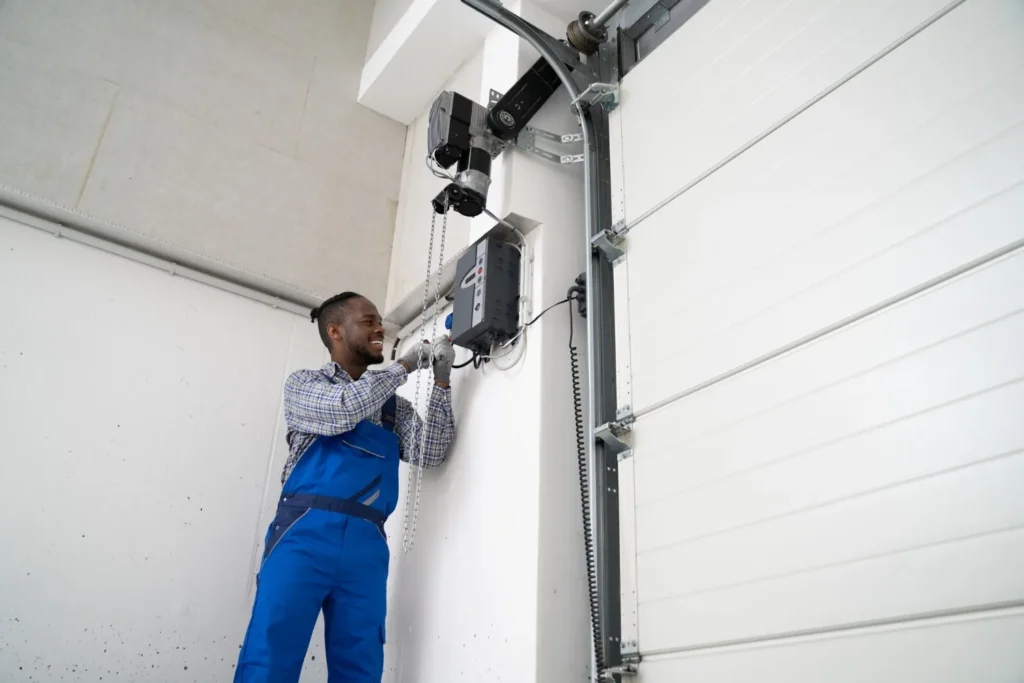
Immediate Response and Diagnostic Scope
When you request service for a malfunctioning opener, the priority is restoring security and functionality. A garage door opener is a complex assembly of electrical components and mechanical gears. When these systems fail, it is rarely due to a single cause. Our approach begins with a comprehensive diagnostic evaluation to pinpoint exactly why the door is not responding.
Technicians arrive with fully stocked trucks, prepared to address the issue in a single visit. The goal is to minimize downtime. You do not have time to wait for parts to be ordered or for a second appointment to be scheduled. Whether the issue lies within the logic board, the traveler assembly, or the safety eye sensors, the necessary components are typically on hand to effect an immediate repair.
The scope of service covers every component of the automatic opener system:
- Logic Board Examination: Testing the circuit board for shorts, burnt soldering, or signal failure.
- Gear and Sprocket Inspection: Checking for stripped gears or worn sprockets that prevent the chain or belt from moving.
- Capacitor Testing: Verifying the starting capacitor has the strength to initiate the motor cycle.
- Safety Sensor Alignment: Ensuring the photo-eye sensors are clean, aligned, and receiving power.
- Limit Switch Adjustment: Calibrating the travel limits so the door closes fully without reversing unexpectedly.
How the Repair Process Works
Understanding the steps involved in a professional repair helps you prepare for the service visit. We utilize a systematic workflow to ensure no underlying issues are missed. This structured approach guarantees that the symptom is treated alongside the root cause:
- Step One: Manual Release and Balance Test
- The technician pulls the emergency release cord to disconnect the opener from the door.
- The door is operated manually to check for broken springs or binding tracks. If the door is too heavy to lift manually, the issue is likely with the spring system, not the opener itself.
- This step protects the new or repaired opener from burning out due to excessive strain.
- Step Two: Electrical Diagnostics
- Using a multimeter, the technician tests the voltage reaching the motor head.
- The wall console and remote transmitters are tested to rule out simple signal interference.
- Wiring from the motor to the sensors is inspected for staples or cuts that may be causing a short circuit.
- Step Three: Component Repair or Replacement
- If a specific part like the helical gear is stripped (common in Leander due to heat stress), the motor casing is opened, and the gear assembly is replaced.
- Faulty capacitors are swapped out for high-grade replacements designed to withstand temperature fluctuations.
- Logic boards are reprogrammed or replaced if they have sustained damage from power surges.
- Step Four: Reconnection and Calibration
- Once the internal repair is complete, the opener is re-engaged with the door.
- Force settings are adjusted to ensure the door reverses if it hits an obstruction, a critical safety requirement.
- The travel limits are fine-tuned so the weather seal compresses gently against the floor without bowing the rail.
When to Replace vs. When to Repair
Homeowners often face the dilemma of whether to invest in a repair or opt for a full unit replacement. Making the right financial decision depends on the age of the unit, the cost of the repair, and the safety features currently present.
Repair is the viable option when:
- The unit was manufactured within the last 7 to 10 years.
- The issue is isolated to a specific, replaceable part like a capacitor, gear kit, or safety sensor.
- The motor runs strong, but the door fails to move due to a mechanical disconnect (carriage trolley failure).
- The cost of the repair is less than 50% of the cost of a new machine and installation.
Replacement is the smarter investment when:
- Safety Standards are Outdated: If your opener was manufactured before 1993, it likely lacks the federally mandated safety reversing sensors. These units cannot be legally repaired and must be replaced to ensure household safety.
- Critical Motor Failure: If the electric motor itself has burned out, the cost of the part and labor usually exceeds the value of a modern, more efficient unit.
- Recurring Electrical Issues: If a unit has gone through multiple logic boards, it suggests an internal wiring fault or age-related degradation that will continue to drain your wallet.
- Noise Reduction Needs: Older chain drive models can vibrate the entire house. Switching to a modern belt drive system significantly reduces noise, which is often preferred for garages with bedrooms above them.
Local Considerations for Leander Homeowners
Operating a garage door opener in Central Texas presents unique challenges that standard maintenance advice often overlooks. The environmental factors in Leander directly impact the lifespan and performance of your equipment.
- Extreme Heat Impact:
- Summer temperatures frequently exceed 100°F. Inside a closed garage, temperatures can soar even higher. This intense heat can cause the viscosity of the grease on the rail and gears to break down, leading to metal-on-metal grinding.
- Electronics are sensitive to heat. Logic boards and capacitors are prone to swelling or failing prematurely when exposed to the prolonged thermal stress typical of a Texas July or August.
- Humidity and Moisture:
- With annual precipitation averaging over 30 inches and high humidity levels, corrosion is a silent killer. Contacts on the sensors can corrode, and rust can accumulate on the chain or screw drive.
- Technicians in this area use specific lubricants and protective coatings to shield electrical contacts from moisture damage.
- Power Surges and Lightning:
- Electrical storms are common in the region. A nearby lightning strike or a grid surge can fry the sensitive circuit board in your opener instantly.
- We recommend using high-quality surge protectors specifically designed for garage door openers to prevent catastrophic electrical failure during storm season.
- Pest Interference:
- Fire ants and small insects are attracted to the electromagnetic fields and warmth generated by the motor head. It is not uncommon to find a logic board shorted out by a colony of ants inside the housing. Regular cleaning and pest mitigation around the garage perimeter are essential.
Common Components That Fail
To understand what you are paying for, it helps to know which parts are most susceptible to failure. Good Golly Garage Doors stocks high-quality replacements for these specific components:
- The Main Gear and Sprocket Assembly: This is the plastic gear that interacts with the metal worm drive on the motor shaft. Over time, or if the door is unbalanced, the teeth on this gear shear off. When this happens, you will hear the motor running, but the chain will not move. This is the most common mechanical failure in chain and belt drive units.
- The Start Capacitor: Similar to an air conditioning unit, the garage door motor requires a jolt of energy to start lifting the heavy door. The capacitor stores this energy. When it fails (often due to heat), the motor may buzz or hum but refuse to turn. Visually, a bad capacitor often looks swollen or leaks oil.
- The Logic Board (Receiver): This is the brain of the opener. It processes signals from the remote, the wall button, and the safety sensors. If the remote works but the wall button doesn’t, or if the lights flash inexplicably, the logic board is likely the culprit.
- The RPM Sensor: This small sensor counts the revolutions of the motor cup. If it cannot read the speed, the opener assumes the door is stuck and will stop or reverse for safety. This often manifests as the door moving six inches and then reversing.
Opener Drive Types We Service
Different homes utilize different drive mechanisms based on budget, door weight, and noise tolerance:
- Chain Drive Openers: The most common and traditional type. They use a metal chain to pull or push the trolley. They are incredibly durable and reliable but can be noisy. They are well-suited for detached garages where noise is not a concern.
- Belt Drive Openers: These function similarly to chain drives but use a steel-reinforced rubber belt. They are virtually silent and are the gold standard for attached garages, especially if there is living space directly above the garage.
- Screw Drive Openers: These use a threaded steel rod to move the trolley. They have fewer moving parts, which theoretically means less maintenance. However, in regions with high temperature fluctuations like Leander, the lubricant can become gummy, affecting performance.
- Jackshaft (Wall-Mount) Openers: These units mount on the wall beside the garage door, connected directly to the torsion spring shaft. They free up overhead ceiling space for storage. They are highly advanced, quiet, and secure, often featuring automatic deadbolt locks.
Why Professional Troubleshooting is Essential
While many home maintenance tasks can be handled by a DIY approach, garage door opener repair carries distinct risks and complexities. The opener is integrated with a high-tension spring system. Attempting to repair the opener without properly securing the door or understanding the counterbalance system can result in severe injury or property damage.
Furthermore, modern openers are sophisticated electronic devices. Misdiagnosing a logic board issue as a motor failure can lead to buying unnecessary parts. Misaligning the travel limits can drive the door into the concrete, buckling the bottom panel or shattering the glass. Professional technicians possess the diagnostic tools to read error codes and the mechanical expertise to adjust internal gearing safely.
Correct repair also ensures that your home insurance and hardware warranties remain valid. Unlicensed tampering often voids manufacturer warranties on the opener unit. By utilizing professional services, you ensure a paper trail of authorized repair work, maintaining the value and protection of your hardware.
Ready to Restore Access?
A malfunctioning garage door opener disrupts your daily routine and compromises the security of your home. Whether it is a stripped gear, a fried logic board, or a simple sensor alignment, the solution requires professional attention and specific parts. Do not leave your garage unsecured or rely on manual lifting in the Texas heat.
Good Golly Garage Doors is available to diagnose and repair your opener today. We provide the expertise needed to determine if a repair or replacement is the best path forward for your specific situation.
Call us immediately to schedule your diagnostic visit and get your garage door moving again.
 All Service Areas