
Garage Door Opener Repair In Hesperia, CA
Restore function fast with skilled garage door repair in Hesperia, CA from Good Golly Garage Doors. Same-day help available—contact us todau. Call us now.
Stuck Garage Door? Repair Solutions Within Reach
Facing a garage door that refuses to open or close creates stress, trapping your vehicle inside or leaving your home vulnerable to intrusion. In Hesperia, where extreme temperatures can already strain mechanical systems, a malfunctioning operator requires professional attention to restore security and convenience. If your opener is humming without movement or the remote has stopped communicating, schedule your repair service now.
Good Golly Garage Doors understands that a broken opener brings your daily routine to a grinding halt. Our technicians arrive equipped to diagnose electrical faults, mechanical failures, and sensor misalignments on the spot. We prioritize restoring the automated entry to your home efficiently, ensuring you are not left manually lifting heavy panels.
Diagnostics and Opener Repair Scope
When an automatic opener fails, the symptom is often obvious, but the root cause requires technical expertise to identify. Homeowners often report a door that reverses after touching the floor, a motor that runs while the chain stays static, or a complete lack of power despite checking the breaker. Professional intervention begins with a comprehensive assessment of the entire drive system. The goal is not just to get the door moving again, but to ensure the opener is not being overworked by an unbalanced door, which is a common cause of premature motor burnout.
Technicians examine every component of the opener assembly. This includes the logic board, which acts as the brain of the unit, and the starting capacitor, which provides the torque needed to lift the heavy door. In many cases, the issue lies within the drive mechanism itself. Plastic gears inside the motor casing can shear off over time due to wear or lack of lubrication, rendering the motor useless even if it still sounds like it is running.
The scope of repair covers all major drive types found in residential properties:
- Chain Drive Units: These serve as the workhorses for many homes. Repairs often involve tightening a slack chain, replacing broken sprocket assemblies, or silencing excessive rattling caused by loose hardware.
- Belt Drive Units: Preferred for their quiet operation, these units require specific attention to the rubber-reinforced belt. If the belt teeth wear down or the tensioner fails, the opener cannot grip the rail effectively.
- Screw Drive Units: Common in older homes, these rely on a threaded steel rod. The primary failure point is often the plastic coupler that connects the motor to the drive screw, which snaps under stress.
- Jackshaft Openers: Wall-mounted units require specialized diagnostics for their internal tension monitors and electronic locking mechanisms.
Beyond the motor and drive system, the repair scope includes the safety infrastructure. Modern openers rely on strict safety protocols. If the infrared safety sensors are misaligned, dirty, or have damaged wiring, the system will prevent the door from closing to avoid crushing hazards. Technicians troubleshoot these sensitive electronics to differentiate between a simple obstruction and a circuit board failure.
The Technical Restoration Process
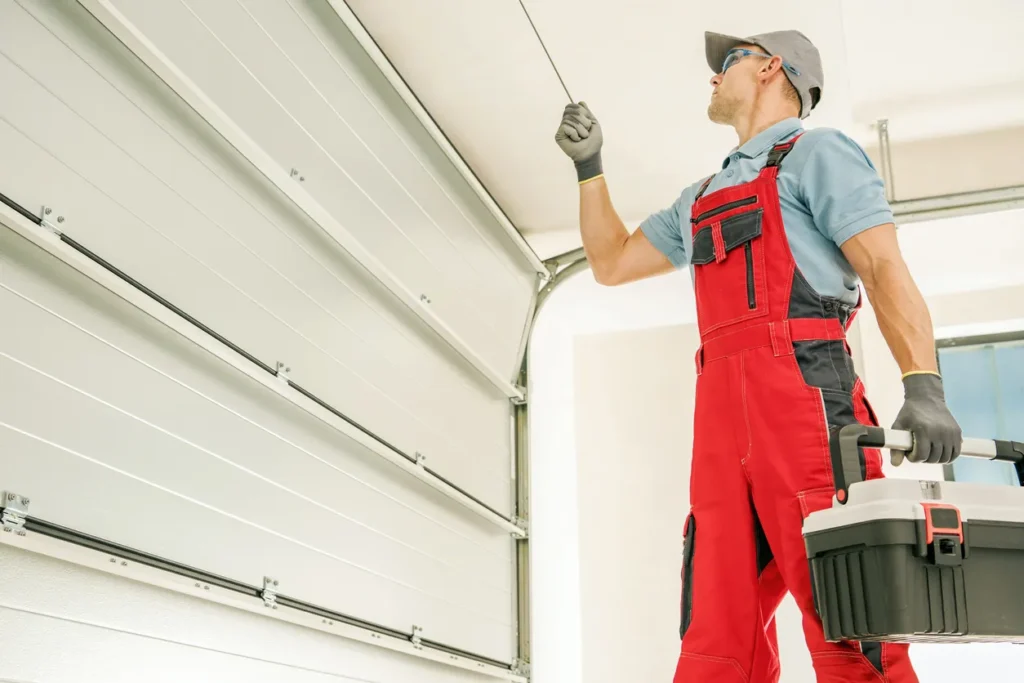
Restoring a garage door opener involves a systematic approach to ensure safety and longevity. Attempting to force a unit to operate without following a strict protocol can result in further damage to the door panels or the torsion spring system. The process is designed to isolate the fault and verify that the door acts as a balanced system before the automatic operator is re-engaged.
Manual Balance Test:
The technician first disengages the opener from the door using the emergency release cord. The door is operated manually to check for binding, damaged rollers, or broken springs. If the door is too heavy to lift manually, the problem lies with the springs, not the opener, and the springs must be adjusted first to prevent burning out the new or repaired motor.
Electrical Circuit Testing:
Using a multimeter, the technician tests the flow of electricity from the outlet to the internal transformer and logic board. This step confirms if the issue is a blown capacitor, a fried circuit board due to a power surge, or faulty wiring in the wall station.
Drive Assembly Inspection:
The casing is removed to inspect the internal gears and sprockets. For chain and belt drives, the traveler (the carriage that moves along the rail) is checked for cracks or stripping. If the gear kit is shredded, it is removed and replaced with a new assembly, including fresh grease to minimize friction.
Sensor Alignment and Wiring:
The photo-eye sensors located near the floor are inspected. The technician ensures the LEDs are solid (indicating a good beam connection) and checks the low-voltage wiring for staples that may have pierced the insulation. Any damaged wire runs are replaced to ensure reliable signal transmission.
Limit and Force Adjustment:
Once the hardware is fixed, the technician reprograms the travel limits. This tells the motor exactly how far to open and close. The force settings are also calibrated so the door reverses if it encounters an obstruction, but pushes firmly enough to seal against the concrete.
Remote and Keypad Programming:
Finally, all peripherals are synced to the logic board. This includes erasing old codes for security and programming new remotes, keypads, and vehicle HomeLink systems.
Deciding Between Repair and Replacement
There comes a point where repairing an aging unit ceases to be cost-effective. Determining whether to swap out a component or install a completely new system depends on the age of the unit, the availability of parts, and compliance with current safety regulations. A repair is typically the right choice if the unit is under ten years old and the issue is an isolated part, such as a capacitor or a remote control receiver.
However, replacement is often the smarter financial move in specific scenarios:
Safety Standard Compliance:
If the opener is older than 10 to 15 years, it likely lacks the federally mandated safety reversal sensors (photo-eyes). These systems are considered unsafe and cannot legally be repaired by a professional; they must be replaced to mitigate liability and injury risks.
The 50% Rule:
If the cost of the repair (parts and labor) exceeds 50% of the cost of a brand-new, modern system, replacement provides better value.
California Battery Backup Law (SB 969):
In California, all newly installed garage door openers must include a battery backup system. If your current system does not have this feature and requires a major overhaul, upgrading to a compliant system ensures you can open your garage door during power outages, which is a critical safety feature during wildfire season or grid failures.
Recurring Electronic Failures:
If a logic board fails repeatedly, it often indicates that the motor creates electrical noise or internal surges. Constantly replacing circuit boards is expensive and unreliable compared to installing a new DC-motor system with updated surge suppression.
Noise Considerations:
Homeowners converting a garage into a workspace or with a bedroom above the garage often find older chain drive systems intolerably loud. Switching to a modern belt-drive opener significantly reduces noise and vibration transfer through the home’s framing.
Why Professional Diagnosis Protects Your Home
While the opener is the motorized muscle, the garage door system relies on dangerous tension to function. The opener is designed to guide the door, not lift dead weight. When an opener fails, it is frequently a symptom of a deeper mechanical issue with the door itself, such as a broken spring or frayed cable. Homeowners attempting DIY repairs on the opener often fail to recognize that the door is unbalanced.
Installing a new gear kit on an opener attached to an unbalanced door is a temporary fix that will result in the new gears stripping within weeks. Good Golly Garage Doors technicians assess the entire counterweight system. By ensuring the springs are doing the heavy lifting, the opener is preserved, operating smoothly and quietly for years.
Professional service also ensures that the safety reversal system is tested to UL 325 standards. This test involves placing a 1.5-inch block on the floor and confirming the door reverses automatically upon contact. Incorrect force settings can allow the door to crush objects or fail to close fully, compromising home security.
Expert handling of the logic board and frequency interference is also critical. With the rise of LED lighting in garages, many homeowners experience decreased remote range. Certain LED bulbs emit frequencies that interfere with the opener’s radio signal. Professionals identify these interference sources and install distinct bulbs or external antenna extenders to restore range.
Securing Your Automated Entry
A functional garage door opener is essential for the safety and fluidity of your household. Whether it is a stripped gear, a sensor alignment issue, or a complete logic board failure, delaying repair can lead to the door failing in the closed position, potentially trapping vehicles, or in the open position, leaving the home exposed.
The complex interplay between the electrical motor and the mechanical counterbalance system requires a trained eye to diagnose accurately. Ignoring the warning signs, grinding noises, slow operation, or intermittent response, often leads to more expensive replacements down the line. Ensure your system complies with California safety regulations and operates reliably regardless of the desert weather.
For precise diagnosis and repair that restores your garage door’s automatic function, contact our team today.
Fixes with Garage Door Opener Repair in Hesperia, CA
When your garage door opener fails, everything comes to a halt. Good Golly Garage Doors provides same-day garage door opener repair in Hesperia, CA, restoring your system’s function professionally. Our techs troubleshoot fast and deliver long-lasting solutions. Don’t deal with slow or stuck doors; get your opener fixed today.
Book Your Opener Repair with the Experts
Proudly Serving Victorville and Surrounding Areas
We provide the best garage door services you can find across Victorville, CA. Wherever you are, Good Golly Garage Doors is ready to deliver. Let’s get your garage door in Victorville, CA or beyond back in top shape with service that’s fast, friendly, and built to last.
Call (760) 979-0605 All Service Areas