
Garage Door Opener Repair in Crestline, CA
Struggling with a faulty garage door opener in Crestline? Contact Good Golly Garage Doors for same-day repair services. Ensure your garage door functionality today!
Garage Door Opener Malfunctions Requiring Prompt Attention
Is your garage door refusing to open or close smoothly, leaving you frustrated and potentially locked out? You are not alone in facing these common issues, and Good Golly Garage Doors is ready to help restore your access. Contact us to schedule a professional inspection or repair appointment:
- Experience professional repair services designed to restore proper operation without unnecessary delay.
- Benefit from reliable service scheduling and after-hours phone answering for unexpected concerns.
- Trust in top-rated local experts known for reliability and effective solutions.
All services come with a satisfaction guarantee to ensure your peace of mind.
What to Expect From Professional Opener Repair Services
When a garage door opener fails, the disruption to your daily routine is immediate. You cannot afford to wait days for a technician while your vehicle is trapped or your home is left vulnerable. The repair process focuses on accurate diagnosis and proper correction of mechanical or electrical faults. Residents in Crestline rely on functional garage systems to navigate daily departures and arrivals, making timeliness an important factor in service delivery.
Upon arrival, a technician evaluates the entire opening system. This is not limited to the motor unit hanging from the ceiling. The inspection covers the logic board, the wall station, the remote frequencies, the safety sensors, and the drive mechanism (belt, chain, or screw). The goal is to pinpoint whether the issue stems from a stripped gear, a blown capacitor, a misalignment of safety eyes, or a disruption in the power supply.
Comprehensive repair service includes a full safety check. The opener is the motorized muscle, but it must work in tandem with the door’s physical balance. If the opener is straining due to a heavy door, simply replacing a gear is a temporary fix. A professional service adjusts the force limits and travel settings to help prevent premature wear. You receive a clear explanation of the failure point and a direct solution based on available parts and manufacturer specifications.
The Technician’s Process for Restoring Functionality
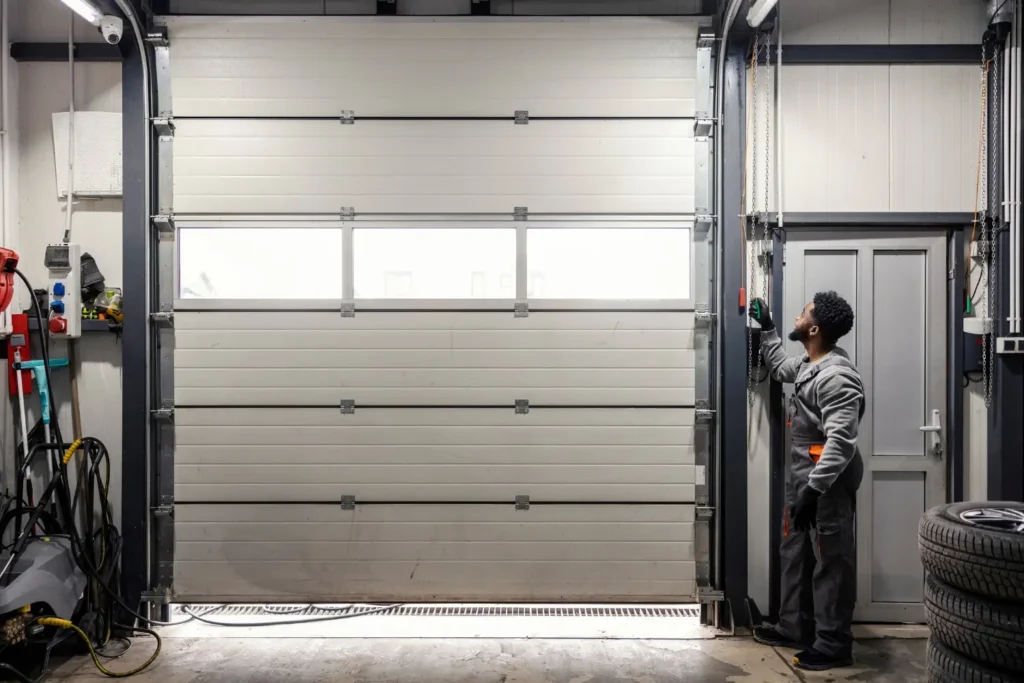
Restoring a broken garage door opener involves a systematic approach to ensure safety and longevity. Technicians do not guess, they follow a specific protocol to isolate the variable causing the failure. This helps ensure that when the repair is complete, the issue is properly addressed.
Initial Diagnostic Scan:
- The technician begins by testing the wall button, remote controls, and keypads to determine if the issue is strictly electronic or mechanical.
- Error codes on the motor unit (often indicated by flashing LED lights) are read to identify specific internal failures like logic board shorts or sensor obstructions.
- Power output is tested at the outlet to rule out electrical panel or wiring issues within the garage infrastructure.
Internal Component Inspection:
- The motor casing is removed to inspect internal plastic gears. In many older systems, these gears strip over time, causing the motor to hum without moving the chain.
- The starting capacitor is checked. If this component is swollen or leaking, the motor will not have the torque required to lift the door.
- Wiring harnesses are inspected for loose connections or corrosion, which is common in environments with fluctuating temperatures.
Drive System Repair:
- For chain-drive systems, the technician checks for slack. A loose chain can slap against the rail or skip sprockets, throwing off the timing.
- For belt-drive systems, the belt is examined for missing teeth or fraying spots that cause slippage.
- The traveler assembly (the part that connects the door arm to the rail) is inspected for cracks or wear that prevent engagement.
Sensor Alignment and Safety Testing:
- Photo-eye sensors are realigned. Even a slight bump can knock these out of focus, preventing the door from closing.
- Lenses are cleaned of dust, spiderwebs, or moisture that might be blocking the infrared beam.
- Wiring to the sensors is checked for staples that may have pierced the insulation, causing intermittent shorts.
- The reverse mechanism is tested using a standardized block test to ensure the door reverses immediately upon contact with an object.
Final Calibration:
- Up and down force limits are adjusted. If the up-force is too high, the opener works too hard, if too low, the door stops halfway.
- Travel limits are set to ensure the door opens fully to the header and seals tightly against the concrete floor without bending the rail.
- Remote controls are reprogrammed if the logic board was reset or replaced.
Determining When to Replace vs. Repair Your Opener
Deciding between repairing an existing system and installing a new one is a decision based on cost-efficiency, safety, and age. While many issues are repairable, there comes a tipping point where continued repairs are no longer practical. Good Golly Garage Doors assists homeowners in making informed decisions based on the condition of the current hardware.
Consider Repair When:
- The system is within its typical service life, most modern openers are designed to last 10 to 15 years.
- The issue is external: Misaligned sensors, dead remote batteries, or a broken wall switch are minor issues that do not indicate motor failure.
- The motor hums but gears are stripped: Replacing a gear kit is a standard procedure and often more cost-effective than replacement when the motor remains in good condition.
- Parts are readily available: If the manufacturer still supports the model and parts are accessible, repair is a viable option.
Consider Replacement When:
- Safety features are missing: Older openers that lack modern safety reverse sensors should be replaced to meet current safety standards.
- Critical failures occur in systems near the end of their service life: If a logic board fails late in the opener’s lifespan, replacement may be more practical.
- Noise is a major concern: Older chain-drive models can be very loud. Switching to a modern DC-motor belt drive can significantly reduce noise, especially when living space is above the garage.
- Recurring breakdowns: If multiple repairs have been required over a short period, the system may be nearing the end of its usable life.
- Lack of battery backup: In California, battery backup is required for new installations. If your current opener cannot operate during power outages, upgrading improves both safety and reliability.
Important Regional Considerations for Opener Performance
Operating a garage door in Crestline presents specific challenges that differ from flatter or desert regions. The local climate and geography directly impact how garage door openers function and how often they require service. The mountain environment places additional stress on mechanical systems:
- Climate Impact on Electronics and Mechanics: The Mediterranean climate brings wet winters and significant precipitation. Moisture can affect garage door electronics. High humidity levels may contribute to corrosion on circuit boards and sensor wiring. During colder snaps, the metal rail and chain can contract, while lubrication can thicken, forcing the opener to work harder. Technicians in this area use low-temperature lithium grease designed to maintain performance in colder conditions.
- Snow and Sensor Obstruction: Winter precipitation often includes snow, which can drift against the garage door. If snow builds up and blocks the path of the safety sensors inside the door jamb, the door may not close. This is a safety feature. Additionally, the added weight of ice or moisture on a wooden door can affect force settings, causing the door to reverse unexpectedly.
- Power Reliability and Battery Backup: Mountain communities may experience power fluctuations or outages during storms. An electric garage door opener without battery backup may not operate during these events. California law (SB 969) requires that all new garage door openers installed in the state include a battery backup, helping ensure access during outages.
- Terrain and Driveway Slope: Many properties in the area feature steep driveways or hillside construction. This can affect the settling of the garage structure over time. If garage tracks shift due to ground movement, the geometry of the door travel can change. The opener, which moves in a straight line, may strain against misaligned tracks. Proper mounting and periodic adjustment help maintain smooth operation.
Why Professional Diagnosis Is Critical
Troubleshooting a garage door opener is rarely a simple DIY task. The opener is part of a high-tension system involving heavy springs and cables. Misdiagnosing the problem can lead to unnecessary parts purchases or safety risks. A professional brings the appropriate tools to check voltage, signal integrity, and mechanical load.
Additionally, generic parts from retail stores may not match the specifications of certain systems. Using incorrect components can lead to premature failure or additional damage. Professional repairs typically use manufacturer-approved parts and include labor coverage for the work performed, usually around one year depending on the component.
Secure Your Garage Access Today
A malfunctioning garage door opener can affect the security of your home and the convenience of daily life. Whether it involves a stripped gear, a faulty logic board, or a sensor alignment issue, the problem should be addressed by a qualified professional. Delaying service can lead to additional wear on the garage door system.
Ensure your garage door opens reliably when you need it. For questions or to arrange service, contact our team. Contact Good Golly Garage Doors to schedule your repair service.
Proudly Serving Victorville and Surrounding Areas
We provide the best garage door services you can find across Victorville, CA. Wherever you are, Good Golly Garage Doors is ready to deliver. Let’s get your garage door in Victorville, CA or beyond back in top shape with service that’s fast, friendly, and built to last.
Call (760) 979-0605 All Service Areas