

Garage Door Opener Installation in Cullman, AL
Secure and streamline your garage access in Cullman with professional opener installation services. Contact us for seamless, reliable service with top-rated openers. Book today!
Eliminate the Inconvenience of a Malfunctioning Garage Door Opener
A garage door opener that fails to operate consistently can interrupt your routine, create noise throughout your home, and reduce the security of your garage access. If your door reverses unexpectedly, struggles to open, or produces grinding sounds, the issue often points to aging components or an opener that no longer matches the door’s requirements. Good Golly Garage Doors provides professional garage door opener installation in Cullman and surrounding areas, helping homeowners restore dependable access with properly selected and installed systems. Contact our team to schedule installation or discuss available financing options.
A failing opener is more than an inconvenience. It can affect safety, security, and overall system performance. Good Golly Garage Doors delivers installation services focused on accuracy, compliance, and long-term reliability.
Comprehensive Solutions for Your Garage Access Needs
Choosing professional garage door opener installation means investing in modern performance, improved security, and smoother daily operation. Advances in opener technology provide homeowners with quieter motors, enhanced safety features, and optional smart functionality designed to match different garage layouts and usage needs.
Understanding Opener Drive Types
Selecting the right hardware is the first step in the installation process. The choice of drive mechanism dictates the noise level, maintenance requirements, and longevity of the system.
- Belt Drive Openers: These systems use a rubber belt reinforced with steel to lift the door. They are widely regarded as the quietest option available, making them ideal for homes with attached garages or bedrooms located directly above the garage. The operation is smooth and virtually vibration-free.
- Chain Drive Openers: utilizing a metal chain similar to a bicycle, these openers are known for their durability and affordability. While they generate more noise than belt drives, they provide robust lifting power, making them a suitable choice for heavy, insulated doors or detached garages where noise is less of a concern.
- Direct Drive and Jackshaft Openers: For garages with limited overhead space or cathedral ceilings, wall-mounted jackshaft openers are the superior choice. These mount beside the door, freeing up ceiling space for storage. Direct drive systems offer a complex solution with only one moving part, reducing the likelihood of mechanical failure.
Smart Technology Integration
Modern installations often include smart features that transform how you interact with your home. WiFi-enabled openers allow you to control and monitor your garage door from anywhere using a smartphone app.
- Remote Monitoring: Receive real-time alerts if the door is left open or if it is opened while you are away.
- Guest Access: Grant temporary access to delivery drivers or guests without sharing a physical code or key.
- Integration: Sync your garage door with other smart home hubs to create automated routines, such as turning on lights when the door opens.
Safety and Security Features
Every new installation prioritizes safety. Modern systems come equipped with rolling code technology, which generates a new code every time the remote is used, preventing code-grabbing thieves from accessing your home. Additionally, advanced safety sensors are installed to instantly reverse the door if an object or person crosses the threshold during operation.
The Installation Process: What to Expect
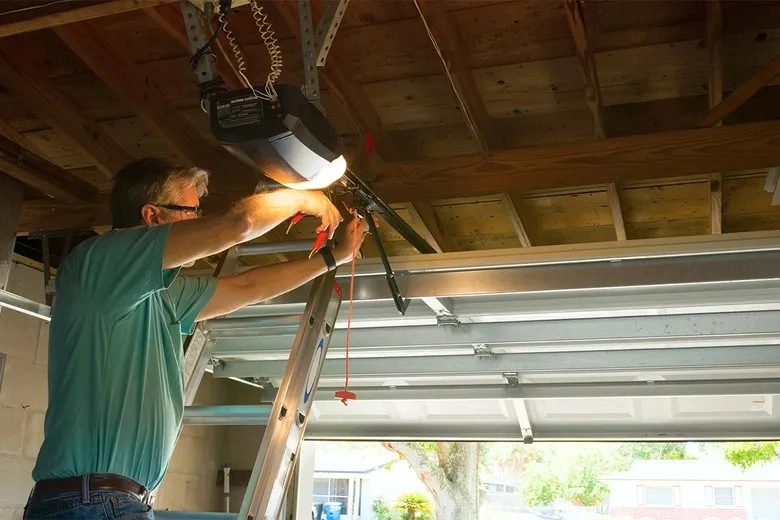
A professional installation is a systematic process designed to ensure your new opener functions correctly and adheres to all safety standards. This is not merely swapping out a motor; it involves a full inspection and calibration of the entire door system.
Assessment and Removal
The process begins with a thorough evaluation of the existing garage door balance and hardware. An opener cannot compensate for a door with broken springs or misaligned tracks.
- Technicians inspect the torsion or extension springs to ensure they are properly counterbalancing the door’s weight.
- The tracks and rollers are checked for wear and obstructions.
- The old opener system, rail, and associated hardware are safely removed and prepared for disposal.
Assembly and Mounting
Once the door system is cleared, the new system is prepared for installation.
- The rail assembly is constructed and attached to the motor head.
- Technicians determine the optimal mounting height to ensure the arm pulls the door at the correct angle, preventing unnecessary strain on the top section of the door.
- The motor is secured to the ceiling using perforated angle iron, ensuring it is bolted into structural framing members for maximum stability.
Wiring and Component Installation
Electrical components are the nervous system of the garage door opener.
- Photo-eye safety sensors are mounted six inches from the floor on either side of the opening. These are wired back to the motor head and aligned precisely so the invisible beam is uninterrupted.
- The wall console is mounted in a convenient location near the entry door, at a height of at least five feet to prevent small children from reaching it.
- Wiring is stapled neatly along the walls and ceiling to prevent tangling or accidental damage.
Programming and Calibration
The final physical steps involve configuring the logic of the machine.
- Travel limits are set to tell the motor exactly how far to open and close the door. Incorrect limits can cause the door to slam into the floor or not open fully.
- Force settings are adjusted. This dictates how much power the opener uses. If the force is too high, the safety reversal mechanism may not trigger when it meets resistance.
- Remotes, keypads, and in-vehicle HomeLink systems are programmed and tested for range and reliability.
Deciding Between Repair and Replacement
Homeowners often grapple with the decision of whether to repair an existing system or invest in a full replacement. While repair is sometimes a viable option for minor issues, there are clear indicators when installing a new system is the more economically and practically sound decision.
Age of the system
Garage door openers typically have a lifespan of 10 to 15 years. If your system is approaching or exceeding this age range, internal components like gears, capacitors, and logic boards are likely nearing the end of their service life. Investing in repairs for a system this old is often a temporary fix that leads to diminishing returns.
Lack of Safety Features
If your current opener does not have safety reverse mechanisms and photo-eye sensors, replacement is not just a matter of convenience but a critical safety upgrade. Updating to a compliant system ensures protection for pets, vehicles, and family members.
Recurring Mechanical Failures
If you find yourself calling for service multiple times a year, or if the cost of a repair approaches 50% of the cost of a new installation, replacement is the smarter financial move.
Noise and Vibration
Older chain drive models can become excessively noisy as parts wear and chains stretch. If the noise of the garage door opening disrupts the household, switching to a modern belt drive or direct drive system can significantly improve your quality of life.
Security Vulnerabilities
Older openers use fixed codes that can be easily intercepted by potential intruders using code grabbers. New installations feature rolling code technology, making unauthorized entry virtually impossible via the remote signal.
Why Professional Installation is Essential
While DIY projects are popular, garage door opener installation is a complex task involving high-tension springs, heavy lifting, and electrical work. Relying on professional services ensures the job is done safely and correctly the first time.
Precision and Balance
The opener is designed to move a door that is perfectly balanced by the springs. If the door is heavy or the springs are weak, the opener will be overworked and will fail prematurely. Professionals verify the door’s balance before the opener is even unboxed. If the door is heavy, adjustments are made to the spring tension to ensure the opener lifts the door with minimal strain.
Proper Safety Setup
The force and limit settings on an opener are critical for safety. If the close force is set too high, the door can crush an object before reversing. If the limits are off, the door can be damaged by slamming into the header or the floor. Professionals use specific testing methods to ensure the safety reversal system activates exactly as intended.
Efficiency and Disposal
Installing an opener involves handling bulky hardware and disposing of the old system. Service teams handle the removal and environmentally responsible disposal of the old motor and rail, leaving your garage clean and clutter-free.
Don’t Settle for Inconsistent Performance: Install a Garage Door Opener Built to Last
Good Golly Garage Doors ensures that every aspect of the installation meets strict quality standards. From selecting the right horsepower to explaining the features of your new keypad, the focus is always on long-term reliability and customer satisfaction.
Secure your home and streamline your access today. Book your garage door opener installation now.
Proudly Serving Decatur, AL, and Surrounding Areas
We provide the best garage door services you can find across Decatur, AL. Whether it’s the impact of Decatur’s heat and sudden storms on garage door components, we ensure our solutions are tailored to your needs. Wherever you are, Good Golly Garage Doors is ready to deliver.
Call (256) 686-4010 All Service Areas