
Garage Door Maintenance in Wrightwood, CA
Stuck with a malfunctioning garage door in Wrightwood? Contact Good Golly Garage Doors for immediate professional service to ensure secure, efficient operation. Call now for expert maintenance!
Resolve Garage Door Stalls and Eliminate Grinding Noises
Dealing with a malfunctioning garage door in Wrightwood can be frustrating. When your system fails to open, you need professional intervention to restore access and security; schedule service today.
Our approach prioritizes efficiency and longevity, ensuring your system handles the unique environmental stressors of the region.
- Trained technicians apply specific adjustments for thermal expansion.
- Comprehensive maintenance checks identify hidden wear patterns to prevent future mechanical malfunctions.
What You Get Today: Comprehensive Maintenance Scope
When you book a professional maintenance visit, the objective is to reset your system to factory specifications. A garage door is a massive moving wall that relies on a complex interplay of tension, balance, and electrical signals. Over time, vibration loosens hardware, and lubrication points dry out. Our service is designed to address every mechanical and electrical component of the door assembly. Contact us.
A complete maintenance service includes a multi-point safety and performance inspection. We examine the structural integrity of the panels and the alignment of the vertical and horizontal tracks. If the tracks are slightly out of square, the door encounters resistance, which strains the opener and shortens the life of the motor. We adjust these tracks to ensure a frictionless glide path.
Hardware tightening is another critical component. A typical garage door system contains dozens of nuts, bolts, and lag screws. The constant vibration of the door cycling up and down loosens these fasteners over time. We systematically tighten every hinge, roller bracket, and mounting bolt to ensure the structure remains rigid and secure.
Lubrication is often misunderstood by homeowners. Using the wrong grease or oil can attract dirt and grit, essentially creating a grinding paste that destroys bearings. We use professional-grade lithium-based or silicone lubricants on rollers, hinges, and springs. This reduces friction, lowers operating noise, and protects metal parts from corrosion, which is vital in mountain environments.
Good Golly Garage Doors technicians also focus on the counterbalance system. The torsion or extension springs do the heavy lifting, not the opener. If the springs are fatigued or unbalanced, the door becomes heavy, posing a safety risk. We perform a balance test by disconnecting the opener and manually operating the door. If it falls or shoots up, we adjust the spring tension to achieve a neutral weight, ensuring safe operation.
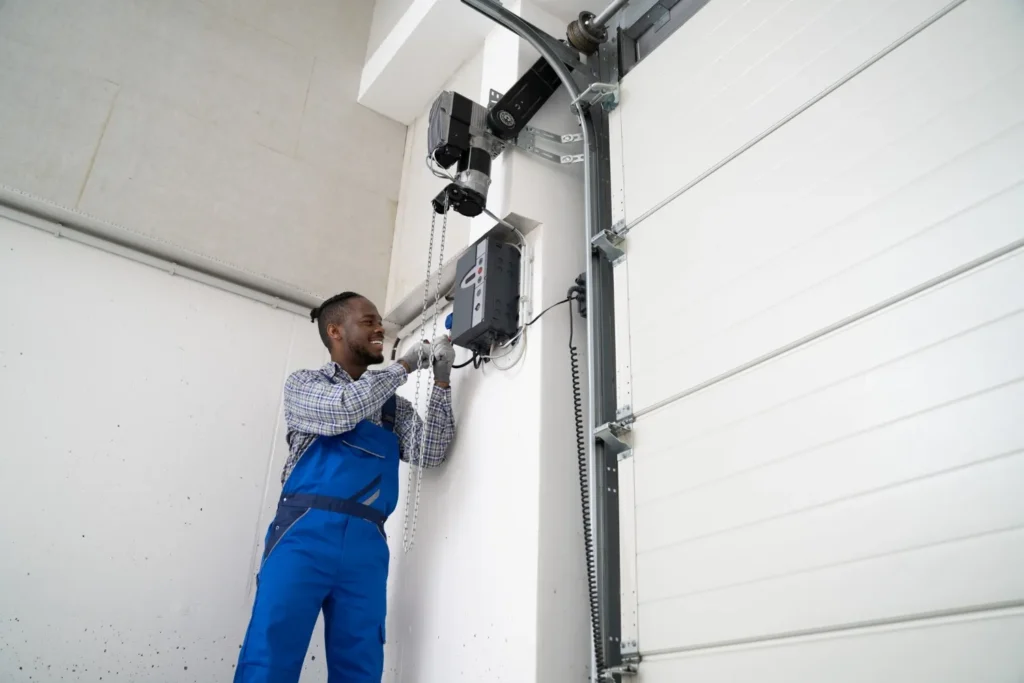
Common Mechanical Failures We Address
Routine maintenance is the best defense against catastrophic failure, but understanding what typically goes wrong helps you identify when a service call is urgent.
- Misaligned Sensors: The safety eyes located at the base of the tracks are sensitive. If they are bumped or if the lenses become dirty, the door will refuse to close. We realign these sensors and check the wiring for continuity.
- Worn Rollers: Plastic or steel rollers have a finite lifespan. When the bearings fail, the rollers drag instead of roll, causing the door to “hop” in the track. We inspect every roller and recommend replacements for those showing flat spots or bearing play.
- Frayed Cables: The lift cables are under immense tension. Corrosion or rubbing against the drum can cause individual strands to snap. If a cable breaks, the door can become jammed or fall. We inspect cables for fraying and replace them before they snap.
- Stripped Gears: In the opener system, the main drive gear is often made of plastic to serve as a failure point that protects the motor. If the door is unbalanced, this gear strips out, and you will hear the motor humming but see no movement. We inspect the internal gears for plastic shavings, a sign of imminent failure.
The Maintenance Process: Step-by-Step
Understanding the workflow helps you prepare for the service visit. We value your time and operate with a structured process to ensure no component is overlooked.
- Visual Inspection: The technician begins by inspecting the door panels, tracks, and hardware for visible damage, rust, or misalignment. This initial assessment dictates the focus of the maintenance.
- Balance and Safety Test: Before making adjustments, we test the door’s current balance and the auto-reverse safety features. This establishes a baseline for performance.
- Debris Removal: Tracks are cleaned of old grease, dirt, and debris that impede roller movement.
- Hardware Torque Check: Every bolt and screw is checked and tightened. This includes the mounting hardware for the opener system itself.
- Spring Adjustment: If the balance test revealed an issue, we carefully adjust the tension on the torsion springs. This is a high-risk task that requires specific tools and training.
- Lubrication Application: We apply specialized lubricants to the springs, rollers, and hinges. We strictly avoid lubricating the tracks directly, as this causes roller slippage.
- Opener Diagnostics: We check the force settings and limit switches on the opener. If the door is reversing unnecessarily or slamming into the concrete, we fine-tune these electronic limits.
- Final Operation Cycle: The door is cycled multiple times to ensure smooth, quiet operation. We demonstrate the improvements and point out any parts that may need replacement in the near future.
When Replacement Beats Repair
While maintenance extends the life of your system, there are specific thresholds where repair is no longer the most economical or safe option. Making the decision to replace components or the entire system depends on age, extent of damage, and technological obsolescence.
- Panel Damage: If more than two sections of your door are damaged, the cost of individual panel replacement often approaches the cost of a brand-new door. Furthermore, if your door is older, matching the color and woodgrain pattern of a replacement panel may be impossible. In these cases, full replacement provides a better aesthetic and structural result.
- Spring Cycles: Springs are rated by “cycles” (one up and down motion). Standard builder-grade springs last about 10,000 cycles. If you have broken a spring, the other one is likely near the end of its life as well. We often recommend replacing both springs simultaneously to save on future service call fees.
- Track Damage: If the vertical tracks are severely bent or rusted through, they cannot be safely straightened. Bent tracks compromise the seal of the door and can cause derailment. Replacement is necessary to ensure the door stays in the opening.
Safety Mechanisms and Sensor Alignment
The most critical aspect of your garage door system is safety. Modern openers are equipped with entrapment protection devices designed to prevent the door from closing on a person, pet, or vehicle. These systems are reliable but fragile.
The photo-eye sensors project an invisible beam across the opening. If this beam is broken, the door must reverse. In many cases, sunlight hitting the sensors at a specific angle during certain times of the day can blind the receiving eye, causing the door to reverse phantomly. We install sun shields or adjust the angle of the sensors to mitigate this issue.
Another safety feature is the force setting. The opener monitors how much force is required to move the door. If the door encounters an obstruction that doesn’t break the beam (like a block of wood or a person), it must sense the resistance and reverse. Over time, as springs weaken and rollers drag, the force required to move the door changes. If the force sensitivity is set too high, the door becomes dangerous because it will push through an obstruction rather than reversing. We test and recalibrate these electronic force limits to ensure the door reverses upon contact with a 2×4 laid flat on the floor, adhering to safety standards.
Why Professional Maintenance Outperforms DIY
Many homeowners attempt to lubricate their doors or tighten bolts themselves. While basic care is encouraged, professional maintenance goes beyond surface-level adjustments. The garage door system involves components under extreme tension. Torsion springs, in particular, store enough energy to cause severe injury if mishandled.
Professional technicians possess the specific winding bars and containment tools required to adjust spring tension safely. We also have the diagnostic experience to hear the difference between a roller that needs grease and a bearing that is about to disintegrate. We identify failure points that are invisible to the untrained eye, such as hairline cracks in the hinges or fraying inside the cable drum.
Furthermore, applying the wrong lubricant is a common DIY error. Standard WD-40 is a solvent, not a lubricant. It strips away existing grease and leaves the metal unprotected, accelerating wear. We use dedicated garage door lubricants.
Ensuring Long-Term Reliability
Your garage door is likely the largest moving object in your home and the primary entry point. Neglecting it leads to emergency repair bills that far exceed the cost of routine maintenance. By investing in regular service, you ensure the system operates quietly, safely, and reliably regardless of the weather conditions outside.
We focus on delivering specific, actionable service that results in a tangible improvement in door performance. From the precise balancing of the springs to the calibration of the opener’s logic board, every step is calculated to extend the operational life of your equipment.
When you need a service provider that understands the technical requirements of garage door systems, trust the experts who prioritize mechanical integrity. Good Golly Garage Doors is ready to assist you with comprehensive maintenance and repair services.
Secure the functionality of your home’s largest entry point today. Contact us!
Proudly Serving Victorville and Surrounding Areas
We provide the best garage door services you can find across Victorville, CA. Wherever you are, Good Golly Garage Doors is ready to deliver. Let’s get your garage door in Victorville, CA or beyond back in top shape with service that’s fast, friendly, and built to last.
Call (760) 979-0605 All Service Areas