

Garage Door Maintenance In Leander, TX
Experiencing garage door issues in Leander? Contact us for quick, reliable garage door service. Ensure your home's security with our certified technicians. Sign up now!
Is Your Garage Door Making Strange Noises or Failing to Close?
A grinding, sticking, or unresponsive overhead door creates immediate security risks and causes unnecessary frustration for homeowners in Leander. Contact us to schedule a comprehensive tune-up or request same-day inspection services.
If your door reverses unexpectedly, moves unevenly, or screeches during operation, these are clear indicators that the mechanical system is struggling. Ignoring these signs often leads to costlier repairs or total system failure down the road. Our goal is to restore the smooth, quiet operation of your entry system quickly and safely:
- Quick response times with same-day service availability to secure your home immediately.
- Comprehensive maintenance performed by certified technicians who identify hidden wear and tear.
- Preventative adjustments that prolong the lifespan of your springs, opener, and hardware.
All services are backed by a robust satisfaction guarantee and warranty to ensure your peace of mind.
Immediate Relief and Comprehensive Maintenance Scope
When you schedule professional maintenance, the objective is to address current performance issues while preventing future breakdowns. Garage doors are heavy, complex moving systems that rely on the precise coordination of cables, springs, tracks, and electronic openers. A lack of lubrication or a slight misalignment can escalate into a situation where the door becomes stuck or falls off its tracks.
We provide a rigorous inspection and tune-up protocol designed to catch issues before they require major part replacements. This service is not merely a visual check; it involves hands-on adjustments to the critical hardware that bears the weight of the door. Homeowners in Leander often find that what seems like a major motor failure is actually a result of poor balance or lack of maintenance, which can be resolved efficiently during a service visit.
Our maintenance service typically covers the following key areas:
- Lubrication of Moving Parts: We apply professional-grade lithium or silicone-based lubricants to rollers, hinges, springs, and bearings. This reduces friction, eliminates squeaking, and prevents premature wear on metal-to-metal contact points.
- Spring Tension Adjustment: Torsion and extension springs lose tension over time. We test the balance of the door and adjust spring tension to ensure the opener does not have to work harder than necessary to lift the door.
- Safety Sensor Alignment: Misaligned photo-eye sensors are the most common cause of a door refusing to close. We clean, align, and test these sensors to ensure they reverse the door properly when an obstruction is detected.
- Hardware Tightening: The vibration caused by daily operation loosens bolts and screws over time. We systematically tighten all roller brackets, hinge screws, and track bolts to stabilize the system.
- Track and Roller Inspection: We check for bent tracks or flat spots on rollers that cause the door to “jump” or rattle during operation.
- Opener Force Calibration: We test the force settings on your garage door opener to ensure it stops and reverses correctly if it encounters resistance, complying with modern safety standards.
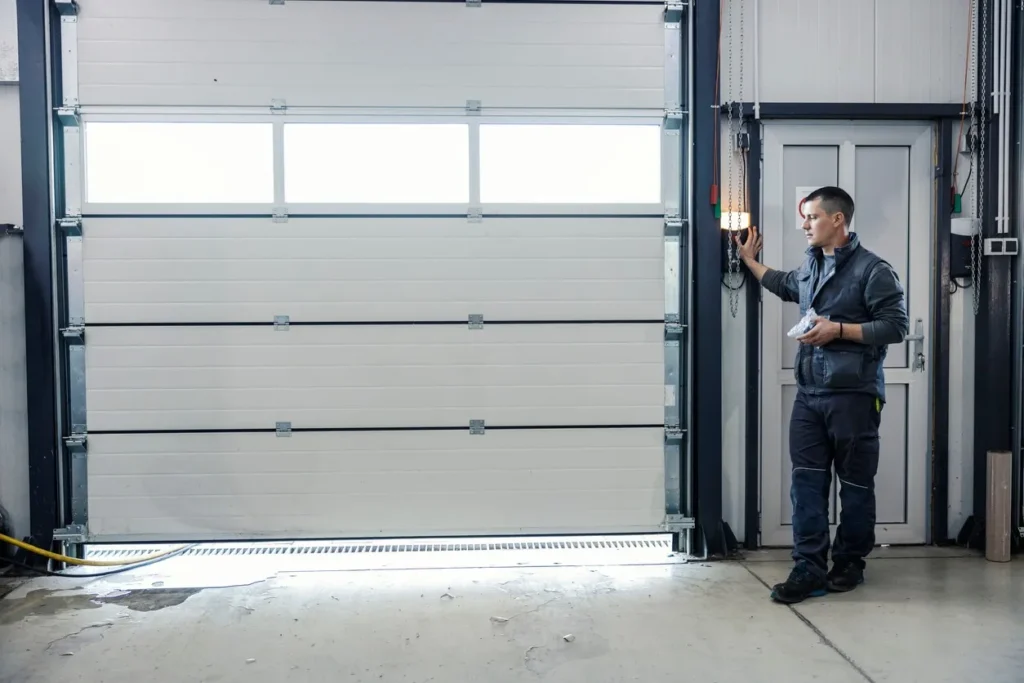
The Maintenance Process: What to Expect
Understanding the workflow of a professional tune-up helps you know exactly what is happening in your garage. Our technicians follow a systematic approach to ensure no component is overlooked. This process is efficient, thorough, and designed to minimize disruption to your day.
- Visual Assessment and Balance Test:
The process begins with a complete visual inspection of the door panels, tracks, and hardware. The technician will disconnect the opener to operate the door manually. This allows them to feel for “sticky” spots, heaviness, or resistance that indicates a broken spring or drum issue. A properly balanced door should stay halfway open without being held; if it slams shut or shoots up, the spring tension requires immediate correction.
- Cleaning and Clearing Tracks:
Next, the technician clears debris from the vertical and horizontal tracks. While tracks generally do not require lubrication (which can attract dirt), they must be clean and perfectly aligned. Any bends or gaps in the track alignment are corrected to ensure the rollers glide smoothly.
- Deep Lubrication and Hardware Torque:
Once the system is aligned, the technician moves to lubrication. Standard WD-40 is avoided as it is a solvent, not a lubricant. Instead, specialized grease is applied to the torsion tube, bearings, and steel rollers. Concurrently, the technician uses impact tools to tighten the lag screws securing the track to the wall and the hardware attached to the door panels.
- Opener Diagnostics and Limit Setting:
The focus then shifts to the motorized opener. The technician checks the drive mechanism (chain, belt, or screw) for slack. If the chain is sagging, it is tightened to prevent it from slipping off the sprocket. The “up” and “down” travel limits are checked to ensure the door opens fully without hitting the stop bolt and closes tightly against the concrete header without reversing unnecessarily.
- Final Safety Check and Operation Cycle:
Finally, the technician performs a safety reversal test. A wood block is placed on the floor, and the door is commanded to close. Upon striking the block, the door must reverse automatically. This confirms that the pressure settings are safe for use around children and pets. The system is cycled several times to verify quiet and consistent operation.
Repair vs. Replacement: Making the Right Call
Deciding between a standard maintenance repair and a full system replacement depends on the age of the unit, the extent of the damage, and the long-term cost implications. While Good Golly Garage Doors prioritizes repair whenever feasible to save you money, there are specific scenarios where replacement is the more financially sound decision.
When to Repair and Maintain:
- The door is under 10 years old: Most high-quality garage doors have a lifespan of 15-30 years. If the door is relatively new, component repair is usually the best path.
- Cosmetic damage only: If a single panel is dented but the structural integrity of the door remains intact, a strut reinforcement or panel replacement is sufficient.
- Sudden mechanical failure: A broken spring, snapped cable, or stripped gear in the opener are isolated mechanical failures. These parts are consumables and are designed to be replaced without discarding the entire system.
- Noise issues: Squeaking and grinding are almost always maintenance issues that can be solved with lubrication and tightening, rather than replacement.
When to Replace:
- Recurring breakdowns: If you are paying for service calls every few months for different issues, the cumulative cost of repairs will quickly exceed the price of a new, reliable unit.
- Severe structural damage: If the door has been hit by a vehicle or severe weather and the frame is bent or the sections are bowing, repair is often unsafe. A compromised structure can collapse unexpectedly.
- Lack of safety features: Older doors lacking bottom reversal sensors or pressure-sensitive openers are non-compliant with current safety codes. Replacement ensures your home meets modern safety standards.
- Energy inefficiency: If your garage is attached to living spaces and the door lacks insulation, upgrading to an insulated sandwich-style door can significantly reduce utility bills, making the replacement an investment rather than just a cost.
Local Considerations for Garage Door Care
Operating a garage door in Leander presents specific challenges due to the local climate and environmental factors. The region experiences distinct weather patterns that directly influence the performance and longevity of garage door components. Understanding these local factors helps in planning the timing and frequency of your maintenance:
- Thermal Expansion and Contraction:
Leander experiences intense heat during the summer months, with temperatures frequently reaching the upper 90s. Metal components, particularly the tracks and springs, expand in this heat. If the door was installed or adjusted during a cooler period without accounting for this expansion, the door may bind or stick in the summer. Conversely, as temperatures drop in the winter, metal contracts. Regular seasonal maintenance ensures the spacing and tension remain correct regardless of the ambient temperature.
- Lubrication Breakdown:
The high heat can also cause standard lubricants to thin out and drip off, leaving moving parts unprotected. We utilize high-viscosity, temperature-resistant lubricants specifically chosen for the Texas climate to ensure they stay in place during the peak of summer.
- Moisture and Spring Corrosion:
Wet spring seasons can introduce humidity into the garage environment. This moisture can accelerate rust and corrosion on springs and cables, which are under immense tension. Rust weakens the steel, leading to unexpected snapping. Regular application of corrosion inhibitors is essential for homes in this area to prevent premature spring failure.
- Pest Intrusion:
As the weather changes, pests often seek shelter in garages. A common maintenance check involves inspecting the bottom weather seal (astragal). In the local area, heat can dry rot these rubber seals, creating gaps where rodents or insects can enter. Replacing cracked or flattened weather seals helps maintain a pest-free and energy-efficient environment.
- Building Codes and HOA Requirements:
While standard maintenance does not typically require permits, significant structural alterations or replacements might. It is also important to note that many local Homeowners Associations (HOAs) have strict guidelines regarding the appearance of garage doors. Keeping your door clean, painted, and free of dents through regular care helps avoid compliance issues.
Why Professional Maintenance Matters
Attempting to DIY garage door maintenance can be dangerous and is often ineffective compared to professional service. The garage door is the largest moving object in your home, and the spring system holds enough tension to lift hundreds of pounds:
Safety Risks of DIY:
The most critical reason to choose professional maintenance is safety. Torsion springs are under extreme tension. If a homeowner attempts to adjust a spring or loosen bottom brackets without the proper tools and training, the potential for severe injury is high. Certified technicians possess the winding bars and containment knowledge to adjust these components safely.
Long-Term Cost Savings:
Preventative maintenance is significantly cheaper than emergency repairs. A frayed cable identified during a tune-up costs a fraction of what it costs to replace a door that has fallen and twisted off its tracks because that cable snapped. Regular inspections extend the life of the opener motor by ensuring it isn’t dragging a dead weight.
Warranty Preservation:
Many garage door manufacturers and opener brands require proof of regular maintenance to keep their warranties valid. Neglecting the system can void these protections. Professional service records provide the documentation needed should a warranty claim ever arise.
Property Value and Curb Appeal:
A noisy, struggling garage door creates a negative impression of the home’s condition. Whether you are planning to sell or simply want to maintain your property value, a smooth-operating door suggests that the home has been well-cared for.
Secure Your Garage Door Today
Don’t wait for your garage door to become stuck halfway open or crash down unexpectedly. Proactive care is the key to a secure home and a functional daily routine. Whether you need an urgent repair due to a malfunction or a seasonal tune-up to prepare for the heat, professional intervention ensures the job is done right the first time.
Ensure your system remains safe, quiet, and reliable for years to come. Contact Good Golly Garage Doors now to schedule your comprehensive maintenance service.
 All Service Areas