

Garage Door Maintenance In Lakeway, TX
Experience reliable garage door service in Lakeway. Schedule professional maintenance for quieter operation and prolonged door life. Sign up now for expert service!
Is Your Garage Door Noisy, Stuck, or Moving Too Slowly?
A malfunctioning garage door is more than just a minor annoyance; it compromises the security of your home and disrupts your daily routine. Whether the door is refusing to close completely, reversing unexpectedly, or emitting loud grinding noises during operation, immediate attention is required to prevent a complete system failure. Contact us today to schedule a comprehensive inspection and restore functionality to your garage door.
Homeowners in Lakeway often experience issues resulting from wear and tear or misaligned components, but professional intervention resolves these problems efficiently. Ignoring these early warning signs can lead to snapped springs or burned-out motors, turning a simple tune-up into a costly repair:
- Get same-day service with our certified technicians to restore access immediately.
- Benefit from a comprehensive maintenance check designed to extend your door’s lifespan and prevent future breakdowns.
- Enjoy peace of mind knowing that 24/7 emergency services are available when you need them most.
All services are performed by insured professionals, with extended warranties offered on all parts and labor to guarantee long-term performance.
What to Expect From a Professional Maintenance Visit
When you schedule a maintenance service, the objective is to address every moving part of the system to ensure smooth, quiet, and safe operation. A garage door is the largest moving appliance in your home, comprised of complex mechanical and electrical components that must work in unison. Good Golly Garage Doors provides a rigorous multi-point inspection and tune-up that covers the entire lifting assembly and opener mechanism.
The scope of a standard maintenance visit includes a detailed examination of the counterbalance system. This involves checking the torsion or extension springs for signs of fatigue, rust, or loss of tension. Springs are under immense pressure and are responsible for lifting the heavy weight of the door; if they are not properly balanced, the opener motor works harder than necessary, leading to premature burnout. Technicians verify that the door is balanced correctly so that it can be lifted manually with ease, which is a key indicator of a healthy system.
Hardware tightening is another critical component of the service. Over time, the vibration caused by the door opening and closing loosens bolts, nuts, and screws on the hinges and brackets. A maintenance visit ensures every fastener is secure, preventing the door from rattling or becoming misaligned. Rollers are inspected for wear; chipped or flat rollers are identified for replacement, while functional rollers are lubricated to ensure they glide smoothly inside the tracks.
The electrical components of the opener are also tested. This includes checking the logic board, adjusting force settings, and ensuring the travel limits are set correctly so the door opens fully and closes tightly against the floor without rebounding.
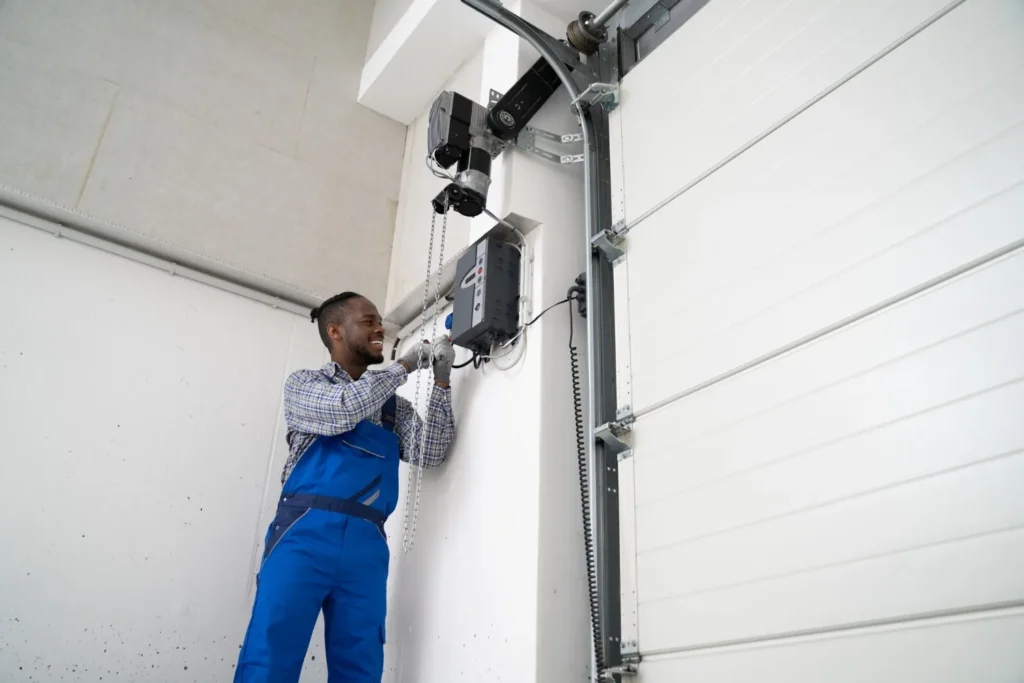
The Systematic Tune-Up Process
A professional tune-up is not a quick visual glance; it is a methodical process that follows a strict sequence to ensure safety and functionality. Technicians utilize a step-by-step approach to isolate issues and apply corrective measures immediately:
- Visual and Audible Inspection: The process begins with a complete cycle of the door. The technician listens for scraping, grinding, or squeaking sounds that indicate friction or metal-on-metal contact. They inspect the vertical and horizontal tracks for bends, debris, or misalignments that could impede movement.
- Lubrication Application: Proper lubrication is the lifeblood of a garage door system. Technicians apply a specialized non-silicone, lithium-based lubricant to the springs, rollers, hinges, and bearings. This reduces friction, lowers operating noise, and protects metal parts from corrosion caused by humidity.
- Door Balance Test: To test the balance, the technician disconnects the electric opener to operate the door manually. The door should stay in place when lifted halfway. If it slams shut or shoots upward, the spring tension is adjusted carefully to achieve neutral buoyancy.
- Safety Reversal Test: Federal safety standards require that a closing door reverses automatically if it encounters an obstruction. A solid object is placed in the door’s path to ensure the pressure sensors activate the reversal mechanism immediately upon contact.
- Photo-Eye Sensor Alignment: The infrared safety sensors located at the base of the tracks are checked for alignment. If the beam is broken or the lenses are dirty, the door will not close. Technicians clean the lenses and adjust the brackets to ensure a strong, uninterrupted signal.
- Cable and Drum Inspection: Lift cables are inspected for fraying or kinking. These cables carry the weight of the door and are prone to snapping if damaged. The drums are checked to ensure the cable winds neatly without overlapping, which can cause the door to hang unevenly.
Identifying When Routine Care Requires Repair
While maintenance extends the life of your system, there are specific scenarios where a simple tune-up is insufficient, and repair or part replacement becomes necessary. Understanding the difference between a door that needs lubrication and a door that has critical structural failures helps you make informed decisions about your property. Read our expert tips for more details.
If you observe a gap in the coils of your torsion spring, the spring has snapped. Maintenance cannot fix a broken spring; it must be replaced before the door can operate again. Similarly, if the lift cables are frayed or hanging loose, this is an emergency situation that requires immediate replacement components to prevent the door from falling.
Excessive noise that persists after lubrication often points to worn-out rollers or a failing motor gear. Steel rollers can become noisy over time as the bearings wear down. Upgrading to nylon rollers is often recommended during maintenance to significantly reduce decibel levels. If the motor hums but the chain or belt does not move, the internal gear assembly may be stripped, requiring a gear kit replacement or a new opener unit.
Cracks in the door panels themselves can compromise the structural integrity of the system. While small dents might be cosmetic, deep cracks can cause the panels to buckle under the weight of the door when it is in the overhead position. In such cases, strut reinforcement or panel replacement is required to maintain safety standards.
Regional Factors Impacting Garage Door Health
Operating a garage door in Lakeway presents specific challenges due to the local climate and environmental conditions. The humid subtropical climate, characterized by hot summers and moisture-heavy air, accelerates the degradation of certain components:
- Humidity and Rust: High humidity levels can lead to surface rust on steel components, including springs, cables, and tracks. Rust increases friction and weakens the metal, leading to earlier failure. Regular application of corrosion-inhibiting lubricants is essential in this region to create a protective barrier against moisture.
- Thermal Expansion and Contraction: Texas experiences significant temperature fluctuations. Metal parts expand in the searing summer heat and contract during cooler spells. This thermal cycling can cause hardware to loosen more frequently than in temperate climates. It can also affect the sensitivity of the opener’s force settings, causing the door to reverse falsely when it detects slightly more resistance due to expanded metal tracks.
- Storm Debris and Alignment: Spring thunderstorms often bring wind and debris. Dust and small twigs can accumulate in the lubricated tracks, creating a sludge that impedes roller movement. Strong winds can also put pressure on the door panels, occasionally shifting the tracks slightly out of plumb, which requires realignment to prevent binding.
- Power Surges: Lightning storms are common in the area. Garage door openers are sensitive electronics that can be fried by power surges. Ensuring your unit is plugged into a surge protector, or inspecting the logic board after severe weather, is a prudent step for local homeowners.
Why Professional Inspection Beats DIY Attempts
Many homeowners consider garage door maintenance a candidate for Do-It-Yourself projects, but the risks involved often outweigh the savings. The garage door system involves components under extreme tension, particularly the torsion springs. These springs store enough potential energy to lift a 300-pound door. If a spring is mishandled or released incorrectly during a DIY adjustment, it can cause severe physical injury or property damage.
Professional technicians possess the specialized tools required to safely wind and unwind springs, crimp cables, and adjust torque settings. They also have access to OEM parts that are not typically available at big-box hardware stores. For example, the springs sold in retail stores are often “one-size-fits-all,” whereas a professional will cut and install springs calibrated exactly to the weight and height of your specific door.
Furthermore, professional maintenance includes a warranty on workmanship. If a DIY adjustment leads to a door falling off the tracks, the homeowner is liable for the full cost of replacement and any collateral damage to vehicles parked inside. Good Golly Garage Doors ensures that every adjustment is backed by professional liability coverage, removing the financial risk from the homeowner.
Diagnosis is another area where professionals excel. A homeowner might identify a symptom, such as a noisy door, and attempt to fix it with grease. A technician understands that the noise is a symptom of a deeper issue, such as a failing bearing or a misaligned track. Treating the root cause rather than just the symptom prevents the issue from recurring weeks later.
Finally, time and convenience are major factors. A comprehensive tune-up takes a trained technician approximately one hour. For an untrained individual, finding the right lubricants, researching the mechanics, and attempting the work can take an entire weekend, with no guarantee of success. Professional service ensures the job is done correctly the first time, restoring your home’s security and convenience without delay.
Secure Your Home with Expert Maintenance
A garage door is a primary entry point for many homes, and its reliability is non-negotiable. Regular maintenance prevents unexpected entrapment, reduces noise pollution, and ensures that your family remains safe from mechanical failures. Whether you are dealing with a door that sticks in the humidity or an opener that has become unreliable, proactive care is the most cost-effective solution.
From tightening hardware to calibrating safety sensors, every step of the process is designed to optimize performance. Don’t wait until the door refuses to open before seeking help. Ensure your system is operating at peak efficiency with a service that prioritizes safety, speed, and technical excellence.
Contact us today to schedule your garage door maintenance and keep your system running smoothly year-round.
 All Service Areas