
Garage Door Maintenance In Bee Cave, TX
Ensure your garage door operates smoothly with our professional maintenance services in Bee Cave. Contact us now to secure your home and streamline your routine!
Eliminate Grinding Noises and Unreliable Operation
Is your garage door screeching during operation, moving unevenly on the tracks, or pausing unexpectedly before closing completely? You are likely dealing with misaligned components or worn hardware that requires immediate professional attention to prevent a total system failure. For homeowners in Bee Cave seeking to restore security and functionality, contact us today to schedule a comprehensive safety inspection and tune-up.
We understand that a malfunctioning garage door disrupts your daily routine and compromises home security. Good Golly Garage Doors provides a streamlined maintenance service designed to identify vulnerabilities and extend the lifespan of your equipment:
- Guaranteed thorough inspection of all moving parts, including springs, cables, and rollers.
- Immediate adjustment of track alignment and sensor positioning for smooth, quiet operation.
- Comprehensive safety testing to ensure auto-reverse mechanisms protect your family and vehicles.
- Proactive lubrication and hardware tightening to prevent future emergency breakdowns.
All maintenance services are performed by licensed, insured professionals and include a detailed report on the health of your garage door system.
Comprehensive Garage Door Maintenance and Safety Inspections
Regular maintenance is not just about silencing a squeaky door; it is about ensuring the heavy mechanical system operating above your car is safe. Over time, vibration loosens hardware, and the extreme Texas climate degrades lubricants. Our maintenance service is a technical audit of your entire garage door assembly. We do not simply glance at the door; we physically test and adjust every critical component to ensure it meets manufacturer specifications.
The Mechanical Tune-Up
The core of our service involves tightening and adjusting the hardware that holds the system together. A standard double-car garage door weighs hundreds of pounds. When the bolts connecting the hinges and brackets loosen due to vibration, the door sections can sag, leading to cracked panels or derailed rollers:
- Tightening Hardware: We torque all lag screws, nuts, and bolts on the hinges, roller brackets, and bearing plates to ensure structural integrity.
- Lubrication: We avoid standard WD-40, which attracts dirt. Instead, we apply specialized lithium or silicone-based sprays to rollers, hinges, and springs. This reduces friction, eliminates noise, and prevents rust accumulation.
- Track Cleaning and Alignment: We remove debris from the tracks and measure the spacing. If the tracks are too tight or too loose, the door will bind. We adjust the track brackets to ensure a perfect vertical and horizontal line.
Counterbalance System Check
The springs and cables do the heavy lifting, not the opener. If the balance is off, the opener gear will strip, leading to expensive repairs:
- Torsion Spring Tension: We test the tension of the springs. If the door feels heavy when lifted manually, we add tension. If it flies up, we release tension.
- Cable Inspection: We examine the lift cables for fraying or kinking. A snapped cable can cause the door to slam shut instantly. We identify weak points before they fail.
- Roller Assessment: We check for “wobbly” wheels on the rollers. Steel rollers without ball bearings often wear out quickly. We inspect for flat spots that cause the “thump-thump” sound during operation.
Opener and Safety Verification
Your electric opener requires distinct maintenance protocols:
- Force Settings: We adjust the force limits so the door stops if it encounters resistance, but still has enough power to close fully.
- Travel Limits: We recalibrate how far the door opens and closes. If the door hits the floor too hard, it can bend the top rail or buckle the bottom panel.
- Safety Eyes: We align the photo-eye sensors. If these are misaligned, the door will refuse to close. We clean the lenses and check the wiring for corrosion.
How Our Maintenance Process Works
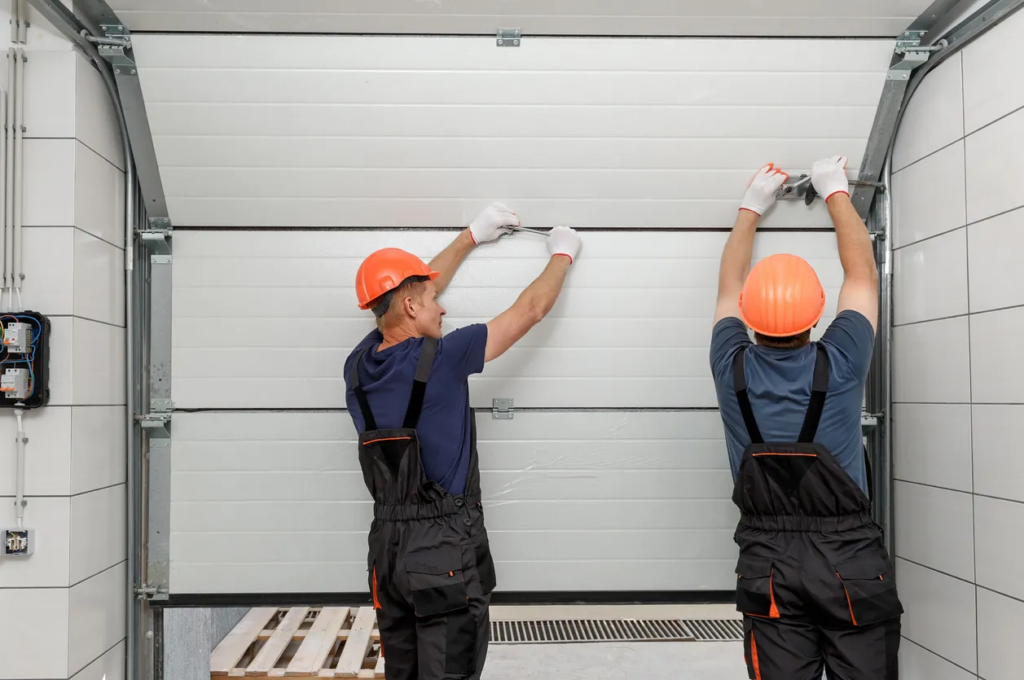
We respect your time and property. Our process is designed to be efficient, transparent, and thorough. When you book a service appointment in Bee Cave, you are booking a technical specialist, not a salesperson. We follow a strict protocol to ensure nothing is missed:
- Arrival and Initial Assessment: The technician arrives with a fully stocked truck. We begin by operating the door to listen for specific noises—grinding indicates bearing issues, while popping suggests spring problems. We visually inspect the exterior and interior of the panels for stress cracks.
- De-energizing for Safety: Before touching springs or cables, we disconnect the opener to prevent accidental activation. This ensures a safe environment for mechanical adjustments.
- Systematic Tightening and Adjustment: We work from the door bottom up, tightening hinges and inspecting rollers. We verify the condition of the bottom weather seal. If the seal is brittle or cracked, we note it, as this affects energy efficiency and pest control.
- Balance Testing: We disengage the opener and lift the door by hand. A properly balanced door should stay suspended halfway up. If it falls or rises, we adjust the springs. This is the most critical step for prolonging the life of your opener motor.
- Opener Diagnostics: We check the drive mechanism (chain, belt, or screw). For chain drives, we adjust the slack. For belt drives, we check for missing teeth. We also test the manual release handle to ensure you can open the door during a power outage.
- Final Safety Test and Report: We perform the “2×4 test,” placing a block of wood under the door to ensure it reverses upon contact. Once the service is complete, we provide a checklist of what was serviced and any recommendations for parts that are nearing the end of their lifecycle.
Deciding Between Repair, Maintenance, and Replacement
Homeowners often wait until the door stops working to call for help. However, understanding where your system stands in its lifecycle helps you make financial decisions regarding repairs versus replacement. Routine maintenance often reveals whether a door is worth saving or if it has become a money pit.
When Maintenance is Sufficient
If your door is under 10 years old and the panels are structurally sound, a tune-up is usually all that is required:
- Minor Noise: Squeaking is usually just a lack of lubrication.
- Sluggish Movement: This can often be resolved by adjusting spring tension and opener force settings.
- Cosmetic Surface Rust: Small spots of rust can be sanded and sealed during maintenance or by the homeowner.
When Repair is Necessary
Specific failures require part replacements beyond a standard tune-up:
- Broken Springs: A door with a snapped spring cannot be “tuned up.” The spring must be replaced.
- Frayed Cables: These are immediate safety hazards and require replacement, not just adjustment.
- Stripped Gears: If the motor hums but the chain doesn’t move, the internal gears are stripped and need replacement.
When Replacement is the Better Investment
Sometimes, pouring money into an old system is not cost-effective:
- Severe Impact Damage: If a car has hit the door and bent two or more sections, replacement is often cheaper than sourcing matching panels for an older model.
- Rotted Wood: For custom wood doors, extensive rot or termite damage compromises the structural weight. Repairing this often alters the balance permanently.
- Lack of Safety Features: If your opener was manufactured before 1993, it likely lacks mandated safety sensors. We recommend replacing these units to comply with current safety codes.
- Energy Efficiency Needs: If you use your garage as a workshop, an older, uninsulated sheet metal door allows massive heat transfer. Upgrading to a modern, insulated door reduces energy bills.
Local Regulations and Seasonal Considerations
Operating a garage door in Bee Cave presents unique challenges due to local building standards and the specific Texas climate. Ignoring these factors leads to accelerated wear and potential code violations.
Battling the Texas Climate
The weather directly impacts the metallurgy and chemistry of your garage door system:
- Heat and Lubrication: High temperatures cause standard grease to liquefy and drip off the track, leaving metal components unprotected. We use high-viscosity lubricants designed to withstand high heat without running.
- Spring Expansion: Steel expands and contracts with temperature shifts. In a garage that isn’t climate-controlled, these fluctuations can alter the tension of your springs, affecting how the door balances.
- Humidity and Swelling: For homes with wood overlay doors, humidity causes the wood to absorb moisture and swell. This adds significant weight to the door. If the springs aren’t adjusted to account for this seasonal weight gain, the opener motor will burn out trying to lift the extra load.
- Storm Readiness: Spring thunderstorms bring high winds. We inspect the reinforcing struts on your door panels to ensure they are securely fastened. These struts prevent the door from bowing or collapsing during pressure changes caused by severe weather.
Local Standards and HOAs
Bee Cave and the surrounding Hill Country areas often have strict Homeowners Association (HOA) guidelines regarding exterior appearance:
- Aesthetic Maintenance: Faded or peeling doors can trigger HOA violations. While we focus on mechanical maintenance, we can advise on panel integrity. If a panel is dented or rusting, it affects the curb appeal and value of the home.
- Noise Ordinances: In quiet residential neighborhoods, a noisy chain-drive opener can be a nuisance. Regular maintenance keeps decibel levels down, but we can also recommend conversion kits to quieter nylon rollers or belt-drive systems if noise becomes a compliance issue.
Why Technical Expertise Matters
Garage door maintenance is often mistakenly viewed as a DIY project. However, the torsion spring system is under extreme tension and can cause severe injury if mishandled. Professional technicians possess the specific tools—such as winding bars and tension gauges—necessary to safely manipulate these components.
At Good Golly Garage Doors, we prioritize technical accuracy over speed. We do not rush through the inspection. We look for the root causes of wear, such as a slightly shifting foundation affecting the door frame or a header bracket that wasn’t installed into a stud. Identifying these underlying issues saves you from catastrophic failure down the road.
Proactive vs. Reactive Care
The goal of our service is to convert your garage door from a worry into a reliable utility. Reactive repair is expensive and happens at the most inconvenient times—usually when you are trying to leave for work. Proactive maintenance is scheduled, predictable, and significantly cheaper than an emergency service call:
- Extended Lifespan: Regular tension adjustments prevent the opener from overworking, adding years to the motor’s life.
- Improved Security: A door that closes firmly and locks securely is a deterrent to intruders. We check the slide locks and the opener’s locking mechanism to ensure your home is sealed.
- Value Retention: A well-maintained door adds to the resale value of the home. Documentation of regular professional maintenance is a selling point for potential buyers.
We focus on delivering results that you can hear and feel. The door will travel quietly. The opener will lift without straining. The sensors will react instantly to obstructions. This is the standard of operation we restore.
Restore Smooth, Quiet Performance: Schedule Your Maintenance Today
Bring your system back to safe, reliable operation with expert service from Good Golly Garage Doors. Our precision tune-ups eliminate grinding noises, correct misalignment, and protect your home from avoidable breakdowns. For seamless performance and long-term peace of mind, contact our team today.
 All Service Areas