

Garage Door Installation in Athens, AL
Facing issues with your garage door in Athens? Ensure security and energy efficiency with our professional installation services. Contact us for a seamless experience!
Tired of a Stuck or Noisy Garage Door?
Struggling with a garage door that just won’t cooperate? You are not alone, many homeowners in Athens face this frustrating issue when their door shudders, screeches, or refuses to open entirely. Whether your current system has suffered structural damage from a vehicle impact or the mechanical components have simply worn out over decades of use, waiting to address the problem often leads to security risks and higher energy bills. Contact us or inquire about our financing options to plan your installation.
- Enjoy a seamlessly installed new garage door typically completed within a standard installation timeframe.
- Select from top-rated local brands recognized for their quality and durability.
- Experience peace of mind with manufacturer warranties, typically around one year, and expert local support.
Good Golly Garage Doors provides certified and insured installations with manufacturer-backed warranties and financing options available to ensure your home remains secure and accessible.
Comprehensive Installation Scope and Expectations
When you commit to a garage door installation, you are purchasing more than just the panels and the hardware, you are investing in the primary entry point of your home. A professional installation ensures that every component, from the high-tension springs to the sensitive photo-eye sensors, functions in perfect unison. In Athens, where weather conditions can fluctuate, ensuring a tight seal and proper insulation is critical for maintaining energy efficiency within the garage and the adjacent rooms.
The scope of a standard installation involves several distinct phases. It begins with the safe removal and disposal of the existing door and hardware. Attempting to remove torsion springs without professional tools is dangerous, so this step is handled with extreme caution. Following removal, the rough opening is inspected to ensure the framing is square and capable of supporting the new track system. If the framing is rotted or uneven, it must be addressed before the new garage door is mounted to prevent future operational issues.
You can expect the following inclusions in a standard service package:
- Site Inspection and Measurement: Precise measurements of the width, height, and clearance, headroom and backroom, are taken to ensure the selected door fits perfectly without requiring excessive modification to the structure.
- Hardware Installation: This includes the vertical and horizontal tracks, torsion or extension springs, cable drums, and rollers. High-quality steel tracks are essential for preventing the door from derailing.
- Panel Assembly: Modern doors often come in sections. These panels are stacked and hinged together, often with weather-stripping between sections to prevent air infiltration.
- Opener Connectivity: If a new opener is part of the package, it is mounted, wired, and programmed. If utilizing an existing opener, the installer ensures it is compatible with the weight and balance of the new door.
- Perimeter Weather Seal: Vinyl stops are nailed to the exterior jambs to seal the gaps against wind, rain, and debris.
Most residential installations are typically completed within a standard workday timeframe, though some installations may require a follow-up visit due to ordered parts or site conditions. The goal is to leave you with a fully functional, quiet, and secure door once the installation is completed.
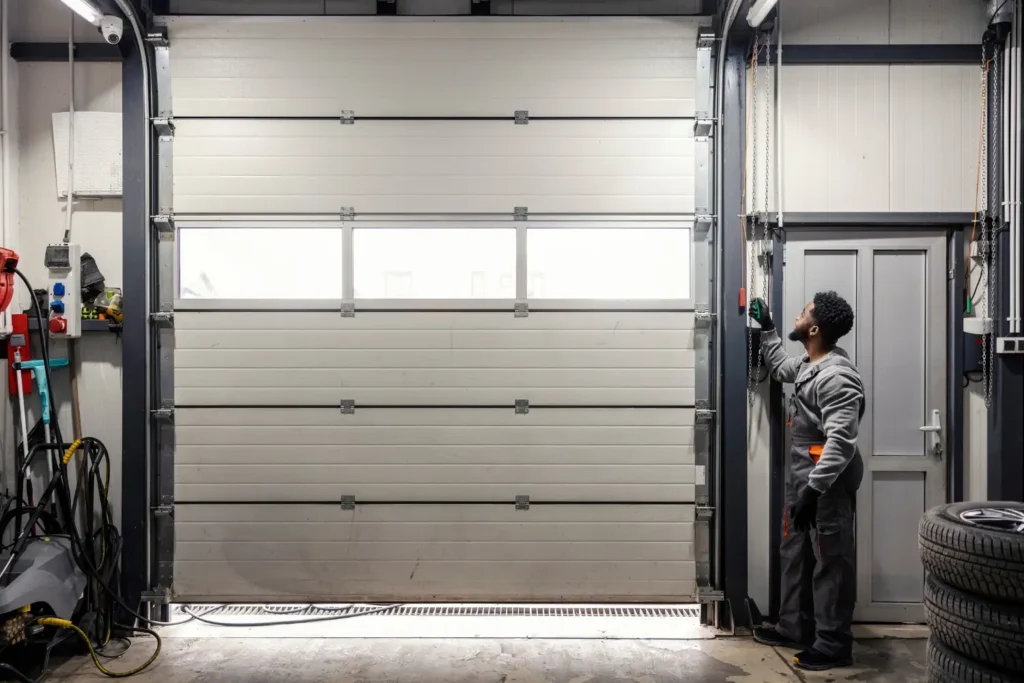
How the Installation Process Works
Understanding the mechanics of the installation process helps homeowners appreciate the precision required. A garage door is a heavy moving wall, and its safe operation relies on physics and geometry. The process is systematic, ensuring that no step is overlooked, which could compromise the safety or longevity of the system.
- Preparation and Staging: The workspace is cleared to allow safe movement for the installers. All parts are unboxed and inspected for shipping damage. The installer lays out the hardware to verify that all lag screws, track brackets, and hinges are present.
- Assembling the Vertical Track: The vertical tracks are attached to the door jambs. This is a critical step. If the tracks are not perfectly plumb, vertically straight, and parallel, the door will bind as it moves. Installers use levels to ensure accuracy before tightening the lag screws into the framing.
- Stacking the Panels: The bottom panel is set into the opening first. It must be perfectly level. If the floor is uneven, the installer may need to scribe and trim the bottom weather seal or shim the panel to ensure it sits flat. Once the first panel is level, the remaining panels are stacked on top, connected by hinges and roller carriers.
- Horizontal Track and Spring Assembly: Once the vertical sections are done, the horizontal tracks are installed and suspended from the ceiling. This requires securely locating ceiling joists. The spring system, torsion or extension, is then mounted to the header above the door. Torsion springs are wound to a specific tension calculated based on the door’s weight. This balance allows the door to be lifted manually with minimal effort.
- Final Adjustments and Safety Checks: The installer manually operates the door to check for binding or noise. The spring tension is fine-tuned so the door stays in the open position without drifting down and does not rise uncontrolled. Finally, the opener is connected, and safety reverse tests are conducted to ensure the door reverses when it hits an obstruction.
Deciding When to Replace vs. Repair
Homeowners often struggle with the decision of whether to invest in a brand-new system or continue repairing an aging door. While repairs are often cost-effective for minor issues like a broken spring or a single dented panel, there is a tipping point where replacement becomes the more logical financial and functional choice.
Consider replacement if the door is showing signs of structural failure. Sagging sections, where the door bows in the middle when open, indicate that the steel or wood has lost its integrity. This cannot be repaired and presents a significant safety concern, as the door could collapse.
Evaluate the following factors when making your decision:
- Age of the System: If the door is over 15 to 20 years old, the moving parts are likely nearing the end of their fatigue life. Replacing individual components one by one often costs more in labor over time than installing a new, warrantied system.
- Energy Efficiency Needs: Older wooden or uninsulated steel doors offer little thermal protection. If you use your garage as a workshop or have a bedroom above it, upgrading to a modern sandwich-style door with polyurethane insulation can help lower heating and cooling costs.
- Safety Features: Older doors may lack modern safety features, such as pinch-resistant panels, which prevent fingers from getting caught between sections, or updated auto-reverse sensors. If your current system presents a safety concern, replacement should be considered.
- Curb Appeal and Property Value: A garage door can take up to 40 percent of a home’s facade. If the door is rusted, faded, or dented, it affects the appearance of the entire property. A new door can improve curb appeal.
- Recurring Noise and Vibration: If the door rattles, shakes, and screeches despite lubrication and tune-ups, the track system or rollers may be worn beyond adjustment. A new installation can provide quieter operation.
Differentiators and Quality Assurance
The market offers many options, but the quality of the installation is as important as the quality of the product. A premium door installed improperly may fail sooner than a budget door installed correctly. Professional installers focus on the alignment and geometry of the track system to ensure smooth operation.
Good Golly Garage Doors prioritizes technical standards that distinguish a professional installation from a basic one. This includes the use of solid steel drive shafts instead of hollow tubes, which helps prevent bowing under spring tension. Installers also utilize heavy-duty 14-gauge hardware for hinges and brackets, which resists bending and cracking better than lighter-gauge alternatives.
- Counterbalancing Precision: The life of the electric opener is closely tied to the balance of the door. If the springs are not adjusted to the correct specification for the door’s weight, opener components can wear prematurely. Professionals use proper winding bars and measurement techniques to achieve correct balance.
- Safety Sensor Alignment: Misaligned sensors are a common cause of operational issues. Installers securely mount and align sensors to help prevent misalignment due to vibration or incidental contact.
- Debris Management: A professional team removes packaging, old hardware, and the previous door materials at the conclusion of the installation.
Investing in a proper installation helps protect your vehicle, your family, and your home’s value. A professionally installed garage door supports long-term reliability and performance. Contact Good Golly Garage Doors to request an estimate and discuss installation options.
Secure Your Home with a New Garage Door
Are you dealing with an outdated or broken garage door? Don’t let it affect your security or your home’s curb appeal. At Good Golly Garage Doors, we provide professional garage door installations completed according to standard installation timelines. Whether you’re replacing a damaged door or upgrading to a more energy-efficient model, we offer quality doors and professional installation designed for durability and safety. Reach out to schedule your installation consultation and ask about available financing options.
Proudly Serving Decatur, AL, and Surrounding Areas
We provide the best garage door services you can find across Decatur, AL. Whether it’s the impact of Decatur’s heat and sudden storms on garage door components, we ensure our solutions are tailored to your needs. Wherever you are, Good Golly Garage Doors is ready to deliver.
Call (256) 686-4010 All Service Areas