
Garage Door Inspection in Spring Valley Lake, CA
Experiencing garage door problems in Spring Valley Lake? Contact Good Golly Garage Doors for fast, reliable repair services and comprehensive safety inspections. Secure your home today!
Fix Your Garage Door Issues Quickly and Reliably
A thorough garage door inspection is essential to ensure your system is running safely and efficiently. At Good Golly Garage Doors, we offer expert garage door inspection in Spring Valley Lake, CA, designed to identify any potential issues before they become major problems. Our skilled technicians will check every component, from springs and cables to tracks and safety features, ensuring your door is balanced, secure, and functioning smoothly. Regular inspections can help extend the life of your garage door and prevent costly repairs down the road. Call us today to schedule your comprehensive garage door inspection and keep your system in top shape!
What A Comprehensive Safety Inspection Includes
A professional garage door inspection is not merely a glance at the tracks; it is a forensic evaluation of a heavy, complex mechanical system. Most homeowners in Spring Valley Lake only notice their door when it stops working, but the components responsible for lifting and lowering the door wear down gradually. A comprehensive inspection service covers the structural integrity, mechanical efficiency, and safety compliance of the entire system.
The evaluation begins with the hardware that bears the weight of the door. Technicians examine the hinges, brackets, and fasteners. Vibration caused by daily operation often loosens these components over time. If a hinge is loose, the door sections can sag, leading to misalignment and increased friction. The inspection verifies that every bolt is torqued to the manufacturer’s specifications to ensure rigid structural support.
Next, the focus shifts to the counterbalance system, which includes the springs and cables. This is the most critical and dangerous part of the assembly. Inspectors measure the tension in torsion or extension springs to ensure they are balanced correctly. A door that is heavy to lift manually indicates that the springs have lost tension or are near the end of their cycle life. Cables are checked for fraying, especially near the bottom brackets, where moisture and debris accumulate. Even a single broken strand in a cable warrants immediate attention to prevent the door from slamming shut unexpectedly.
The track and roller assembly is also scrutinized. Technicians look for dents, rust, or misalignment in the vertical and horizontal tracks. The rollers are checked for flat spots and bearing wear. Finally, the electronic opener and safety systems undergo a rigorous test. This includes testing the motor’s gear drive, the trolley carriage, and the belt or chain tension. The limit switches, which tell the door where to stop, are calibrated to prevent the door from hitting the ground too hard or not opening fully.
How The System Evaluation Works
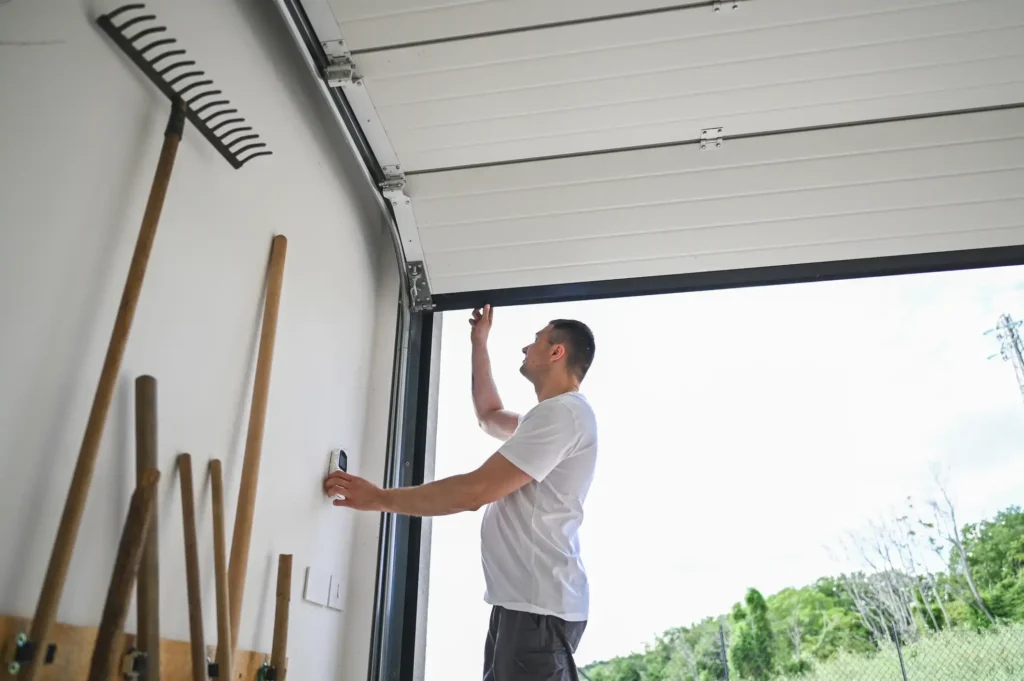
The inspection process follows a logical, safety-focused sequence designed to isolate variables and pinpoint specific mechanical failures. By adhering to a strict protocol, technicians ensure that no component is overlooked.
- First, the technician performs a visual assessment of the door’s exterior and interior. This initial walkthrough identifies obvious signs of distress, such as cracked panels, rusted bottom seals, or gaps in the weatherstripping that allow pests and dust to enter the garage.
- Next, the emergency release cord is engaged to disconnect the opener from the door. This allows the technician to operate the door manually. This step is crucial because it isolates the door’s mechanics from the motor. The technician lifts the door to halfway and releases it. A properly balanced door will stay in place; if it slams down or shoots up, the spring tension requires adjustment.
- Following the balance test, the technician reconnects the opener to test the force settings. The opener is cycled up and down to listen for grinding noises, hums, or hesitation. Excessive noise usually points to worn internal gears or a lack of lubrication on the screw or chain drive.
- Then, the safety reverse mechanisms are tested. The technician places a standard 2-inch block on the floor under the center of the door. When the door closes and makes contact with the block, it must automatically reverse. If it does not, the down-force limit is set too high, posing a crushing hazard.
- The photo-eye sensors are also checked for alignment. These sensors project an invisible beam across the opening. The technician interrupts this beam while the door is closing to ensure the door stops and reverses immediately. Wiring leading to these sensors is inspected for cracks or loose connections, which are common causes of intermittent phantom reversals.
- Finally, the technician evaluates the perimeter seal and bottom weather seal. The inspection confirms whether the seal is providing an adequate barrier against thermal transfer and debris.
Deciding Between Targeted Repairs and Full Replacement
An inspection provides the data needed to make an informed financial decision. Not every noise requires a new system, but pouring money into a failing system is rarely cost-effective. The decision to repair or replace depends on the age of the system, the extent of the damage, and the availability of parts.
- Component Fatigue vs. System Failure: If a single spring breaks on a relatively new door, a targeted repair is the logical choice. However, if the door is over 10-15 years old and suffers from rusted tracks, frayed cables, and a failing motor simultaneously, the cumulative cost of individual repairs often exceeds the price of a modern, warranty-backed replacement.
- Panel Integrity: Cosmetic dents can often be ignored or repaired with a strut for reinforcement. However, if the door sections are cracked, sagging, or showing signs of delamination (separation of the door layers), structural integrity is compromised. A sagging door will bind in the tracks, destroying the rollers and burning out the opener motor. In such cases, section or full door replacement is necessary.
- Opener Technology: Older openers that lack modern safety features, such as rolling code technology or battery backup systems, are candidates for replacement regardless of their mechanical status. If the opener is old and lacks photo-eye sensors, safety standards dictate an upgrade to a compliant system.
- R-Value and Efficiency: If the current door is uninsulated steel and the garage gets unbearably hot, no amount of repair will fix the thermal inefficiency. Replacing the system with a sandwich-style door (steel-insulation-steel) with a high R-value is a functional upgrade that improves the comfort of the home, particularly for garages attached to living spaces.
The Value of Professional Diagnostics
While DIY maintenance is popular, the high-tension components of a garage door system present significant physical risks to untrained individuals. Torsion springs, in particular, are under immense pressure and can cause severe injury if mishandled. A professional inspection by Good Golly Garage Doors removes the guesswork and the danger from the equation.
Professional diagnostics go beyond identifying what is broken; they identify why it broke. A snapped cable is often a symptom of a seized bearing or a skewed track. Simply replacing the cable without addressing the root cause guarantees the problem will recur. Specialized tools, such as tension gauges and force meters, allow technicians to tune the system to factory tolerances that are impossible to achieve by eye/hand estimation.
Furthermore, professional inspections provide documentation of the door’s condition. This is often valuable for real estate transactions or insurance purposes. Knowing the exact state of the counterbalance system, the cycle life of the springs, and the safety compliance of the opener allows homeowners to budget for future maintenance rather than being blindsided by an emergency breakdown. The best part? With the Good Golly Gold Plan, you get regular professional inspections that include this detailed documentation, ensuring that you’re always in the know about your garage door’s health. We’ll help you stay ahead of any potential issues, saving you from expensive repairs down the road.
Ensuring Long-Term Performance and Safety
Ignoring the warning signs of a struggling garage door usually leads to inconvenient breakdowns and expensive emergency repairs. A proactive approach involves regular professional evaluations to ensure every component, from the smallest hinge to the main torsion spring, is functioning in harmony.
By addressing wear and tear early, you extend the lifespan of the entire system and ensure the safety of your family and property. Whether you need a routine seasonal check or a deep diagnostic on an aging system, expert assistance is the key to reliable operation. Secure your home and restore smooth operation today. Contact us today!
Proudly Serving Victorville and Surrounding Areas
We provide the best garage door services you can find across Victorville, CA. Wherever you are, Good Golly Garage Doors is ready to deliver. Let’s get your garage door in Victorville, CA or beyond back in top shape with service that’s fast, friendly, and built to last.
Call (760) 979-0605 All Service Areas