
Garage Door Inspection In Phoenix, AZ
Ensure your garage door operates smoothly with our Phoenix-based inspection and repair services. Schedule a safety check today to avoid costly repairs.
Is Your Garage Door Acting Unpredictably or Making Strange Noises?
Experiencing grinding sounds, hesitation during operation, or a door that refuses to close completely creates safety concerns for your home. Our comprehensive inspection services pinpoint the root cause of the malfunction to ensure reliable, smooth operation before a minor issue becomes an expensive emergency. Contact us today to schedule a detailed safety inspection and diagnostic check.
- Comprehensive 25-point safety inspection report with straightforward repair recommendations.
- Same-day service availability to address urgent security or functionality concerns.
- Easy online booking system to secure an appointment that fits your schedule.
- Fully licensed and insured technicians ensure code compliance and complete peace of mind.
What Is Included in a Comprehensive System Evaluation
A garage door is the largest moving object in your home, comprised of numerous hardware components under high tension. A professional evaluation goes far beyond a quick visual glance. It involves a systematic check of every mechanical and electrical part to verify structural integrity and operational safety.
When Good Golly Garage Doors performs an inspection, we assess the entire counterbalance system. This is the critical mechanism that lifts the weight of the door. We check torsion springs for stress fractures, rust, or loss of tension that occurs over time. If your system uses extension springs, we verify that safety cables are installed and intact to prevent injury in case of spring failure.
The track and roller assembly requires precise alignment to function correctly. We inspect the vertical and horizontal tracks for bends, gaps, or misalignment that could cause the door to derail. We also examine every roller. Nylon rollers can develop flat spots, while steel rollers may suffer from bearing failure, both of which contribute to noisy and vibrating operation.
Hardware tightness is another focal point. The vibration caused by daily operation loosens bolts and screws over time. We check all hinges, brackets, and fasteners to ensure the door panels are securely held together. Loose hinges can crack panel sections, leading to costly cosmetic and structural damage.
We also rigorously test the opener system itself. This includes checking the internal gears for stripping, inspecting the drive belt or chain for slack, and testing the logic board for consistent signal reception. The capacitor, which provides the starting torque for the motor, is tested to ensure it holds the correct charge.
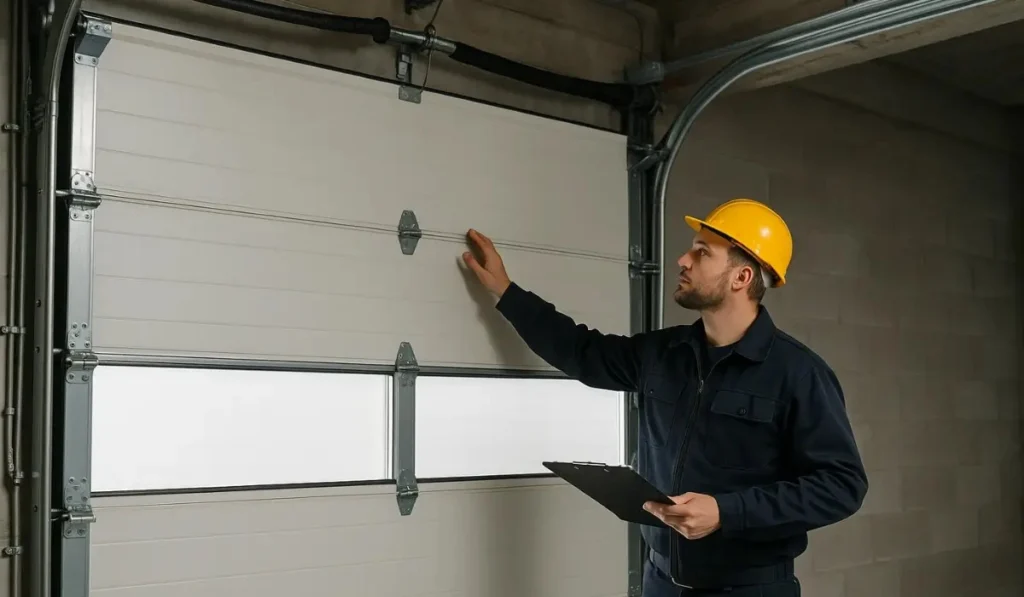
The Inspection and Diagnostic Process
Understanding the workflow of a professional inspection helps you prepare for the service. We utilize a structured approach to ensure no component is overlooked.
- Visual Assessment: The technician begins with the door in the closed position to inspect cables for fraying, springs for gaps, and panels for stress cracks. This static check identifies visible wear and tear that might make dynamic testing dangerous.
- Manual Balance Test: The technician disengages the automatic opener to operate the door manually. A properly balanced door should lift easily with one hand and stay in place when left halfway open. If the door slams shut or shoots up, the spring tension is incorrect and requires adjustment.
- Safety Reverse Testing: This is a critical safety step. We place a solid object in the door’s path to ensure it reverses quickly upon contact. We also test the photo-eye sensors to verify that breaking the infrared beam causes the door to reverse or stop closing.
- Force Setting Analysis: Modern openers have force sensitivity settings. We test these to ensure the door stops if it encounters resistance while opening or closing, protecting the motor from burning out and preventing damage to the door.
- Lubrication and Minor Adjustments: As part of the process, we apply specific lubricants to springs, rollers, and hinges. We do not use standard WD-40, which attracts dust; instead, we use silicone-based or lithium sprays suited for the local climate.
- Findings and Recommendations: Finally, the technician compiles a report detailing the condition of each component. This includes repair needs, potential future issues, and a clear explanation of options.
When to Repair vs. When to Replace
An inspection often forces a decision between fixing the current system or investing in a new one. This decision relies on the age of the equipment, the extent of the damage, and long-term cost efficiency.
Repair is generally the correct path when the issue is isolated. If a single spring has snapped but the door panels and opener are in good condition, replacing the springs restores the system. Similarly, replacing worn rollers or a frayed cable is a standard maintenance task that extends the life of the door. If the opener needs a new gear kit or capacitor, these are cost-effective fixes compared to a full system replacement.
However, replacement becomes the logical choice when the structural integrity of the door is compromised. If the door sections are sagging, cracked, or rusted through, no amount of hardware repair will make the door safe or seal it properly against the elements. A sagging door puts uneven stress on the rollers and tracks, causing recurring failures.
Cost is a major factor. If the estimated cost of repairs approaches 50% of the cost of a new system, replacement is usually recommended. Old openers that lack modern safety features, specifically photo-eye sensors, should be replaced to meet current safety codes. Additionally, if you are frequently paying for service calls on an opener manufactured more than 15 years ago, upgrading to a modern system offers better reliability, security features, and smartphone connectivity.
Differentiators and Service Standards
Selecting a service provider for inspection requires looking for technical expertise and adherence to safety standards. The goal of an inspection is not just to find a quick fix, but to ensure the heavy machinery operating above your car and family is secure.
We prioritize a thorough educational approach. Rather than simply handing over a bill, we walk you through the mechanics of your specific door system. You will understand exactly why a part failed; whether it was due to cycle life exhaustion, environmental stress, or improper initial installation. This transparency ensures that you can make informed decisions about maintenance budgets.
Our technicians arrive with vehicle having common parts. This means that if the inspection reveals a critical safety hazard, such as a frayed cable hanging by a thread or a cracked hinge, we can usually resolve the issue. We do not believe in leaving a system in a dangerous state while waiting for parts sourcing.
We also focus on code compliance and safety updates. Garage door safety regulations have changed significantly over the last two decades. We check that your system complies with UL 325 standards, ensuring that reversing mechanisms and safety eyes are functioning correctly. This is particularly important for homeowners looking to sell, as non-compliant garage doors can be flagged during real estate inspections.
Finally, we offer clear, written estimates before any work begins. The inspection fee covers the diagnosis; any further repair work is presented as a separate, optional line item. There is no pressure to proceed with repairs promptly, though we will clearly mark any conditions that constitute a safety hazard requiring lockout.
</section>
<section>
Securing Your Home Access Point
A garage door is often the primary entrance to the home, used more frequently than the front door. Ensuring it opens when you need to leave for work and closes securely at night is essential for your daily routine and home security. Regular inspections detect the silent wear that leads to sudden, inconvenient failures.
By identifying worn bearings, stretching cables, and fatigued springs early, you avoid the frustration of a car trapped in the garage on a Monday morning. Proactive maintenance also extends the total lifespan of the system, delaying the significant expense of full replacement.
Whether you are hearing a new noise or simply haven’t had the system checked in over a year, a professional assessment provides the data you need to maintain a safe home.
For reliable diagnostics and a clear path to a fully functional garage door, rely on Good Golly Garage Doors to deliver the expertise you need; contact us today.
Secure your appointment now to ensure your garage door system is safe, balanced, and ready for any season.
Proudly Serving Phoenix, AZ, and Surrounding Areas
We provide the best garage door services you can find across Phoenix, AZ. Whether it’s the impact of Phoenix’s heat and sudden storms on garage door components, we ensure our solutions are tailored to your needs. Wherever you are, Good Golly Garage Doors is ready to deliver.
Call (602) 399-7054 All Service Areas