

Garage Door Inspection in Peoria, AZ
Secure your Peoria home with a professional garage door inspection. Immediate bookings and transparent pricing. Call us today to ensure your door's safety and functionality!
Stuck or Noisy Garage Door? Professional Inspection Solutions
Experiencing unexpected breakdowns or strange noises from your garage door system can disrupt your daily routine and compromise the security of your home. Ensure your property’s safety and functionality with a professional inspection that identifies underlying issues before they become costly emergencies. For scheduling or to discuss financing options, contact us today or click here to call.
Good Golly Garage Doors provides thorough assessments designed to pinpoint mechanical failures and safety hazards. Residents in Peoria, AZ, rely on accurate diagnostics to maintain the largest moving object in their homes. We deliver:
- Booking availability so you can get inspected today.
- Expert solutions ranging from minor tune-ups to detailed part integrity checks.
Why Regular Garage Door Inspections Are Essential
A garage door system operates under immense tension and relies on a complex coordination of moving parts. While the door may appear to function normally, internal components often degrade silently over time. Ignoring the early signs of wear, such as grinding noises, slow operation, or jerky movements, can lead to catastrophic failure. A professional inspection is not merely a cursory glance at the hardware; it is a rigorous safety audit designed to protect your family and your property.
Safety is the primary driver for scheduling a maintenance check. A standard garage door weighs several hundred pounds. If a torsion spring snaps or a cable frays to the point of breaking, the door can crash down with lethal force. Regular evaluation ensures that these critical safety features function correctly when they are needed most.
Preventative maintenance is significantly more cost-effective than repairs. When a single component, such as a roller or a hinge, begins to fail, it places additional stress on the rest of the system. For example, a door with worn rollers will drag in the tracks, forcing the opener motor to work harder than intended. This excess strain can burn out the motor’s logic board or strip its gears, turning a cheap roller replacement into an expensive opener installation. Identifying these issues early allows for minor adjustments that extend the lifespan of the entire system.
Security is another vital aspect of an inspection. Your garage door is often the primary entrance to your home. A door that does not close flush with the ground or has a compromised locking mechanism is an invitation to intruders. During an inspection, technicians verify that the door seals tightly against the floor and that the opener’s locking protocols are engaged, ensuring your home remains secure against unauthorized access.
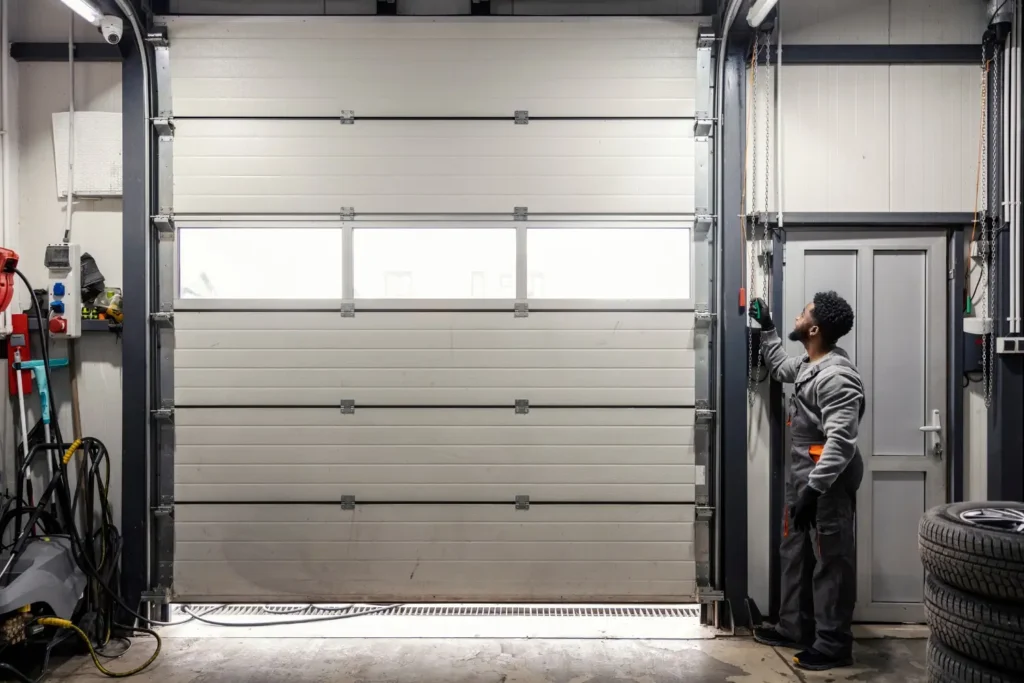
Comprehensive Inspections: What We Check and Why
Our inspection protocol covers every mechanical and electrical component of your overhead door system. We do not skip steps or make assumptions about the condition of your hardware. Each part plays a specific role in the smooth operation of the door, and failure in one area often indicates trouble in another.
Torsion and Extension Springs
The springs provide the counterbalance necessary to lift the heavy door. They are under extreme tension and have a limited cycle life.
- We check for gaps or separation in the spring coils, which indicate impending failure.
- We measure the tension balance to ensure the door is not too heavy for the opener.
- We inspect anchor brackets for signs of fatigue or movement.
Lifting Cables and Drums
Cables work in tandem with springs to lift the door. If a cable snaps, the door can fall unevenly or jam in the tracks.
- We look for fraying, kinks, or rust on the cables.
- We verify that cables are winding correctly onto the drums without overlapping.
- We check the bottom brackets where cables attach, as these are prone to rust and corrosion.
Rollers, Hinges, and Hardware
These components facilitate the movement of the door panels as they travel along the tracks.
- We inspect rollers for worn bearings or flat spots that cause vibration.
- We tighten all hinges and hardware, as vibration from daily use often loosens bolts.
- We check for cracks in the hinges which can cause panels to sag.
Tracks and Alignment
The tracks guide the door’s path. Misalignment here causes friction and noise.
- We measure the distance between tracks to ensure they are parallel.
- We inspect for dents, bends, or debris that could obstruct roller movement.
- We verify that the tracks are securely mounted to the garage walls.
Opener and Logic Board
The motor drives the operation, but it relies on electronic logic to function safely.
- We test the gear assembly for wear, specifically looking for plastic shavings that indicate stripping.
- We check the drive chain or belt for proper tension.
- We inspect the logic board for burn marks or signs of electrical surges.
Safety Sensors and Reversal Features
This is the most critical safety check.
- We test the photo-eye sensors to ensure they stop the door when the beam is broken.
- We perform a force test to verify the door reverses upon hitting a physical obstruction.
- We check sensor alignment and wiring for corrosion or damage.
Midway through the lifespan of a garage door, usually around the seven to ten-year mark, components begin to show significant wear. Good Golly Garage Doors recommends an annual inspection to catch these issues before they result in a trapped vehicle or a stuck door.
From Evaluation to Solution: Our Inspection Process
We utilize a systematic approach to inspections that moves from visual assessment to operational testing. This ensures that no potential issue is overlooked and that the homeowner receives a clear picture of the system’s health.
Visual Assessment and Hardware Tightening
The process begins with the door in the closed position. The technician visually inspects the exterior and interior panels for damage, warping, or rust. Inside, every bolt and screw is checked. The vibration of a garage door naturally loosens hardware over time. We mechanically tighten every nut and bolt on the door and track system to ensure structural rigidity. This step alone often eliminates rattling noises.
Balance and Manual Operation Test
To test the springs, the technician disengages the automatic opener and operates the door manually. A properly balanced door should be easy to lift with one hand and should stay in place when lifted halfway. If the door slams shut or shoots up, the spring tension is incorrect. This test isolates the mechanical door from the electric opener, allowing us to determine if the springs are doing their job effectively.
Safety Mechanism Testing
Once the mechanical balance is confirmed, we re-engage the opener and test the safety features. We place an object in the path of the closing door to ensure the sensors detect it and reverse the motor. We also physically test the pressure sensitivity of the door to ensure it reverses upon contact with an object that might not break the sensor beam, such as a car bumper or a person.
Lubrication and Adjustment
Friction is the enemy of garage door hardware. We apply professional-grade lithium or silicone-based lubricants to rollers, hinges, and springs. We avoid standard WD-40, which attracts dust and can gum up the works. This step reduces noise and protects metal parts from moisture and wear. Limits and force settings on the opener are adjusted to ensure the door opens fully and closes tightly without excessive force.
Reporting and Recommendations
After the physical work is complete, we provide a detailed status report. This document outlines the condition of critical parts, categorizes them by urgency, and provides clear options for any necessary repairs. You receive a breakdown of what is working well, what needs monitoring, and what requires attention.
Deciding Between Repair and Full Replacement
Following an inspection, homeowners often face the decision of whether to invest in repairs or opt for a complete system replacement. This decision relies on several factors, including the age of the system, the cost of repairs, and the availability of parts.
The 50% Rule
A general guideline in the industry is the 50% rule. If the cost of the necessary repairs approaches or exceeds 50% of the cost of a new garage door or opener, replacement is often the more financially sound choice. Investing heavily in an old system may solve the problem, but other aging parts are likely to fail soon after.
Age of the Equipment
If your opener is older than 15 years and experiencing motor failure, sourcing parts may be difficult or impossible. Newer systems also come with updated rolling code technology and battery backups that older systems lack. If the door itself is wood and has begun to rot or warp, or if it is a non-insulated metal door that has rusted through, replacement offers better energy efficiency and curb appeal.
Safety Standards
Older garage door openers may not have modern safety sensors (photo-eyes). If your system lacks these mandated safety features, we strongly recommend replacement rather than repair to ensure compliance with current safety codes and to reduce liability.
Frequency of Breakdowns
If you find yourself calling for repairs multiple times a year, the system has likely reached the end of its useful life. The cumulative cost of frequent service calls often outweighs the one-time investment in a new, reliable system.
Trusted by Homeowners: Real Reviews, Real Results
Choosing a service provider for garage door inspection requires looking at technical expertise and operational transparency. A qualified inspection service focuses on delivering data, not just a sales pitch. The goal is to provide homeowners with the information required to make educated decisions about their property.
We prioritize clear communication regarding timelines and scope of work. The focus remains on thorough diagnostics identifying the root cause of symptoms rather than applying temporary patches.
Professional inspections differ from DIY checks because of the training involved. Identifying a hairline crack in a torsion spring or a voltage drop in a circuit board requires specialized tools and experience. Liability is also a major factor; professional services carry the necessary insurance and licenses to perform dangerous work involving high-tension springs and electrical systems safely.
When evaluating service providers, consider the depth of the inspection report provided. A checklist that covers 20+ points of inspection ensures that no stone is left unturned. This level of detail provides a roadmap for future maintenance, allowing homeowners to budget for eventual replacements rather than being blindsided by emergencies.
Call Now
Maintaining a functional garage door is vital for the security and convenience of your home. Whether you are hearing grinding noises, or seeing slow operation, a professional assessment is the first step toward a solution.
Don’t wait for a total system failure to address your garage door needs. Good Golly Garage Doors is ready to provide the comprehensive inspection required to keep your door running smoothly. Choosing a service provider like us ensures your home remains secure and your family safe; contact us today.
Schedule your professional garage door inspection now.
Proudly Serving Phoenix, AZ, and Surrounding Areas
We provide the best garage door services you can find across Phoenix, AZ. Whether it’s the impact of Phoenix’s heat and sudden storms on garage door components, we ensure our solutions are tailored to your needs. Wherever you are, Good Golly Garage Doors is ready to deliver.
Call (602) 399-7054 All Service Areas