
Garage Door Inspection in Paradise Valley, AZ
Ensure your garage door's safety with our professional inspection services in Paradise Valley. Secure and reliable checks with no hidden fees. Schedule today!
Is Your Garage Door Safe? Get a Professional Inspection Now!
Concerned about the safety and functionality of your garage door? A thorough inspection can ensure it operates smoothly and safely, avoiding potential hazards while securing your home. Residents in Paradise Valley rely on their garage doors as the primary entry point, and even minor irregularities can signal significant underlying mechanical failures. If you are experiencing issues or simply want peace of mind, schedule your inspection today.
- Detect and resolve potential issues before they escalate, ensuring your garage door’s longevity.
- Quick, reliable service, appointments available.
- Transparent pricing with clear explanations, so you understand the scope of work before decisions are made.
All services are performed by certified technicians, ensuring compliance with local codes and standards. Good Golly Garage Doors provides the expertise needed to keep your system running safely year-round.
Comprehensive Safety Evaluation and System Performance Check
A garage door is a complex system composed of electrical, mechanical, and structural components that must work in unison. A standard visual glance is insufficient to determine the true health of the system. Our inspection service creates a detailed snapshot of your door’s current condition, identifying wear patterns that lead to failure.
We evaluate the counterbalance system, which is the most critical and potentially dangerous part of the assembly. This includes a close examination of the torsion or extension springs. We look for signs of rust, gaps in the coils, or elongation that suggests the metal has reached the end of its cycle life. Cables are inspected for fraying, kinking, or separation from the drum, which can cause the door to become uneven or crash down unexpectedly.
The track and roller assembly is scrutinized for alignment and integrity. Misaligned tracks cause excessive friction, forcing the opener to work harder than necessary, which can shorten motor life. We check for:
- Bends or crimps in the vertical and horizontal tracks.
- Loose mounting brackets or missing lag screws.
- Worn nylon or steel rollers that drag rather than roll.
- Accumulation of debris or hardened grease blocking the path.
The electric opener and safety systems undergo a rigorous testing protocol. This involves testing the logic board for error codes, checking the condition of the drive gear, or belt or chain tension, and ensuring the capacitor is holding a charge. Most importantly, the safety reversal mechanism and photo-eye sensors are tested to ensure the door stops and reverses upon detecting an obstruction, a critical requirement for homeowner safety.
The Inspection Workflow: From Diagnosis to Report
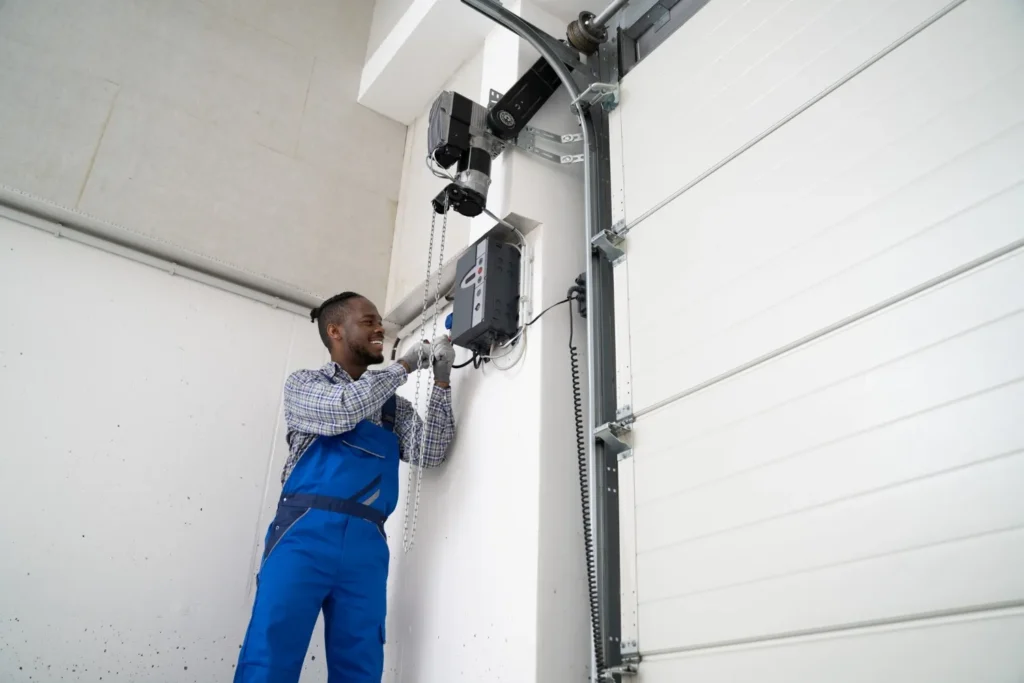
We utilize a systematic approach to inspections to ensure no component is overlooked. This process is designed to be efficient while providing a deep dive into the mechanical health of the system:
- First, the technician performs a static inspection. This involves examining the door while it is closed to check for structural damage to the panels, hinges, and struts. The technician checks manual locks and external weather stripping during this phase.
- Next, we disengage the automatic opener to perform a manual balance test. The technician lifts the door by hand to determine if it is properly balanced. A well-balanced door should stay halfway open without support. If the door slams shut or moves upward rapidly, the spring tension requires adjustment.
- Then, the operational diagnostics begin. We re-engage the opener and run the door through several full cycles. The technician listens for specific auditory cues, grinding, squealing, or clicking, that indicate bearing failure or gear stripping.
- Following the cycle test, we perform safety compliance testing. This includes blocking the infrared beam of the safety sensors to ensure the door reverses and testing the force settings by placing a standard resistance block under the door to verify it rebounds upon contact.
- Finally, the technician compiles a comprehensive report. You receive a breakdown of repairs that may be needed, recommended maintenance, and an estimated remaining lifespan for critical parts like the opener and springs.
Deciding Between Maintenance, Repair, or Full Replacement
One of the primary goals of an inspection is to help you make informed decisions regarding your garage door system. Not every noise requires a replacement, but continuing to invest in a failing system can be inefficient. We help you distinguish between a system that needs routine service and one that may be approaching the end of its service life.
When to Repair and Maintain
Repair is the logical choice when the core structure of the door is sound, but specific moving parts have degraded.
- If the door is less than 10 to 15 years old and the panels are in good condition.
- When the issue is isolated to a specific component, such as a broken spring, frayed cable, or a stripped gear in the opener.
- If the door is slightly noisy due to lack of lubrication or worn rollers.
- When safety sensors are misaligned but functional.
When to Replace
Replacement becomes the more economical and safer option when multiple systems fail simultaneously or the door is structurally compromised:
- If the door panels are warped, rusted through, or significantly dented, affecting structural integrity and insulation.
- When the cost of repairs approaches approximately half the cost of a new garage door system.
- If the opener is an older model lacking modern safety features, such as rolling code technology or battery backup.
- When the door has a history of repeated breakdowns despite regular repairs.
Why Professional Assessments Outperform DIY Checks
Homeowners often attempt to diagnose garage door issues themselves, but without specialized training and tools, this approach can miss critical warning signs or lead to unsafe situations. A professional inspection goes beyond the surface level to evaluate the physics and stress loads of the system.
Safety Risks of High-Tension Components: The torsion spring system is under significant tension, sufficient to lift a heavy garage door. A DIY inspection of these springs or the bottom brackets where cables attach carries a risk of serious injury. Professionals understand how to visually assess spring fatigue, such as gaps in the coils, without physically manipulating tensioned components.
Accurate Load Calculation: A professional can determine if incorrect springs were installed during a previous repair. If the springs are not calibrated to the weight of the door, the opener handles a load it was not designed for. This is a common issue that contributes to premature opener wear. Homeowners rarely have the tools to weigh the door and correlate it with spring specifications.
Identifying “Invisible” Wear: Many failures start internally. A technician can identify a fraying cable core before the outer strands break or detect a hairline crack in a hinge that is not visible from a distance. We also inspect the mounting of the motor to the ceiling joists, ensuring vibrations have not loosened the structural lag screws over time, a safety check often overlooked by homeowners.
Prioritize Safety and Reliability
A garage door is an essential utility that benefits from regular attention. Addressing concerns before the door becomes inoperable helps reduce risk to your property and household. Regular inspections provide the information needed to maintain a secure, functional home environment. Good Golly Garage Doors is dedicated to providing honest, thorough assessments that support reliable operation.
Scheduling routine inspections helps ensure your garage door system remains safe, compliant, and prepared for seasonal conditions.
Proudly Serving Phoenix, AZ, and Surrounding Areas
We provide the best garage door services you can find across Phoenix, AZ. Whether it’s the impact of Phoenix’s heat and sudden storms on garage door components, we ensure our solutions are tailored to your needs. Wherever you are, Good Golly Garage Doors is ready to deliver.
Call (602) 399-7054 All Service Areas