
Garage Door Inspection In Georgetown, TX
Ensure your garage door's stability and security with our professional inspections and repair services in Georgetown, TX. Schedule your safety check today!
Is Your Garage Door Showing Signs of Instability?
Is your garage door failing to open properly, or has it been making unsettling noises that disrupt your daily routine? You might be overdue for a professional inspection to prevent a complete system breakdown and ensure the security of your home. Contact us to schedule an inspection.
- Receive an in-depth inspection to pinpoint potential failings in your system before they become expensive repairs.
- Fast, same-day service is available to ensure your garage door operates safely and efficiently without delay.
- Get a detailed report and maintenance tips specifically tailored to Georgetown’s unique climate challenges.
Backed by a solid warranty and expert knowledge of local building codes, we provide the clarity you need to make informed decisions about your home’s entry points.
Good Golly Garage Doors understands that a malfunctioning garage door is more than an inconvenience; it is a security risk and a safety hazard. Homeowners in Georgetown, TX often overlook the complexity of the counterbalance systems that lift these heavy doors. When a cable frays or a sensor misaligns, the entire mechanism is compromised. Our goal is to provide a comprehensive analysis of your current hardware, offering a clear path to restoration or improvement.
Why Regular Inspections Are Critical for Garage Door Longevity
A garage door is the largest moving object in most homes, relying on high-tension springs and precise alignment to function correctly. Neglecting regular inspections often results in catastrophic failures that trap vehicles inside the garage or, worse, cause injury due to falling doors. Proactive assessment identifies wear patterns that are invisible to the untrained eye but obvious to a certified technician.
Mechanical components have a finite lifecycle. Torsion springs, for example, are rated for a specific number of cycles. As they approach this limit, the metal fatigues, increasing the risk of snapping. An inspection does not just look at what is broken now; it calculates the remaining life of critical parts. This predictive approach allows homeowners to budget for replacements rather than reacting to emergency situations at inconvenient times.
Safety mechanisms require frequent testing to ensure they comply with modern standards. Auto-reverse features and photo-eye sensors are designed to protect pets, children, and vehicles from crushing injuries. Over time, these sensors can drift out of alignment or suffer from wiring degradation. A professional inspection verifies that these safety protocols are active and responsive. If the door does not reverse immediately upon hitting an obstruction, the system is deemed unsafe and requires immediate adjustment.
Our Inspection Services Breakdown: What to Expect
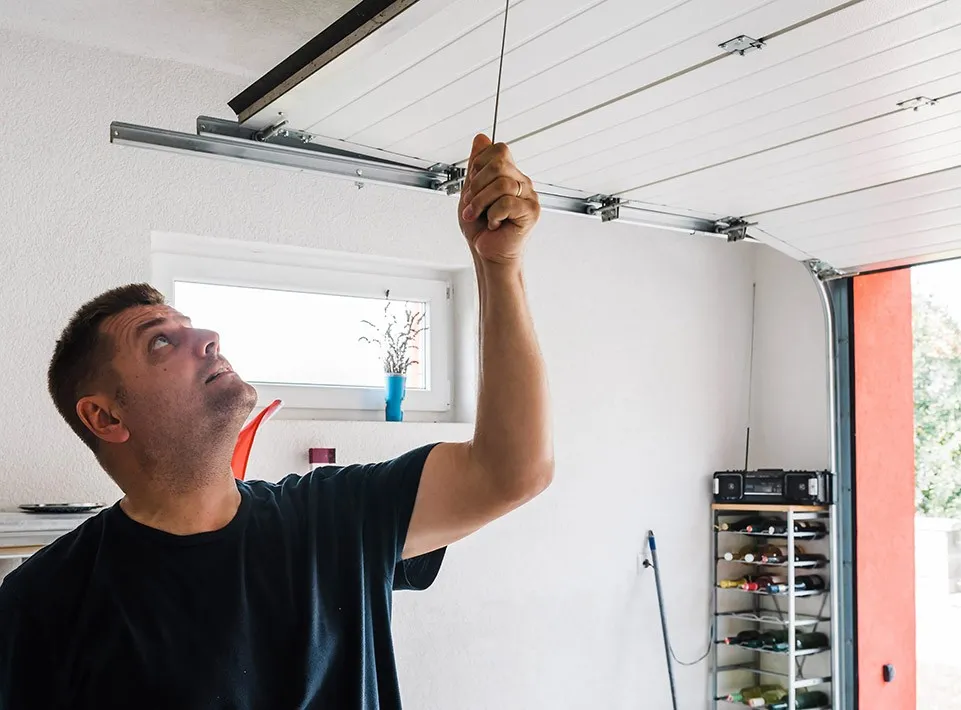
When you schedule a service call, the objective is to provide a complete audit of the door’s mechanical and structural health. This is not a cursory glance; it is a systematic evaluation of every moving part. The process typically takes between 30 to 60 minutes, depending on the complexity of the drive system and the condition of the hardware.
Structural Assessment
- Door Panels: Technicians examine the panels for cracks, dents, and separation. In steel doors, checks are made for stress cracks near the hinges. For wood doors, the focus shifts to rot, warping, or water damage that increases weight.
- Track Alignment: The vertical and horizontal tracks must be perfectly parallel. Any deviation causes friction, straining the opener. The inspection measures the gap between the rollers and the track to ensure smooth travel.
- Hinges and Brackets: Loose hardware is a common issue caused by vibration. All hinges and mounting brackets are checked for tightness and integrity.
Counterbalance System Evaluation
- Torsion and Extension Springs: The springs take the brunt of the lifting weight. Inspectors look for gaps in the coils, rust buildup, and elongation. A “balance test” determines if the springs are holding the correct amount of tension.
- Lift Cables: Cables are checked for fraying, kinking, or rust. A frayed cable is a snap hazard and requires immediate attention.
- Drums and Bearings: The cable drums are inspected for cracks, and the end bearing plates are checked for wear. Worn bearings cause the door to shudder and operate noisily.
Opener and Electronics Check
- Drive Mechanism: Whether chain, belt, or screw drive, the opener rail is inspected for adequate lubrication and tension.
- Gear and Sprocket: Inside the motor housing, plastic gears are checked for stripped teeth or shaving accumulation, which indicates impending failure.
- Logic Board: The technician verifies that the circuit board is communicating correctly with remotes and wall consoles.
Safeguarding Your Property: The Inspection Process
Understanding the flow of a professional inspection helps homeowners prepare for the visit. The process is designed to be non-intrusive while thorough, ensuring that every safety parameter is met.
- Visual Perimeter Check: The technician begins by inspecting the door from the outside and inside while it is in the closed position. This identifies gaps in the weather stripping, bottom seal wear, and obvious structural damage.
- Manual Operation Test: The garage door opener is disengaged to operate the door manually. This step is crucial for feeling “sticky” spots in the track or resistance that the electric motor might be masking. If the door is heavy to lift manually, the springs are likely failing or under-tensioned.
- Safety Reverse Verification: The technician reconnects the opener and places a standard test object (often a 2×4 block) under the door. The door is commanded to close. Upon contact with the object, the door must reverse direction immediately. Failure here results in an immediate safety warning.
- Sensor Alignment: Photo-eyes are cleaned and realigned. The technician creates a break in the beam while the door is closing to ensure it stops and reverses.
- Torque and Tightening: Using professional-grade tools, the technician moves systematically across the door, tightening lag screws, roller brackets, and hinge bolts that may have loosened due to daily operation vibrations.
- Lubrication Application: Critical friction points—such as steel rollers, hinges, and the bearing plates—receive application of a specialized non-silicone lubricant to reduce noise and wear.
- Final Report Generation: The findings are documented in a clear report. This includes a status for each component (Pass, Monitor, Replace) and a summary of urgent recommendations versus preventative suggestions.
Deciding Between Repair and Full Replacement
Following an inspection, homeowners are often faced with a decision: fix the current unit or invest in a new system. This decision relies on cost-effectiveness, age, and safety.
When to Repair
- Cosmetic Damage: If a single panel is dented but the structural integrity remains, a strut can often reinforce the panel, or the single section can be swapped out.
- Single Component Failure: If the door is generally healthy but a spring has snapped or a sensor has failed, a targeted repair restores full functionality.
- Recent Installation: If the door system is under 10 years old, repair is usually the most logical financial path, as the remaining components likely have years of service left.
When to Replace
- Severe Rust or Rot: In Georgetown, humidity can degrade the bottom sections of doors. If rust has eaten through the steel or wood rot has compromised the frame, repairs are merely cosmetic bandages on a structural failure.
- Cost Ratio: If the estimated repair cost exceeds 50% of the price of a new door installation, replacement is the smarter long-term investment. New doors come with fresh warranties and reset the clock on wear and tear.
- Lack of Safety Features: Older doors lacking modern entrapment protection sensors cannot always be retrofitted. For liability and safety reasons, upgrading to a compliant system is necessary.
- Energy Efficiency Needs: Older, non-insulated doors allow heat transfer, forcing HVAC systems to work harder. Replacing an uninsulated layer with a sandwich-style polyurethane-insulated door significantly improves thermal efficiency.
Georgetown’s Climate and Your Garage Door: Maintenance Essentials
The local environment in Georgetown plays a significant role in how rapidly garage door components degrade. Understanding these factors helps in planning maintenance schedules.
- Extreme Heat and Thermal Expansion: Summer temperatures often exceed 90°F. Metal components, particularly the long tracks and the door panels themselves, expand in this heat. If the installation was done without accounting for thermal expansion, the door may bind or stick during the hottest parts of the day. Electronics inside the opener head unit are also susceptible to overheating, which can cause intermittent logic board failures or capacitor issues.
- Humidity and Corrosion: High humidity levels accelerate oxidation. Galvanized steel parts are resistant but not immune to rust. Without regular lubrication, springs and cables develop surface rust that eventually pits the metal, leading to weakness and snapping. The bottom brackets, which sit closest to the floor where moisture accumulates, are particularly vulnerable.
- Rainfall and Water Damage: With annual rainfall averaging around 36 inches, water intrusion is a primary concern. Wooden doors absorb moisture from the air and direct contact with rain. This causes the wood to swell, increasing the weight of the door significantly. If the springs are not adjusted to account for this “water weight,” the opener gear is subjected to excessive strain and will strip. Additionally, the bottom weather seal must be pliable and intact to prevent water from entering the garage and damaging stored items or drywall.
- Soil Movement: The region is known for shifting soil conditions. As the ground expands and contracts with moisture levels, the garage foundation can shift slightly. This movement throws the door frame out of square. An inspection checks for these structural shifts, as a square door trying to move in a non-square frame will eventually jam or derail.
Licensed, Trusted, and Client-Focused: Why Choose Us
We prioritize technical accuracy and operational transparency. When Good Golly Garage Doors arrives at a property, the truck is stocked with high-quality, commercial-grade parts. This ensures that if the inspection reveals a critical safety flaw, it can often be rectified during the same visit without the need for a follow-up appointment.
- Certified Technicians: Our team undergoes rigorous training to handle various door brands, opener types, and spring systems. We do not use subcontractors; every technician is vetted and trained to our high standards.
- Comprehensive Diagnostics: We look beyond the obvious symptom. If a cable is loose, we find out why the drum slipped. If a gear stripped, we find out why the door is heavy. We fix the root cause, not just the result.
- No Hidden Fees: The inspection report provides a clear, line-item breakdown of any recommended work. Homeowners approve the scope of work before any tools are applied for repairs.
- Local Compliance: We operate with full knowledge of local permit requirements and wind load ratings necessary for the area. This ensures that any repair or installation meets insurance and code standards.
Your garage door is a complex system that requires respect and expertise. Don’t wait for a spring to snap or a motor to burn out. Secure your home and ensure reliable access today — contact us.
Schedule your comprehensive garage door inspection now to ensure your system is safe, secure, and ready for any weather.
Proudly Serving Austin, TX, and Surrounding Areas
From the neighborhoods of Austin to Round Rock and Buda, we provide the best garage door services you can find across the area. Whether it’s the impact of Texas heat and sudden storms on garage door components, we ensure our solutions are tailored to your needs. Wherever you are, Good Golly Garage Doors is ready to deliver.
View All Cities
 All Service Areas